Studio Gear Review
Allen & Heath ZED-14 Review: High Gain DuoPre Preamps
The Allen & Heath ZED-14 pairs DuoPre preamps rated at 69dB gain with flexible pre and post fade aux sends and driver free USB recording. This research review covers the confirmed gain and phantom power figures and the specs left unpublished.
Our Verdict
Research Score 80/100The Allen & Heath ZED-14 backs up its touring quality framing with concrete preamp figures, DuoPre preamps offering up to 69dB of gain through two gain stages and confirmed 48V phantom power, alongside a thoughtfully specified routing layout with separate pre-fade and post-fade auxiliary outputs. A 100Hz high pass filter and 3-band MusiQ EQ with a swept mid add real tone shaping tools on every mono channel. Class compliant USB I/O means this mixer connects to computers, tablets and phones without drivers. The main gaps are a noise floor figure and headphone output detail, neither of which the listing states. At a mid-range price tier, this is a well rounded choice for bands and small venues.
Editorial research score based on published specifications and documented features, not a customer rating or lab test.

Allen & Heath
Allen & Heath ZED-14
Best for: Bands and small venues that want touring quality build, high gain DuoPre preamps and flexible pre-fade and post-fade auxiliary routing in a 14 channel mixer with simple USB recording.
Skip it if: You need rack mounting included out of the box, or you need more than 6 mic inputs for a larger ensemble.
Check Price on AmazonWe may earn a commission at no extra cost to you.
Listing verified: November 2026
Who Should Buy It
Buy it if
- Bands who want touring quality construction and high gain preamps in a mid-sized mixer
- Engineers who need separate pre-fade and post-fade aux sends for monitors and effects
- Operators who want driver free USB recording that also works with tablets and phones
- Venues that want a 100Hz high pass filter on every channel to clean up low end clutter
Skip it if
- You need more than 6 simultaneous mic inputs for a larger ensemble
- You need rack mounting included without a separate optional purchase
- You require a confirmed preamp noise floor specification before buying
Key Specifications
| Type | 14-channel touring quality analog mixer with class compliant USB I/O |
| Inputs | 6 mic inputs, 6 line or instrument inputs, 4 stereo inputs (2 left, 2 right), 2 USB audio channels and 1 FX return per the listing's channel breakdown |
| Outputs | 2 pre-fade and 2 post-fade auxiliary outputs, plus the main mix and USB return path |
| Preamps | DuoPre XLR microphone preamps with 48V phantom power and up to 69dB of gain, using two gain stages for a full and accurate sound across the gain range |
| Resolution | Not published in listing (no bit depth or sample rate stated) |
| Phantom power | 48V |
| Connection | Class compliant, routable stereo-in stereo-out USB connection, no drivers required, compatible with Mac, Windows, tablets and smartphones |
| Monitoring | 2 pre-fade auxiliary outputs for independent monitor mixes, plus 2 post-fade auxiliary outputs for feeding FX units, subwoofers or a streaming and recording mix |
| Bundled software | Not published in listing |
| Included accessories | An optional rack ear kit is available separately for mounting in a standard 19 inch rack or flight case |
Overview
The Allen & Heath ZED-14 is a 14-channel analog mixer built with the same touring quality philosophy that runs through the broader ZED range, pairing a reasonably generous channel count with genuinely specific preamp figures and a flexible auxiliary routing layout rather than a bare bones feature set.
The listing provides a detailed channel breakdown, 6 mic inputs, 6 line or instrument inputs, 4 stereo inputs split across left and right, 2 USB audio channels and 1 FX return, giving a clear and internally consistent picture of this mixer's total routing capacity.
Unlike some mixers in this manufacturer's range where the listing's title and detailed bullets disagree on channel count, the ZED-14 listing presents a single, coherent configuration throughout, which gives buyers more confidence in planning an exact session layout around this specific model.
Preamps and Sound Quality
The listing names DuoPre XLR microphone preamps specifically, stating 48V phantom power for condenser microphones and up to 69dB of gain, achieved through two separate gain stages designed to provide a full and accurate sound across the entire gain range rather than degrading at the extremes.
That dual gain stage design is specifically called out as giving enough power for even gain hungry microphones, which suggests this preamp circuit is engineered with headroom in mind for demanding sources rather than simply being adequate for average use.
69dB of gain is a strong figure for a mixer in this price tier, comfortably covering most dynamic and condenser microphones used in live sound and project studio recording, though buyers working with unusually quiet specialist microphones should still confirm this meets their specific needs.
Inputs, Outputs and Routing
The confirmed routing layout totals 6 mic inputs, 6 line or instrument inputs, 4 stereo inputs, 2 USB audio channels and 1 FX return, a configuration well suited to a mid-sized band with a handful of vocal and instrument microphones plus a couple of stereo playback or keyboard sources.
Two pre-fade auxiliary outputs are described as enabling separate mixes sent to monitor speakers or any feed requiring a mix of channels independent of the main mix, which is standard and valuable functionality for stage monitor sends that need different balance than the front of house mix.
Two additional post-fade auxiliary outputs send signal at a level that follows the main mix fader, which the listing specifically frames as ideal for external FX units, subwoofer feeds, or creating a separate mix for streaming or recording, giving this mixer genuinely flexible routing beyond a single main output.
Features, Monitoring and Software
A 100Hz high pass filter is available on every mono input, letting an engineer remove unneeded low frequency content, such as stage rumble or handling noise, before it reaches the EQ and main mix, which is a simple but genuinely useful tool for cleaning up a live sound.
The 3-band MusiQ EQ includes a swept mid frequency control, letting an engineer choose exactly where in the frequency spectrum to cut or boost, which the listing specifically notes is especially useful for vocals, guitar and other instruments with a rich mid-range character that a fixed frequency EQ might not address as precisely.
The routable stereo-in stereo-out USB connection allows recording of the whole main mix or specific channels, with a stereo return path letting audio from a connected device be routed back into the mix, useful for playing backing tracks or a click track through the same USB connection used for recording.
- DuoPre preamps, 69dB gain, 48V phantom power
- 100Hz high pass filter on every mono input
- 3-band MusiQ EQ with swept mid
- 2 pre-fade and 2 post-fade aux outputs
- Class compliant stereo-in stereo-out USB
- Optional 19 inch rack ear kit
Build, Design and Controls
As part of Allen & Heath's ZED touring range, this mixer is built with the manufacturer's general touring quality construction standards in mind, though this specific listing does not itemize chassis dimensions, weight or material beyond the general touring quality framing.
An optional rack ear kit is available separately for mounting this mixer into a standard 19 inch rack or flight case, which the listing frames as an added purchase rather than an included accessory, so buyers planning rack mounted use should budget for that separately.
The combination of a swept mid EQ control and dual gain stage preamps suggests a control layout with a reasonable number of dedicated per channel controls, though the listing does not break down the exact knob and switch count on the front panel.
Connectivity, Drivers and Latency
The defining connectivity feature is the class compliant stereo-in stereo-out USB connection, which the listing states does not require drivers, allowing this mixer to connect immediately to Mac and Windows computers as well as tablets and smartphones.
The stereo return capability is a meaningful detail beyond simple recording, letting audio played from a connected device be routed back into the live mix, which is useful for backing tracks, click tracks or a streamed audio source during a performance.
The listing does not state specific latency figures for the USB connection, so buyers with demanding low latency monitoring needs should treat this as a general purpose stereo connection rather than one engineered specifically for minimal round trip latency.
Setup and Daily Use
Setting up this mixer for a show involves gain staging the 6 mic and 6 line or instrument inputs through the DuoPre preamps, engaging the 100Hz high pass filter where needed, and configuring the pre-fade and post-fade aux sends for monitors and effects respectively.
Daily use benefits from the swept mid EQ control, letting an engineer quickly address problem frequencies on vocals or instruments without needing outboard EQ, and from the stereo USB return, which simplifies playing a backing track or click without additional hardware.
Bands that record their shows through the stereo USB connection will appreciate the simplicity of a single routable connection for both recording and returning audio, compared with managing separate record and playback devices connected to the mixer.
Who Should Buy It
This mixer suits bands and small venues that want touring quality build and genuinely high gain preamps, along with flexible pre-fade and post-fade auxiliary routing for monitors, effects and recording feeds.
It is a weaker fit for ensembles needing more than 6 simultaneous mic inputs, and for buyers who need rack mounting included without a separate purchase, or a confirmed preamp noise floor figure before buying.
Engineers who specifically value separate pre-fade and post-fade aux sends, rather than a single shared auxiliary bus, will find this mixer's routing more capable than many similarly priced alternatives that only offer one type of aux send.
Small house of worship teams and corporate AV setups that need a dependable, driver free way to both run live sound and capture a simple recording through the same box will also find this mixer's feature set lines up closely with that kind of recurring, lower complexity use case.
Alternatives Worth Considering
Buyers who need more than 6 mic inputs for a larger band should look at a bigger mixer in the same ZED range, such as a model with additional channels, rather than this 14-channel unit.
Buyers who want rack mounting included by default rather than as a separate accessory purchase should consider a mixer explicitly sold in a rack mountable chassis.
Buyers who do not need the swept mid EQ or dual gain stage preamps, and want the lowest possible price, might consider a simpler analog mixer without those specific tone shaping features.
Verdict
The Allen & Heath ZED-14 earns its mid-range price tier through specific, confirmed preamp figures, 69dB of gain with 48V phantom power, and a genuinely flexible routing layout with separate pre-fade and post-fade auxiliary outputs that many competing mixers at this price simplify into a single aux type.
The main gaps are a noise floor specification and headphone output detail, neither published in the listing, but buyers comfortable with those being unknowns should find this mixer a well rounded, dependable choice for touring and small venue use.
For a band that regularly needs separate monitor and recording feeds alongside a main front of house mix, the dual aux design here does real practical work that a simpler, single aux mixer at a similar price point generally cannot match.
Strengths and Limitations
Strengths
- DuoPre XLR preamps with up to 69dB of gain and 48V phantom power using dual gain stages
- 100Hz high pass filter on every mono input to remove unneeded low frequencies
- 3-band MusiQ EQ with a swept mid frequency for musical tone shaping
- 2 pre-fade and 2 post-fade auxiliary outputs for flexible monitor and FX routing
- Class compliant stereo USB I/O with a return channel, no drivers required
- Works with Mac, Windows, tablets and smartphones without additional software
Limitations
- No stated preamp noise floor figure beyond the gain specification
- No stated headphone output detail
- Rack mounting requires a separately purchased optional kit
- No bundled recording or mixing software is mentioned
How We Scored It
Scores reflect published specifications, documented features and value against the alternatives below. They are editorial research scores, not laboratory measurements.
Alternatives to Consider

Pioneer DJ XDJ-RX3
DJs who want club-standard standalone playback from USB with a large touchscreen and a familiar two-channel layout.
Read the Pioneer DJ XDJ-RX3 review →
Yamaha DM3-D 22
Small venues, houses of worship and production companies that want a compact 96 kHz digital console with Dante networking for stage boxes and multitrack recording.
Read the Yamaha DM3-D 22 review →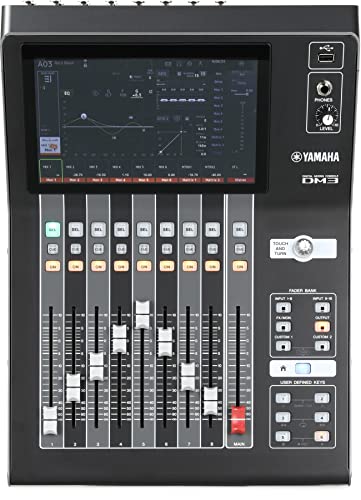
Yamaha DM3
Bands, small venues and project studios that want a compact 96 kHz digital console that doubles as an 18x18 USB recording interface.
Read the Yamaha DM3 review →Questions Buyers Ask
Allen & Heath ZED-14
See the current listing, price and included accessories.
About This Review
Daniel Brooks
Daniel Brooks edits the buying guides and how-to articles at Mandrillis. He works from manufacturer manuals, published specifications and common owner questions to explain music and audio gear in plain language, from turntables and headphones to digital pianos and electronic drums.
Read our full research methodology.