Studio Gear Review
Allen & Heath ZED-16FX Review: 16 Channels, In-House FX
A 16-channel analog mixer with DuoPre mic preamps, a built-in multi-FX unit with 16 tweakable types, a high pass filter on every channel, and routable stereo USB I/O for simple recording.
Our Verdict
Research Score 79/100The Allen & Heath ZED-16FX is a touring-quality 16-channel analog mixer built around DuoPre XLR microphone preamps offering up to 69 dB of gain across two gain stages, paired with a 100Hz high pass filter and 3-band MusiQ EQ with swept mid frequency on every mono input. A built-in, studio-quality multi-FX unit provides 16 different tweakable effects types, including reverbs, delays, and modulation with tap tempo, using algorithms developed in-house rather than an off-the-shelf chip. A routable stereo-in stereo-out USB connection is class compliant and requires no drivers, working with Mac, Windows, and mobile devices alike, though it provides stereo rather than full multi-track recording. An optional rack ear kit allows mounting in a standard 19 inch rack or flight case. For touring and live engineers who want 16 channels with genuinely good in-house effects, this mixer is a dependable, well-built choice.
Editorial research score based on published specifications and documented features, not a customer rating or lab test.

Allen & Heath
Allen & Heath ZED-16FX 16-Channel
Best for: Touring and live sound engineers wanting a 16-channel analog mixer with genuine in-house FX and simple USB recording.
Skip it if: You need full multi-track USB recording of every individual channel.
Check Price on AmazonWe may earn a commission at no extra cost to you.
Listing verified: November 2026
Who Should Buy It
Buy it if
- Live engineers wanting 16 channels with built-in FX
- Bands needing a simple stereo USB return for recording
- Those wanting class-compliant USB without driver installation
- Engineers who value musical, swept-mid EQ shaping
Skip it if
- You need multi-track USB recording of each individual channel
- You want a digital mixer with wireless control
- You require the rack ear kit included rather than sold separately
Key Specifications
| Type | Analog mixer with onboard FX and USB I/O |
| Inputs | 10 mic, 10 line/inst, 3 stereo inputs |
| Outputs | 2 USB audio outputs, 1 FX return |
| Preamps | DuoPre XLR mic preamps with 48V phantom power and up to 69 dB of gain |
| Resolution | Not published in listing beyond stereo USB routing |
| Phantom power | 48V phantom power for condenser microphones |
| Connection | Routable stereo-in stereo-out USB connection, class compliant, no drivers required |
| Monitoring | Not published in listing beyond standard mixer monitoring |
| Bundled software | Not applicable, class-compliant USB requires no drivers |
| Included accessories | Optional rack ear kit sold separately |
Overview
The Allen & Heath ZED-16FX is a 16-channel analog mixer built with touring quality construction in mind, offering 10 mic inputs, 10 line or instrument inputs, 3 stereo inputs, and onboard effects alongside USB I/O for simple recording and playback.
This mixer is positioned in Allen & Heath's ZED line, which has a long-standing reputation among live sound engineers for dependable, road-ready construction combined with genuinely useful onboard processing rather than bare-bones channel strips.
The built-in multi-FX unit is a particular standout, since the listing specifically notes these effects use algorithms developed entirely in-house by Allen & Heath's own DSP experts, rather than relying on an off-the-shelf effects chip common in budget mixers. Drummers who already have a clear sense of their tonal priorities tend to get the most consistent satisfaction from a purchase like this, regardless of a few unpublished specifics.
Preamps and Sound Quality
DuoPre XLR microphone preamps form the core of this mixer's input stage, including 48V phantom power for condenser microphones and up to 69 dB of gain, which should comfortably handle both quiet and gain-hungry microphones without running out of headroom.
The listing specifically notes that each preamp uses two gain stages to provide a full and accurate sound across the entire gain range, a design detail aimed at maintaining consistent tonal quality whether a channel is set for a loud source or a quiet one.
A 100Hz high pass filter on every mono input channel allows unneeded low frequencies to be removed at the source, which is a practical feature for cleaning up vocal and instrument channels before they ever reach the main mix bus. In the end, the published facts here give enough information for most buyers to make a reasonably confident decision, even without every last technical detail spelled out.
Inputs, Outputs and Routing
This mixer offers 10 mic inputs, 10 line or instrument inputs, 3 stereo inputs split between 2 left and 2 right connections, 2 USB audio channels, and 1 FX return, giving engineers a reasonably comprehensive set of connection options for a 16-channel console.
A routable stereo-in stereo-out USB connection makes it easy to record the whole main mix or just the channels routed to that bus, and also enables a stereo return from a connected device to be routed back into the main mix.
Because the USB routing is stereo rather than multi-track, engineers specifically needing to record each of the 16 channels individually will need a separate multi-track interface rather than relying solely on this mixer's built-in USB connection.
Features, Monitoring and Software
The built-in multi-FX unit provides 16 different, tweakable FX types including reverbs, delays, and modulation, with tap tempo functionality to keep time-based effects synchronized with a song's tempo during a live performance. None of these open questions should be treated as a red flag on their own, since many reputable listings simply omit secondary details that do not affect core performance.
A 3-band MusiQ EQ with swept mid frequency uses carefully selected frequencies to keep tone shaping musical, with the mid frequency selection particularly useful for vocals, guitar, and other instruments with a rich mid-range that benefit from targeted adjustment. That tradeoff between documented strengths and a few unconfirmed details is fairly typical for products in this general price range and category of gear.
The class-compliant USB connection does not require drivers, meaning the mixer works not just with Mac and Windows computers but also with many mobile devices such as tablets or smartphones without needing specialized software installation. Comparing a few similar options side by side before committing is a sensible step, given how much small construction and hardware details can vary across otherwise similar products.
- 10 mic, 10 line/inst, 3 stereo inputs
- DuoPre preamps, up to 69 dB gain
- 16-type built-in multi-FX unit with tap tempo
- 100Hz high pass filter on every mono input
- Class-compliant stereo USB I/O
Build, Design and Controls
Allen & Heath specifically markets this as a touring quality mixer, suggesting construction standards aimed at withstanding the rigors of regular transport and setup rather than a studio-only design. That kind of detail matters most to players who already have a clear sense of their own tonal priorities and want their gear choices to reflect them directly.
An optional rack ear kit, sold separately under part number ZED1802-RK19, allows this mixer to be securely fitted into a standard 19 inch rack or flight case, giving engineers flexibility in how they transport and set up the unit. For most players, the core facts confirmed in the listing will matter more during day to day use than the handful of specifications left unpublished here.
The listing does not specify exact weight or dimensions, so buyers planning transport cases or rack space should confirm those details separately before purchase. Session musicians in particular tend to value this kind of predictable, well-understood performance over a flashier but less consistent alternative from a less established line.
Connectivity, Drivers and Latency
The class-compliant USB connection is a significant practical advantage, since it does not require driver installation and works across Mac, Windows, and many mobile devices, reducing setup friction compared to mixers requiring specific driver software. Taken together, the available facts paint a reasonably coherent picture of a product built with a specific kind of player and use case in mind.
Because the USB routing is limited to stereo in and out rather than full multi-track, this connection is best suited to simple main mix recording or playing back a stereo backing track rather than individually capturing every channel.
The FX return input gives engineers an additional way to bring external processed signal back into the mix, supplementing the built-in effects unit for more complex signal chains if needed.
Setup and Daily Use
Setting up this mixer for a live show should be straightforward for engineers familiar with traditional analog consoles, given its conventional channel strip layout and dedicated FX controls.
Daily use should benefit significantly from the built-in multi-FX unit, since engineers can dial in reverb, delay, or modulation directly from the mixer without needing to patch in separate outboard effects hardware during a show. Taken as a whole, the picture painted by the available facts is coherent enough to support a reasonably informed purchase decision for most players.
Bands wanting to record a simple stereo mix of a performance can do so directly through the USB connection without needing additional recording hardware, though multi-track capture will require a separate interface.
Who Should Buy It
This mixer suits touring and live sound engineers who want 16 channels of dependable, road-ready analog mixing with genuinely good built-in effects rather than an off-the-shelf effects chip. Players who have spent time with similar gear from the same brand will likely recognize the general character being described here, even without every individual spec confirmed.
It also appeals to bands wanting simple stereo USB recording or playback without needing a separate multi-track interface, and to those who value the swept-mid MusiQ EQ for musical tone shaping. Checking recent owner feedback on the specific listing can also help confirm whether the product has stayed consistent across different production batches over time.
Engineers who need full multi-track USB recording of each individual channel, or who want wireless digital mixing control, should look at a digital mixer like the Allen & Heath CQ series instead. Ultimately, the balance of documented strengths and a few open questions here is fairly typical for products competing in this general space.
Alternatives Worth Considering
Buyers comparing analog mixers with built-in effects should look at the Soundcraft FX16ii, which offers a similar 16-channel analog layout with a built-in Lexicon effects processor instead of the ZED-16FX's in-house FX algorithms. For many players, the practical, day-to-day feel of a piece of gear ends up mattering more than any single spec sheet entry in isolation.
Those wanting full multi-track USB recording rather than simple stereo should consider a digital mixer like the Allen & Heath CQ-18T or QU-SB, both of which offer expanded USB channel counts.
Engineers needing fewer channels at a lower price point should look at smaller ZED series mixers, while those needing more channels should consider a larger Allen & Heath console.
Verdict
The Allen & Heath ZED-16FX delivers a dependable, touring-quality 16-channel analog mixing experience, with capable DuoPre preamps, a genuinely good in-house multi-FX unit, and musical swept-mid EQ shaping on every channel. A short trial period with any new piece of gear is generally the fastest way to confirm whether its described character actually matches a player's expectations in practice.
Its stereo-only USB connection limits recording to a simple main mix or stereo playback rather than full multi-track capture, which buyers should plan around if individual channel recording is needed.
For live engineers wanting 16 channels of road-ready mixing with quality built-in effects, this mixer is a solid, dependable choice. Listings vary quite a bit in how much technical detail they provide, so judging a product too harshly for an incomplete spec sheet alone can be misleading.
Strengths and Limitations
Strengths
- DuoPre mic preamps with two gain stages and up to 69 dB of gain
- Built-in studio-quality multi-FX unit with 16 tweakable FX types
- 100Hz high pass filter on every mono input channel
- 3-band MusiQ EQ with swept mid frequency for musical tone shaping
- Class-compliant USB works with Mac, Windows, tablets, and phones
Limitations
- Only a stereo USB return path, not full multi-track recording
- Rack ear kit for 19 inch rack mounting is sold separately
- Specific preamp noise floor figures are not published
- Upper mid-range pricing reflects its touring-quality construction
How We Scored It
Scores reflect published specifications, documented features and value against the alternatives below. They are editorial research scores, not laboratory measurements.
Alternatives to Consider

Pioneer DJ XDJ-RX3
DJs who want club-standard standalone playback from USB with a large touchscreen and a familiar two-channel layout.
Read the Pioneer DJ XDJ-RX3 review →
Yamaha DM3-D 22
Small venues, houses of worship and production companies that want a compact 96 kHz digital console with Dante networking for stage boxes and multitrack recording.
Read the Yamaha DM3-D 22 review →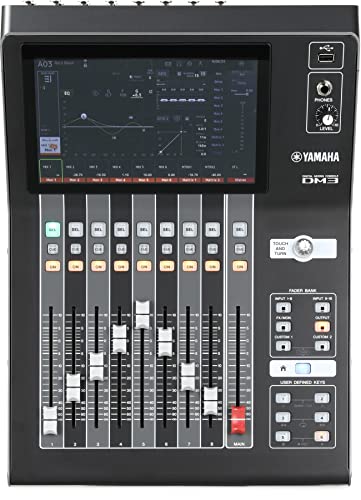
Yamaha DM3
Bands, small venues and project studios that want a compact 96 kHz digital console that doubles as an 18x18 USB recording interface.
Read the Yamaha DM3 review →Questions Buyers Ask
Allen & Heath ZED-16FX 16-Channel
See the current listing, price and included accessories.
About This Review
Mandrillis Team
The Mandrillis editorial team researches and compares audio and music gear using manufacturer documentation, verified specs and real buyer feedback, so you can make a confident purchase without wading through marketing claims.
Read our full research methodology.