Studio Gear Review
Behringer U-PHORIA UM2 Review: Rated XENYX Preamp at 48kHz
The Behringer U-PHORIA UM2 pairs a XENYX mic preamp, rated at 100 dB dynamic range, with confirmed 48 kHz resolution and USB bus power. This research review checks those specific published numbers against the input, output and phantom power details the listing leaves unaddressed.
Our Verdict
Research Score 60/100The Behringer U-PHORIA UM2 stands out in this batch for actually publishing preamp numbers: a XENYX mic preamp rated at 100 dB dynamic range with a bandwidth extending from 10 Hz to well above 30 kHz, paired with a confirmed 48 kHz recording resolution. Direct Monitor select switching and Status and Signal Clip LEDs add practical feedback during tracking, and USB-supplied power keeps the setup simple. What the listing does not confirm is phantom power, input connector types, or any instrument input, which matters for anyone planning to use a condenser microphone or a direct instrument signal. For a musician who wants a documented preamp spec at a budget price and does not need confirmed phantom power, the UM2 is a solid, numbers-backed choice.
Editorial research score based on published specifications and documented features, not a customer rating or lab test.

Behringer
Behringer U-PHORIA UM2
Best for: Musicians who want a specifically rated XENYX preamp with a stated dynamic range and bandwidth, running at a confirmed 48 kHz resolution over simple USB bus power.
Skip it if: You need confirmed phantom power for a condenser microphone or require 2 simultaneous mic inputs, since neither is stated in the published listing.
Check Price on AmazonWe may earn a commission at no extra cost to you.
Listing verified: November 2026
Who Should Buy It
Buy it if
- Solo musicians who want a preamp with a stated dynamic range figure
- Buyers who want confirmed 48 kHz resolution rather than an unstated figure
- Musicians who want USB bus power with no separate adapter
- Buyers comfortable verifying phantom power support before relying on a condenser mic
Skip it if
- You specifically require confirmed phantom power before buying
- You need 2 microphone inputs recorded at once
- You require stated output connector types for your monitor setup
Key Specifications
| Type | USB audio interface with a XENYX mic preamplifier |
| Inputs | Not itemized in the feature bullets beyond confirming a XENYX mic preamp input. Connector types and any separate instrument input are not stated |
| Outputs | Not published in listing |
| Preamps | 1 XENYX mic preamplifier, stated at a 100 dB dynamic range with a bandwidth from 10 Hz to well above 30 kHz |
| Resolution | 48 kHz, confirmed directly in the feature bullets |
| Phantom power | Not published in listing |
| Connection | USB-supplied power is confirmed. The specific USB version is not detailed beyond that |
| Monitoring | Direct Monitor select switch, Status and Signal Clip LEDs, and a powerful headphone output |
| Bundled software | Not published in listing |
| Included accessories | Not published in listing |
Overview
The Behringer U-PHORIA UM2 is a compact USB audio interface built around a single XENYX mic preamplifier. Unlike many budget listings, this one publishes real numbers: a 100 dB dynamic range, a bandwidth from 10 Hz to well above 30 kHz, and a confirmed 48 kHz recording resolution.
Behringer frames the UM2 as a fast, simple path from a musician's idea into a Mac or Windows computer, with broad compatibility claimed across popular recording software such as Pro Tools, Ableton Live and Cubase. That general compatibility claim matches language used across the wider U-Phoria and UMC interface families.
This review relies entirely on the five feature bullets published for this listing. Phantom power, input connector types and any separate instrument input are not stated anywhere in that data, and each of those gaps is flagged directly rather than assumed from similar Behringer models.
Preamps and Sound Quality
The UM2's XENYX mic preamp is described with two specific figures: a 100 dB dynamic range and a bandwidth extending from 10 Hz to well above 30 kHz. Those numbers give this listing a level of technical detail that many competing budget interfaces in this batch do not provide.
A 100 dB dynamic range is a respectable figure for a budget preamp, suggesting the circuit can handle both quiet passages and louder peaks without excessive noise or clipping. The extended bandwidth claim similarly points toward a preamp designed to capture detail across a wide frequency range rather than a narrow, telephone-like response.
With only 1 mic preamp confirmed, the UM2 is built for single-source recording rather than capturing multiple microphones at once. That single-channel design keeps the unit simple and focused on one musician layering parts one at a time.
For that kind of songwriter workflow, having a documented dynamic range and bandwidth figure matters more than extra channel count, since the single signal path is the one the buyer will rely on for every take. A clean, well-specified mono path can outperform a noisier multi-channel unit for this specific use case.
Inputs, Outputs and Routing
The feature bullets confirm the XENYX mic preamp input exists but do not itemize the connector type, whether that is a combo jack accepting XLR and TRS, or a simpler format. No separate instrument input is mentioned, unlike the related UMC22 model in the same general product family.
No output connector type, output count or headphone jack is specifically described, though the listing does promise a powerful headphone output as part of its monitoring feature set. Buyers planning a specific monitor setup should confirm the output connectors directly before ordering.
That confirmation step matters most for anyone who already owns studio monitors with a fixed cable type. A mismatch discovered after the interface arrives is an easy problem to avoid with one quick check beforehand.
No insert points, aux sends or MIDI ports are mentioned anywhere in the bullets. Routing on this interface is therefore simple by necessity: one input captured, processed through the preamp, and sent to the computer over USB.
Features, Monitoring and Software
Direct Monitor select is the primary monitoring feature, letting a performer hear their input signal without first routing through the computer. Status and Signal Clip LEDs back that up with visual feedback, helping catch gain problems during a take before they ruin a recording.
A powerful headphone output is promised for private listening while tracking, rounding out the monitoring section alongside the Direct Monitor switch. Together these features address the practical need to hear a clean, immediate signal while recording.
No bundled software or plugin collection is named in the listing. Buyers should plan to supply their own DAW, relying on the general compatibility claim with popular recording software rather than an included application.
- 1 XENYX mic preamplifier
- 100 dB dynamic range, 10 Hz to well above 30 kHz bandwidth
- 48 kHz recording resolution
- Direct Monitor select switch with Status and Signal Clip LEDs
- USB-supplied power, no separate adapter needed
Build, Design and Controls
No chassis material, weight or physical dimensions are published for the UM2. Behringer's U-Phoria family has generally used compact, metal-topped enclosures across similarly sized single-preamp interfaces, though that cannot be confirmed for this specific unit from the available data.
Controls described in the listing include the Direct Monitor select switch and whatever gain control manages the XENYX preamp input. Status and Signal Clip LEDs provide the main visual feedback described on the front panel.
Given the compact single-input design, a small footprint suited to a travel bag or tight desk seems likely. Exact measurements are not stated, so buyers with limited space should confirm the physical size directly before ordering.
Connectivity, Drivers and Latency
The UM2 connects over USB and draws power entirely from that connection, removing the need for a separate power adapter. The listing frames this USB-supplied power as part of what makes the interface a fast and easy path into a computer-based recording setup.
No specific USB version or detailed driver requirement is published. The broad compatibility claim with popular DAWs suggests the interface behaves as a standard class-compliant device, though buyers using less common software should verify support directly.
Latency is addressed mainly through the Direct Monitor feature rather than a published round-trip figure. Monitoring the input signal directly, before it reaches the computer, sidesteps the most common complaint about delay in budget USB interfaces.
Buyers running the UM2 alongside other USB audio devices, such as a webcam or a separate headset, should check how their operating system handles multiple simultaneous audio devices. No companion control panel is mentioned in the listing for managing that kind of routing.
Setup and Daily Use
Setting up the UM2 involves connecting a microphone to its input, then connecting the unit to a computer over USB, which both powers the device and establishes the recording connection. The absence of a separate instrument input simplifies the front panel compared to interfaces that offer both input types.
Daily use benefits from the Direct Monitor switch, letting a musician hear themselves clearly while tracking vocals or an instrument through the XENYX preamp. The Status and Signal Clip LEDs offer a quick way to check levels throughout a session.
Because phantom power is not confirmed, anyone planning to use a condenser microphone should verify that capability directly before relying on the UM2 for that purpose. Dynamic microphones, which do not require phantom power, avoid that uncertainty entirely.
A dynamic microphone paired with the stated 100 dB dynamic range and extended bandwidth should still deliver a clean, detailed result for spoken word, acoustic guitar or vocal demos recorded close to the capsule. That pairing sidesteps the phantom power question entirely while still benefiting from the preamp's documented numbers.
Who Should Buy It
The UM2 suits a solo musician who values a documented preamp specification, specifically the stated 100 dB dynamic range and extended bandwidth, over an interface that simply claims quality without numbers. The confirmed 48 kHz resolution adds further technical reassurance.
Buyers who do not specifically need phantom power, or who already know their microphone does not require it, will find this a straightforward budget interface for single-source recording. The documented preamp figures add a layer of confidence that many competing listings lack.
Anyone who needs confirmed phantom power, 2 microphone inputs, or a separate instrument input should look toward a different model, such as the UMC22 or UMC204HD. None of those features are confirmed here.
Alternatives Worth Considering
Buyers who specifically need confirmed phantom power and a separate instrument input should consider the Behringer UMC22. It adds both features along with a Midas-designed preamp instead of a XENYX one.
For 2 full microphone inputs plus MIDI connectivity, the Behringer U-Phoria UMC204HD offers a larger feature set within the same general price range. That trades some of this interface's simplicity for added flexibility.
Buyers who want a documented preamp specification similar to the UM2 but from a different brand should compare dynamic range and bandwidth figures directly. Not every competing budget interface publishes those numbers as clearly as this listing does.
Verdict
The Behringer U-PHORIA UM2 earns credit for publishing real preamp numbers, a 100 dB dynamic range and a bandwidth from 10 Hz to well above 30 kHz, paired with a confirmed 48 kHz resolution. That documentation sets it apart from several other listings in this same price range.
The listing's silence on phantom power, input connector types and any instrument input leaves real gaps for buyers with specific technical needs. Those gaps matter most for condenser microphone users and anyone wanting to record an instrument alongside vocals.
For a solo musician who wants a documented, single-channel preamp at a budget price and does not need confirmed phantom power, the UM2 is a solid pick. Its published numbers set it apart among this group of interfaces.
Strengths and Limitations
Strengths
- XENYX mic preamp with a stated 100 dB dynamic range
- Extended bandwidth from 10 Hz to well above 30 kHz
- Confirmed 48 kHz recording resolution
- Direct Monitor select switch with Status and Signal Clip LEDs
- USB-supplied power, so no separate adapter is needed
Limitations
- Phantom power is not mentioned anywhere in the feature bullets
- Input connector types and any instrument input are not itemized
- Only 1 mic preamp is confirmed
- No MIDI, build or dimension details are published
How We Scored It
Scores reflect published specifications, documented features and value against the alternatives below. They are editorial research scores, not laboratory measurements.
Alternatives to Consider

Pioneer DJ XDJ-RX3
DJs who want club-standard standalone playback from USB with a large touchscreen and a familiar two-channel layout.
Read the Pioneer DJ XDJ-RX3 review →
Yamaha DM3-D 22
Small venues, houses of worship and production companies that want a compact 96 kHz digital console with Dante networking for stage boxes and multitrack recording.
Read the Yamaha DM3-D 22 review →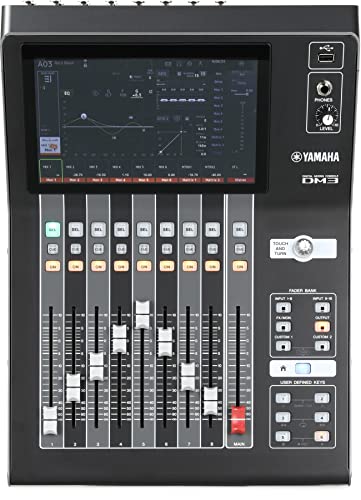
Yamaha DM3
Bands, small venues and project studios that want a compact 96 kHz digital console that doubles as an 18x18 USB recording interface.
Read the Yamaha DM3 review →Questions Buyers Ask
Behringer U-PHORIA UM2
See the current listing, price and included accessories.
About This Review
Mandrillis Team
The Mandrillis editorial team researches and compares audio and music gear using manufacturer documentation, verified specs and real buyer feedback, so you can make a confident purchase without wading through marketing claims.
Read our full research methodology.