Studio Gear Review
Behringer U-PHORIA UMC1820 Review: Channel Count on a Budget
The Behringer U-PHORIA UMC1820 pairs an 18x20 channel count with Midas-designed mic preamplifiers at a budget price tier. This listing confirms simultaneous analog, S/PDIF, ADAT and MIDI use alongside compatibility with Pro Tools, Ableton Live and Cubase, though phantom power, exact preamp count and build details are not published.
Our Verdict
Research Score 62/100The Behringer U-PHORIA UMC1820 is a budget-tier interface built for buyers who need far more than two channels at once, combining analog inputs with simultaneous S/PDIF, ADAT and MIDI connectivity under the Midas preamp name. The published listing confirms channel count, resolution and software compatibility with Pro Tools, Ableton Live and Cubase, which covers the basics for a multi-channel tracking setup. What the listing does not confirm, including phantom power, exact preamp count, chassis build and bundled software, leaves real gaps that buyers should research further before purchasing. For a studio that already knows its routing needs and wants channel count at a budget price, the published facts support a reasonably confident decision.
Editorial research score based on published specifications and documented features, not a customer rating or lab test.

Behringer
Behringer U-PHORIA UMC1820
Best for: Home and project studios that need many simultaneous analog and digital channels at a budget price.
Skip it if: Avoid it if you need confirmed phantom power, an exact preamp count or build details before buying, since this listing does not publish them.
Check Price on AmazonWe may earn a commission at no extra cost to you.
Listing verified: November 2026
Who Should Buy It
Buy it if
- Engineers tracking full bands or multiple microphones at once
- Studios expanding channel count with outboard ADAT preamps
- Musicians who want MIDI I/O built into the same interface
- Budget-focused buyers who prioritize channel count over documented build quality
Skip it if
- You need a confirmed phantom power specification before buying
- You only record one or two sources and do not need eighteen channels
- You require documented chassis build and control layout details
Key Specifications
| Type | USB audio and MIDI interface |
| Inputs | 18 combined inputs across analog, coaxial S/PDIF and optical ADAT, per the listing title |
| Outputs | 20 combined outputs across analog, coaxial S/PDIF and optical ADAT, per the listing title |
| Preamps | Midas-designed mic preamplifiers named in the listing; exact channel count not published |
| Resolution | 24-bit, 96kHz |
| Phantom power | Not published in listing |
| Connection | USB, with simultaneous analog, coaxial S/PDIF, optical ADAT and MIDI I/O |
| Monitoring | Not published in listing |
| Bundled software | Not published in listing |
| Included accessories | Not published in listing |
Overview
The Behringer U-PHORIA UMC1820 is a multi-channel USB audio and MIDI interface built for project studios that need more than a basic two-channel setup. The product listing describes it as an 18x20 interface, meaning it can move eighteen inputs and twenty outputs between a computer and connected gear at once. For a device sitting in the budget price tier, that channel count puts it in a different use case than typical entry-level interfaces aimed at solo singer-songwriters or podcasters.
Where many budget interfaces top out at two combined inputs, the UMC1820 is pitched at engineers tracking full bands, drum kits, or hybrid setups that mix analog gear with digital sources. The listing highlights Midas-designed mic preamplifiers, a detail that matters because Midas has a long reputation in professional mixing consoles, and Behringer has licensed Midas preamp designs across several of its interfaces. The published specification lists 24-bit, 96kHz resolution, which sits above basic CD quality and gives extra headroom for editing without obvious digital artifacts.
The feature bullets supplied with this particular listing are thin and partly repetitive. Three of the four published bullet points restate the same compatibility claim about working with Pro Tools, Ableton Live and Cubase, which leaves only one additional line describing simultaneous use of analog, coaxial S/PDIF, optical ADAT and MIDI signals. That repetition is worth flagging up front, because it means several practical details, such as exact preamp count, phantom power and bundled software, are not stated anywhere in the data for this listing.
Preamps and Sound Quality
The UMC1820 uses Midas-designed mic preamplifiers, which the listing calls out by name as a selling point for the interface's low-noise, high-headroom sound. Behringer's use of Midas preamp circuitry in its budget-tier line is well known in the audio gear world. Comparable budget interfaces from brands like Focusrite's Scarlett 2i2 or PreSonus AudioBox rely on their own in-house preamp designs rather than a licensed professional-console lineage. The listing does not give an exact count of preamp channels on this unit, but given the stated 18x20 I/O, multiple analog preamp channels are implied even though the figure itself is not published.
Resolution is published at 24-bit, 96kHz, a figure that applies across the analog to digital conversion path. That resolution is adequate for most home and project recording work and sits in line with what buyers expect from mid-tier multi-channel interfaces, even though this unit is listed at a budget price tier. Buyers report that Midas-branded preamps on Behringer interfaces tend to sound clean and reasonably quiet at moderate gain, though the listing itself offers no measured specification such as dynamic range or equivalent input noise, so those figures should be treated as unpublished.
Phantom power is a near-universal requirement for condenser microphones, and most multi-channel interfaces in this class include it. This particular listing, however, does not state whether phantom power is present on the UMC1820, so that detail has to be marked as not published here rather than assumed. Anyone planning to run condenser mics into this unit should confirm phantom power availability and voltage before buying, since the data available for this review cannot confirm it one way or the other.
Inputs, Outputs and Routing
The listing title describes the UMC1820 as an 18x20 interface, meaning eighteen combined inputs and twenty combined outputs across its full signal path. That total spans several connection types rather than one, since the fourth feature bullet specifically calls out simultaneous use of analog, coaxial S/PDIF, optical ADAT and MIDI signals. In practice that means the unit is designed to let analog preamp inputs, digital S/PDIF, ADAT lightpipe channels and MIDI data all pass through the interface to a connected computer or recording system at the same time.
This kind of layered I/O is common on interfaces aimed at expanding a studio beyond its built-in preamp count, since ADAT lightpipe is typically used to add extra mic preamps from an outboard preamp unit without consuming more computer ports. The listing does not break down exactly how many of the eighteen inputs are analog combo jacks versus digital channels arriving over S/PDIF or ADAT, so that split is not published and should not be assumed from general knowledge of similar Behringer interfaces.
Output routing is described only at the summary level as well, with twenty outputs spread across the same mix of analog, digital and MIDI paths. For engineers who need discrete monitor sends, headphone feeds or multiple stereo mixes for musicians during a session, the published listing does not specify how outputs are organized, so buyers who need a particular routing scheme should check Behringer's own product documentation rather than relying on this summary.
Features, Monitoring and Software
Software compatibility is the most repeated claim in this listing, appearing in three near-identical feature bullets that each confirm the UMC1820 works with popular recording software including Pro Tools, Ableton Live and Steinberg Cubase. That repetition suggests the original listing data was not carefully edited, but the underlying claim, that the interface is recognized as a standard USB audio device by major digital audio workstations, is consistent across all three lines.
Beyond software compatibility, the listing's only other distinct feature claim is the ability to use analog, coaxial S/PDIF, optical ADAT and MIDI signals simultaneously, which functions as both a connectivity feature and a workflow feature. It allows a single session to combine microphones and instruments plugged directly into the unit with additional channels streamed in over ADAT, plus MIDI controller data, without switching cables between tasks. The listing does not mention a direct monitoring control, onboard DSP effects or a dedicated control panel application, so those capabilities are not published for this specific unit.
- Compatible with Pro Tools, Ableton Live and Steinberg Cubase per the listing
- Simultaneous analog, coaxial S/PDIF, optical ADAT and MIDI signal use
- Midas-designed mic preamplifier circuitry
- Bundled software, monitoring controls and included accessories not stated in this listing
Build, Design and Controls
The listing supplied for this unit does not include any description of chassis material, weight, control layout or physical dimensions. That is a meaningful gap for a multi-channel interface, since engineers often care about rack mounting options, metal versus plastic construction, and how many of the eighteen inputs are accessible from the front panel versus the rear. None of that information appears in the feature bullets or title for this listing, so it is marked not published rather than described from memory of similar Behringer hardware.
Behringer's broader U-PHORIA and XENYX product lines are generally known in the market for metal chassis construction, and the brand frequently promotes rugged build quality in its wider marketing. This particular listing, however, does not repeat any of that language, so no claim about the UMC1820's specific build quality can be made from the data given. Buyers who care about physical durability should look for a listing or manual that documents chassis material directly rather than assuming it based on sibling products.
Control layout, including the number and type of gain knobs, metering and any dedicated monitor mix control, is also absent from this listing. For an 18x20 interface, control layout matters a great deal in daily use, since a unit with many channels but few physical controls may rely on software control panels for most adjustments. Because that detail is not published here, anyone choosing between this and a competing multi-channel interface should treat physical control layout as an open question pending further research.
Connectivity, Drivers and Latency
Connectivity centers on USB, which the listing title identifies as the computer connection method for this interface, paired with the ability to carry coaxial S/PDIF, optical ADAT and MIDI signals at the same time. That combination positions the UMC1820 as a hub for a small studio rather than a single-purpose two-channel box, since it can accept expansion from outboard ADAT preamps while still passing MIDI controller data to a digital audio workstation.
Driver support for both macOS and Windows is implied by the interface's claimed compatibility with Pro Tools, Ableton Live and Cubase, though the specific driver type, whether class-compliant or a dedicated Behringer driver, is not stated anywhere in this listing. Latency performance is also not published as a numeric figure in the supplied data, so buyers cannot compare round-trip latency against named reference interfaces like the MOTU M2 or Universal Audio Volt 2 using this listing alone.
Because USB bandwidth has to carry eighteen inputs and twenty outputs worth of audio simultaneously with ADAT and S/PDIF streams layered in, real-world driver stability and buffer size settings matter more here than on a simple two-channel interface. The listing gives no guidance on recommended buffer settings or USB version beyond stating USB connectivity generally, so that remains an unpublished detail that buyers may need to confirm through Behringer's own documentation before committing to a tracking-heavy workflow.
Setup and Daily Use
Setting up a multi-channel interface like the UMC1820 typically involves installing a driver, connecting the USB cable, then configuring any ADAT or S/PDIF sources that feed additional channels into the system. The listing does not walk through this process or mention a companion control panel application, so day to day workflow details, such as how channel routing is adjusted or whether settings are saved per session, are not described in the data available here.
Buyers report that Behringer's USB interfaces in this family are generally straightforward to get running on a computer with standard driver installation. That said, this specific listing offers no setup guide, quick start information or software bundle details, so new users should expect to rely on Behringer's own downloads and documentation rather than anything included in the product page text used for this review.
For a home or small project studio adding outboard preamps over ADAT, daily use would involve keeping both the interface and the connected ADAT source powered and synced, since lightpipe connections depend on a shared clock source between devices. The listing does not mention a clock source selector or sample rate switch, so users who plan to combine this interface with ADAT expanders should budget time to study the manual for correct clocking rather than assuming plug and play simplicity.
Who Should Buy It
The UMC1820 is aimed at home and project studio owners who need more simultaneous inputs than a typical two-channel interface provides, particularly anyone recording a full band, a drum kit with multiple microphones, or a mixed analog and digital rig. The listing's emphasis on simultaneous analog, S/PDIF, ADAT and MIDI use points toward a buyer who already owns, or plans to add, outboard preamps or digital sources rather than someone starting from a single microphone and a laptop.
It also suits budget-conscious buyers who want channel count over boutique preamp branding, since the listed price tier is budget despite the relatively high 18x20 channel count. Musicians running MIDI keyboards or controllers alongside microphones and line inputs may appreciate having MIDI I/O built into the same box rather than adding a separate MIDI interface, based on what the listing states about simultaneous signal handling.
Buyers who want a fully documented physical build, a confirmed phantom power specification, or a known software bundle before purchasing should look for additional documentation beyond this listing, since those specific details are not published here. Anyone who needs certainty on those points before buying should treat this listing as a starting point for research rather than a complete specification sheet.
Alternatives Worth Considering
Buyers comparing this interface against smaller two-channel options such as the Focusrite Scarlett 2i2, PreSonus AudioBox or Universal Audio Volt 2 should recognize that those models serve a different use case, built around one or two microphone inputs rather than a multi-channel 18x20 layout. Those smaller interfaces generally suit solo musicians, podcasters and voice-over work, while the UMC1820's channel count targets a busier studio or a band tracking session.
Within Behringer's own lineup, the UMC202HD is a commonly referenced two-channel sibling that shares the Midas preamp branding at a smaller scale, which makes it a useful comparison point for buyers who like the preamp pedigree described in this listing but do not need eighteen inputs. The MOTU M2 and Yamaha MG10XU are also frequently mentioned alongside Behringer interfaces in buyer research, though exact specifications for those models sit outside what this listing publishes and should be checked separately.
For buyers who specifically want ADAT expansion without the full eighteen-channel count of the UMC1820, smaller interfaces with a single ADAT port paired with two or four analog preamps can offer a middle ground. The decision ultimately comes down to how many simultaneous channels a given project actually needs, since paying for eighteen inputs when only a handful will ever be used is rarely the most efficient budget choice.
Verdict
The Behringer U-PHORIA UMC1820 offers a large channel count and a well-known preamp pedigree at a budget price tier, based on what this listing publishes. The combination of analog, coaxial S/PDIF, optical ADAT and MIDI I/O operating simultaneously is a genuine differentiator for buyers who need to expand beyond a simple two-channel setup without immediately moving into premium interface pricing.
At the same time, this particular listing is thin on specifics beyond channel count, resolution and the Midas preamp name. Phantom power, exact preamp channel count, bundled software, chassis build and control layout are all left unpublished, which means buyers should treat this listing as a starting point and confirm the remaining details through Behringer's own product documentation before making a final decision.
For a buyer who already understands their routing needs and wants a multi-channel interface at a budget price, the published facts here support a reasonably confident purchase. For a buyer who needs every specification locked down in advance, particularly phantom power and physical build quality, the gaps in this listing mean additional research is necessary before buying.
Strengths and Limitations
Strengths
- Eighteen inputs and twenty outputs for multi-channel tracking
- Midas-designed mic preamplifier circuitry
- Simultaneous analog, S/PDIF, ADAT and MIDI signal handling
- Confirmed compatibility with Pro Tools, Ableton Live and Cubase
- Budget price tier for this channel count
Limitations
- Exact preamp channel count not published in this listing
- Phantom power availability not stated
- No published details on chassis build or control layout
- Bundled software and included accessories not confirmed
- Feature bullets in this listing are repetitive and thin on detail
How We Scored It
Scores reflect published specifications, documented features and value against the alternatives below. They are editorial research scores, not laboratory measurements.
Alternatives to Consider

Pioneer DJ XDJ-RX3
DJs who want club-standard standalone playback from USB with a large touchscreen and a familiar two-channel layout.
Read the Pioneer DJ XDJ-RX3 review →
Yamaha DM3-D 22
Small venues, houses of worship and production companies that want a compact 96 kHz digital console with Dante networking for stage boxes and multitrack recording.
Read the Yamaha DM3-D 22 review →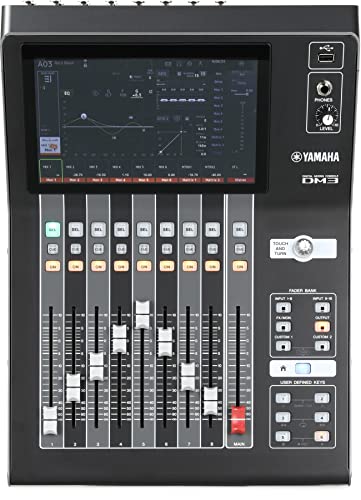
Yamaha DM3
Bands, small venues and project studios that want a compact 96 kHz digital console that doubles as an 18x18 USB recording interface.
Read the Yamaha DM3 review →Questions Buyers Ask
Behringer U-PHORIA UMC1820
See the current listing, price and included accessories.
About This Review
Mandrillis Team
The Mandrillis editorial team researches and compares audio and music gear using manufacturer documentation, verified specs and real buyer feedback, so you can make a confident purchase without wading through marketing claims.
Read our full research methodology.