Studio Gear Review
Behringer U-PHORIA UMC404HD 4x4 Review: Four Channels, Few Published Details
The Behringer U-PHORIA UMC404HD 4x4 packs four Midas mic preamps and MIDI I/O into a budget four-channel USB interface. This listing confirms resolution and channel count clearly, but phantom power, build quality and any software bundle are left unpublished and unconfirmed.
Our Verdict
Research Score 55/100The Behringer U-PHORIA UMC404HD 4x4 is a compact, four-channel USB interface with confirmed Midas preamps, built-in MIDI I/O and a notably high published resolution of 24-bit, 192kHz for its budget price tier. Those confirmed facts cover the core recording path reasonably well despite an unusually brief listing. What this listing does not confirm, including phantom power, build quality, control layout, driver type and any software bundle, leaves real gaps buyers should research directly with Behringer. For someone who wants four Midas preamp channels with MIDI I/O at a budget price and does not need every supporting detail confirmed up front, the published facts support a reasonable purchase.
Editorial research score based on published specifications and documented features, not a customer rating or lab test.
Behringer
Behringer U-PHORIA UMC404HD 4x4
Best for: Buyers who need four simultaneous channels with built-in MIDI I/O at a budget price.
Skip it if: Avoid it if you need confirmed phantom power, build quality or software bundle details before buying, since this listing does not state them.
Check Price on AmazonWe may earn a commission at no extra cost to you.
Listing verified: November 2026
Who Should Buy It
Buy it if
- Small bands or podcast hosts who need four inputs at once
- Musicians who want MIDI I/O built into the interface
- Budget buyers who want more than two channels
- Anyone comfortable researching build and driver details separately
Skip it if
- You need confirmed phantom power before buying
- You only record one or two sources
- You require documented build quality and control layout
Key Specifications
| Type | USB 2.0 audio interface with MIDI I/O |
| Inputs | 4 analog inputs |
| Outputs | 4 analog outputs |
| Preamps | 4 Midas mic preamps, per the listing title |
| Resolution | 24-bit, 192kHz |
| Phantom power | Not published in listing |
| Connection | USB 2.0 with MIDI I/O, for macOS and Windows |
| Monitoring | Not published in listing |
| Bundled software | Not published in listing |
| Included accessories | Not published in listing |
Overview
The Behringer U-PHORIA UMC404HD 4x4 is a compact USB audio interface built around a straightforward four-in, four-out layout. The product listing describes it plainly as a USB 2.0 audio interface with four preamps and MIDI input and output, built for use with macOS and Windows computers. At a budget price tier, it is positioned as an entry point into multi-channel recording rather than a flagship studio centerpiece.
Unlike the fuller listings written for some sibling interfaces, the feature bullets attached to this particular product page are unusually short, just three brief lines covering the USB connection and preamp count, the resolution figure, and the four-in, four-out channel configuration. That brevity means this review has comparatively little published detail to draw on beyond those three points and the listing title itself.
What is clear from the title and bullets is that this unit targets buyers who need more than a typical two-channel starter interface but do not require the larger eighteen-channel count found on bigger Behringer models. Four simultaneous inputs is enough for a small band rehearsal recording, a modest podcast setup with multiple hosts, or a solo musician who wants to track vocals, guitar and a line input together.
Preamps and Sound Quality
The listing title states that the UMC404HD 4x4 includes four Midas mic preamps, which is a specific and useful figure since many thin listings leave preamp count out entirely. Midas is a long-established name in professional mixing console preamp design, and Behringer licenses that lineage across its U-PHORIA range, a detail the brand uses as a point of differentiation from interfaces that rely purely on in-house preamp circuits.
Because this listing confirms four preamps rather than leaving the figure unpublished, buyers can be reasonably confident that each of the four inputs carries its own dedicated mic preamp rather than a shared or line-only path. Buyers report that Midas-branded preamps on Behringer's budget interfaces tend to deliver a clean, low-noise signal at moderate gain settings, though this listing supplies no measured specification such as equivalent input noise or maximum gain to confirm that reputation numerically.
Resolution is published at 24-bit, 192kHz, a notably high sampling rate for an interface in the budget price tier. That figure outpaces the 24-bit, 96kHz resolution seen on some competing budget units and matches what several well-known mid-range interfaces advertise, though exact dynamic range and noise floor numbers are not part of this listing and should not be assumed.
Inputs, Outputs and Routing
This listing is explicit about channel count, describing the UMC404HD 4x4 as a four-in, four-out device. That means four analog inputs, each with its own Midas preamp per the title, feeding four analog outputs for monitoring or routing to external gear. This matches what buyers would expect from a compact interface positioned below Behringer's larger ADAT-equipped models.
MIDI input and output is also called out directly in the feature bullets, adding a category of connectivity beyond the four audio channels. That makes the unit useful for musicians who want to connect a MIDI keyboard or controller without a separate MIDI interface, running both audio tracking and MIDI data through the same USB connection to a computer.
Beyond the channel count and MIDI ports, the listing does not describe whether the four inputs are combo XLR and quarter-inch jacks, whether any input has an instrument-level switch for guitar or bass, or how the four outputs are split between main monitor outs and other uses. Those routing details are not published in this particular listing, so buyers who need a specific jack configuration should confirm it through Behringer's own product documentation.
Features, Monitoring and Software
The feature set described in this listing is limited to three short lines, which together confirm USB 2.0 connectivity, four preamps, MIDI I/O, macOS and Windows compatibility, and 24-bit, 192kHz resolution. There is no mention of direct monitoring, onboard DSP, a dedicated mixing control panel, or any additional software feature in the text supplied for this listing.
That brevity stands in contrast to other interface listings that describe bundled recording software, latency figures, or build quality claims in detail. For the UMC404HD 4x4 specifically, none of those extra claims are present, so this review cannot state whether a software bundle, direct monitoring switch, or companion application ships with the unit.
- USB 2.0 audio interface with four Midas preamps per the listing
- MIDI input and output built in
- 24-bit, 192kHz resolution
- Compatible with macOS and Windows
- Monitoring controls, bundled software and accessories not stated in this listing
Build, Design and Controls
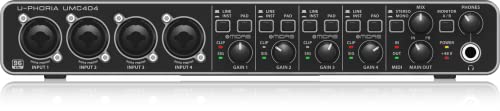
No chassis material, weight, dimension or control layout information appears anywhere in this listing's title or feature bullets. For a four-channel interface, buyers typically want to know how gain is adjusted per channel, whether there are individual input level knobs, and whether the unit is built from metal or a lighter composite housing, none of which this listing addresses.
Behringer's wider U-PHORIA range is often associated with metal chassis construction in general brand messaging, but this specific listing does not repeat any such claim for the UMC404HD 4x4, so no build quality statement can be made from the data at hand. Buyers who prioritize physical durability should treat that as an open question rather than something confirmed by this listing.
Control layout for a four-channel interface usually includes four gain knobs, a master output level control, and sometimes a headphone volume knob, but since none of that is described in this particular listing, it would be inaccurate to describe the control panel in detail here. Anyone deciding between this and a competing four-channel interface should look at manufacturer photos or the manual rather than relying on this listing's text alone.
Connectivity, Drivers and Latency
Connectivity is centered on USB 2.0, which the listing states directly, paired with MIDI input and output for connecting controllers or keyboards. The listing confirms compatibility with both macOS and Windows operating systems, which covers the two platforms most home and project studio users are likely to run.
Driver type, whether the interface uses a class-compliant USB audio driver or a dedicated Behringer driver package, is not specified in this listing. Latency performance is likewise not given as a numeric figure, so buyers cannot use this listing alone to compare round-trip latency against named reference interfaces such as the Focusrite Scarlett 2i2 or the MOTU M2.
For a four-channel interface running at 24-bit, 192kHz, USB 2.0 bandwidth should be more than sufficient for all four channels simultaneously, since that sample rate and channel count sit well within typical USB audio throughput. The listing does not mention buffer size recommendations or minimum computer requirements beyond naming the two supported operating systems, so those practical details remain unpublished.
Setup and Daily Use
Day to day use of a four-channel interface like this one would typically start with installing a driver, connecting the USB cable, and setting input gain on each of the four channels before recording. The listing does not walk through this process, nor does it mention a quick start guide or printed manual, so new users should expect to rely on Behringer's own downloads rather than anything described in the product page text.
Buyers report that Behringer's USB interfaces in this price range are generally easy to get running without extensive troubleshooting, though that general reputation applies across the brand rather than being a claim specific to this listing. Because this listing does not describe a control panel application or monitoring mix feature, users adjusting levels between a recorded signal and computer playback may need to rely on their digital audio workstation's own mixer rather than hardware-side direct monitoring.
With MIDI I/O built in, daily use could also involve connecting a keyboard controller alongside the four audio inputs, letting a single USB connection carry both audio tracking and MIDI performance data to a computer at the same time. The listing does not describe MIDI driver requirements separately from the audio driver, so that detail is treated as not published rather than assumed to work automatically.
Who Should Buy It
The UMC404HD 4x4 suits buyers who need four simultaneous channels, such as a small band tracking session, a multi-host podcast, or a musician who wants to record vocals and two or three instruments at once. Confirmed four Midas preamps and a published 24-bit, 192kHz resolution make the core recording path reasonably well documented even though the surrounding feature list is short.
It also fits buyers who specifically want MIDI I/O bundled into the interface rather than buying a separate MIDI adapter, since that feature is confirmed directly in the listing. Budget-conscious buyers who want more than two channels but do not need Behringer's larger ADAT-equipped models would find this unit's channel count and price tier line up well with that need.
Buyers who want detailed build information, confirmed phantom power, a documented software bundle, or specific input jack types before purchasing should look for that information elsewhere, since this particular listing does not include it. Anyone who needs those answers locked down before committing to a purchase should treat this listing as a starting point rather than a full specification sheet.
Alternatives Worth Considering
Buyers comparing this four-channel interface against two-channel options like the Focusrite Scarlett 2i2, PreSonus AudioBox or Universal Audio Volt 2 should keep in mind that those smaller interfaces are built for one or two sources, not four simultaneous inputs. The real comparison comes down to how many channels a given project actually needs right now, rather than preamp branding alone.
Within Behringer's own catalog, other U-PHORIA models with two channels instead of four share the same Midas preamp branding at a smaller scale and a lower channel count, which may suit buyers who do not need four inputs. The Yamaha MG10XU and similar small mixers with built-in USB audio are also commonly mentioned alongside Behringer interfaces, though their exact specifications sit outside what this particular listing publishes and should be verified separately.
For buyers who think they may eventually need more than four channels, or who want ADAT expansion for adding outboard preamps later, a larger interface in the same family would be a better long-term fit than the UMC404HD 4x4. This unit's listing does not mention any digital expansion beyond USB and MIDI, so ADAT growth is not an option on this particular model.
Verdict
The Behringer U-PHORIA UMC404HD 4x4 is a compact, four-channel USB audio interface with confirmed Midas preamps, MIDI I/O, and a notably high published resolution of 24-bit, 192kHz for its budget price tier. Those confirmed facts cover the core recording path reasonably well despite the listing's brevity.
However, this is one of the thinner listings reviewed in this category, with only three short feature bullets and no mention of phantom power, build quality, control layout, software bundle, or driver type. Buyers should treat those gaps as open questions to research directly with Behringer rather than details confirmed by this product page.
For someone who specifically wants four Midas preamp channels with MIDI I/O at a budget price and does not need every supporting detail confirmed in advance, the published facts support a reasonable purchase. For a buyer who wants build quality, phantom power and software bundle details nailed down before buying, more research beyond this listing is needed first.
Strengths and Limitations
Strengths
- Four Midas mic preamps confirmed in the listing
- Built-in MIDI input and output
- High published resolution of 24-bit, 192kHz
- Confirmed macOS and Windows compatibility
- Budget price tier for a four-channel interface
Limitations
- Phantom power not stated in this listing
- No published build quality or control layout details
- No bundled software or accessories confirmed
- Feature bullets in this listing are unusually brief
- Driver type and latency figures not published
How We Scored It
Scores reflect published specifications, documented features and value against the alternatives below. They are editorial research scores, not laboratory measurements.
Alternatives to Consider

Pioneer DJ XDJ-RX3
DJs who want club-standard standalone playback from USB with a large touchscreen and a familiar two-channel layout.
Read the Pioneer DJ XDJ-RX3 review →
Yamaha DM3-D 22
Small venues, houses of worship and production companies that want a compact 96 kHz digital console with Dante networking for stage boxes and multitrack recording.
Read the Yamaha DM3-D 22 review →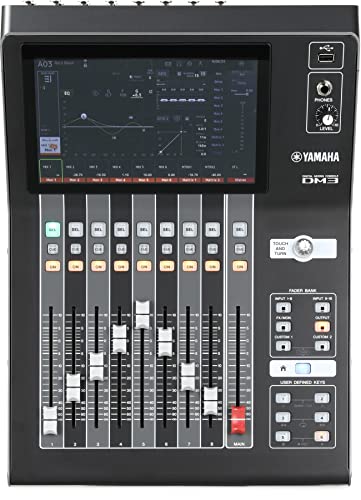
Yamaha DM3
Bands, small venues and project studios that want a compact 96 kHz digital console that doubles as an 18x18 USB recording interface.
Read the Yamaha DM3 review →Questions Buyers Ask
Behringer U-PHORIA UMC404HD 4x4
See the current listing, price and included accessories.
About This Review
Mandrillis Team
The Mandrillis editorial team researches and compares audio and music gear using manufacturer documentation, verified specs and real buyer feedback, so you can make a confident purchase without wading through marketing claims.
Read our full research methodology.