Studio Gear Review
Electro-Voice RE320 Review: Dual-Voicing Dynamic Mic
The Electro-Voice RE320 is a professional-grade dynamic microphone with Variable-D positional stability, integrated humbucking and pop filtering, and a dual-voicing switch. This research review covers what the listing confirms and the specs it leaves unstated.
Our Verdict
Research Score 77/100The Electro-Voice RE320 brings genuine engineering detail to its listing, a Variable-D pattern control minimizing positional and off-axis tonal shifts, an integrated humbucking coil and integral pop filters for virtually noiseless performance, and a unique dual-voicing switch selecting from two response curves. That combination gives engineers real flexibility and stability without needing outboard processing. The listing does not state a specific polar pattern name, numeric frequency response, or sensitivity figures, so buyers who need those details in writing should check Electro-Voice's own documentation. At a lower mid-range price tier, this is a well featured, versatile dynamic microphone for vocal and instrument recording.
Editorial research score based on published specifications and documented features, not a customer rating or lab test.

Electro-Voice
Electro-Voice RE320
Best for: Engineers who want a professional-grade dynamic microphone with Variable-D positional stability and a dual-voicing switch for two distinct tonal curves, at a lower mid-range price tier.
Skip it if: You need a confirmed polar pattern name or numeric frequency response before purchase.
Check Price on AmazonWe may earn a commission at no extra cost to you.
Listing verified: November 2026
Who Should Buy It
Buy it if
- Engineers who want minimal tonal shift as a vocalist or instrumentalist moves around the microphone
- Buyers who want a dual-voicing switch for quick tonal adjustment between two curves
- Studios that want integrated pop filtering and humbucking noise rejection built in
- Buyers recording a variety of vocal and instrument sources with one versatile dynamic mic
Skip it if
- You need a confirmed polar pattern name before purchase
- You need a confirmed numeric frequency response or sensitivity figure before buying
- You need confirmed included accessories such as a mount before purchase
Key Specifications
| Type | Professional-grade large diaphragm dynamic microphone designed for recording and sound reinforcement |
| Polar pattern | Not explicitly named in listing; a Variable-D pattern control is confirmed to minimize positional and off-axis tonal shifts |
| Frequency response | Not published in listing as a specific numeric range |
| Connection | Not published in listing as a specific connector type |
| Phantom power | Not required; this is a dynamic microphone design |
| Max SPL or sensitivity | Not published in listing as a specific numeric figure; the listing describes extremely low noise and the best possible tonal and transient response |
| Controls | A dual-voicing switch that selects from two response curves |
| Mount and stand | Integral pop filters are built into the microphone |
| Weight | Not published in listing |
| Included accessories | Not published in listing |
Overview
The Electro-Voice RE320 is described in its listing as a professional-grade dynamic microphone designed specifically for recording and sound reinforcement, positioning it as a serious studio and stage tool rather than a basic entry level dynamic microphone.
What distinguishes this listing is the level of specific engineering detail provided, a Variable-D pattern control, an integrated humbucking coil, integral pop filters, and a dual-voicing switch, each named directly rather than described only in vague marketing terms.
Variable-D technology, referenced by name in the listing title as well as the feature bullets, is a design approach Electro-Voice has used across several of its microphones specifically to reduce the tonal coloration that normally occurs as a speaker or instrument moves closer to or farther from a microphone.
The dual-voicing switch adds a further layer of flexibility uncommon on many dynamic microphones, letting an engineer select between two distinct response curves rather than being locked into a single fixed tonal character.
Sound Quality
No numeric frequency response range, sensitivity figure or self-noise specification is published in this listing, though the feature bullets make a specific qualitative claim about extremely low noise and the best possible tonal and transient response for applications that demand it.
The integrated humbucking coil is specifically credited with providing virtually noiseless performance, a meaningful detail since humbucking coil designs are specifically engineered to cancel out electromagnetic interference that can otherwise introduce hum into a dynamic microphone's signal.
The dual-voicing switch is described as selecting between two response curves, giving engineers a genuine tonal choice built into the microphone itself, though the listing does not detail the exact frequency characteristics each curve represents.
Buyers who need a specific, confirmed frequency response curve or sensitivity rating to compare directly against another microphone's published specification should check Electro-Voice's own documentation, since this listing's feature bullets describe performance qualitatively rather than with full numeric detail.
Pickup Pattern and Noise Handling
The listing does not explicitly name a specific polar pattern such as cardioid, though the confirmed Variable-D pattern control is specifically credited with minimizing positional and off-axis tonal shifts, addressing a closely related concern, consistency of tone as a source moves relative to the microphone.
Variable-D technology works by using multiple internal ports along the microphone body to manage how sound reaches the capsule from different angles and distances, which is a different, complementary concern from the basic directional pattern itself.
The integral pop filters and humbucking coil further contribute to noise handling, addressing plosive consonant noise and electromagnetic interference respectively, rather than acoustic room noise specifically.
Build Quality
The listing frames this microphone as professional-grade, though it does not state specific chassis dimensions, weight or body material beyond that general positioning.
Integral pop filters built directly into the microphone body suggest a construction approach prioritizing practical, built-in solutions over requiring separate external accessories for common recording challenges.
Buyers who want confirmed chassis weight, body material or finish details before purchase should check Electro-Voice's own product page or specification sheet, since none of that information is present in the available listing data for this particular model.
- Professional-grade dynamic microphone
- Variable-D pattern control
- Integrated humbucking coil
- Integral pop filters
- Dual-voicing switch, two response curves
Connectivity and Setup
The listing does not state a specific connector type for this microphone, though dynamic microphones in this general category commonly use a standard balanced connector, a detail buyers should still confirm directly rather than assume.
As a dynamic microphone, this model does not require phantom power, simplifying setup compared with a condenser microphone and allowing it to be used with a wider range of basic mixers and interfaces that may lack phantom power on every channel.
Setup involves connecting via a standard microphone cable and selecting the appropriate dual-voicing switch setting for the specific source being recorded, giving an engineer a quick way to tailor tone without additional outboard EQ.
Because no phantom power or special driver is needed, this microphone should work immediately with virtually any mixer or interface that accepts a standard XLR input, which simplifies integration into an existing setup compared with a condenser requiring confirmed phantom power support.
Features, Controls and Extras
The dual-voicing switch is the standout control feature here, letting an engineer select between two distinct response curves depending on the source or desired tonal character, which is a genuinely uncommon feature on dynamic microphones at this price tier.
Variable-D pattern control functions as a built-in feature addressing positional consistency, meaning a vocalist or instrumentalist who moves slightly during a performance should experience less dramatic tonal shift than with a conventional dynamic microphone.
The integrated humbucking coil and integral pop filters round out a feature set focused on practical noise reduction built directly into the microphone, reducing the need for additional outboard noise management tools and simplifying the signal chain for engineers who would otherwise add those fixes separately.
Use Cases: Vocals, Streaming, Podcasting and Instruments
The listing specifically states this microphone is great for capturing a variety of vocal and instrument sources, delivering terrific detail, dynamic response and pleasing natural tone, positioning it as a genuinely versatile choice rather than one narrowly specialized for a single application.
The Variable-D positional stability is particularly valuable for live vocal performance, where a singer's distance from the microphone often varies during a show, and for instrument recording where consistent mic placement cannot always be guaranteed.
Podcasters and streamers considering this microphone will benefit from the dynamic design's natural resistance to ambient room noise, combined with the dual-voicing switch's flexibility to adjust tone for a specific voice without separate EQ processing.
Who Should Buy It
This microphone suits engineers and performers who want positional tonal stability and a built-in tonal choice through the dual-voicing switch, rather than buyers who need a single simple, no-frills dynamic microphone.
It is a weaker fit for buyers who need a confirmed polar pattern name or numeric frequency response before purchase, given how much of this listing's detail centers on named technologies rather than numeric specifications.
Live sound engineers managing vocalists who move around during a performance will find the Variable-D control a genuinely practical solution to a common live sound challenge.
Studio engineers who want flexibility between two tonal characters on the same microphone, rather than needing two separate microphones, will find the dual-voicing switch a real time and cost saver.
Broadcast and voiceover professionals who need a dependable, low noise dynamic microphone for daily use will also find the integrated humbucking coil and pop filtering reduce the number of separate accessories they need to manage during a typical session.
Alternatives Worth Considering
Buyers who need a confirmed polar pattern name published directly in the listing should look at a different dynamic microphone whose listing states that specification clearly.
Buyers who do not need the dual-voicing switch or Variable-D technology, and want the simplest possible dynamic microphone, might consider a more basic model without those specific features.
Buyers who need a confirmed numeric frequency response specification should compare this model against a competing dynamic microphone with fuller published data.
Buyers who want a condenser microphone's typically higher sensitivity for quieter sources should look elsewhere, since this is a dynamic design suited to different use cases.
Verdict
The Electro-Voice RE320 stands out through genuinely named, specific engineering features, Variable-D positional stability, an integrated humbucking coil, integral pop filters, and a dual-voicing switch, rather than vague marketing claims about quality.
The unpublished polar pattern name and numeric frequency response are the main gaps buyers should be aware of, and those who need those details confirmed should check Electro-Voice's own documentation directly.
For engineers and performers who want positional stability and built-in tonal flexibility, this microphone offers real practical value at its lower mid-range price tier.
Buyers who need every specification confirmed in writing, or who want the simplest possible dynamic microphone, should weigh this listing's gaps carefully before committing to a purchase.
Overall, the depth of named technology here, Variable-D, humbucking and dual-voicing together, gives this microphone a stronger practical story than many dynamic microphones at a similar price that rely purely on a basic cardioid pattern and a single fixed tonal character.
Strengths and Limitations
Strengths
- Variable-D pattern control minimizes positional and off-axis tonal shifts
- Integrated humbucking coil for virtually noiseless performance
- Integral pop filters built directly into the microphone
- Dual-voicing switch selects from two response curves
- Suited to a variety of vocal and instrument sources
Limitations
- No stated polar pattern name beyond the Variable-D control description
- No stated numeric frequency response, sensitivity or maximum SPL figures
- No stated included accessories or mount
- No stated microphone weight
How We Scored It
Scores reflect published specifications, documented features and value against the alternatives below. They are editorial research scores, not laboratory measurements.
Alternatives to Consider

Beyerdynamic M 160
Recording guitar amplifiers, drum overheads, strings and brass with a smooth, directional ribbon character.
Read the Beyerdynamic M 160 review →
Shure BLX288/SM58 Dual Vocal
Bands, worship teams and event companies that need two dependable wireless SM58 vocal channels in one simple package.
Read the Shure BLX288/SM58 Dual Vocal review →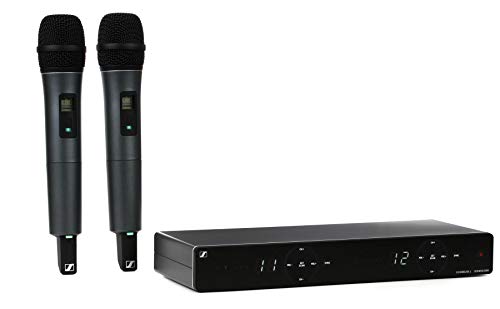
Sennheiser XSW 1-835
Worship teams, schools and gigging duos who want two wireless e835 vocal channels with the simplest possible setup.
Read the Sennheiser XSW 1-835 review →Questions Buyers Ask
Electro-Voice RE320
See the current listing, price and included accessories.
About This Review
Mandrillis Team
The Mandrillis editorial team researches and compares audio and music gear using manufacturer documentation, verified specs and real buyer feedback, so you can make a confident purchase without wading through marketing claims.
Read our full research methodology.