Studio Gear Review
Lewitt RAY Review: Autofocus Style Condenser Mic
The Lewitt RAY is a 1 inch true condenser microphone with AURA Technology, described as autofocus for your voice, and a 100% analog signal path. This research review covers what the listing confirms and the frequency response it leaves unstated.
Our Verdict
Research Score 74/100The Lewitt RAY builds its identity around AURA Technology, which the listing describes as working like autofocus for your voice, an automatic adaptive feature layered onto a 1 inch true condenser capsule with a 100% analog signal path and a confirmed cardioid pattern. Broad compatibility with any 48V phantom power interface is a genuine practical strength, removing compatibility guesswork for buyers with an existing audio interface. The listing does not state frequency response, sensitivity or included accessories. At a lower mid-range price tier, this is an interesting choice for buyers who want automatic tonal consistency over manual control, though those wanting a fully documented numeric spec sheet should look elsewhere.
Editorial research score based on published specifications and documented features, not a customer rating or lab test.

Lewitt
Lewitt RAY
Best for: Buyers who want a 1 inch true condenser with an automatic, autofocus-like vocal consistency feature and broad 48V phantom power compatibility, at a lower mid-range price tier.
Skip it if: You need confirmed frequency response or sensitivity figures before purchase, or you prefer manual control over automatic tonal adjustment.
Check Price on AmazonWe may earn a commission at no extra cost to you.
Listing verified: November 2026
Who Should Buy It
Buy it if
- Buyers who want a condenser microphone that automatically adapts to keep vocal sound consistent
- Home studio owners who want broad compatibility with any 48V phantom power interface
- Buyers who value a 100% analog signal path over added digital processing
- Content creators who want reduced background noise through a confirmed cardioid pattern
Skip it if
- You prefer manual tonal control rather than an automatic adaptive feature
- You need confirmed frequency response and sensitivity figures before purchase
- You need confirmed included accessories such as a shock mount before buying
Key Specifications
| Type | 1 inch true condenser studio microphone built around what the listing calls AURA Technology |
| Polar pattern | Cardioid |
| Frequency response | Not published in listing |
| Connection | Not published in listing as a specific connector type; compatibility is confirmed with any audio interface providing 48V phantom power |
| Phantom power | 48V |
| Max SPL or sensitivity | Not published in listing |
| Controls | Not published in listing beyond the automatic AURA Technology behavior |
| Mount and stand | Not published in listing |
| Weight | Not published in listing |
| Included accessories | Not published in listing |
Overview
The Lewitt RAY is built around a feature the listing calls AURA Technology, described directly as working like autofocus for your voice, suggesting an automatic adaptive system that adjusts to keep vocal sound consistent without the user manually tweaking settings for each take or position.
Beyond that headline feature, the listing confirms a 1 inch true condenser studio capsule and a 100% analog signal path, positioning this microphone as combining modern adaptive technology with a traditional, unprocessed analog core rather than relying on digital signal processing throughout.
The listing also specifically confirms broad compatibility, stating this microphone works with any audio interface providing 48V phantom power, which removes a common source of buyer uncertainty found in many other listings in this research series that leave phantom power requirements unstated.
Lewitt has built a reputation for technically sophisticated microphone designs, and AURA Technology fits that broader pattern, giving this model a distinctive selling point beyond simply being another 1 inch condenser capsule in a crowded market.
Sound Quality
No frequency response range, sensitivity figure or self-noise specification is published in this listing, which is a real gap for buyers trying to judge tonal character numerically before committing to a purchase.
AURA Technology is the central sound quality claim here, described using an autofocus analogy, suggesting the microphone automatically adjusts some aspect of its response, potentially related to proximity or positioning, to maintain consistent vocal capture rather than requiring the user to reposition precisely every time.
The listing specifically notes a 100% analog signal path, which is worth distinguishing from AURA Technology itself, since the automatic adaptation described could plausibly be achieved through analog circuit design rather than digital processing, though the listing does not explain the exact underlying mechanism.
Buyers who need a specific, confirmed frequency response curve or sensitivity rating to compare directly against another microphone's published specification should check Lewitt's own documentation, since this listing's feature bullets emphasize the AURA concept rather than numeric detail.
Pickup Pattern and Noise Handling
The listing confirms a cardioid polar pattern, specifically stating that it rejects background noise, which is the standard behavior expected of a cardioid design rejecting sound from directly behind the microphone.
Combined with AURA Technology's automatic adaptation, this cardioid pattern may work alongside that feature to maintain consistent noise rejection even as a speaker moves slightly, though the listing does not explicitly confirm that specific interaction, and curious buyers should ask Lewitt directly rather than assume a specific technical implementation.
Buyers recording in untreated rooms with background noise concerns will find the confirmed cardioid pattern a reasonable baseline expectation, consistent with most single-capsule studio condensers in this category, and a sensible starting point for anyone comparing this listing against a competing single-pattern microphone.
Build Quality
The listing does not state chassis dimensions, weight or body material for this microphone, leaving physical build details largely unaddressed beyond the general 1 inch true condenser capsule classification.
The emphasis on a 100% analog signal path suggests a design philosophy valuing traditional circuit construction, though this is a circuit design detail rather than a physical build quality claim about the chassis itself.
Buyers who want confirmed chassis weight, body material or finish details before purchase should check Lewitt's own product page or specification sheet, since none of that information is present in the available listing data for this particular model.
- 1 inch true condenser studio capsule
- AURA Technology, autofocus for your voice
- 100% analog signal path
- Cardioid polar pattern
- 48V phantom power compatible
Connectivity and Setup
The listing specifically confirms compatibility with any audio interface providing 48V phantom power, which is a genuinely useful, broad compatibility claim that removes much of the guesswork buyers face with thinner listings that leave phantom power requirements unstated.
A specific connector type is not named directly in the listing, though 48V phantom power compatibility strongly implies a standard XLR connection, consistent with virtually all studio condenser microphones in this general category.
Setup should be straightforward given the confirmed phantom power compatibility, connecting via a standard microphone cable to any interface or mixer offering 48V phantom power on its inputs.
Because the listing explicitly confirms this broad compatibility rather than leaving it unstated, buyers can proceed with more confidence here than with several other listings in this research series that omit phantom power details entirely.
Features, Controls and Extras
AURA Technology is the standout feature here, and the autofocus analogy used in the listing suggests this is meant to be a largely automatic, hands-off feature rather than a manual control requiring the user to make adjustments during a session.
The 100% analog signal path is presented as a feature in its own right, appealing to buyers who specifically value an unprocessed, traditional signal chain over added digital processing stages.
No included accessories, such as a shock mount, clip or case, are itemized in this listing, so buyers should budget for potentially needing to source basic mounting accessories separately if they are not included.
Use Cases: Vocals, Streaming, Podcasting and Instruments
Given the specific framing around voice and the autofocus analogy, this microphone appears primarily positioned for vocal, podcasting and streaming applications where consistent capture despite a speaker's natural movement matters considerably.
The confirmed cardioid pattern and background noise rejection claim further support this voice-focused positioning, suggesting a microphone optimized for clear, isolated vocal capture rather than broad instrument or ensemble recording.
Instrumentalists considering this microphone for non-vocal sources should weigh the voice-specific framing of AURA Technology carefully, since its adaptive behavior may be tuned specifically for vocal characteristics rather than for a broader range of instrument tones.
Who Should Buy It
This microphone suits podcasters, streamers and vocalists who want an automatic, hands-off approach to maintaining consistent vocal sound, along with broad phantom power compatibility that simplifies interface pairing.
It is a weaker fit for buyers who prefer precise manual control over their signal, or for buyers who need a confirmed frequency response and sensitivity figure before purchase.
Buyers new to studio recording who want fewer variables to manage during a session will find the autofocus-style automatic adaptation a genuinely approachable feature compared with microphones requiring more manual tuning.
Content creators who move around somewhat while speaking, rather than staying perfectly still in front of a fixed microphone position, are a particularly good match for this adaptive design philosophy.
Buyers who record alone without an engineer present to continuously monitor levels and tone will also find an automatic adaptive system like this one reduces some of the burden of self-monitoring during a solo recording session.
Alternatives Worth Considering
Buyers who prefer full manual control over their microphone's tonal response rather than an automatic adaptive feature should look at a more traditional fixed-response condenser microphone instead.
Buyers who need a confirmed numeric frequency response and sensitivity specification published directly in the listing should compare this model against a competing condenser with fuller published data.
Buyers who want included accessories such as a shock mount or case confirmed as part of the purchase should look for a bundle listing that itemizes those items specifically.
Buyers primarily recording instruments rather than vocals might find a microphone voiced and marketed specifically for instrument capture a better match than this voice-focused design.
Verdict
The Lewitt RAY distinguishes itself through AURA Technology, a genuinely novel automatic adaptation feature the listing compares to autofocus for voice, backed by a 1 inch true condenser capsule, a 100% analog signal path, and broad 48V phantom power compatibility.
The unpublished frequency response and sensitivity figures are worth resolving with Lewitt directly if those details matter to a buyer's specific technical comparison needs.
For podcasters, streamers and vocalists who want automatic tonal consistency without manual adjustment, this is an interesting and reasonably priced recommendation at its lower mid-range price tier.
Buyers who prefer manual control or need a fully documented numeric spec sheet should weigh those priorities against this microphone's distinctive adaptive feature before deciding.
Overall, the AURA concept gives this microphone a genuinely different value proposition from a typical fixed-response condenser, and buyers willing to trust that automatic adaptation over manual tuning should find it a worthwhile, if less conventionally specified, purchase.
Strengths and Limitations
Strengths
- AURA Technology, described in the listing as working like autofocus for your voice
- 1 inch true condenser studio capsule
- 100% analog signal path
- Cardioid pattern rejects background noise
- Compatible with any audio interface providing 48V phantom power
Limitations
- No stated frequency response, sensitivity or maximum SPL figures
- No stated included accessories such as a shock mount or case
- No stated specific connector type beyond general 48V phantom power compatibility
- No stated microphone weight
How We Scored It
Scores reflect published specifications, documented features and value against the alternatives below. They are editorial research scores, not laboratory measurements.
Alternatives to Consider

Beyerdynamic M 160
Recording guitar amplifiers, drum overheads, strings and brass with a smooth, directional ribbon character.
Read the Beyerdynamic M 160 review →
Shure BLX288/SM58 Dual Vocal
Bands, worship teams and event companies that need two dependable wireless SM58 vocal channels in one simple package.
Read the Shure BLX288/SM58 Dual Vocal review →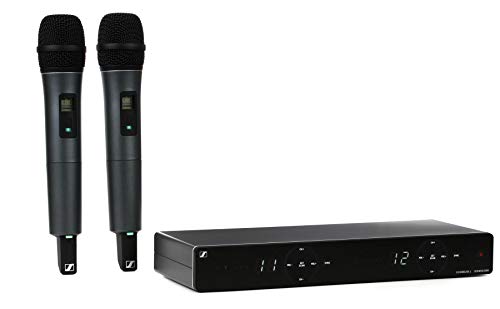
Sennheiser XSW 1-835
Worship teams, schools and gigging duos who want two wireless e835 vocal channels with the simplest possible setup.
Read the Sennheiser XSW 1-835 review →Questions Buyers Ask
Lewitt RAY
See the current listing, price and included accessories.
About This Review
Mandrillis Team
The Mandrillis editorial team researches and compares audio and music gear using manufacturer documentation, verified specs and real buyer feedback, so you can make a confident purchase without wading through marketing claims.
Read our full research methodology.