Studio Gear Review
Mackie Mix5 5-Channel Mixer Review: Compact Single-Mic Analog Mixer
The Mackie Mix5 is a compact 5-channel analog mixer with 1 phantom-powered mic input, 2 stereo line inputs, dedicated RCA playback and recording connections, and main L/R outputs. This research review checks those listed features against the gaps the published data leaves open, including the absence of any USB connection.
Our Verdict
Research Score 45/100The Mackie Mix5 is built around a narrow, clear job: 1 phantom-powered microphone input combined with stereo line and RCA connections, all routed through a 2-band EQ and out to main L/R outputs. That is enough for a solo presenter, DJ or small act that needs simple playback and mic mixing without any digital complexity. Mackie's general reputation for high-headroom, low-noise circuitry supports the listing's claims, even though no gain or noise figures are published for this specific unit. The lack of any stated USB or computer connection rules out direct recording without extra hardware, and build details are left unconfirmed. As an affordable, single-mic analog mixer for small-scale use, it is a reasonable buy within that narrow scope.
Editorial research score based on published specifications and documented features, not a customer rating or lab test.

Mackie
Mackie Mix5 5-Channel Mixer
Best for: A single presenter, DJ or small act that needs one clean mic input plus stereo playback and recording connections, in a purely analog mixing chain.
Skip it if: You need more than one microphone input or a direct computer connection, because the listing confirms neither additional mic channels nor any USB path.
Check Price on AmazonWe may earn a commission at no extra cost to you.
Listing verified: November 2026
Who Should Buy It
Buy it if
- Solo presenters or vocalists who need one phantom-powered mic input
- DJs or hosts who want dedicated RCA connections for playback gear
- Buyers who want a simple analog mixer with no software to install
- Anyone needing main L/R outputs to feed powered speakers directly
Skip it if
- You need more than one simultaneous microphone input
- You need a USB or digital connection to a computer
- You require published noise and headroom specifications before buying
Key Specifications
| Type | 5-channel compact analog mixer. No USB or computer connection is stated in the listing |
| Inputs | 1 mic/line input plus 2 stereo 1/4 inch line inputs and dedicated stereo RCA inputs, for 5 channels total |
| Outputs | Main L/R outputs plus dedicated stereo RCA outputs for playback or recording |
| Preamps | 1 mic/line preamp described as studio-level audio quality. No gain or noise figures are published |
| Resolution | Not applicable. This is an analog mixer with no stated digital conversion |
| Phantom power | Phantom power is available on the single mic/line input for studio condenser microphones |
| Connection | Not published in listing. No USB, Bluetooth or computer connection is stated anywhere in the bullets |
| Monitoring | Not published in listing |
| Bundled software | Not applicable, since no computer connection is stated |
| Included accessories | Not published in listing |
Overview
The Mackie Mix5 is a small format analog mixer with 5 total channels. The listing describes 1 mic/line input with phantom power, 2 stereo 1/4 inch line inputs, and dedicated stereo RCA inputs and outputs for playback or recording, all routed out through main L/R outputs. No USB port, Bluetooth streaming or any computer connection is mentioned anywhere in the feature bullets.
Mackie positions the Mix series around proven high-headroom, low-noise performance, and the Mix5 is the smallest member of that family covered in this batch of listings. With only 1 mic-capable channel, it targets a much narrower use case than its larger 8-channel sibling, the Mix8.
This review treats the published listing as the sole source of fact. Mackie's general design reputation is noted only as context, and every unpublished detail, including gain figures and physical dimensions, is flagged plainly rather than assumed from the broader product family.
Preamps and Sound Quality
The single mic/line input on the Mix5 is described as studio-level audio quality, with phantom power confirmed for use with condenser microphones. That makes this mixer capable of running one high-quality condenser mic without an external power supply, which suits a solo vocalist, presenter or voiceover artist.
No gain range, noise figure or maximum input level is published for this preamp. Mackie's broader marketing language for the Mix series relies on general claims of high headroom and low noise rather than measured numbers, and buyers report the compact Mix mixers as adequate for small-room use.
Because only 1 of the 5 channels accepts a microphone, this mixer is clearly built for a single live source supplemented by line-level playback. Anyone needing 2 or more simultaneous microphones will need a larger mixer, since the Mix5's channel layout does not support that directly.
Inputs, Outputs and Routing
The input layout combines 1 mic/line channel with 2 stereo 1/4 inch line inputs and a dedicated stereo RCA input, giving the Mix5 its 5 total channels once the stereo pairs are counted. That mix suits a single presenter alongside 2 separate stereo sources, such as a laptop and a CD or media player.
On the output side, the listing confirms main L/R outputs for feeding powered speakers or a larger sound system, plus dedicated stereo RCA outputs intended for playback or recording into a separate device. That RCA output pair is a genuinely useful feature for sending a clean feed to a recorder without disturbing the main mix.
No aux send, headphone output or control room output is mentioned in the listing. Routing options beyond the main and RCA outputs are therefore limited, and any recording plan beyond the RCA output would require connecting into a separate audio interface.
That limited routing is consistent with the Mix5's role as the smallest board in its family. It is built for a single presenter plugging in a couple of stereo sources rather than a full band needing multiple independent feeds.
Features, Monitoring and Software
The Mix5's mic/line channel carries a 2-band EQ, which the listing describes as clean, precise tone shaping. That is a simpler EQ than the 3-band design on the larger Mix8, reflecting the Mix5's smaller, more basic feature set overall.
The dedicated stereo RCA inputs and outputs function as the mixer's main extra feature beyond basic mixing, letting a turntable, CD player or similar RCA source feed into the mix while also sending a clean stereo signal out to a separate recorder. That two-way RCA connection adds real flexibility for a small setup.
No software, app or driver applies here, since the listing states no computer connection for the Mix5. Any buyer expecting bundled plugins, a companion app or recording software should look to a USB-equipped interface instead, since none of that is part of this analog mixer.
- 5 total channels: 1 mic/line plus 2 stereo 1/4 inch line inputs and stereo RCA
- Phantom power on the mic/line input
- 2-band EQ for clean tone shaping
- Dedicated stereo RCA inputs and outputs for playback or recording
- No USB or computer connection stated
Build, Design and Controls
The listing does not state the chassis material, weight or physical dimensions of the Mix5. Mackie's compact Mix series has historically used a mix of metal and painted steel construction in similar small mixers, though this specific detail is not confirmed for this unit.
Controls described in the listing center on gain and the 2-band EQ for the mic/line channel, plus basic level controls expected on the stereo line and RCA inputs. No LED metering or dedicated headphone volume control is mentioned in the published bullets.
As the smallest mixer in this family, the Mix5 should have a correspondingly small desktop footprint. Exact measurements are not published, so available desk space should be confirmed against the unit before ordering.
Connectivity, Drivers and Latency
No USB port, Bluetooth connection or other computer link is stated anywhere in the Mix5's feature bullets. This places it in the analog-only category, distinct from USB-equipped mixers that can stream audio directly into recording software on a computer.
Because there is no digital connection, there is nothing to say about drivers, sample rates or latency for this unit. The entire signal path runs through analog circuitry from input to output, which removes any digital processing delay from the equation entirely.
Buyers who want to record what passes through the Mix5 can use the dedicated RCA output to feed a separate recorder or a USB audio interface. That approach adds a second piece of hardware to the chain but keeps the Mix5 itself simple.
Setup and Daily Use
Setting up the Mix5 involves connecting a microphone to the mic/line input, patching stereo sources into the line and RCA inputs, and setting levels and EQ before use. There is no software to install and no driver to configure, which keeps initial setup quick.
Daily operation centers on the single mic channel's gain and EQ controls, along with whichever stereo source is active at the time. Because there is only one mic input, switching between multiple speakers or presenters requires either unplugging and replugging a microphone or using a separate mic switcher.
That single-mic constraint is rarely a problem for its intended solo use case. The mixer was never designed to host more than one live voice at a time in the first place.
The dedicated RCA output is worth using consistently for anyone who wants a backup recording of each session. It provides a clean feed independent of the main L/R output level, which may be adjusted for the room rather than for recording purposes. That separation protects the recording from last-minute volume changes made for the live audience.
Who Should Buy It
The Mix5 suits a solo presenter, vocalist or small act that needs exactly 1 microphone input plus a couple of stereo playback or recording connections, all handled without any computer involved. Its 2-band EQ and RCA connections cover the basics that this kind of single-source session needs.
Buyers who want a dedicated RCA feed for recording a session separately from the main speaker output will find real value in this mixer's design. Many mixers in this size class skip that feature entirely, which makes the Mix5's inclusion of it stand out.
Those needing more than 1 mic input, any aux send, or a direct computer connection should treat the Mix5 as too limited for that work. A larger mixer or a dedicated USB audio interface would serve those needs better.
Alternatives Worth Considering
Buyers who need a second microphone input should look at the larger Mix8 within Mackie's own range, which doubles the mic channel count while keeping a similar analog-only design philosophy. The step up adds channels without introducing any new digital complexity.
For buyers who specifically want USB streaming built into a small mixer, models like the Behringer XENYX 502S include at least a stereo USB connection. That trades the Mix5's dedicated RCA output approach for a direct computer link instead.
Anyone who needs to record multitrack audio rather than a single stereo feed should pair this mixer with, or skip it entirely in favor of, a dedicated USB audio interface. The Behringer U-Phoria UMC204HD is one example of that kind of device.
Verdict
The Mackie Mix5 is a tightly focused, small analog mixer that handles 1 microphone and 2 stereo sources cleanly, with a dedicated RCA output for separate recording and main L/R outputs for the room. For a solo presenter or small act working entirely in the analog domain, that feature set covers the basics well.
The listing leaves real gaps around build quality, physical dimensions and any gain or noise specifications, and it confirms no computer connection at all. Those gaps keep the score modest, even though nothing about the stated features themselves looks like a flaw.
As an affordable, single-mic analog mixer for a narrow set of small-scale uses, the Mix5 is a reasonable buy. That holds true provided its limited channel count and the unpublished specifications are acceptable going in.
Strengths and Limitations
Strengths
- High-headroom, low-noise design per the listing
- Phantom power on the mic/line input for condenser microphones
- 2-band EQ for clean, precise tone shaping
- Dedicated stereo RCA inputs and outputs for playback or recording
- Compact 5-channel layout keeps the footprint small
Limitations
- No USB or computer connection is stated, so recording needs separate gear
- Only 1 of the 5 channels accepts a microphone directly
- No published gain, noise or headroom figures
- Build material, weight and dimensions are not stated
How We Scored It
Scores reflect published specifications, documented features and value against the alternatives below. They are editorial research scores, not laboratory measurements.
Alternatives to Consider

Pioneer DJ XDJ-RX3
DJs who want club-standard standalone playback from USB with a large touchscreen and a familiar two-channel layout.
Read the Pioneer DJ XDJ-RX3 review →
Yamaha DM3-D 22
Small venues, houses of worship and production companies that want a compact 96 kHz digital console with Dante networking for stage boxes and multitrack recording.
Read the Yamaha DM3-D 22 review →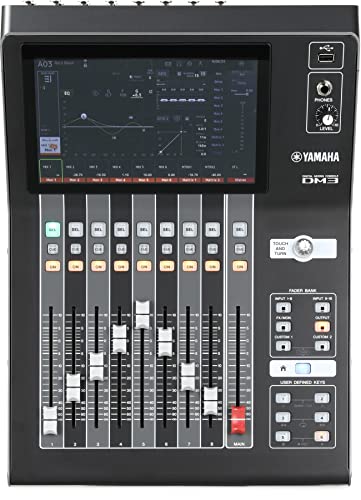
Yamaha DM3
Bands, small venues and project studios that want a compact 96 kHz digital console that doubles as an 18x18 USB recording interface.
Read the Yamaha DM3 review →Questions Buyers Ask
Mackie Mix5 5-Channel Mixer
See the current listing, price and included accessories.
About This Review
Mandrillis Team
The Mandrillis editorial team researches and compares audio and music gear using manufacturer documentation, verified specs and real buyer feedback, so you can make a confident purchase without wading through marketing claims.
Read our full research methodology.