Studio Gear Review
Mackie ProFX10 GO Review: Battery Mixer With Onyx Preamps
The Mackie ProFX10 GO is a 10-channel analog mixer with a swappable battery rated at up to 8 hours, Onyx preamps, analog compression, GigFX+ effects on a color screen, a two-way Bluetooth channel and three USB-C recording modes. This research review weighs those published strengths against the specs the listing leaves out.
Our Verdict
Research Score 78/100The Mackie ProFX10 GO stands apart from every mains-only compact desk because the listing pairs a rechargeable, swappable battery rated at up to 8 hours with Onyx preamps, analog compression, GigFX+ effects, a full-color LCD and a two-way Bluetooth channel. Three USB-C recording modes cover a polished full mix, a Loopback feed for streamers and a clean two-channel Interface capture. The gaps are real, though: phantom power, output connectors, USB resolution and bundled software are all absent from the published description. At a lower mid-range tier it is a strong pick for mobile performers and streamers, and a harder sell for a studio that never unplugs.
Editorial research score based on published specifications and documented features, not a customer rating or lab test.

Mackie
Mackie ProFX10 GO
Best for: Mobile performers, buskers, event hosts and streamers who need a compact analog desk with effects, Bluetooth and a USB-C recording path that keeps working without a wall outlet.
Skip it if: You mix in one fixed room and need confirmed phantom power, output counts and USB resolution before buying, because the listing publishes none of them.
Check Price on AmazonWe may earn a commission at no extra cost to you.
Listing verified: October 2026
Who Should Buy It
Buy it if
- Buskers and outdoor performers who need up to 8 hours of battery operation
- Worship and community groups that set up in halls without reliable power
- Streamers who want Loopback and a clean two-channel Interface mode in one desk
- Small event hosts who play backing tracks from a phone over Bluetooth
Skip it if
- Your mixer will sit permanently on a studio desk next to a power strip
- You need per-channel multitrack recording over USB
- You must confirm phantom power for condenser microphones before purchase
Key Specifications
| Type | 10-channel battery-powered analog mixer with USB-C audio interface and Bluetooth |
| Inputs | 10 channels including a dedicated Bluetooth channel (mic versus line split not published in listing) |
| Outputs | Not published in listing |
| Preamps | Onyx mic preamps described as high-headroom and low-noise (count and gain not published in listing) |
| Resolution | Not published in listing |
| Phantom power | Not published in listing |
| Connection | USB-C with three recording modes (Standard, Loopback, Interface) plus two-way Bluetooth audio |
| Monitoring | Not published in listing |
| Bundled software | Not published in listing |
| Included accessories | Not published in listing (the listing describes a rechargeable, swappable battery but does not confirm box contents) |
Overview
The Mackie ProFX10 GO is a 10-channel analog mixer that doubles as a USB-C audio interface and can run on a rechargeable, swappable battery for up to 8 hours. That battery detail is the whole point of the product: it is a compact desk built for gigs, events and sessions where a wall outlet is not guaranteed. The listing positions it as a professional tool rather than a novelty, with Onyx preamps, EQ, analog compression and a built-in effects engine.
At a lower mid-range price tier, it competes with mains-powered compact mixers such as the Yamaha MG10XU, but it adds Bluetooth, a color screen and the battery option that those desks lack. Buyers who do not need battery power are paying for a feature they will rarely use, so the value case depends heavily on how often you work away from power.
This review is based on the published listing rather than any bench session. Several specifications that buyers normally expect, including the number of mic preamps, phantom power and the USB resolution, are not stated in the listing, and those gaps are called out where they matter.
Preamps and Sound Quality
Onyx preamps are the headline analog component, and the listing describes them as high-headroom and low-noise. Onyx has been the brand's premium preamp name for years, and its appearance on a battery-powered desk is a meaningful signal that the company did not cut corners on the front end to save power. What the listing does not say is how many of the 10 channels carry an Onyx mic preamp, or how much gain each one offers.
Tone-shaping EQ and analog compression are mentioned in the listing, though band counts and compressor controls are not detailed. Analog compression on a mixer this size is useful for taming a loud vocalist or an uneven acoustic guitar before the signal hits the master bus. Without a published spec sheet, buyers should treat the compressor as a simple leveling tool rather than a studio-style dynamics processor.
On paper, the preamp story compares well with the XENYX preamps found on Behringer desks at a similar tier and sits in the same conversation as Yamaha's D-PRE design. Phantom power is not mentioned anywhere in the listing, which is an odd omission for a mixer with condenser-friendly preamps, so confirm it in the manual before pairing the desk with condenser microphones.
Inputs, Outputs and Routing
The 10-channel count includes a dedicated Bluetooth channel for a phone or tablet, which the listing says can both send and receive audio wirelessly. That two-way wireless path is more than a playback convenience, because it lets a presenter stream the mix to an app on the same device that is feeding backing tracks into the desk.
Routing to a computer runs over USB-C with three recording modes. Standard mode captures the full mix including effects, Loopback mode folds computer audio back into the recording, and Interface mode records channels 1 and 2 directly with no effects. The Interface mode is the one home recordists will care about, because it delivers a clean two-channel signal to a DAW.
Physical output connectors are not published in the listing. There is no stated count of main outputs, aux sends, monitor sends or headphone jacks, which makes it hard to judge whether the desk can run a stage monitor mix alongside the mains. For a mixer marketed to live performers, that is the single most important detail missing from the listing.
Features, Monitoring and Software
The GigFX+ engine supplies reverbs, delays, choruses and other effects, and the listing describes them as high-resolution. Presets can be edited and saved on the fly through a full-color LCD screen, which is a step up from the single-knob effects selectors common on budget desks. A screen also makes it easier to see which preset is active in low stage light.
Monitoring details are absent from the listing. There is no mention of a headphone output, a control room output or a dedicated monitor mix, so buyers should check the manual if they plan to feed in-ear monitors or a wedge from this desk. The absence does not mean the features are missing, only that the published description does not confirm them.
No bundled software is named in the listing. Many competing interfaces include a DAW license or plugin pack, and the lack of any such mention here is worth weighing. The upside is that the three USB-C modes should work with any recording application that recognizes a standard audio device, though class compliance itself is not confirmed in the published text.
- GigFX+ reverbs, delays and choruses with editable presets
- Full-color LCD screen for effect selection and preset saving
- Dedicated Bluetooth channel that sends and receives audio
- Three USB-C recording modes: Standard, Loopback and Interface
- Analog compression and tone-shaping EQ on the channel strips
Build, Design and Controls
The defining physical feature is the rechargeable, swappable battery that the listing rates at up to 8 hours of runtime. A swappable design means a second battery can extend a long event without downtime, though the listing does not state the battery chemistry, capacity, charge time or whether a battery ships in the box.
Chassis material, weight and dimensions are not published. Mackie's ProFX desks have historically used a mix of metal and composite construction, but nothing in this listing confirms the approach for the GO model, so buyers who need a specific weight for flight cases or backpacks should look up the manual.
Control layout is only partly described. The full-color LCD handles effects, and the usual ProFX complement of channel gain, EQ and compression knobs is implied by the feature list. Fader length, knob spacing and the presence of channel mute buttons are not stated.
Connectivity, Drivers and Latency
USB-C is the computer connection, and the three recording modes give it more flexibility than a plain stereo-out mixer. Loopback in particular saves streamers from needing a separate virtual audio cable, because computer playback can be mixed with live inputs inside the desk.
Sample rate, bit depth and driver requirements are not published. Round-trip latency figures are also absent. Mixers that stream a stereo mix over USB typically feel responsive enough for live streaming, but anyone planning to track through plugins should not assume low-latency performance from a listing that does not promise it.
Bluetooth adds a second connectivity path that most comparable desks lack. The listing describes two-way audio over Bluetooth, which suits backing tracks and phone-based streaming, though wireless audio always carries some delay and is not a substitute for a wired monitor feed during a live performance.
Setup and Daily Use
Daily operation looks straightforward on paper: charge the battery, pair a phone to the Bluetooth channel, plug in microphones and instruments, and pick a USB-C mode when a computer is involved. The color screen should make effects editing quicker than the menu-diving required on text-only displays.
For a mobile performer, the realistic workflow is a battery-powered busking or small-venue set with backing tracks arriving over Bluetooth and a stereo recording of the whole performance captured in Standard mode. For a podcaster or streamer, Loopback mode handles guest audio from the computer while Interface mode records the two main microphones cleanly.
The main uncertainties in everyday use are phantom power and monitoring, neither of which the listing confirms. If both are present in the manual, the desk covers most small-event needs; if not, the buyer may need an external phantom supply or a separate headphone amplifier.
Who Should Buy It
The strongest case is for mobile performers, buskers, outdoor event hosts and worship or community groups that regularly set up where power is unreliable. The combination of a battery, Bluetooth and onboard effects removes three separate boxes from a mobile rig.
Streamers and podcasters who sometimes record away from a desk also fit, because the three USB-C modes cover both a polished full mix and a clean capture of the first two channels. A home studio that never leaves the room would be better served by a mains-powered desk or a dedicated interface with published specs.
Buyers who need a documented input and output count, confirmed phantom power and a known USB resolution before purchasing should wait until they can read the manual. The listing leaves those questions open, and no amount of portability makes up for a missing monitor send if your act depends on one.
Alternatives Worth Considering
The Yamaha MG10XU is the most direct mains-powered comparison at a similar size and tier. It offers D-PRE preamps, one-knob compressors and SPX effects, but it has no battery, no Bluetooth and no color screen, so it suits fixed installations more than mobile work.
Behringer's XENYX desks with USB cover similar channel counts at lower prices and often include a Klark Teknik effects processor, though they also rely on mains power. For buyers who only need a clean two-channel recording path and never mix live, a Focusrite Scarlett 2i2 or MOTU M2 provides published specifications and bundled software that this listing lacks.
Within Mackie's own range, the mains-powered ProFX models offer the same Onyx preamp and GigFX lineage without the battery premium. That is the sensible choice if the desk will live on a studio table.
Verdict
The Mackie ProFX10 GO is a genuinely different product in a crowded category, and the battery, Bluetooth and three-mode USB-C design justify its lower mid-range tier for anyone who mixes away from a wall socket. Onyx preamps and a color screen for effects add substance to the portability pitch.
The published listing still leaves important gaps, chiefly phantom power, output count, USB resolution and bundled software. Those omissions hold the score back and should be confirmed against the manual before buying.
For mobile performers and streamers, it earns a strong recommendation on paper. For stationary studios, a conventional desk or dedicated interface is the better value.
Strengths and Limitations
Strengths
- Rechargeable, swappable battery rated at up to 8 hours
- Onyx preamps with analog compression and EQ on the channels
- Two-way Bluetooth channel for backing tracks and phone streaming
- Three USB-C recording modes including Loopback and a clean Interface mode
- GigFX+ effects with editable presets on a full-color LCD
Limitations
- Phantom power is not mentioned in the listing
- Output connectors and monitor sends are not published
- USB resolution and driver details are not stated
- No bundled software is named
- Battery premium is wasted on a desk that never leaves the studio
How We Scored It
Scores reflect published specifications, documented features and value against the alternatives below. They are editorial research scores, not laboratory measurements.
Alternatives to Consider

Yamaha DBR10 700-Watt
Solo performers, DJs, presenters and small events that want a single powered speaker with enough SPL for a modest room and a two-channel mixer built into the back panel.
Read the Yamaha DBR10 700-Watt review →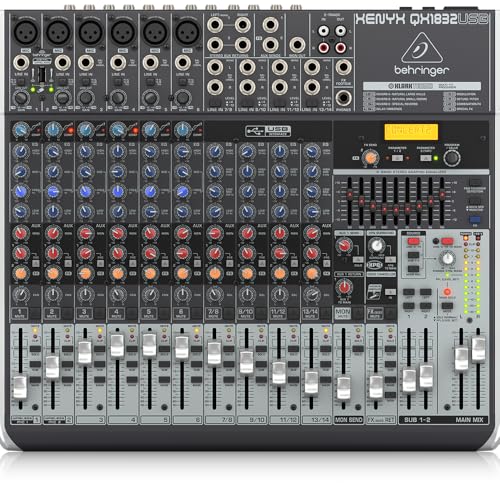
Behringer XENYX QX1832USB 18-Input 3/2-Bus
Small bands, worship teams and schools that need six compressed mic channels, subgroup routing and a Klark Teknik effects engine with a basic USB recording path at a lower mid-range.
Read the Behringer XENYX QX1832USB 18-Input 3/2-Bus review →
Mackie ProFX12v3+ 12-Channel
Streamers, podcasters and small bands that want one compact analog board to mix live, play music from a phone over Bluetooth and record to a computer in more than one way.
Read the Mackie ProFX12v3+ 12-Channel review →Questions Buyers Ask
Mackie ProFX10 GO
See the current listing, price and included accessories.
About This Review
Mandrillis Team
The Mandrillis editorial team researches and compares audio and music gear using manufacturer documentation, verified specs and real buyer feedback, so you can make a confident purchase without wading through marketing claims.
Read our full research methodology.