Studio Gear Review
Yamaha DBR10 700-Watt Review: Powered Speaker With Onboard Mixer
The Yamaha DBR10 700-Watt is a bi-amped 10-inch powered loudspeaker with a 2-channel mixer on board, rated at 700 W peak and 129 dB SPL with FIR-X tuning and a 7-year warranty. This research review explains what the listing confirms, how the onboard mixer fits simple setups, and why it should not be confused with an audio interface.
Our Verdict
Research Score 71/100The Yamaha DBR10 700-Watt is a powered loudspeaker first and a mixer second, and buyers should read it that way. The listing publishes the numbers that matter for a speaker: 700 W peak, 129 dB SPL, a 55 Hz to 20 kHz range at -10 dB, bi-amped design, FIR-X tuning and a 7-year warranty. The 2-channel mixer makes it a complete system for a solo performer, a DJ or a presenter. It offers no USB, no Bluetooth and no recording path, and the listing does not publish input connectors, phantom power or weight. As a compact main or monitor at a lower mid-range price it is well specified, but it is not a substitute for an interface or a multi-channel desk.
Editorial research score based on published specifications and documented features, not a customer rating or lab test.

Yamaha
Yamaha DBR10 700-Watt
Best for: Solo performers, DJs, presenters and small events that want a single powered speaker with enough SPL for a modest room and a two-channel mixer built into the back panel.
Skip it if: You are shopping for an audio interface or a multi-channel mixer, because the Yamaha DBR10 700-Watt is a loudspeaker with only two input channels and no computer connection.
Check Price on AmazonWe may earn a commission at no extra cost to you.
Listing verified: October 2026
Who Should Buy It
Buy it if
- Singer-songwriters and duos who plug a microphone and an instrument straight into the speaker
- DJs and mobile presenters who need a main speaker with a simple onboard mixer
- Bands that want a powered stage monitor with a long warranty
- Schools and halls that need a portable speaker for assemblies and outdoor events
Skip it if
- You need to record to a computer
- You have more than two sources and no separate mixer
- You need a confirmed input connector list before buying
Key Specifications
| Type | Bi-amped 10-inch powered loudspeaker with a built-in 2-channel mixer |
| Inputs | 2-channel onboard mixer (connector types not published in listing) |
| Outputs | Not published in listing (any link-through output is not stated) |
| Preamps | Not published in listing |
| Resolution | Not applicable to a powered speaker; FIR-X digital tuning resolution not published in listing |
| Phantom power | Not published in listing |
| Connection | Not published in listing (no USB or Bluetooth stated) |
| Monitoring | Usable as a main or stage monitor speaker per the listing |
| Bundled software | Not published in listing |
| Included accessories | Not published in listing |
Overview
The Yamaha DBR10 700-Watt is a bi-amped powered loudspeaker with a 10-inch woofer, and the listing describes a 2-channel mixer built into it for performances, DJ sets and outdoor events. It appears in this category because of that onboard mixer, but it is important to be clear from the start: this is a speaker that happens to mix two sources, not an audio interface and not a multi-channel desk.
The published figures are the kind a speaker buyer looks for. Seven hundred watts of peak power, a maximum SPL of 129 dB, a frequency range of 55 Hz to 20 kHz at the -10 dB points, FIR-X tuning and a 7-year warranty are all stated. The listing also describes it as a high performance main or monitor speaker, which reflects the dual role compact powered cabinets play on small stages.
This is a research review based on the product listing and general knowledge of powered speaker design. No direct use of the speaker is involved. Input connector types, phantom power, link-through outputs, weight and dimensions are not published, and those gaps are noted wherever they affect a decision.
Preamps and Sound Quality
The listing publishes no preamp specification for the two mixer channels, so gain range, noise and whether the inputs accept microphone level signals directly cannot be confirmed. On powered speakers with onboard mixers, the channels typically accept both microphone and line signals, but that is a category convention rather than a published fact for the Yamaha DBR10 700-Watt. Phantom power for condenser microphones is likewise unstated.
Sound quality claims rest on the amplifier and tuning figures. Seven hundred watts of what the listing calls clean digital power, which points to a class-D design, drives a bi-amped arrangement where the woofer and the high frequency driver each get their own amplifier channel. Bi-amping allows the crossover to work at line level before the amplifiers, which generally yields tighter control of each driver than a passive crossover.
FIR-X tuning is Yamaha's name for finite impulse response processing applied to the crossover and driver alignment, which corrects phase and frequency response around the crossover point. Combined with a published 129 dB SPL and a low frequency reach of 55 Hz at -10 dB, the speaker is specified to cover vocals, acoustic instruments and DJ playback in small to medium rooms without a subwoofer, though bass heavy music at high volume would still benefit from one.
Inputs, Outputs and Routing
The onboard mixer is described as 2-channel, which is enough for a microphone and an instrument, a microphone and a playback device, or a DJ controller's stereo feed summed to the single cabinet. The listing does not state the connector types on those channels, so buyers should not assume combo jacks, dedicated RCA inputs or a stereo mini jack until they see the rear panel.
Outputs are not described at all. Most powered speakers in this class provide a link or thru output so the mixed signal can be passed to a second cabinet, which turns one speaker with a mixer into a stereo pair or a main plus monitor arrangement. That provision would be central to how the Yamaha DBR10 700-Watt is used, and buyers should confirm it.
Routing is simple by design. The two channels sum to the internal amplifiers and, where a link output exists, to the next speaker. There are no buses, aux sends, effects or EQ sections described in the listing, which is appropriate for a speaker but underlines why it does not belong in the same decision as a mixer with eight or more channels.
Features, Monitoring and Software
The feature list is short and speaker focused. Bi-amped power, FIR-X tuning, a 2-channel mixer and the ability to serve as a main or monitor speaker cover the published functionality. There are no effects, no feedback suppression and no app control described, which places it below powered mixers and digital speakers that bundle processing, though it keeps operation simple.
Monitor use is specifically mentioned in the listing, which means the cabinet shape and dispersion are intended to work when the speaker lies on its side at a performer's feet as well as when it stands on a pole. A 10-inch two-way cabinet is a common size for this dual role, since it is light enough to position quickly and powerful enough for a small stage.
The 7-year warranty is a feature in its own right, and the listing states it explicitly. For a product that will be carried, stacked and left outdoors at events, a warranty of that length signals confidence in the amplifier and driver reliability. No software, firmware or accessories are described in the published data.
- Bi-amped design with 700 W peak power
- Maximum SPL of 129 dB
- Frequency range of 55 Hz to 20 kHz at -10 dB
- FIR-X tuning for crossover and driver alignment
- Built-in 2-channel mixer
- 7-year warranty
Build, Design and Controls
The listing does not publish cabinet material, weight, dimensions or the presence of a pole socket or fly points, so the physical side of the Yamaha DBR10 700-Watt cannot be judged from the published data. Compact 10-inch powered speakers are typically molded from a tough polymer with a steel grille and a pole mount, and the listing's mention of outdoor events implies a design meant for transport, but that is inference rather than specification.
Controls on a speaker of this type live on the rear amplifier panel and normally include a level knob per channel and a master, plus any tuning switches. The listing does not describe them. Because the mixer is only two channels, the control set is minimal by nature, and a performer can set levels once and leave them.
Connectivity, Drivers and Latency
There is no USB, Bluetooth, network or any computer connection described in the listing, so the speaker cannot record, stream or be controlled from a device. In this section the word drivers refers to loudspeaker drivers rather than software, and the listing specifies a 10-inch woofer while leaving the high frequency driver size unstated.
Latency is a non-issue for an analog input powered speaker, even with FIR-X processing, because the digital tuning operates at a level that performers do not perceive. Signal enters the two channels, passes through the processing and amplifiers, and leaves the drivers with no computer in the path.
Wireless playback would need an external receiver cabled into one of the two channels, and any link to a second speaker depends on an output the listing does not confirm. Compared with mixers that put Bluetooth on a channel strip, this is a plain analog cabinet in its published form.
Setup and Daily Use
Setup for a solo performer is as simple as it gets: a microphone into one channel, an instrument or a playback device into the other, set the two levels and the master, and play. Pole mounting for a main or laying the cabinet on its side as a monitor are the two positions the listing implies, and the FIR-X tuning means no manual EQ is needed to get a balanced starting point.
For a DJ or a presenter at an outdoor event, the speaker serves as the whole system when the source is a controller or a laptop with its own volume control. Daily use involves carrying the cabinet, which the listing does not quantify by weight, and protecting it from weather, since no ingress rating is published. The long warranty covers failures but not neglect.
Who Should Buy It
The Yamaha DBR10 700-Watt fits singer-songwriters, duos, DJs, presenters and small event organizers who want one powered speaker with a simple mixer and enough output for a modest room or an outdoor gathering. Bands looking for a powered stage monitor with a long warranty also match the listing's description.
Anyone shopping for an audio interface, a mixer with more than two channels, or a recording path should look elsewhere, because this product does none of those things. Buyers with condenser microphones or specific connector needs should confirm the unpublished input details before committing.
Alternatives Worth Considering
If a true mixer is the goal, the Yamaha EMX5 12-input powered mixer offers 12 inputs, a 2 x 630 W amplifier, feedback suppression and SPX effects, and it drives passive speakers rather than containing one. For a group with several microphones and passive cabinets, that is the more appropriate Yamaha product.
For performers who want more inputs but still prefer powered speakers, a compact analog desk feeding a pair of powered cabinets is the better route. Boards such as the Yamaha MG12XU 12-Input 4-Bus or the Mackie ProFX12v3+ 12-Channel provide compression, effects and USB recording that no speaker with an onboard mixer can match.
Within the powered speaker category, the DBR10 competes with other 10-inch two-way cabinets that offer similar power and SPL. The Yamaha DBR10 700-Watt stands out in the listing for its published figures and 7-year warranty, while competitors sometimes add Bluetooth or more mixer channels, so the right choice depends on whether wireless playback matters more than warranty length.
Verdict
Judged as a powered speaker, the Yamaha DBR10 700-Watt is well documented where it counts. Power, SPL, frequency range, bi-amped design, FIR-X tuning and warranty are all stated, and the 2-channel mixer makes it a complete small system for one or two sources.
Judged against the mixers and interfaces it sits beside in this category, it scores modestly because it has no computer connection, no recording path and only two inputs with unpublished connector details. Buyers who understand that distinction and want a compact main or monitor with a long warranty will find it a sound lower mid-range choice.
Strengths and Limitations
Strengths
- 700 W peak bi-amped power with a published 129 dB SPL figure
- Published frequency range of 55 Hz to 20 kHz at -10 dB
- Built-in 2-channel mixer removes the need for a separate desk in simple setups
- Works as a main speaker or a stage monitor
- FIR-X tuning for the crossover and driver alignment
- 7-year warranty stated in the listing
Limitations
- This is a powered speaker, not an audio interface or standalone mixer
- Input connector types, phantom power and link outputs are not published
- No USB, Bluetooth or recording path of any kind
- Weight and dimensions are not stated
How We Scored It
Scores reflect published specifications, documented features and value against the alternatives below. They are editorial research scores, not laboratory measurements.
Alternatives to Consider

Mackie ProFX10 GO
Mobile performers, buskers, event hosts and streamers who need a compact analog desk with effects, Bluetooth and a USB-C recording path that keeps working without a wall outlet.
Read the Mackie ProFX10 GO review →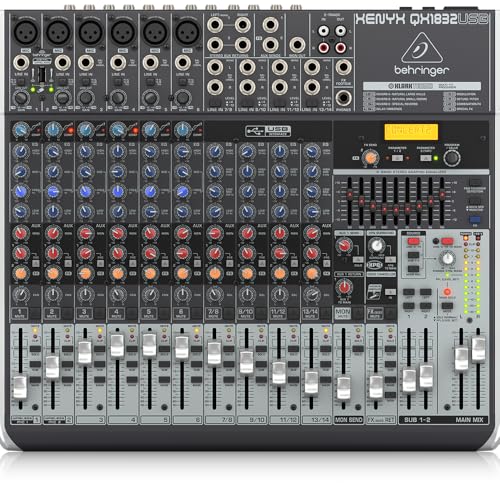
Behringer XENYX QX1832USB 18-Input 3/2-Bus
Small bands, worship teams and schools that need six compressed mic channels, subgroup routing and a Klark Teknik effects engine with a basic USB recording path at a lower mid-range.
Read the Behringer XENYX QX1832USB 18-Input 3/2-Bus review →
Yamaha MG12XU 12-Input 4-Bus
Small bands, worship teams, lecturers and home recordists who want a compact, durable analog desk with respected preamps, channel compression.
Read the Yamaha MG12XU 12-Input 4-Bus review →Questions Buyers Ask
Yamaha DBR10 700-Watt
See the current listing, price and included accessories.
About This Review
Mandrillis Team
The Mandrillis editorial team researches and compares audio and music gear using manufacturer documentation, verified specs and real buyer feedback, so you can make a confident purchase without wading through marketing claims.
Read our full research methodology.