Studio Gear Review
MOTU UltraLite-mk5 18x22 Review: 40 Channel DSP Mixing
The MOTU UltraLite-mk5 18x22 offers 40 simultaneous channels through optical expansion, DSP driven monitor mixing across six busses, and a 125dB dynamic range. This research review covers what the listing confirms and the preamp gain figure it leaves unstated.
Our Verdict
Research Score 78/100The MOTU UltraLite-mk5 18x22 packs genuine channel expansion capacity, up to 40 simultaneous audio channels through its combo inputs, analog ins, S/PDIF and 8-channel optical I/O, into a compact interface, backed by DSP driven monitor mixing across six separate busses and a detailed OLED metering display. A 125dB dynamic range on the analog outputs is a concrete, strong figure, though the listing does not state a specific preamp gain number, describing analog quality only in general terms. At a mid-range price tier, this interface suits producers who need serious expansion and monitoring flexibility more than buyers chasing an exact gain specification on paper.
Editorial research score based on published specifications and documented features, not a customer rating or lab test.

MOTU
MOTU UltraLite-mk5 18x22
Best for: Producers who want extensive channel expansion through optical I/O, DSP powered monitor mixing across six busses, and detailed OLED metering in one compact interface.
Skip it if: You need a confirmed numeric mic preamp gain figure, since the listing describes analog quality generically rather than with a specific gain number.
Check Price on AmazonWe may earn a commission at no extra cost to you.
Listing verified: November 2026
Who Should Buy It
Buy it if
- Producers who need to grow channel count well beyond a basic 2 input interface through optical expansion
- Engineers who want separate DSP mixed monitor feeds for multiple performers at once
- Buyers who want onboard EQ and dynamics processing without leaning on the host computer's processor
- iOS based mobile producers who want a class compliant interface that works across platforms
Skip it if
- You need a confirmed numeric mic preamp gain figure before purchase
- You require Thunderbolt or USB-C rather than USB 2.0 connectivity
- You only need 2 inputs and do not need the 40 channel expansion capacity
Key Specifications
| Type | 18x22 USB audio interface for Mac, Windows and iOS with onboard DSP mixing and effects |
| Inputs | 2 combo XLR/TRS mic, line or HiZ guitar inputs, plus 6 additional analog inputs, S/PDIF digital I/O and 8 channel optical I/O, for 40 simultaneous audio channels total |
| Outputs | 10 analog outputs plus a headphone output, S/PDIF digital I/O and 8 channel optical I/O |
| Preamps | Not published in listing as a specific gain figure; described only generically as superb analog quality |
| Resolution | Analog outputs deliver a 125dB dynamic range, with optimized drivers for ultra-low latency performance |
| Phantom power | Not published in listing |
| Connection | Hi-speed USB 2.0, audio class compliant, compatible with USB 3.0 and iOS |
| Monitoring | DSP-driven monitor mixing with six separate mix busses, each able to include computer channels, plus a high-resolution OLED display for detailed metering on all analog I/O |
| Bundled software | CueMix 5 app for Mac, PC or iOS control, plus Performer Lite workstation software with over 100 included instruments, dozens of effects and 6 GB of included loops |
| Included accessories | Not published in listing |
Overview
The MOTU UltraLite-mk5 18x22 is built around channel expansion and onboard DSP processing rather than simply offering a couple of clean preamps, and the listing's own naming, 18 inputs by 22 outputs, only tells part of the story once the 8 channel optical I/O is factored in, bringing total simultaneous channel capacity to 40 according to the listing.
That expansion capacity is paired with DSP-driven monitor mixing, letting a user create up to six separate, independent mixes from the same set of inputs, each sent to a different analog output pair, which is a genuinely advanced feature for an interface in this size and price category, and one more commonly found on larger, rack mounted studio hardware than on a compact desktop unit.
The listing also emphasizes cross platform compatibility, naming Mac, Windows and iOS support directly, along with a dedicated CueMix 5 control app, positioning this interface as equally useful in a traditional studio and in a more mobile, tablet driven recording setup.
Preamps and Sound Quality
The listing describes superb analog quality on the outputs, specifically quoting a 125dB dynamic range figure, which is a genuinely strong, checkable number that places this interface's output conversion quality well above an entry level unit.
On the input preamp side, however, the listing does not state a specific gain figure in decibels, an equivalent input noise rating, or a maximum input level, which is a real gap for buyers trying to judge how this interface will handle quiet microphones compared with a competing unit whose listing states that number directly.
The 2 combo XLR/TRS inputs are described as accepting mic, line or HiZ guitar signals, suggesting flexible gain staging across different source types, though without a published number, this review treats the preamp performance as a general quality claim rather than a confirmed specification.
Inputs, Outputs and Routing
The listing states 2 combo XLR/TRS mic, line or HiZ guitar inputs, plus 6 additional analog inputs, S/PDIF digital I/O and 8 channel optical I/O, combining for 40 simultaneous audio channels, a substantial routing capacity for an interface of this physical size and price.
On the output side, 10 analog outputs are listed alongside a headphone output, matching S/PDIF and 8 channel optical I/O, giving this interface genuine flexibility to feed multiple monitor pairs, a headphone mix and digital expansion gear all at once.
The optical I/O specifically is what pushes total channel capacity well beyond what the physical analog connectors alone would suggest, letting this interface pair with an ADAT equipped preamp expander or another optical source to reach the full 40 channel figure the listing describes.
Features, Monitoring and Software
DSP-driven monitor mixing is the standout feature here, letting a user mix live inputs to any analog output pair and create up to six separate, unique mixes, each of which can include computer channels alongside the live inputs, which is considerably more advanced than the single shared monitor mix found on simpler interfaces.
Onboard effects extend this further, with the listing stating reverb, a 4-channel parametric EQ and dynamics processing available on both inputs and bus mixes, meaning a performer's headphone mix can have real processing applied without taxing the host computer's own processor.
A high-resolution OLED display is listed as providing detailed metering for all analog I/O at a glance, a genuinely useful hardware feature for quickly checking gain staging across many channels without needing to look at a computer screen, alongside the CueMix 5 app and the bundled Performer Lite workstation software with its substantial included instrument and loop library.
- 2 combo mic/line/HiZ inputs, 6 analog ins
- S/PDIF and 8-channel optical I/O, 40 channels total
- 10 analog outputs plus headphone out
- 125dB dynamic range on analog outputs
- 6 separate DSP mix busses
- Onboard reverb, 4-channel parametric EQ, dynamics
- High-resolution OLED metering display
- CueMix 5 app, Performer Lite software
Build, Design and Controls
The listing does not state exact dimensions, weight or chassis material for this interface, though the inclusion of a high-resolution OLED display on the front panel suggests a design oriented around at-a-glance metering rather than a minimalist control surface.
Given the channel count and routing complexity on offer, the physical control layout likely balances a handful of direct hardware controls with deeper configuration handled through the CueMix 5 software, though the listing does not itemize the exact number of physical knobs or buttons.
Buyers planning a specific desk or rack placement for this unit should confirm its physical footprint against official product photography, since the listing's feature bullets focus on channel capacity and DSP features rather than chassis specifications.
Connectivity, Drivers and Latency
Connectivity runs over hi-speed USB 2.0, described in the listing as audio class compliant and compatible with USB 3.0 ports as well as iOS devices, giving this interface broad compatibility across older and newer computers alike without requiring a newer USB-C or Thunderbolt port.
The listing specifically claims optimized drivers deliver rock-solid performance and industry-leading low latency, though it does not quote a specific millisecond figure, so buyers chasing an exact round trip latency number for a given buffer size should look to independent measurements rather than this listing alone.
Universal connectivity is framed as a deliberate design goal in the listing, with compatibility claimed across all audio software, which is a meaningful claim for buyers who may switch between different digital audio workstations over the life of this interface, and who do not want their hardware choice to lock them into one particular software ecosystem.
Setup and Daily Use
Setting up this interface involves installing MOTU's driver and the CueMix 5 app, then configuring the six available DSP mix busses to route specific inputs and computer channels to the output pairs that feed monitors, headphones or recording devices.
Daily use benefits considerably from the OLED display, letting an engineer check signal levels across many channels at a glance rather than relying solely on software metering, which is especially useful once the optical expansion pushes total channel count toward the listing's stated 40 channel maximum.
For sessions involving several performers who each need a different headphone mix, the six independent DSP busses mean each person can get a tailored blend of their own instrument, a monitor wedge feed and computer playback, without one performer's preferences affecting another's mix.
Who Should Buy It
This interface suits producers and engineers who need substantial channel expansion through optical I/O and who will make real use of six independent DSP mix busses for multiple performers, rather than buyers who only need two clean inputs.
It is a weaker fit for buyers who need a confirmed numeric preamp gain figure before purchase, and for anyone specifically wanting Thunderbolt or USB-C connectivity rather than the USB 2.0 standard this interface uses.
iOS based mobile producers and musicians building a portable rig around a tablet will find particular value in the confirmed class compliant, cross platform support, which is less common among interfaces at this channel count and price tier.
Alternatives Worth Considering
Buyers who need a confirmed, published preamp gain figure should look at an interface whose listing states that number directly rather than relying on this unit's generic analog quality claim.
Buyers who specifically need Thunderbolt or USB-C connectivity for their existing studio setup should consider an interface built around one of those standards rather than this USB 2.0 based unit.
Buyers who only need two inputs and do not expect to grow into the 40 channel optical expansion capacity may find better value in a smaller, simpler two channel interface, since much of this unit's price reflects expansion headroom that would otherwise go unused.
Verdict
The MOTU UltraLite-mk5 18x22 earns its mid-range price tier through genuine channel expansion capacity, DSP driven monitor mixing across six independent busses, and a strong 125dB dynamic range figure on its analog outputs.
The absence of a published preamp gain number is the main gap in an otherwise detailed listing, and buyers who need that figure confirmed should check MOTU's own specification sheet before finalizing a purchase built around this interface's expansion and mixing strengths.
Taken as a whole, this is an interface for buyers who value routing flexibility, independent monitor mixing and future expansion headroom over a single headline preamp number, and it rewards a studio that will actually grow into its 40 channel ceiling rather than one that only ever needs two inputs.
Strengths and Limitations
Strengths
- 40 simultaneous audio channels via 2 combo inputs, 6 analog ins, S/PDIF and 8-channel optical I/O
- 125dB dynamic range on the analog outputs
- DSP-driven monitor mixing with 6 separate mix busses, each able to include computer channels
- Onboard reverb, 4-channel parametric EQ and dynamics processing on inputs and bus mixes
- High-resolution OLED display for detailed metering across all analog I/O
- CueMix 5 control app plus a substantial Performer Lite workstation software bundle
Limitations
- No specific preamp gain figure is published, only a generic analog quality claim
- No stated phantom power voltage
- USB 2.0 connection standard rather than USB-C or Thunderbolt
- No stated weight or chassis dimensions
How We Scored It
Scores reflect published specifications, documented features and value against the alternatives below. They are editorial research scores, not laboratory measurements.
Alternatives to Consider

Pioneer DJ XDJ-RX3
DJs who want club-standard standalone playback from USB with a large touchscreen and a familiar two-channel layout.
Read the Pioneer DJ XDJ-RX3 review →
Yamaha DM3-D 22
Small venues, houses of worship and production companies that want a compact 96 kHz digital console with Dante networking for stage boxes and multitrack recording.
Read the Yamaha DM3-D 22 review →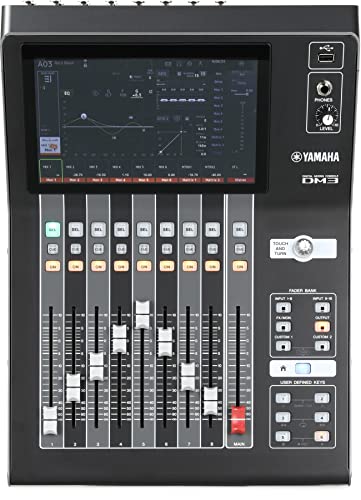
Yamaha DM3
Bands, small venues and project studios that want a compact 96 kHz digital console that doubles as an 18x18 USB recording interface.
Read the Yamaha DM3 review →Questions Buyers Ask
MOTU UltraLite-mk5 18x22
See the current listing, price and included accessories.
About This Review
Mandrillis Team
The Mandrillis editorial team researches and compares audio and music gear using manufacturer documentation, verified specs and real buyer feedback, so you can make a confident purchase without wading through marketing claims.
Read our full research methodology.