Studio Gear Review
Se Electronics VR1 Review: Passive Ribbon for Guitar
The Se Electronics VR1 is a passive ribbon microphone voiced for guitar cabinets, covering 20Hz to 18kHz with an ultra-slim chassis and a custom shockmount included. This research review covers what the listing confirms and the polar pattern it leaves unstated.
Our Verdict
Research Score 72/100The Se Electronics VR1 is a passive ribbon microphone specifically voiced, according to the listing, to bring out the bite and edge of guitar cabinets without muddy highs, while still performing well on drum overheads and acoustic instruments. A confirmed 20Hz to 18kHz frequency response, a hand-tensioned ribbon capsule, and an ultra-slim chassis for tight amp miking positions back up that framing with real detail. As a passive design, output is lower than an active ribbon, so a preamp with ample clean gain matters more here than on the active VR2 sibling. Polar pattern and sensitivity figures are not published. At a lower mid-range price tier, this is a strong, guitar-focused ribbon choice.
Editorial research score based on published specifications and documented features, not a customer rating or lab test.
Se Electronics
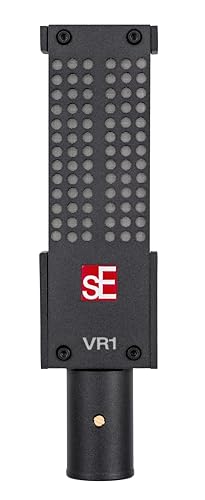
Se Electronics VR1
Best for: Guitarists and engineers who want a passive ribbon microphone specifically voiced for guitar cabinets, with an ultra-slim chassis for tight amp miking positions.
Skip it if: You need higher output than a passive ribbon design provides without a high gain preamp, or a confirmed polar pattern before purchase.
Check Price on AmazonWe may earn a commission at no extra cost to you.
Listing verified: November 2026
Who Should Buy It
Buy it if
- Guitarists and engineers who want a ribbon microphone specifically voiced for guitar cabinet recording
- Engineers who want classic passive ribbon warmth with a raw, punchy character
- Buyers recording drum overheads or acoustic instruments who want ribbon detail without active circuitry
- Buyers with a preamp offering ample clean gain to drive a lower output passive ribbon design
Skip it if
- You need higher output than a passive ribbon provides and do not have a high gain preamp
- You need a confirmed polar pattern before purchase
- You need a confirmed numeric sensitivity or maximum SPL figure before buying
Key Specifications
| Type | Passive ribbon microphone |
| Polar pattern | Not published in listing |
| Frequency response | 20Hz to 18kHz |
| Connection | Gold-plated XLR connector |
| Phantom power | Not required; as a passive ribbon design, this microphone should generally not be run with phantom power |
| Max SPL or sensitivity | Not published in listing as a specific numeric figure; as a passive ribbon design, output level is generally lower than an active ribbon or condenser microphone, which the listing's emphasis on raw ribbon character is consistent with |
| Controls | Not published in listing |
| Mount and stand | A custom shockmount system is included, allowing the microphone to be centered, flipped or angled |
| Weight | Not published in listing; the chassis is described as less than three quarters of an inch thick |
| Included accessories | A custom shockmount is included per the listing |
Overview
The Se Electronics VR1 is a passive ribbon microphone that the listing positions specifically around guitar cabinet recording, describing it as designed to bring out the bite and edge of guitar cabinets without muddy highs, a more targeted framing than a generic all-purpose ribbon microphone claim.
Being a passive design, rather than the active circuit found on the related VR2 model, this microphone relies purely on its ribbon element's own output without internal electronics boosting the signal, which is the classic ribbon microphone approach and generally results in a lower output level requiring a preamp with ample clean gain.
The listing confirms a full-range 20Hz to 18kHz frequency response, the same figure stated for the active VR2 sibling, suggesting both models share a similar underlying ribbon element design despite the different circuit approach between passive and active versions.
Se Electronics credits its ribbon technology to innovative design work by the company's own CEO, and the VR1's specific framing around guitar cabinets, drum overheads and acoustic instruments suggests this model is tuned somewhat differently in character from the more vocal and strings oriented active VR2.
Sound Quality
The listing describes a superbly detailed, open sound with the raw, punchy character classic passive ribbon microphones are known for, specifically contrasting this with a more polished or processed tonal approach, and framing that rawness as particularly well suited to guitar cabinets and other dynamic sources.
The confirmed 20Hz to 18kHz frequency response extends further into the high frequencies than some vintage-style passive ribbons, which the listing credits to the innovative ribbon technology shared across the VR series, combining that extended detail with classic ribbon warmth.
The hand-tensioned ribbon capsule is specifically credited with delivering the classic passive ribbon response, with expressive dynamics and natural character, a result of individually hand-tensioning each ribbon element rather than relying on a less controlled mass production process.
Buyers who need a specific, confirmed sensitivity or maximum SPL figure to compare directly against another microphone's published specification should check Se Electronics' own documentation, since this listing describes sound character qualitatively rather than with full numeric detail.
Pickup Pattern and Noise Handling
The listing does not state a specific polar pattern for this microphone, which is a notable gap even though other sound character and construction details are described in reasonable depth.
Ribbon microphones in general commonly use a figure-8, or bidirectional, pattern due to the physical design of the ribbon element itself, though this remains general category context rather than a confirmed specification for this particular model.
Buyers who need a confirmed polar pattern before purchase, particularly relevant when positioning a microphone close to a guitar cabinet where rear pickup could capture unwanted room reflections, should resolve this question directly with Se Electronics.
Build Quality
The listing confirms durable all-metal construction with a gold-plated XLR connector, matching the build approach described for the active VR2 sibling and suggesting a consistent construction standard across the VR series.
The ultra-slim chassis, less than three quarters of an inch thick, is specifically useful for guitar cabinet miking, where a low-profile microphone body can be positioned closer to the speaker without the physical bulk of a larger microphone interfering with placement.
A custom shockmount system is included, described as allowing the microphone to be centered, flipped or angled, which matters for guitar cabinet work where precise, repeatable positioning relative to the speaker cone can meaningfully affect captured tone.
- Passive ribbon microphone
- 20Hz to 18kHz frequency response
- Voiced for guitar cabinets
- Hand-tensioned ribbon capsule
- Ultra-slim chassis, under 3/4 inch thick
- Custom shockmount included
Connectivity and Setup
The listing confirms a gold-plated XLR connector, a standard, reliable connection type that also offers some resistance to corrosion at the contact points compared with an uncoated connector.
As a passive ribbon design, this microphone should not be run with phantom power, which is a meaningful operational difference from the active VR2 sibling and from condenser microphones generally, since phantom power is simply unnecessary and, depending on the specific design, could be risky for some passive ribbons.
Because passive ribbon output is generally lower than a condenser or active ribbon microphone, buyers should plan for a preamp with substantial clean gain on hand, particularly for quieter sources, to avoid needing to push gain high enough that noise becomes audible.
Features, Controls and Extras
This is a passive ribbon microphone with no onboard switches or controls described in the listing, consistent with the classic, stripped-down approach many passive ribbon designs take, relying on the ribbon element's inherent character rather than electronic shaping.
The hand-tensioned ribbon capsule functions as the primary quality feature here, aiming for consistent, expressive dynamics between individual units through careful manufacturing rather than through any switchable control.
The included custom shockmount, with its centering, flipping and angling capability, is a genuinely useful positioning feature, particularly for the precise placement guitar cabinet miking often benefits from.
Use Cases: Vocals, Streaming, Podcasting and Instruments
The listing specifically recommends this microphone for electric guitar amps, framing it as ideal for bringing out the bite and edge of guitar cabinets without muddy highs, which is a clear, specific use case recommendation.
Drum overheads and acoustic instruments are also named as applications where this microphone performs beautifully, according to the listing, suggesting genuine versatility beyond its primary guitar cabinet focus.
Vocal and podcasting use is less emphasized in this specific listing compared with the active VR2 sibling, and the passive design's lower output may make it a less convenient choice for voice work without a sufficiently powerful preamp on hand.
Who Should Buy It
This microphone suits guitarists and engineers who specifically want a ribbon microphone voiced for guitar cabinet recording, along with the flexibility to also use it on drum overheads and acoustic instruments.
It is a weaker fit for buyers who need higher output for quieter sources without a high gain preamp available, or for buyers who need a confirmed polar pattern before purchase.
Engineers building a dedicated guitar amp miking setup will find the ultra-slim chassis and flexible shockmount particularly useful for achieving precise, repeatable microphone placement relative to a speaker cone.
Buyers who already own the active VR2 sibling and want a second, differently voiced ribbon microphone specifically for guitar cabinets will find this a sensible complementary purchase.
Home studio owners recording their own guitar parts, rather than professional session engineers, will also appreciate the combination of a forgiving, flexible shockmount and a microphone specifically voiced for the instrument rather than a general purpose design stretched to fit the job.
Alternatives Worth Considering
Buyers who want higher output without needing as much preamp gain should look at the active VR2 sibling from the same manufacturer instead of this passive design.
Buyers who need a confirmed polar pattern published directly in the listing should look at a different ribbon or condenser microphone whose listing states that specification clearly.
Buyers who primarily want this microphone for vocal or podcast work, rather than guitar cabinet recording, might find the active VR2 model's framing a closer match to that use case.
Buyers who need a confirmed numeric sensitivity or maximum SPL figure should compare this listing against a competing passive ribbon microphone with fuller published data.
Verdict
The Se Electronics VR1 delivers a genuinely well targeted passive ribbon microphone for guitar cabinet recording, backed by a confirmed 20Hz to 18kHz frequency response and a hand-tensioned ribbon capsule aimed at classic, expressive ribbon character.
Its lower passive output compared with an active design is a real consideration for buyers without a sufficiently powerful preamp, and the unpublished polar pattern and sensitivity figures are worth resolving with Se Electronics if those details matter to a specific recording plan.
For guitarists and engineers specifically focused on amp miking, this is a strong, well specified recommendation at its lower mid-range price tier.
Buyers who want higher output for easier gain staging, or who primarily need a microphone for vocal work, should weigh the active VR2 sibling as a closer match to those priorities.
Overall, buyers who know they want classic, raw ribbon character on electric guitar specifically will find this listing's narrow, confident framing more useful than a generic all-purpose claim would have been, even with the polar pattern and sensitivity figures left unstated.
Strengths and Limitations
Strengths
- Full-range frequency response of 20Hz to 18kHz combining ribbon warmth with extended high-frequency detail
- Specifically voiced to bring out the bite and edge of guitar cabinets without muddy highs
- Hand-tensioned ribbon capsule for a classic passive ribbon response with expressive dynamics
- Ultra-slim chassis fits into tight recording positions
- Custom shockmount included for flexible centered, flipped or angled positioning
- Durable all-metal construction with a gold-plated XLR connector
Limitations
- No stated polar pattern
- No stated numeric sensitivity or maximum SPL figure
- As a passive ribbon design, output is lower than an active ribbon or condenser microphone, requiring a preamp with ample clean gain
- No stated microphone weight
How We Scored It
Scores reflect published specifications, documented features and value against the alternatives below. They are editorial research scores, not laboratory measurements.
Alternatives to Consider

Beyerdynamic M 160
Recording guitar amplifiers, drum overheads, strings and brass with a smooth, directional ribbon character.
Read the Beyerdynamic M 160 review →
Shure BLX288/SM58 Dual Vocal
Bands, worship teams and event companies that need two dependable wireless SM58 vocal channels in one simple package.
Read the Shure BLX288/SM58 Dual Vocal review →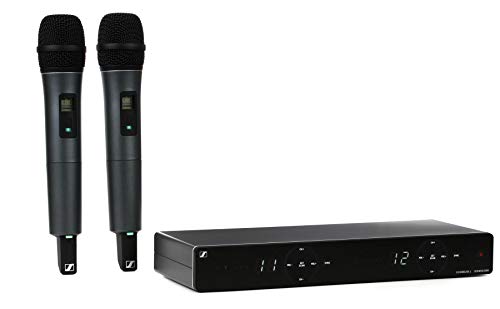
Sennheiser XSW 1-835
Worship teams, schools and gigging duos who want two wireless e835 vocal channels with the simplest possible setup.
Read the Sennheiser XSW 1-835 review →Questions Buyers Ask
Se Electronics VR1
See the current listing, price and included accessories.
About This Review
Daniel Brooks
Daniel Brooks edits the buying guides and how-to articles at Mandrillis. He works from manufacturer manuals, published specifications and common owner questions to explain music and audio gear in plain language, from turntables and headphones to digital pianos and electronic drums.
Read our full research methodology.