Studio Gear Review
Solid State Logic BiG SiX SuperAnalogue Mixing Console Review: Analog Summing Meets USB
The Solid State Logic BiG SiX SuperAnalogue Mixing Console pairs 4 console-grade mic preamps with a 16-channel USB interface and 18-input analog summing at mixdown for hybrid studio and stage work. This research review covers its confirmed channel architecture alongside the gain, phantom power and software details the listing leaves unpublished.
Our Verdict
Research Score 76/100The Solid State Logic BiG SiX gives a genuinely hybrid studio and stage mixer a clear, checkable channel architecture: 4 console-grade SuperAnalogue mic preamps, 4 stereo line inputs, 2 ext inputs, a 16-channel USB audio interface, and 24-bit, 96 kHz conversion. Per-channel 3-band EQ and dynamics, a stereo master bus compressor, a Listen Mic Compressor on talkback and 18-input summing at mixdown round out a feature set built for engineers who want an analog console feel alongside modern USB recording. The listing does not confirm preamp gain range, phantom power or bundled software, which matters for buyers comparing it strictly against fully specified competitors. Given the brand's console heritage and the concrete detail that is published, this is a solid mid-range to upper mid-range score.
Editorial research score based on published specifications and documented features, not a customer rating or lab test.

Solid State Logic
Solid State Logic BiG SiX SuperAnalogue Mixing Console
Best for: Hybrid studios and small stages that want console-grade SuperAnalogue preamps, built-in 16-channel USB recording and analog summing at mixdown in one mixer.
Skip it if: You need a documented preamp gain range and confirmed phantom power in writing before buying, since this listing focuses on channel architecture and processing features rather than.
Check Price on AmazonWe may earn a commission at no extra cost to you.
Listing verified: November 2026
Who Should Buy It
Buy it if
- Hybrid studios that want console-grade mic preamps with built-in USB recording
- Engineers who want analog style summing at mixdown rather than working entirely inside a DAW
- Live sound operators who need a stage-capable mixer with a USB interface built in
- Buyers who value a stereo master bus compressor and Listen Mic Compressor as standard features
Skip it if
- You need a documented preamp gain range before purchasing
- You require confirmed phantom power specifications
- You need bundled recording software included rather than sourced separately
Key Specifications
| Type | SuperAnalogue hybrid mixing console and USB audio interface for studio and stage, Solid State Logic BiG SiX |
| Inputs | 4 console-grade SuperAnalogue mic preamps, 4 stereo line inputs and 2 ext inputs, as stated in the listing |
| Outputs | Not published in listing as an itemized output count. A comprehensive monitoring section is described without a specific output number |
| Preamps | 4 console-grade SuperAnalogue mic preamps, described as studio-grade. An exact gain range is not stated |
| Resolution | 24-bit, 96 kHz AD/DA converters |
| Phantom power | Not published in listing |
| Connection | 16-channel USB audio interface built into the console |
| Monitoring | A comprehensive monitoring section, plus a stereo master bus compressor and a Listen Mic Compressor on the talkback input |
| Bundled software | Not published in listing |
| Included accessories | Not published in listing |
Overview
The Solid State Logic BiG SiX SuperAnalogue Mixing Console is a hybrid mixing console and USB audio interface built for both studio and stage use. The listing describes it as a console-grade product, and several of its bullets back that framing with specific channel counts and processing features rather than vague marketing language alone.
The core idea is hybrid production: a real analog signal path through SuperAnalogue preamps and summing, combined with a 16-channel USB interface for recording directly into a computer. That combination targets engineers who want the character of a physical console without giving up modern digital recording convenience.
This review works from those published bullets, flagging anything the listing does not state, such as preamp gain range or phantom power, rather than assuming it based on the brand's broader reputation in professional console design. That reputation is real, but a research review built on published facts has to hold even a well known manufacturer to the same standard as a lesser known one.
Preamps and Sound Quality
Four console-grade SuperAnalogue mic preamps are the centerpiece of this listing, explicitly described as built for hybrid production across studio and stage settings. No specific gain range in decibels is given, so buyers cannot compare headroom numerically against other interfaces from this figure alone.
Conversion is stated at 24-bit, 96 kHz through the console's AD/DA converters, which is a specific, checkable figure rather than a vague dynamic range claim. That resolution sits in a solid professional range, even if it does not reach the highest sample rates some competing interfaces advertise.
Per-channel 3-band EQ and dynamics processing add further shaping ability ahead of the USB interface stage, meaning engineers can shape a sound on the console itself before it ever reaches a recording application, which is a genuinely analog-console workflow rather than a software-only approach. For engineers trained on larger studio consoles, that order of operations can feel more natural than reaching for plug-ins after the fact.
Inputs, Outputs and Routing
Four console-grade SuperAnalogue mic preamps, 4 stereo line inputs and 2 ext inputs are stated directly in the listing. That gives a clear picture of the analog input architecture available on the console itself, separate from its USB recording capability.
On the digital side, a 16-channel USB audio interface is built directly into the console, letting a substantial number of channels be recorded to a computer without external converters. The listing does not break down how those 16 channels map against the analog inputs described above. Studios recording a band with several microphones and line sources at once would likely find that channel count sufficient for most sessions, even without a published mapping.
An 18-input summing feature at mixdown is also stated, which lets a DAW session route individual tracks back out through the console's analog summing bus rather than relying entirely on digital summing inside the software. The listing does not describe a specific physical output count beyond this summing feature. Engineers who prefer the sound of analog summing over software summing will likely find this one of the console's more distinctive capabilities.
Features, Monitoring and Software
A stereo master bus compressor is included, giving the console a glue compression stage on the main mix bus, a feature more commonly associated with larger studio consoles than compact interfaces. The listing does not name a specific compressor topology or ratio range.
A Listen Mic Compressor is specifically described as applied to the talkback input. That detail reflects genuine console engineering heritage, since this kind of dedicated talkback processing is uncommon outside higher-end studio consoles.
The listing describes a comprehensive monitoring section without itemizing specific features such as speaker switching or headphone outputs, so buyers who need a detailed monitoring feature list should request that information from the seller directly. Studios that regularly compare mixes across multiple sets of speakers will want that confirmation before assuming the monitoring section covers their workflow.
- 4 console-grade SuperAnalogue mic preamps
- 4 stereo line inputs and 2 ext inputs
- 16-channel USB audio interface
- 3-band EQ and dynamics channel processing
- Stereo master bus compressor
- Listen Mic Compressor on talkback input
- 18-input summing at mixdown
Build, Design and Controls
No chassis weight, dimensions or construction material are described in this listing. For a console-grade hybrid mixer marketed for both studio and stage use, that is a meaningful gap for buyers planning portability or a fixed installation.
The per-channel EQ and dynamics processing, along with the stereo master bus compressor, imply a control surface with a reasonable number of physical knobs and switches per channel. That is consistent with a console built for tactile analog mixing rather than menu diving.
Buyers who care about physical build and control layout should request confirmed dimensions and a control diagram from the seller. This particular listing emphasizes signal path features over physical design specifics.
Connectivity, Drivers and Latency
The core connectivity feature is the built-in 16-channel USB audio interface. That is stated directly in the listing, without further detail on driver software, supported operating systems, or specific latency figures.
No DAW or recording software is named as bundled with the unit, which is a notable omission for an interface at this price tier, since many comparable products include at least a basic recording application. Buyers should budget for separately licensed recording software or confirm with the seller whether any companion application ships with this particular unit.
Because no latency figure or driver platform is confirmed, buyers planning a specific recording workflow should verify operating system compatibility and expected monitoring delay directly with the seller before relying on this console for time-sensitive tracking. Engineers recording vocalists or other performers sensitive to monitoring delay should treat this confirmation as a priority rather than an afterthought.
Setup and Daily Use
In a hybrid studio, an engineer would likely track through the SuperAnalogue preamps and per-channel EQ and dynamics, recording the result through the 16-channel USB interface into a DAW. The console's summing bus would then blend tracks back together at mixdown for an analog-style final pass.
On stage, the same console could serve live sound duties, with the master bus compressor providing glue on the main program feed and the Listen Mic Compressor supporting clear talkback communication between the engineer and performers. That dual studio and stage capability is a core part of the hybrid positioning described throughout the listing, rather than a single-purpose design bolted onto a second use case.
Who Should Buy It
This console suits hybrid studios that want console-grade preamps with built-in USB recording, engineers who prefer analog summing at mixdown over an entirely digital workflow, and live sound operators who need a stage-capable mixer with a USB interface included. Project studios transitioning away from an entirely software-based setup toward a more tactile analog workflow are also a natural fit.
It is a weaker fit for buyers who need a documented preamp gain range, confirmed phantom power, or bundled recording software included at purchase rather than sourced separately. Shoppers in that group may be better served by an interface listing that itemizes every one of those figures directly.
Alternatives Worth Considering
Within this same catalog, the Solid State Logic SSL 18 covers different ground with a USB-C audio and MIDI interface bundle rather than a hybrid analog console. That makes it a better fit for buyers who want a pure recording interface rather than console-style summing.
Studios that do not need analog summing at mixdown might instead consider a Thunderbolt based studio interface with Unison-style preamp emulation. That trades the BiG SiX's physical console workflow for software-based plug-in modeling of classic preamp character.
Buyers focused purely on live sound without studio recording needs might look at a dedicated digital live mixing console with motorized faders and scene recall. That trades the BiG SiX's analog summing bus for digital snapshot recall across a venue.
Verdict
The Solid State Logic BiG SiX SuperAnalogue Mixing Console gives a genuinely hybrid studio and stage mixer a clear, checkable channel architecture: 4 console-grade mic preamps, 4 stereo line inputs, 2 ext inputs, a 16-channel USB audio interface, and 24-bit, 96 kHz conversion. Per-channel 3-band EQ and dynamics, a stereo master bus compressor, a Listen Mic Compressor on talkback and 18-input summing at mixdown round out a feature set built for engineers who want an analog console feel alongside modern USB recording.
The listing does not confirm preamp gain range, phantom power or bundled software, which matters for buyers comparing it strictly against fully specified competitors. Given the brand's console heritage and the concrete detail that is published, this is a solid mid-range to upper mid-range score.
Strengths and Limitations
Strengths
- 4 console-grade SuperAnalogue mic preamps built by a respected console manufacturer
- 16-channel USB audio interface built into a hybrid studio and stage mixer
- 24-bit, 96 kHz AD/DA conversion stated directly in the listing
- 3-band EQ and dynamics processing on every channel
- Stereo master bus compressor plus Listen Mic Compressor on talkback
- 18-input summing at mixdown for an analog style final blend
Limitations
- No exact gain range is published for the SuperAnalogue preamps
- Phantom power is not mentioned anywhere in the listing
- No bundled software or DAW integration is described
- Chassis weight and dimensions are not published
How We Scored It
Scores reflect published specifications, documented features and value against the alternatives below. They are editorial research scores, not laboratory measurements.
Alternatives to Consider

Pioneer DJ XDJ-RX3
DJs who want club-standard standalone playback from USB with a large touchscreen and a familiar two-channel layout.
Read the Pioneer DJ XDJ-RX3 review →
Yamaha DM3-D 22
Small venues, houses of worship and production companies that want a compact 96 kHz digital console with Dante networking for stage boxes and multitrack recording.
Read the Yamaha DM3-D 22 review →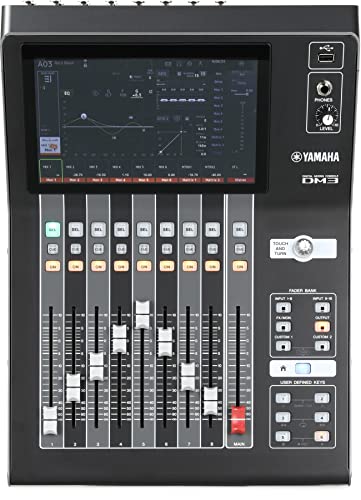
Yamaha DM3
Bands, small venues and project studios that want a compact 96 kHz digital console that doubles as an 18x18 USB recording interface.
Read the Yamaha DM3 review →Questions Buyers Ask
Solid State Logic BiG SiX SuperAnalogue Mixing Console
See the current listing, price and included accessories.
About This Review
Mandrillis Team
The Mandrillis editorial team researches and compares audio and music gear using manufacturer documentation, verified specs and real buyer feedback, so you can make a confident purchase without wading through marketing claims.
Read our full research methodology.