Studio Gear Review
Solid State Logic SSL 18 Review: High Resolution, Thin Connection Detail
The Solid State Logic SSL 18 offers 8 mic/line inputs, 32-bit, 192 kHz conversion and ADAT, S/PDIF and MIDI expansion in one interface bundle. This research review covers those strengths alongside the connection standard and ALPHA 8 expander detail the listing leaves unstated.
Our Verdict
Research Score 73/100The Solid State Logic SSL 18 publishes a genuinely strong core specification: 8 mic/line inputs, 2 Hi-Z inputs, 2 send/return paths, and 32-bit, 192 kHz AD/DA conversion, which is among the highest resolution figures found in this review group. Sixteen-channel ADAT and S/PDIF expansion, MIDI I/O and a talkback mic input with word clock output add real studio integration value. What the available bullets do not confirm is the specific computer connection standard, a preamp gain range, or any detail about the ALPHA 8 expander the listing title says ships alongside it. Buyers drawn to the resolution figure and channel count should find this a strong fit, while anyone who needs every connection detail and bundle component spelled out should request that confirmation first.
Editorial research score based on published specifications and documented features, not a customer rating or lab test.

Solid State Logic
Solid State Logic SSL 18
Best for: Studios that want a high resolution 32-bit, 192 kHz interface with 8 mic/line inputs, dedicated send/return paths and digital expansion through ADAT and S/PDIF.
Skip it if: You need the exact computer connection standard and the bundled ALPHA 8 expander's specifications confirmed in writing before buying.
Check Price on AmazonWe may earn a commission at no extra cost to you.
Listing verified: November 2026
Who Should Buy It
Buy it if
- Studios that want 8 mic/line inputs with dedicated send/return paths for outboard processing
- Engineers who specifically want 32-bit, 192 kHz conversion for high resolution tracking
- Producers who need MIDI I/O alongside audio recording in one interface
- Facilities that already use ADAT or S/PDIF for channel expansion
Skip it if
- You need the computer connection type confirmed before ordering
- You require a documented preamp gain range and phantom power specification
- You need the bundled ALPHA 8 expander's own specifications spelled out separately
Key Specifications
| Type | Studio audio and MIDI interface for recording and mixing, Solid State Logic SSL 18 |
| Inputs | 8 mic/line inputs, 2 Hi-Z inputs and 2 send/return paths, as stated in the listing |
| Outputs | Not published in listing as a separately itemized output count beyond the stated send/return paths and the digital I/O described below |
| Preamps | 8 mic/line preamps. An exact gain range is not published in the listing |
| Resolution | 32-bit, 192 kHz AD/DA conversion |
| Phantom power | Not published in listing |
| Connection | Not published in listing as a specific computer connection standard. 16-channel ADAT, S/PDIF and MIDI I/O are confirmed for digital expansion |
| Monitoring | A talkback mic input and a word clock output are stated. No further monitoring section detail, such as speaker switching, is given |
| Bundled software | Not published in listing |
| Included accessories | Not published in listing. The product's listing title indicates it ships as a bundle with an ALPHA 8 AD/DA converter and expander, though no feature bullet describes that second unit's own specifications |
Overview
The Solid State Logic SSL 18 is a studio audio and MIDI interface described in its listing as built for recording and mixing. It carries a well known console brand's name into the interface market, and the listing's five bullets lean on specific numbers rather than vague marketing language for most of its core specification.
The headline figure is 32-bit, 192 kHz AD/DA conversion, which is a notably high resolution compared to several other interfaces in this review group. That is paired with 8 mic/line inputs, 2 Hi-Z inputs and 2 send/return paths, giving a fairly complete picture of the analog input side of the unit.
This review is built strictly from those five bullets. The listing title indicates the product ships bundled with an ALPHA 8 AD/DA converter and expander, but since no bullet describes that second unit's own specifications, this review treats the ALPHA 8 as an acknowledged but undocumented part of the bundle rather than guessing at its features. Buyers who specifically want ALPHA 8 performance figures should look for a listing or spec sheet dedicated to that unit rather than relying on this one.
Preamps and Sound Quality
The listing confirms 8 mic/line inputs, which implies 8 corresponding preamps, though no specific gain range in decibels is stated anywhere in the bullets. That leaves headroom and noise floor as open questions for buyers comparing this unit against a fully specified competitor.
Conversion quality is addressed with a specific, high resolution figure: 32-bit, 192 kHz AD/DA conversion. That is one of the more concrete and ambitious resolution claims in this entire review group, standing out even against premium Thunderbolt interfaces reviewed alongside it.
Two Hi-Z inputs extend the preamp section to cover instruments such as electric guitar or bass directly, without needing a separate direct injection box, which is a practical inclusion for project studios that record a range of source types. Having that option built in rather than relying on an outboard box also reduces the amount of extra gear a smaller studio needs to carry or store.
Inputs, Outputs and Routing
The listing states 8 mic/line inputs, 2 Hi-Z inputs and 2 send/return paths, which together describe a fairly complete analog input and routing picture. The 2 send/return paths in particular are a notable inclusion, letting outboard hardware such as compressors or equalizers be patched into the signal chain.
No specific physical output count beyond those send/return paths is itemized in the listing. Buyers planning a monitor setup with multiple speaker pairs or headphone outputs should confirm that detail separately rather than assume it from the input count alone. A studio that regularly checks mixes on more than one set of speakers should treat this as a question worth settling before relying on the interface for that workflow.
Digital expansion is handled through 16-channel ADAT and S/PDIF I/O, which lets the interface's effective channel count grow well beyond its onboard analog inputs when paired with additional preamps or converters. For a studio that starts small and later adds a dedicated mic preamp rack, that expansion path can delay the need to replace the core interface entirely.
Features, Monitoring and Software
MIDI I/O is built into the unit, letting hardware synthesizers, drum machines or MIDI controllers connect directly without a separate MIDI interface. This is a practical inclusion for producers working with hardware instruments alongside microphones and line sources.
A talkback mic input is confirmed, supporting communication between a control room and a performance space during tracking. That is a feature more commonly associated with larger studio setups than compact interfaces.
A word clock output is also stated, which matters for studios synchronizing this interface with other digital audio equipment, ensuring sample-accurate timing across multiple devices rather than relying on each unit's own internal clock. Facilities running several digital converters or outboard gear in the same signal chain tend to value this kind of dedicated sync output far more than a single-interface home studio would.
- 8 mic/line inputs and 2 Hi-Z inputs
- 2 send/return paths for outboard gear
- 32-bit, 192 kHz AD/DA conversion
- 16-channel ADAT and S/PDIF digital expansion
- MIDI I/O for hardware instruments
- Talkback mic input and word clock output
Build, Design and Controls
Chassis dimensions, weight and construction material are not described in this listing. Given the inclusion of a talkback input and word clock output, some front-panel control layout is implied, but no specific knob or button count is stated.
A bundled ALPHA 8 AD/DA converter and expander is referenced in the listing title, suggesting a multi-unit physical setup rather than a single compact box. Without feature bullets describing the ALPHA 8 directly, though, this review cannot confirm its own build specifications.
Buyers who need confirmed physical dimensions for a rack installation or desktop setup, for either the SSL 18 itself or the bundled ALPHA 8 expander, should request that detail directly from the seller before ordering. Studios planning a permanent rack build around this unit should treat that confirmation as a necessary step rather than an optional one.
Connectivity, Drivers and Latency
No specific computer connection standard, such as USB-C or Thunderbolt, is named anywhere in the five bullets provided for this listing. That is a significant gap for buyers deciding whether the interface will work with their existing computer setup.
Digital audio expansion through 16-channel ADAT and S/PDIF is confirmed. That is a meaningful connectivity feature in its own right, separate from how the unit connects to a host computer.
No latency figure or driver platform is described in the bullets, so buyers sensitive to monitoring delay during tracking should confirm expected performance with the seller directly rather than assuming a specific figure. Vocalists and other performers who rely on hearing themselves in near real time through headphones are the group most likely to notice if that figure turns out higher than expected.
Setup and Daily Use
In a typical session, a studio would likely use the 8 mic/line inputs and 2 Hi-Z inputs for tracking vocals, instruments and guitar direct signals. The 2 send/return paths would allow outboard compressors or effects to be patched in during tracking, rather than added only in the mix.
Day to day, the talkback mic input would support communication with performers, the word clock output would keep the interface synchronized with other digital gear, and MIDI I/O would let hardware synths or controllers be played and recorded alongside microphone sources in the same session. Over a longer project, that combination of features would reduce how often an engineer needs to reach for a separate piece of outboard gear mid-session.
Who Should Buy It
This interface suits studios that want 8 mic/line inputs with dedicated send/return paths for outboard gear. It also suits engineers who specifically want 32-bit, 192 kHz conversion, and producers who need MIDI I/O alongside audio recording in one unit.
It is a weaker fit for buyers who need the computer connection standard confirmed before ordering. The same goes for anyone requiring a documented preamp gain range and phantom power specification, or buyers who want the bundled ALPHA 8 expander's own specifications spelled out separately.
Alternatives Worth Considering
Within this same catalog, the Solid State Logic BiG SiX takes a different approach, combining console-grade SuperAnalogue preamps with a 16-channel USB interface and analog summing at mixdown. That may suit buyers who want a hybrid console workflow rather than a rack-style interface.
Buyers who specifically need a confirmed Thunderbolt connection might instead look at the Universal Audio Apollo X8P in this same review group. It states its connection standard, channel count and resolution directly in its own listing.
Studios that do not need MIDI I/O or word clock synchronization might consider a simpler interface focused purely on mic and line inputs. That would trade some of the SSL 18's studio integration features for a more compact, lower cost unit.
Verdict
The Solid State Logic SSL 18 publishes a genuinely strong core specification: 8 mic/line inputs, 2 Hi-Z inputs, 2 send/return paths, and 32-bit, 192 kHz AD/DA conversion, which is among the highest resolution figures found in this review group. Sixteen-channel ADAT and S/PDIF expansion, MIDI I/O and a talkback mic input with word clock output add real studio integration value.
What the available bullets do not confirm is the specific computer connection standard, a preamp gain range, or any detail about the ALPHA 8 expander the listing title says ships alongside it. Buyers drawn to the resolution figure and channel count should find this a strong fit, while anyone who needs every connection detail and bundle component spelled out should request that confirmation first.
Strengths and Limitations
Strengths
- 8 mic/line inputs plus 2 Hi-Z inputs for instruments
- 2 dedicated send/return paths for outboard gear
- 32-bit, 192 kHz AD/DA conversion, among the highest resolution figures in this review group
- 16-channel ADAT and S/PDIF digital expansion
- MIDI I/O built in for hardware synths and controllers
- Talkback mic input and word clock output for studio integration
Limitations
- No specific computer connection standard, such as USB-C, is named in the bullets
- No preamp gain range is published
- Phantom power is not mentioned anywhere in the listing
- The bundled ALPHA 8 expander's own specifications are not described in the available bullets
How We Scored It
Scores reflect published specifications, documented features and value against the alternatives below. They are editorial research scores, not laboratory measurements.
Alternatives to Consider

Pioneer DJ XDJ-RX3
DJs who want club-standard standalone playback from USB with a large touchscreen and a familiar two-channel layout.
Read the Pioneer DJ XDJ-RX3 review →
Yamaha DM3-D 22
Small venues, houses of worship and production companies that want a compact 96 kHz digital console with Dante networking for stage boxes and multitrack recording.
Read the Yamaha DM3-D 22 review →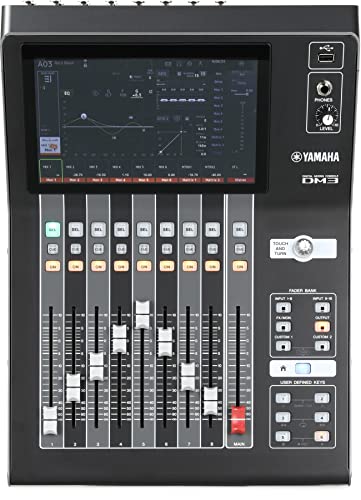
Yamaha DM3
Bands, small venues and project studios that want a compact 96 kHz digital console that doubles as an 18x18 USB recording interface.
Read the Yamaha DM3 review →Questions Buyers Ask
Solid State Logic SSL 18
See the current listing, price and included accessories.
About This Review
Mandrillis Team
The Mandrillis editorial team researches and compares audio and music gear using manufacturer documentation, verified specs and real buyer feedback, so you can make a confident purchase without wading through marketing claims.
Read our full research methodology.