Studio Gear Review
Tascam Model 12 Review: All-in-One Mixer and Interface
The Tascam Model 12 combines a 12 in/10 out USB interface, DAW controller, onboard compression and EQ, and dual headphone outputs in one unit. This research review covers what the listing confirms and the preamp specs it leaves unstated.
Our Verdict
Research Score 70/100The Tascam Model 12 packages a genuinely broad feature set, a 12 in, 10 out USB audio interface, DAW controller functionality, onboard 1-knob compression and 3-band EQ on every input module, a dedicated click output with Tap Tempo, and dual independent headphone outputs, into one all-in-one mixing and recording unit. The listing does not state preamp gain, phantom power or resolution figures, which buyers who need those details in writing should confirm separately. At a mid-range price tier, this is a strong choice for bands and solo producers who want one box covering live mixing, recording and DAW control, rather than buyers chasing a fully documented numeric spec sheet.
Editorial research score based on published specifications and documented features, not a customer rating or lab test.

Tascam
Tascam 12
Best for: Bands and solo producers who want an all-in-one mixer, 12 in/10 out USB interface and DAW controller with onboard compression and EQ on every channel.
Skip it if: You need a confirmed preamp gain figure before purchase, since this listing does not state one.
Check Price on AmazonWe may earn a commission at no extra cost to you.
Listing verified: November 2026
Who Should Buy It
Buy it if
- Bands who want a single unit covering live mixing, recording and DAW control together
- Solo producers who want onboard compression and EQ on every channel without outboard gear
- Musicians who want a dedicated click output with Tap Tempo for recording to a reference beat
- Buyers who want dual independent headphone outputs for two people monitoring differently
Skip it if
- You need a confirmed preamp gain specification before buying
- You do not want to learn DAW controller mappings for your specific software
- You need a confirmed phantom power specification in writing
Key Specifications
| Type | All-in-one 12-track digital multitrack mixing and recording studio, combining a mixer, USB audio interface and DAW controller |
| Inputs | 12 in / 10 out USB audio interface for DAW connectivity |
| Outputs | 10 outputs per the listing's stated USB configuration |
| Preamps | Not published in listing (no gain figure or preamp type stated) |
| Resolution | Not published in listing (no bit depth or sample rate stated) |
| Phantom power | Not published in listing |
| Connection | 12 in / 10 out USB audio interface for DAW connectivity |
| Monitoring | Dual headphone output with individual volume and source selection |
| Bundled software | Not published in listing |
| Included accessories | Not published in listing |
Overview
The Tascam Model 12 is framed in the listing as an all-in-one 12-track digital multitrack mixing and recording studio, combining the roles of a physical mixer, a USB audio interface and a DAW controller into a single unit rather than requiring three separate pieces of gear.
That all-in-one framing is the central selling point, and the listing's feature bullets back it up with specific functional claims, a stated 12 in, 10 out USB interface, onboard MIDI, per-channel compression and EQ, and a dedicated click output, rather than vague marketing language about versatility.
What the listing does not provide is the kind of numeric preamp or conversion specification that a buyer comparing interfaces side by side would want, so this review treats the functional feature set as the confirmed strength of this listing while flagging the numeric gaps clearly.
Positioned as a mid-range all-in-one solution, this unit targets bands and solo producers who want to consolidate their recording setup into fewer boxes, rather than buyers assembling a studio from separate mixer, interface and controller hardware.
Preamps and Sound Quality
No preamp gain figure in decibels, equivalent input noise rating or headroom specification is published anywhere in this listing, which is a real gap for buyers trying to judge how this unit's inputs will handle a range of microphone and instrument sources.
What the listing does confirm is that a 1-knob compressor and 3-band EQ are installed on all input modules, meaning every channel has genuine onboard dynamics and tone shaping available, which can meaningfully affect how a recorded or live signal ultimately sounds regardless of the underlying preamp's raw specification.
The 1-knob compressor design in particular suggests a simplified, single control approach to dynamics processing, trading some fine grained control for speed and ease of use, which fits the all-in-one, workflow focused positioning of this unit rather than aiming at engineers who want highly detailed manual compressor control.
Buyers who need a precise numeric preamp specification for professional comparison purposes should check Tascam's own published documentation, since this listing's feature bullets focus on functional capability, compression and EQ availability, DAW control, and connectivity, rather than on preamp performance numbers.
Inputs, Outputs and Routing
The listing states a 12 in, 10 out USB audio interface configuration for DAW connectivity, which is a solid routing capacity for a mid-sized band or a solo producer layering multiple instrument and vocal tracks during a session.
Exact mic versus line input breakdown within that 12 in total is not itemized in the listing, so buyers planning a specific session layout with a known number of microphone inputs should confirm that detail with Tascam's own specification sheet.
The dual headphone output, with individual volume and source selection for each, functions as an additional routing feature beyond the core 12 in, 10 out interface, letting two people monitor different sources or mix balances simultaneously without one adjustment affecting the other.
Features, Monitoring and Software
Onboard MIDI functionality is confirmed in the listing, letting this unit integrate with MIDI keyboards, controllers or other MIDI equipped gear directly, which adds production flexibility beyond pure audio recording and mixing.
A click output with Tap Tempo lets a band or solo musician record to a steady tempo reference, with Tap Tempo allowing that tempo to be set quickly by tapping in time rather than dialing in a precise beats per minute value manually.
DAW controller functionality is also part of this unit's core identity, meaning its physical controls can be mapped to control a digital audio workstation directly, letting an engineer mix inside software using physical faders and knobs rather than a mouse alone.
1-knob compressor and 3-band EQ on every input module round out the onboard processing, giving each channel genuine tone shaping and dynamics control without needing outboard gear or software plug ins during initial tracking.
- 12 in / 10 out USB audio interface
- Click output with Tap Tempo
- Onboard MIDI functionality
- 1-knob compressor, 3-band EQ on all inputs
- Dual headphone output, individual volume and source
Build, Design and Controls
The listing does not state chassis dimensions, weight or build material for this unit, so buyers planning desk or rack space around this mixer should confirm those figures against official product photography before purchase.
Given the DAW controller functionality and per-channel compressor and EQ knobs described in the listing, the control surface likely includes a meaningful number of physical knobs and possibly motorized or touch sensitive faders for DAW control, though the listing does not itemize the exact control count.
The dual headphone output with individual volume and source selection suggests a thoughtful control layout for monitoring specifically, letting two users adjust their own listening experience independently without needing a separate headphone amplifier.
Connectivity, Drivers and Latency
The core connectivity feature is the stated 12 in, 10 out USB audio interface, which the listing frames specifically for DAW connectivity, suggesting this unit is designed to integrate tightly with a connected computer's recording software.
DAW controller functionality implies an additional layer of connectivity beyond raw audio, likely communicating transport and mixing commands to a digital audio workstation over the same USB connection or through a separate protocol, though the listing does not specify the exact communication method.
Driver requirements and specific round trip latency figures for the USB interface are not detailed in the listing, so buyers with demanding low latency tracking needs should look to independent measurements or Tascam's own published documentation.
Setup and Daily Use
Setting up this unit for a session involves connecting the 12 in, 10 out USB interface to a computer, installing any required DAW controller mapping for a specific digital audio workstation, and configuring the per-channel compressor and EQ settings for the sources in use.
Daily use benefits from the dedicated click output with Tap Tempo, letting a band quickly establish and record to a tempo reference without manually calculating beats per minute, and from the dual headphone outputs, which let two people monitor independently during a session.
DAW controller mapping may require some initial learning time depending on which specific software a buyer uses, since physical controls need to be correctly assigned to the corresponding functions inside that particular digital audio workstation before the controller functionality becomes genuinely useful.
Who Should Buy It
This unit suits bands and solo producers who want to consolidate mixing, recording and DAW control into one box, along with onboard compression and EQ on every channel rather than relying on outboard gear or plug ins alone.
It is a weaker fit for buyers who need a confirmed preamp gain figure before purchase, and for anyone who specifically does not want to spend time learning DAW controller mappings for their particular recording software.
Musicians who record to a click track regularly will find particular value in the dedicated click output with Tap Tempo, which simplifies establishing a tempo reference compared with manually programming a metronome inside a DAW.
Alternatives Worth Considering
Buyers who need a confirmed numeric preamp gain figure should look at an interface whose listing states that number directly, rather than relying on this unit's functional feature description alone.
Buyers who do not need DAW controller functionality and simply want a straightforward USB interface might find a simpler, less expensive unit without the added controller mapping complexity.
Buyers who need more than 12 inputs for a larger ensemble session should look at a bigger format interface or mixer with a higher channel count than this unit offers.
Verdict
The Tascam Model 12 delivers a genuinely broad all-in-one feature set, a 12 in, 10 out USB interface, DAW controller functionality, onboard compression and EQ on every channel, and dual independent headphone outputs, consolidating what might otherwise be several separate pieces of gear.
The unpublished preamp gain and resolution figures are the main gaps in this listing, and buyers who need those confirmed should check Tascam's own specification sheet before committing to this mid-range priced, feature dense all-in-one unit.
For bands and solo producers who want to simplify their setup into one box covering mixing, recording and DAW control, this unit offers strong practical value, provided they are comfortable with the unpublished technical specifications and willing to invest a little setup time in mapping its controller functions.
Strengths and Limitations
Strengths
- 12 in / 10 out USB audio interface for direct DAW connectivity
- Click output with Tap Tempo for tracking to a tempo reference
- Onboard MIDI functionality built into the unit
- 1-knob compressor and 3-band EQ installed on all input modules
- Dual headphone output with individual volume and source selection
Limitations
- No stated preamp gain, phantom power or resolution figures
- No stated weight or chassis dimensions
- No bundled recording or mixing software is mentioned
- Functioning as a DAW controller may require learning specific software mappings
How We Scored It
Scores reflect published specifications, documented features and value against the alternatives below. They are editorial research scores, not laboratory measurements.
Alternatives to Consider

Pioneer DJ XDJ-RX3
DJs who want club-standard standalone playback from USB with a large touchscreen and a familiar two-channel layout.
Read the Pioneer DJ XDJ-RX3 review →
Yamaha DM3-D 22
Small venues, houses of worship and production companies that want a compact 96 kHz digital console with Dante networking for stage boxes and multitrack recording.
Read the Yamaha DM3-D 22 review →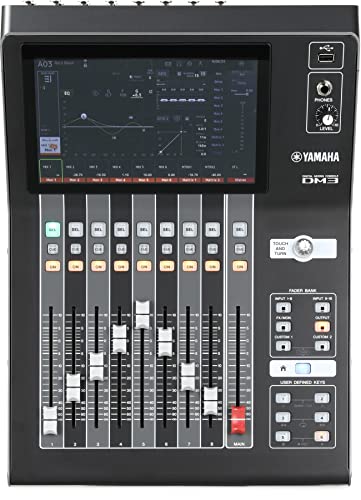
Yamaha DM3
Bands, small venues and project studios that want a compact 96 kHz digital console that doubles as an 18x18 USB recording interface.
Read the Yamaha DM3 review →Questions Buyers Ask
Tascam 12
See the current listing, price and included accessories.
About This Review
Mandrillis Team
The Mandrillis editorial team researches and compares audio and music gear using manufacturer documentation, verified specs and real buyer feedback, so you can make a confident purchase without wading through marketing claims.
Read our full research methodology.