Studio Gear Review
Telefunken M82 Review: Onboard EQ Dynamic Microphone
The Telefunken Elektroakustik M82 is a large-diaphragm dynamic microphone with a switchable two-band EQ, recommended for kick drum, bass amps and broadcast vocals. This research review covers what the listing confirms and the polar pattern it leaves unstated.
Our Verdict
Research Score 71/100The Telefunken Elektroakustik M82 stands out for a genuinely useful built-in feature, an independently switchable two-band EQ offering a mid cut and a high boost, giving engineers tonal shaping control directly at the microphone rather than relying entirely on later processing. The listing specifically recommends this microphone for kick drum, bass and guitar amps, and broadcast or podcast vocals, giving buyers clear guidance on its intended applications. Polar pattern and numeric frequency response figures are not published, which buyers who need those details in writing should resolve with Telefunken directly. At a mid-range price tier, this is a well targeted choice for the specific applications the listing recommends.
Editorial research score based on published specifications and documented features, not a customer rating or lab test.

Telefunken
Telefunken Elektroakustik M82
Best for: Engineers who want a large-diaphragm dynamic microphone with onboard EQ switching, specifically suited to kick drum, bass and guitar amps.
Skip it if: You need a confirmed polar pattern or numeric frequency response figure before purchase, since this listing describes tonal character qualitatively rather than with published numbers.
Check Price on AmazonWe may earn a commission at no extra cost to you.
Listing verified: November 2026
Who Should Buy It
Buy it if
- Engineers recording kick drum, bass or guitar amps who want a dynamic mic with built-in EQ
- Broadcasters and podcasters who want onboard mid cut and high boost switching for vocal clarity
- Buyers who want an end-address design for easy, intuitive microphone positioning
- Buyers who value a microphone designed and hand assembled in the USA
Skip it if
- You need a confirmed polar pattern before purchase
- You need a confirmed numeric frequency response or sensitivity figure in writing
- You need confirmed included accessories such as a mount before buying
Key Specifications
| Type | Large-diaphragm dynamic microphone with an end-address design |
| Polar pattern | Not published in listing |
| Frequency response | Not published in listing as a specific numeric range; the listing describes superior low frequency definition and a balanced mid and high frequency response |
| Connection | Not published in listing as a specific connector type; end-address design is confirmed |
| Phantom power | Not required; this is a dynamic microphone design |
| Max SPL or sensitivity | Not published in listing |
| Controls | Independently switchable two-band EQ featuring a mid cut and a high boost |
| Mount and stand | Not published in listing |
| Weight | Not published in listing |
| Included accessories | Not published in listing |
Overview
The Telefunken Elektroakustik M82 is a large-diaphragm dynamic microphone that the listing positions clearly around specific recommended applications, kick drum, bass and guitar amps, and broadcast or podcast vocals, rather than presenting it as a generic, all-purpose studio microphone.
That clear application guidance is genuinely useful for buyers, since it tells them directly what Telefunken itself considers this microphone's strongest use cases rather than leaving buyers to infer suitability from general specifications alone.
A standout confirmed feature is the independently switchable two-band EQ, offering a mid cut and a high boost directly on the microphone, which is a relatively uncommon control to find built into a dynamic microphone rather than requiring a separate outboard or software EQ.
The listing also notes this microphone is designed and hand assembled in the USA, a manufacturing detail some buyers specifically value when comparing options within a similar price and feature range.
Sound Quality
No numeric frequency response range is published in this listing, though the feature bullets describe superior low frequency definition from the large-diaphragm dynamic capsule and a balanced mid and high frequency response contributing to clarity and intelligibility.
Those qualitative claims align with the microphone's recommended applications, since kick drum and bass amp recording specifically benefit from strong low frequency definition, while broadcast and podcast vocal work benefits from the clarity and intelligibility the listing associates with the balanced mid and high response.
The onboard two-band EQ adds a further layer of tonal control beyond the capsule's inherent character, letting an engineer apply a mid cut to reduce boxiness or a high boost to add presence directly at the microphone rather than only in post-production.
Buyers who need a specific, confirmed frequency response curve to compare directly against another microphone's published specification should check Telefunken's own documentation, since this listing's feature bullets describe tonal character qualitatively rather than numerically.
Pickup Pattern and Noise Handling
The listing does not state a polar pattern for this microphone, which is a notable gap given how clearly the listing otherwise specifies recommended applications and onboard EQ functionality.
Dynamic microphones recommended for close miking loud sources like kick drums and guitar amps are commonly built with a cardioid or similar directional pattern to reject bleed from other nearby sound sources, though this remains general category context rather than a confirmed fact about this specific model.
Buyers who need a confirmed polar pattern before purchase, perhaps to plan a specific multi-microphone drum or amp miking setup, should resolve this question directly with Telefunken rather than assuming a standard pattern.
Build Quality
The end-address design is a specific build detail confirmed in the listing, meaning sound enters from the end of the microphone rather than the side, which the listing states makes for easy positioning on most sound sources.
Being designed and hand assembled in the USA is also confirmed, a manufacturing detail that speaks to quality control and craftsmanship positioning, even though the listing does not provide further detail on chassis material, dimensions or weight.
Buyers who want confirmed chassis weight or body material before purchase should check Telefunken's own product page or specification sheet, since none of that information is present in the available listing data for this particular model.
- Large-diaphragm dynamic capsule
- Switchable two-band EQ: mid cut, high boost
- End-address design
- Designed and hand assembled in the USA
- Recommended for kick drum, bass/guitar amps, broadcast vocals
Connectivity and Setup
The listing does not state a specific connector type for this microphone, though dynamic microphones in this general category commonly use a standard balanced connector, a detail buyers should still confirm directly rather than assume.
As a dynamic microphone, this model does not require phantom power, which simplifies setup compared with a condenser microphone and means it can be used with a wider range of basic mixers and interfaces that may lack phantom power on every channel.
The end-address design also simplifies setup in a practical sense, since positioning the microphone is generally more intuitive when sound enters from the end rather than requiring careful side orientation relative to the source.
Features, Controls and Extras
The independently switchable two-band EQ is the standout feature here, letting an engineer apply a mid cut to tame boxiness on a source like a kick drum, or a high boost to add presence and intelligibility to a broadcast vocal, without reaching for a separate EQ unit.
Having this control built directly into the microphone means tonal adjustments happen before the signal ever reaches a mixer or interface, which can simplify a live or broadcast setup where outboard processing is not readily available.
No additional controls, such as a pad switch or polar pattern selector, are mentioned in the listing, so buyers should not assume those features are present beyond the confirmed two-band EQ.
Use Cases: Vocals, Streaming, Podcasting and Instruments
The listing's own recommended applications, kick drum, bass and guitar amps, and broadcast or podcast vocals, give buyers direct, specific guidance on where this microphone is intended to perform best, which is more useful than a generic suitability claim.
For broadcast and podcast vocal work specifically, the high boost EQ setting could help add clarity and intelligibility to speech, while the mid cut setting could help tame boxiness on sources like kick drum or bass amps where low-mid buildup is common.
Buyers considering this microphone for applications outside the listing's specific recommendations, such as acoustic instrument or choir recording, should weigh the dynamic capsule's generally lower sensitivity compared with a condenser microphone before assuming suitability for those quieter or more distant miking scenarios.
Who Should Buy It
This microphone suits engineers specifically recording kick drum, bass or guitar amps, and broadcasters or podcasters who want onboard EQ switching for vocal clarity, matching the listing's own stated recommended applications closely.
It is a weaker fit for buyers who need a confirmed polar pattern before purchase, or for buyers recording quieter, more distant sources where a dynamic capsule's generally lower sensitivity compared with a condenser may be a limiting factor.
Engineers who want to avoid patching in a separate outboard EQ for sources that commonly need a mid cut or presence boost will find real practical value in this microphone's built-in two-band EQ switching.
Buyers assembling a drum or amp miking setup who want a microphone matched to specific named applications, rather than a generic all-purpose design, will appreciate the clarity of Telefunken's own recommended use cases here.
Home studio owners setting up a single multi-purpose room for both podcast recording and occasional instrument tracking may also find the dual recommended use case, broadcast vocals and instrument amps, a convenient way to cover two needs with one microphone.
Alternatives Worth Considering
Buyers who need a confirmed polar pattern published directly in the listing should look at a different dynamic microphone whose listing states that specification clearly.
Buyers who do not need onboard EQ switching and want the simplest possible dynamic microphone might consider a more basic model without that specific feature, at a potentially lower price.
Buyers recording quieter or more distant acoustic sources, where a condenser microphone's higher sensitivity is an advantage, should look at a large-diaphragm condenser rather than this dynamic design.
Buyers who want a confirmed numeric frequency response specification published directly in the listing should compare this model against a competing dynamic microphone with fuller published data.
Verdict
The Telefunken Elektroakustik M82 earns its place through a genuinely useful built-in two-band EQ and clear, specific guidance on recommended applications, kick drum, bass and guitar amps, and broadcast or podcast vocals, rather than through an exhaustive numeric spec sheet.
The unpublished polar pattern and frequency response figures are the main gaps buyers should be aware of, and those who need those details confirmed should check Telefunken's own documentation directly.
For engineers working within the listing's recommended applications, this microphone's onboard EQ switching offers real practical value at its mid-range price tier.
Buyers working outside those recommended applications, or who need every specification confirmed in writing, should weigh this listing's gaps carefully before committing to a purchase.
Overall, the clarity of Telefunken's own recommended use cases, paired with a genuinely practical onboard EQ, makes this a sensible, targeted purchase for the specific jobs it is built for, rather than a generalist microphone meant to cover every recording scenario equally well.
Strengths and Limitations
Strengths
- Large-diaphragm dynamic capsule for superior low frequency definition
- Balanced mid and high frequency response for clarity and intelligibility
- Independently switchable two-band EQ with a mid cut and high boost built in
- End-address design for easy positioning on most sound sources
- Designed and hand assembled in the USA
- Specifically recommended for kick drum, bass and guitar amps, and broadcast or podcast vocals
Limitations
- No stated polar pattern
- No stated numeric frequency response, sensitivity or maximum SPL figures
- No stated included accessories or mount
- No stated microphone weight
How We Scored It
Scores reflect published specifications, documented features and value against the alternatives below. They are editorial research scores, not laboratory measurements.
Alternatives to Consider

Beyerdynamic M 160
Recording guitar amplifiers, drum overheads, strings and brass with a smooth, directional ribbon character.
Read the Beyerdynamic M 160 review →
Shure BLX288/SM58 Dual Vocal
Bands, worship teams and event companies that need two dependable wireless SM58 vocal channels in one simple package.
Read the Shure BLX288/SM58 Dual Vocal review →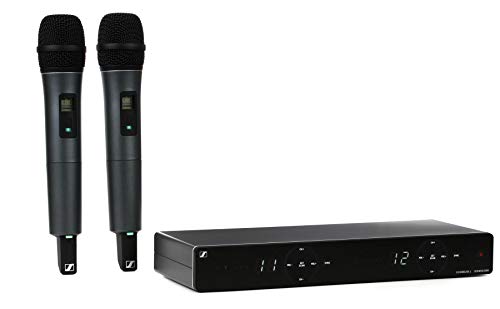
Sennheiser XSW 1-835
Worship teams, schools and gigging duos who want two wireless e835 vocal channels with the simplest possible setup.
Read the Sennheiser XSW 1-835 review →Questions Buyers Ask
Telefunken Elektroakustik M82
See the current listing, price and included accessories.
About This Review
Mandrillis Team
The Mandrillis editorial team researches and compares audio and music gear using manufacturer documentation, verified specs and real buyer feedback, so you can make a confident purchase without wading through marketing claims.
Read our full research methodology.