Studio Gear Review
Universal Audio Apollo x6 Gen 2 Review: The Smallest of the Trio
The Universal Audio Apollo x6 Gen 2 is the smallest implied channel count among the Apollo Gen 2 interfaces in this catalog, pairing a conversion upgrade claim with a large named plug-in library. This research review looks at what fits a smaller studio and what the listing leaves unconfirmed.
Our Verdict
Research Score 55/100The Universal Audio Apollo x6 Gen 2 shares its core marketing claims almost word for word with its x8 and x8p Gen 2 siblings in this catalog: improved conversion, a large named UAD plug-in library, Auto-Gain and subwoofer-aware bass management. What differs is the model name itself, which implies the smallest input capacity of the three, making this the more sensible choice for a smaller project studio rather than a full band tracking room. As with its siblings, the listing does not confirm an exact channel count, preamp specification or connection standard, so buyers should not assume those details based on price or model number alone. For a compact setup built around a handful of inputs and a strong plug-in library, this is a reasonable starting point for further research.
Editorial research score based on published specifications and documented features, not a customer rating or lab test.

Universal Audio
Universal Audio Apollo x6 Gen 2
Best for: Smaller studios or project rooms that want the Apollo Gen 2 conversion claim and named UAD plug-in library without needing a large channel count.
Skip it if: You need a full band or large ensemble channel count confirmed before buying, since the x6 name implies the smallest input capacity among the Gen 2 Apollo units in this catalog.
Check Price on AmazonWe may earn a commission at no extra cost to you.
Listing verified: November 2026
Who Should Buy It
Buy it if
- Solo producers or small project studios that do not need a large channel count
- Buyers drawn specifically to the named UAD plug-in titles included in this bundle
- Engineers who want Auto-Gain for quicker level setting on a handful of inputs
- Mixers who want subwoofer-aware bass management in a compact setup
Skip it if
- You need to track a full band with many simultaneous microphones
- You require a confirmed connection standard before purchasing
- You want a documented preamp specification for every channel
Key Specifications
| Type | Studio audio interface, second generation Apollo x6 platform bundled with an Analog Classics plug-in package |
| Inputs | Not published in listing. Auto-Gain is described as working across multiple inputs, confirming more than one channel without stating an exact count |
| Outputs | Not published in listing |
| Preamps | Not published in listing. No preamp count or gain figure is stated for this Gen 2 unit |
| Resolution | Not published in listing as a bit depth or sample rate figure. The listing instead claims the widest dynamic range and lowest distortion of any Apollo to date |
| Phantom power | Not published in listing |
| Connection | Not published in listing |
| Monitoring | Bass management for adding a subwoofer to a monitor setup, per the listing |
| Bundled software | Access to a library of over 200 UAD DSP and Native plug-ins, including named titles such as Capitol Chambers, Sound City Studios and the EL8 Distressor |
| Included accessories | Not published in listing |
Overview
The Universal Audio Apollo x6 Gen 2 is the smallest implied unit among three similarly named Apollo Gen 2 interfaces reviewed in this catalog, sold here bundled with an Analog Classics plug-in package. The listing itself runs to only four bullets, matching the thin format used for its x8 and x8p siblings almost exactly.
That shared bullet text means the marketing claims are nearly identical across all three Gen 2 units: improved conversion quality, access to a named plug-in library, Auto-Gain and bass management. The practical difference between them, based on model naming alone, is the implied scale of the hardware rather than any distinct feature.
This review treats the x6 designation as a signal of a smaller, more project-studio-oriented unit without assuming a specific channel count that the listing itself does not state. Buyers should not read the smaller name as confirmation of an exact number of inputs. Treating the model name as a loose size indicator rather than a specification is the safest way to compare it against its siblings in this same catalog.
Preamps and Sound Quality
As with its siblings in this catalog, the only sound quality claim here is that the unit offers the widest dynamic range and lowest distortion of any Apollo to date, a comparison made against earlier Universal Audio hardware rather than competing brands. No decibel measurement accompanies that statement.
No preamp count or gain range is published for this unit, and the x6 name itself is the only hint that it carries fewer preamp channels than the x8 and x8p variants reviewed alongside it. That naming convention is a reasonable general assumption but not a number confirmed in this specific listing.
Auto-Gain remains the single feature that touches on preamp behavior, automatically setting levels across whatever multiple inputs the unit has. For a smaller studio with fewer simultaneous sources to track, this automation may matter less in practice than it would on a larger multi-input unit. Even so, it removes one manual step from a typical session, which is a modest but real convenience regardless of channel count.
Inputs, Outputs and Routing
No specific input or output count is stated in this listing. The x6 designation suggests a smaller channel count than the x8 or x8p models sold under the same Gen 2 banner, but that inference comes from the product name rather than from any number in the bullets themselves.
Bass management for subwoofer integration implies some dedicated or assignable low-frequency output path, consistent with what is described across the other Gen 2 Apollo listings in this catalog. Again, no specific output count is given.
Buyers planning a small project studio around a known number of simultaneous inputs should still confirm the exact figure with the seller rather than relying on the model name as a stand-in for a published specification. A short message to the seller before ordering is a small amount of effort compared to receiving a unit that does not match a session's actual channel requirements.
Features, Monitoring and Software
The plug-in library bullet carries the most specific detail in this listing, naming access to over 200 UAD DSP and Native plug-ins and calling out Capitol Chambers, Sound City Studios and the EL8 Distressor by name. That level of detail is identical to what is stated for the larger Gen 2 units in this same catalog.
Auto-Gain is presented as a workflow convenience, automatically setting levels across the available inputs so a take is not missed while manually adjusting gain. In a smaller studio with fewer microphones running at once, this feature may still save time, just across a smaller number of channels.
Bass management completes the feature set, allowing a subwoofer to be added to a compact monitor setup for more accurate low-end checks. This is especially relevant for smaller rooms that may rely on near-field monitors without strong bass response on their own, where low-frequency mix problems can otherwise go unnoticed until a track is played on a larger system.
- Access to over 200 UAD DSP and Native plug-ins
- Named titles including Capitol Chambers, Sound City Studios and the EL8 Distressor
- Auto-Gain across multiple inputs
- Bass management for subwoofer integration
Build, Design and Controls
No chassis dimensions, weight or control layout are described in this listing. Given the implied smaller scale of an x6 unit compared to its x8 and x8p siblings, a more compact footprint is a reasonable expectation, though this review will not state a specific size that the bullets do not provide.
The Auto-Gain and bass management features imply some level of front-panel or software control. No detail on knob count, metering or display is given anywhere in the text.
Buyers who need confirmed physical dimensions for a small desk or compact rack setup should request that information directly from the seller. This listing focuses entirely on conversion and software features rather than physical design.
Connectivity, Drivers and Latency
No connection standard is named anywhere in the listing, matching the pattern seen across the other Gen 2 Apollo products in this catalog. Thunderbolt, USB or any other standard is left entirely unconfirmed in the available text.
Driver and recording software compatibility are likewise unaddressed, with no companion DAW or operating system named for this specific unit. Buyers should not assume compatibility with a particular platform based on general knowledge of other Apollo products.
Latency is not discussed at all in this listing. Smaller studios tracking a single performer at a time may be less sensitive to this gap than larger sessions, but it remains an open question regardless of session size. Anyone recording vocals or other latency-sensitive sources should still confirm expected monitoring delay before relying on the unit for a critical take.
Setup and Daily Use
In a smaller project studio, this interface would likely be used to track one or two sources at a time. Auto-Gain would quickly set levels before a take begins, rather than requiring manual adjustment on each input.
During mixing, the bass management feature would let an engineer check low end through an added subwoofer even in a modestly sized room, while the named plug-in titles would be available for processing within whatever recording software the studio already uses. For a one-person operation handling both tracking and mixing, that combination covers much of a typical daily routine without extra hardware.
Who Should Buy It
This interface suits solo producers and smaller project studios that do not need a large channel count. It also suits buyers specifically interested in the named UAD plug-in titles and Auto-Gain convenience in a smaller footprint.
It is a weaker fit for studios that need to track a full band or large ensemble at once, or for anyone who needs a confirmed channel count, preamp specification or connection standard before purchasing. Shoppers in that second group are better served looking at a listing further up this same catalog that states its numbers directly.
Alternatives Worth Considering
Within this same catalog, the Apollo x8 Gen 2 and Apollo x8p Gen 2 share nearly identical bullet text but imply a larger channel count. That makes them more suitable for studios that need to track more sources simultaneously than this smaller x6 unit likely supports.
Buyers who want a fully specified small interface at a lower price tier might consider something like the Universal Audio Volt 2 or the MOTU M2. Both typically publish a clear channel count and connection type directly in their own listings.
Studios that expect to grow their channel count over time should weigh whether starting with this smaller unit and upgrading later makes more sense than purchasing a larger Gen 2 model now. The listing does not describe any expansion path for this specific unit.
Verdict
The Universal Audio Apollo x6 Gen 2 shares its core marketing claims almost word for word with its x8 and x8p Gen 2 siblings in this catalog: improved conversion, a large named UAD plug-in library, Auto-Gain and subwoofer-aware bass management. What differs is the model name itself, which implies the smallest input capacity of the three, making this the more sensible choice for a smaller project studio rather than a full band tracking room.
As with its siblings, the listing does not confirm an exact channel count, preamp specification or connection standard, so buyers should not assume those details based on price or model number alone. For a compact setup built around a handful of inputs and a strong plug-in library, this is a reasonable starting point for further research.
Strengths and Limitations
Strengths
- Smallest and typically most affordable unit in this Apollo Gen 2 trio reviewed here
- Listing claims the widest dynamic range and lowest distortion of any Apollo generation so far
- Large plug-in library with specific award-winning titles named directly
- Auto-Gain speeds up level setting across multiple inputs
- Bass management supports adding a subwoofer to an existing monitor path
Limitations
- No input, output or preamp count is published anywhere in the listing
- Connection type, such as Thunderbolt or USB, is not stated
- No phantom power confirmation for condenser microphones
- Smaller implied channel count than its x8 and x8p siblings limits larger sessions
How We Scored It
Scores reflect published specifications, documented features and value against the alternatives below. They are editorial research scores, not laboratory measurements.
Alternatives to Consider

Pioneer DJ XDJ-RX3
DJs who want club-standard standalone playback from USB with a large touchscreen and a familiar two-channel layout.
Read the Pioneer DJ XDJ-RX3 review →
Yamaha DM3-D 22
Small venues, houses of worship and production companies that want a compact 96 kHz digital console with Dante networking for stage boxes and multitrack recording.
Read the Yamaha DM3-D 22 review →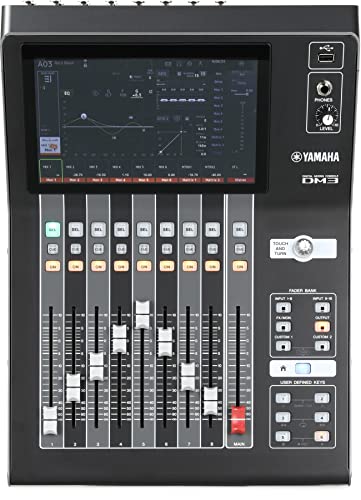
Yamaha DM3
Bands, small venues and project studios that want a compact 96 kHz digital console that doubles as an 18x18 USB recording interface.
Read the Yamaha DM3 review →Questions Buyers Ask
Universal Audio Apollo x6 Gen 2
See the current listing, price and included accessories.
About This Review
Mandrillis Team
The Mandrillis editorial team researches and compares audio and music gear using manufacturer documentation, verified specs and real buyer feedback, so you can make a confident purchase without wading through marketing claims.
Read our full research methodology.