Studio Gear Review
Universal Audio Apollo x8p Gen 2 Review: Strong Claims, Thin Spec Sheet
The Universal Audio Apollo x8p Gen 2 bundles next generation conversion claims, a large named UAD plug-in library and subwoofer-aware bass management into one premium-tier listing. This research review flags how little the four bullets actually confirm about inputs, connection type or preamp count before you commit to buying.
Our Verdict
Research Score 56/100The Universal Audio Apollo x8p Gen 2 leans heavily on Universal Audio's reputation and a short set of marketing claims rather than a detailed spec sheet. The listing promises the widest dynamic range and lowest distortion of any Apollo generation, backs that with access to a large named plug-in library, and adds two practical touches in Auto-Gain and subwoofer-aware bass management. None of the bullets confirm input count, output count, preamp specification or connection type, which is unusual for a flagship-adjacent interface at this price tier. Buyers drawn to the brand and the plug-in library will likely be satisfied, but anyone comparing hard numbers across interfaces should treat this particular listing as a starting point for further research rather than a complete specification.
Editorial research score based on published specifications and documented features, not a customer rating or lab test.

Universal Audio
Universal Audio Apollo x8p Gen 2
Best for: Buyers already familiar with Universal Audio's Apollo line who want next generation conversion and the UAD plug-in library.
Skip it if: You need the connection type, input count and preamp specification confirmed in the listing itself before buying, since none of those appear in the bullets provided.
Check Price on AmazonWe may earn a commission at no extra cost to you.
Listing verified: November 2026
Who Should Buy It
Buy it if
- Producers who want Auto-Gain to speed up tracking across several microphones at once
- Mixers who plan to use subwoofer-aware bass management when checking low end
- Buyers who already know they want access to the named UAD plug-in titles
- Shoppers comfortable researching connection type and channel count elsewhere before ordering
Skip it if
- You need Thunderbolt or USB confirmed in writing before purchase
- You require a stated preamp count and gain range
- You want full phantom power specifications up front
Key Specifications
| Type | Studio audio interface, second generation Apollo x8p platform bundled with an Analog Classics Pro plug-in package |
| Inputs | Not published in listing. Auto-Gain is described as working across multiple inputs, which confirms more than one channel without stating an exact count |
| Outputs | Not published in listing |
| Preamps | Not published in listing. No preamp count or gain figure is stated for this Gen 2 unit |
| Resolution | Not published in listing as a bit depth or sample rate figure. The listing instead claims the widest dynamic range and lowest distortion of any Apollo to date |
| Phantom power | Not published in listing |
| Connection | Not published in listing |
| Monitoring | Bass management for adding a subwoofer to a monitor setup, per the listing |
| Bundled software | Access to a library of over 200 UAD DSP and Native plug-ins, including named titles such as Capitol Chambers, Sound City Studios and the EL8 Distressor |
| Included accessories | Not published in listing |
Overview
The Universal Audio Apollo x8p Gen 2 is sold here bundled with an Analog Classics Pro plug-in package, positioned at the premium end of the interface market under the Apollo name. The listing is noticeably short, built from four bullets rather than a full specification table, which shapes much of what this review can and cannot confirm. Readers expecting a flagship-level breakdown of inputs, outputs and preamps will not find one in the bullets provided.
What the listing does emphasize is conversion quality and two workflow features. It claims the widest dynamic range and lowest distortion of any Apollo generation to date, a comparison made against the brand's own earlier hardware rather than against competitors. Auto-Gain and subwoofer-aware bass management round out the feature list, both aimed at speeding up common studio tasks rather than adding raw channel count.
This review works strictly from those four bullets. Where the listing is silent, such as on connection type or preamp count, that gap is stated plainly rather than filled in from general knowledge of the Apollo line. Shoppers comparing several interfaces side by side should keep in mind that a short bullet list does not necessarily mean a weaker product, only a less complete public description of it.
Preamps and Sound Quality
No preamp count, gain range or emulation list appears anywhere in the listing for this Gen 2 unit. The only sound quality claim is broad: next generation conversion offering the widest dynamic range and lowest distortion of any Apollo so far, which is a comparison against the brand's own catalog rather than a measured figure against outside competitors.
Auto-Gain is the one feature bullet that indirectly touches on preamp behavior, since it automatically sets input levels across multiple channels rather than requiring manual gain staging on each one. That suggests the unit is built to simplify tracking sessions with several microphones or line sources running at once, even though the exact channel count is not stated.
Buyers who want a documented preamp specification, such as a gain range in decibels or a confirmed preamp type, will not find it here. The claim of improved dynamic range should be read as a marketing statement tied to this generation of Apollo hardware rather than an independently verified figure, and it should not be assumed to carry the same preamp emulation features that some other Apollo models advertise, since none are named in this listing.
Inputs, Outputs and Routing
The product name itself suggests a multi-channel interface, and the Auto-Gain bullet confirms the presence of more than one input by describing level setting across multiple inputs. Beyond that, the listing does not state a specific input or output count, nor does it describe how channels are split between front panel and rear panel connections.
Bass management for adding a subwoofer implies at least one dedicated or assignable output path for low-frequency monitoring, which is a routing feature rather than a simple output count. No detail is given on how many main monitor outputs exist alongside that subwoofer path.
Buyers who need a precise channel map before purchasing, particularly for sessions involving many simultaneous microphones, should treat the listing as insufficient on its own and seek a confirmed input and output count from the seller directly. Studios that already run a fixed number of microphones in every session will want that number in hand before assuming this unit covers their full setup.
Features, Monitoring and Software
Software access is the strongest part of this listing, naming a library of over 200 UAD DSP and Native plug-ins and specifically calling out Capitol Chambers, Sound City Studios and the EL8 Distressor as included titles. That level of named detail stands out compared to how little the listing says about the hardware itself.
Auto-Gain is presented as a time saver during tracking, automatically setting levels across multiple inputs so engineers can start recording faster without manually riding gain on each channel. For sessions with many microphones running at once, this kind of automation has real practical value regardless of the exact channel count behind it.
Bass management rounds out the feature set, letting a subwoofer be added to an existing monitor setup so low end can be checked more accurately. The listing frames this as a monitoring convenience rather than a full surround or immersive audio feature, and it does not describe crossover adjustment, output count, or any additional monitor control beyond the basic subwoofer addition.
- Access to over 200 UAD DSP and Native plug-ins
- Named titles including Capitol Chambers, Sound City Studios and the EL8 Distressor
- Auto-Gain for setting levels across multiple inputs quickly
- Bass management for adding a subwoofer to the monitor path
Build, Design and Controls
Chassis material, dimensions, weight and control layout are not described anywhere in the listing bullets. For an interface in this price tier, that is a meaningful gap, since build quality is often part of what buyers are paying for at this level.
The only indirectly relevant detail is that Auto-Gain and bass management both imply front-panel or software-based controls for managing levels and monitor routing. Neither the number of knobs, buttons nor screens involved is stated.
Buyers who care about physical build, rack mounting or control layout should request that information directly. This listing is focused entirely on conversion quality and software features rather than hardware design.
Connectivity, Drivers and Latency
No connection type is mentioned in the listing bullets, which means Thunderbolt, USB or any other interface standard is not confirmed here. This is an unusual omission for a premium-tier interface and should prompt buyers to confirm it before ordering rather than assuming a particular standard.
Driver software and operating system compatibility are also absent from the bullets. Since the plug-in library bullet references UAD titles broadly rather than a specific companion application, no software platform name is confirmed for this listing.
Latency performance is not addressed at all in the available bullets, so no claim can be made here about real time monitoring delay. Buyers sensitive to latency during tracking should treat this as an open question rather than an assumed strength.
Setup and Daily Use
Based on the bullets, a typical session with this interface would start with Auto-Gain quickly setting levels across the available inputs, reducing the manual gain-staging step that slower workflows require before a take begins. That kind of automation tends to matter most in sessions with several performers or microphones running simultaneously, where manually dialing in each channel can eat into limited studio time.
During mixing and monitoring, the bass management feature would let an engineer add a subwoofer to an existing two-speaker setup and check low-frequency content without rebuilding the monitor chain, while the named plug-in titles would be available for processing within whatever software platform supports them. Day to day use beyond those two features is difficult to describe further, since the listing does not go into routing presets, session templates or any other recurring workflow detail.
Who Should Buy It
This interface suits buyers who are already drawn to the Apollo name and the named UAD plug-in titles. It also suits those who value Auto-Gain and subwoofer-aware bass management as practical daily conveniences rather than needing every hardware spec spelled out up front.
It is a weaker fit for shoppers who want a fully documented channel count, preamp specification and connection type before purchasing. None of that is present in this particular listing's bullets.
Alternatives Worth Considering
Buyers who want a fully documented small-channel interface might look at something like the PreSonus AudioBox or the Behringer UMC202HD. Both are typically sold with a clear input, output and preamp count stated up front, even though they sit at a lower price tier than this unit.
Within the same product family, the Apollo x8 Gen 2 and Apollo x6 Gen 2 share very similar listed features, including the same Auto-Gain and bass management bullets. They imply a different input count based on their model names, which makes channel requirements the main differentiator between them.
Shoppers who specifically want Thunderbolt confirmed in writing before buying should compare this listing against other Apollo listings in the same catalog that do state Mac and Thunderbolt compatibility directly, since this one does not. Reading several listings from the same product line side by side is often the fastest way to spot which specific details a given seller chose to publish and which they left out.
Verdict
The Universal Audio Apollo x8p Gen 2 leans heavily on Universal Audio's reputation and a short set of marketing claims rather than a detailed spec sheet. The listing promises the widest dynamic range and lowest distortion of any Apollo generation, backs that with access to a large named plug-in library, and adds two practical touches in Auto-Gain and subwoofer-aware bass management.
None of the bullets confirm input count, output count, preamp specification or connection type, which is unusual for a flagship-adjacent interface at this price tier. Buyers drawn to the brand and the plug-in library will likely be satisfied, but anyone comparing hard numbers across interfaces should treat this particular listing as a starting point for further research rather than a complete specification.
Strengths and Limitations
Strengths
- Listing claims the widest dynamic range and lowest distortion of any Apollo generation so far
- Large plug-in library access with specific award-winning titles named
- Auto-Gain sets levels across multiple inputs quickly
- Bass management lets a subwoofer be added to the monitor path
Limitations
- No input, output or preamp count is published
- No connection type, such as Thunderbolt or USB, is stated anywhere in the listing
- No phantom power confirmation for condenser microphones
- No chassis, software platform or driver detail is given
How We Scored It
Scores reflect published specifications, documented features and value against the alternatives below. They are editorial research scores, not laboratory measurements.
Alternatives to Consider

Pioneer DJ XDJ-RX3
DJs who want club-standard standalone playback from USB with a large touchscreen and a familiar two-channel layout.
Read the Pioneer DJ XDJ-RX3 review →
Yamaha DM3-D 22
Small venues, houses of worship and production companies that want a compact 96 kHz digital console with Dante networking for stage boxes and multitrack recording.
Read the Yamaha DM3-D 22 review →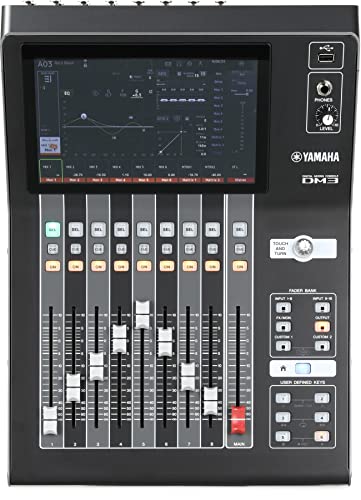
Yamaha DM3
Bands, small venues and project studios that want a compact 96 kHz digital console that doubles as an 18x18 USB recording interface.
Read the Yamaha DM3 review →Questions Buyers Ask
Universal Audio Apollo x8p Gen 2
See the current listing, price and included accessories.
About This Review
Mandrillis Team
The Mandrillis editorial team researches and compares audio and music gear using manufacturer documentation, verified specs and real buyer feedback, so you can make a confident purchase without wading through marketing claims.
Read our full research methodology.