Studio Gear Review
Yamaha HS5 Review: The Default Nearfield for Honest Mixes
The Yamaha HS5 is the reference nearfield many engineers learn on, offered here as a pack of two. This research review covers the published 5 inch woofer, 1 inch dome tweeter, 70W bi-amplification, 54 Hz to 30 kHz response and rear panel controls, and explains who the honest, unflattering sound really suits.
Our Verdict
Research Score 78/100The Yamaha HS5 pack of two is the safest lower mid-range monitor purchase for anyone who values translation over flattery. The published specification is complete where it counts: a 5 inch cone woofer, a 1 inch dome tweeter, 45W plus 25W bi-amplification, a 54 Hz to 30 kHz response and balanced XLR and TRS inputs. Room Control and High TRIM handle near wall placement and bright rooms. It offers no wireless, no headphone jack and limited sub bass, and the listing omits dimensions and weight. For a first serious pair, or a translation check beside larger monitors, it earns its reputation. Bass focused producers should add a subwoofer or consider a larger model.
Editorial research score based on published specifications and documented features, not a customer rating or lab test.

Yamaha
Yamaha HS5
Best for: First time studio owners and editors who want the most widely recognized nearfield reference in a compact pair.
Skip it if: You need sub bass reach, wireless streaming or a headphone output built into the monitor.
Check Price on AmazonWe may earn a commission at no extra cost to you.
Listing verified: October 2026
Who Should Buy It
Buy it if
- Home studio builders who want a trusted translation reference
- Podcasters and video editors in small rooms
- Students learning to mix on an honest speaker
- Anyone replacing consumer bookshelf speakers at a desk
Skip it if
- You produce bass heavy music without a subwoofer
- You want Bluetooth or a headphone jack on the monitor
- You need published dimensions and weight before buying
Key Specifications
| Type | 2-way bass-reflex bi-amplified nearfield studio monitor, sold as a pack of two |
| Woofer | 5 inch cone woofer |
| Tweeter | 1 inch dome tweeter |
| Power | 45W low frequency plus 25W high frequency bi-amp system, 70W total |
| Frequency response | 54 Hz to 30 kHz |
| Inputs | XLR and TRS phone jack inputs, balanced or unbalanced |
| Room controls | Room Control and High TRIM response controls |
| Dimensions | Not published in listing |
| Weight | Not published in listing |
| Included accessories | Not published in listing |
Overview
The Yamaha HS5 is the small white coned monitor that has become a fixture in home studios, edit suites and classrooms, and this listing offers it as a pack of two. It is a 2-way bass-reflex design with a 5 inch cone woofer and a 1 inch dome tweeter, bi-amplified at 70W. The price tier is lower mid-range, which places it above entry desktop speakers and below larger 8 inch monitors.
Few monitors are as widely understood as this one. Engineers tend to know how a mix that sounds balanced on an HS5 will translate to earbuds, car stereos and club systems, and that shared reference value is a large part of why it keeps selling. It is not a flattering speaker, and that is the point.
The listing publishes the core numbers that matter: driver sizes, amplifier split, frequency response, input types and the two rear panel response controls. It does not give dimensions, weight or included accessories, and one bullet notes that the information applies per pack, so buyers should read the quantity details carefully.
Accuracy and Sound Signature
Yamaha's design philosophy for the HS series is a flat response that reveals problems rather than hiding them. On paper the HS5 covers 54 Hz to 30 kHz, which means solid reach into bass guitar and kick drum fundamentals without claiming sub bass extension. The upper limit, well beyond audible range, reflects a tweeter that does not run out of headroom in the top octave.
Buyers report that the HS5 presents the midrange forward and honest, which makes vocal balance, guitar tone and harshness easy to judge. The trade off is that a mix can sound thinner on these monitors than on consumer speakers, and inexperienced users sometimes over compensate by adding too much low end.
Compared with the KRK Rokit 5 G5, which is often described as having a more generous bass presentation, the HS5 sits on the analytical side. Against the JBL 305P MkII, the Yamaha trades a wider waveguide image for a drier, more direct midrange. Neither approach is wrong, but they suit different working styles.
Drivers, Amplification and Power
The 5 inch cone woofer handles everything below the crossover and is responsible for the punchy but controlled low end. A bass-reflex cabinet uses a port to extend low frequency output, and in the HS5 the published response reaches 54 Hz at the bottom. For a 5 inch class monitor that is a sensible, honest figure.
The 1 inch dome tweeter is powered by its own 25W amplifier, while the woofer receives 45W, for a combined 70W of bi-amplification. Bi-amping means each driver has a dedicated amplifier matched to its load, with the crossover placed before the amplifiers. That is the standard professional topology and it keeps the tweeter clean when the woofer is working hard.
Peak SPL and the crossover frequency are not stated on the page. In practice 70W is plenty for a nearfield positioned within arm's reach, and these monitors are not intended to fill a large room. Producers who want more output and deeper bass in the same family normally look at the larger HS models.
Room Fit, Placement and Controls
Two rear panel controls are published: Room Control and High TRIM. Room Control reduces low frequency output to compensate for the bass build up that happens when a monitor sits close to a wall or in a corner. High TRIM adjusts the tweeter level to suit a bright or heavily damped room.
These are switch based adjustments rather than a DSP engine, so the tuning range is limited compared with monitors that offer multiple bands. For most desks and small rooms the two controls cover the common problems, and their simplicity is an advantage when a monitor moves between locations.
The compact 5 inch format is forgiving of placement. It works on a desk, on isolation pads or on stands, and the ported design means some distance from the rear wall is advisable. Cabinet dimensions are not published, so stand and shelf planning requires the manufacturer's figures.
- Room Control switch for near wall placement
- High TRIM switch for treble level
- Compact size for desks and small rooms
- Ported cabinet benefits from wall clearance
Build, Design and Finish
The HS5 is instantly recognizable by its white woofer cone against a black cabinet, a visual language that goes back to Yamaha's earlier reference monitors. The listing does not describe the cabinet material, finish or port design in detail, and it omits dimensions and weight. Those omissions are typical of a short listing rather than a sign of a thin product.
What buyers consistently describe is a solid, utilitarian cabinet designed for daily work rather than display. The controls are on the rear, the front is clean, and there are no lights or touch surfaces to distract. For a monitor that will sit on a desk for years, that plainness is a virtue.
At the lower mid-range tier the HS5 competes with monitors that add Bluetooth, front panel volume knobs and headphone outputs. Yamaha offers none of those, and the build budget goes into the drivers and amplification instead. Buyers who want convenience features should look at the alternatives section.
Connectivity and Inputs
The published inputs are XLR and TRS phone jacks that accept balanced or unbalanced signals. That covers the main audio interface outputs, mixer sends and monitor controllers used in home and project studios. Balanced connections are preferred for long cable runs because they reject interference.
There is no RCA input, no 3.5 mm aux jack and no wireless connection published. A buyer who wants to connect a phone or a consumer source will need an adapter cable, which is a small inconvenience rather than a problem for anyone using an audio interface.
Each monitor is powered individually, so a pair needs two power outlets and two signal cables. Whether cables are included is not stated, and most buyers should budget for a pair of balanced TRS or XLR cables of the correct length.
Setup and Daily Use
Setting up a pair of HS5s is straightforward. Place them in an equilateral triangle with the listening position, aim the tweeters at ear height, then set Room Control according to the distance from the wall behind them. High TRIM is best left flat until the room has been heard with familiar material.
Day to day the HS5 is a low maintenance tool. There is no app, no firmware and no pairing, which means nothing to update and nothing to go wrong. The rear volume control is set once and the interface or monitor controller handles the listening level from there.
The honest midrange rewards patience. New users often find mixes sound dull at first, then discover those mixes translate better to other systems than work done on more flattering speakers. That learning curve is the main reason the HS5 is recommended so often to people starting out.
Who Should Buy It
The HS5 is the right choice for someone building a first serious home studio who wants a reference that engineers everywhere recognize. It suits mixing, editing, podcast production and music lessons, and it works in small rooms where a larger monitor would overload the space.
It is also a sensible pick for anyone replacing consumer bookshelf speakers at a production desk. The jump in midrange clarity is usually immediate, and the Room Control switch helps in the tight placements that desks impose.
Producers who work mainly in bass heavy genres and need to hear sub bass directly will find the 54 Hz lower limit restrictive without a subwoofer. Buyers who want wireless streaming or a headphone output built into the monitor should also look elsewhere.
Alternatives Worth Considering
The KRK Rokit 5 G5 is the most common head to head comparison. It offers DSP driven room tuning and a warmer low end presentation, which some producers prefer for electronic music. The HS5 answers with a flatter midrange and a longer track record as a translation reference.
The JBL 305P MkII brings a waveguide that widens the sweet spot and is usually found in the same tier. The Kali Audio LP-6 steps up to a larger woofer for deeper bass at a similar price, and is a strong choice if the room allows a slightly bigger cabinet.
For tighter budgets the PreSonus Eris 3.5 provides a compact desktop option with front controls and a headphone jack, but it does not aim at the same reference accuracy. Within Yamaha's own range the larger HS models extend the bass for buyers who have the space.
Verdict
The Yamaha HS5 pack of two remains a benchmark lower mid-range nearfield. Its 5 inch woofer, 1 inch dome tweeter, 70W bi-amplification and 54 Hz to 30 kHz response are published clearly, and the Room Control and High TRIM switches handle the common placement problems.
It gives up convenience features and deep bass to monitors that chase them, and the listing leaves dimensions, weight and accessories unstated. None of that changes its core appeal as an honest, widely trusted reference.
For a first pair of real monitors, or for a second set that checks translation, it is one of the safest purchases in its class. Buyers wanting more low end or more features have good alternatives, but few are as universally understood.
Strengths and Limitations
Strengths
- Flat, honest midrange that translates to other systems
- Published 54 Hz to 30 kHz response
- 70W bi-amplification with dedicated tweeter and woofer amplifiers
- XLR and TRS inputs accept balanced or unbalanced signals
- Room Control and High TRIM for placement correction
- Sold as a pack of two
Limitations
- No RCA, aux or wireless input
- Limited low end for bass heavy genres without a subwoofer
- Dimensions, weight and accessories not published in the listing
- Switch based controls rather than multi band DSP
How We Scored It
Scores reflect published specifications, documented features and value against the alternatives below. They are editorial research scores, not laboratory measurements.
Alternatives to Consider

ADAM Audio T-Series Nearfield
Producers who want ADAM Audio's ribbon-style treble and DSP shelving in a nearfield pair and will confirm the exact model with the seller first.
Read the ADAM Audio T-Series Nearfield review →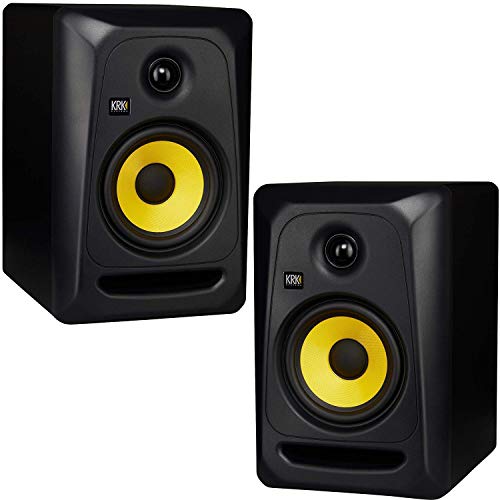
KRK Rokit 5 G3
Beginners and hobbyist producers in small rooms who want a familiar, forgiving Rokit pair with a flat option for mixing.
Read the KRK Rokit 5 G3 review →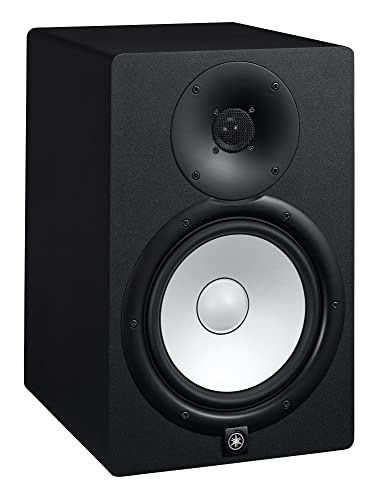
Yamaha HS8
Producers and mix engineers in medium sized rooms who want full range low end from a trusted reference without a subwoofer.
Read the Yamaha HS8 review →Questions Buyers Ask
Yamaha HS5
See the current listing, price and included accessories.
About This Review
Mandrillis Team
The Mandrillis editorial team researches and compares audio and music gear using manufacturer documentation, verified specs and real buyer feedback, so you can make a confident purchase without wading through marketing claims.
Read our full research methodology.