Studio Gear Review
Zoom F6 Review: 32-Bit Float Field Recording
The Zoom F6 combines 32-bit float recording across 6 XLR inputs with timecode I/O and dual use as a standalone recorder or USB interface. This research review covers what the listing confirms and the preamp gain figure it leaves unstated.
Our Verdict
Research Score 75/100The Zoom F6 is built around a genuinely compelling core idea, 32-bit float recording with dual A/D converters that the listing states captures everything from whisper-quiet dialogue to explosive sound without clipping, removing a common failure point for field recording where a sudden loud sound ruins a take. 6 XLR inputs with up to 14 tracks, timecode I/O for video sync, and dual use as a standalone recorder or USB interface round out a genuinely flexible unit for filmmakers and musicians. The listing does not state a specific preamp gain figure or phantom power voltage, so buyers who need those details in writing should check Zoom's own documentation. At a mid-range price tier, this is a strong choice for location and live recording work.
Editorial research score based on published specifications and documented features, not a customer rating or lab test.

Zoom
Zoom F6
Best for: Filmmakers, musicians and field recordists who need 32-bit float recording across 6 XLR inputs with frame-accurate timecode sync.
Skip it if: You need a confirmed preamp gain figure or phantom power voltage in writing before buying, since this listing emphasizes the 32-bit float conversion over numeric preamp specs.
Check Price on AmazonWe may earn a commission at no extra cost to you.
Listing verified: November 2026
Who Should Buy It
Buy it if
- Filmmakers who need frame-accurate timecode sync between audio and video on location
- Musicians who want a rugged, portable multi-track recorder for live shows or rehearsals
- Field recordists who want 32-bit float recording to avoid clipping on unpredictable sound sources
- Buyers who want one unit that works as both a standalone recorder and a computer interface
Skip it if
- You need a confirmed preamp gain figure in decibels before purchase
- You need a confirmed phantom power voltage specification before purchase
- You only need a simple two channel interface rather than a 6 input field recorder
Key Specifications
| Type | Portable field recorder that also functions as a USB audio interface, built around 32-bit float recording with dual A/D converters |
| Inputs | 6 XLR inputs, with up to 14 tracks available for full production flexibility |
| Outputs | Not published in listing beyond headphone monitoring and a line input |
| Preamps | Not published in listing as a specific gain figure; the emphasis in the listing is on 32-bit float dual A/D conversion rather than a numeric preamp gain spec |
| Resolution | 32-bit float recording with dual A/D converters, capturing massive dynamic range from whisper-quiet to explosive sound without clipping |
| Phantom power | Not published in listing |
| Connection | Usable as a standalone recorder or as a USB audio interface, with timecode I/O for frame-accurate sync |
| Monitoring | Headphone monitoring and a line input for full control in any setup |
| Bundled software | Not published in listing |
| Included accessories | Not published in listing; multiple power options are mentioned without itemizing specific included power accessories |
Overview
The Zoom F6 is positioned in the listing primarily as a field recorder for filmmakers and musicians, built around 32-bit float recording with dual A/D converters, a technology specifically aimed at eliminating the risk of clipping on unpredictable sound sources during location or live recording.
Unlike a typical studio interface listing that leads with preamp gain figures, this listing leads with the 32-bit float recording technology itself, framing the core value proposition around never losing a take to an unexpectedly loud sound rather than around a specific numeric preamp specification.
6 XLR inputs with up to 14 total tracks give this recorder genuine multi-track capability for field work, such as capturing several actors' lavalier microphones simultaneously on a film set, or multiple instruments and vocal microphones during a live band recording.
The listing also frames this unit as dual purpose, usable either as a fully standalone recorder with no computer involved, or as a USB audio interface feeding a connected computer directly, which gives buyers flexibility depending on whether a given job calls for location independence or direct computer integration.
Preamps and Sound Quality
The listing does not state a specific preamp gain figure in decibels for the 6 XLR inputs, instead focusing its sound quality claims on the 32-bit float recording technology and dual A/D converters, which capture a wide dynamic range without needing to ride gain levels precisely during a take.
This is a meaningfully different value proposition than a conventional interface's preamp specification, since 32-bit float recording is designed to let an operator set a reasonable gain level and trust the recorder to capture both whisper-quiet and explosively loud moments within the same file without clipping or needing adjustment mid-take.
For field recording and live documentation specifically, this approach can matter more in practice than a slightly higher or lower preamp gain number, since the primary risk in uncontrolled recording environments is an unexpected loud sound ruining an otherwise usable take, which 32-bit float recording is specifically designed to prevent.
Buyers who still want a confirmed gain range in decibels for planning purposes, perhaps to compare against a studio interface they already own, should check Zoom's own published specification sheet, since this listing's feature bullets prioritize the clipping prevention story over a numeric gain claim.
Inputs, Outputs and Routing
The listing confirms 6 XLR inputs, with up to 14 tracks available in total, which suggests this recorder can capture more tracks than physical inputs alone would imply, likely through internal stereo or multi-channel recording modes layered on top of the direct inputs.
That track count makes this recorder suitable for genuinely complex field recording scenarios, such as miking several actors on a film set or capturing a full band's individual instruments and vocal microphones during a live performance, without running out of available tracks mid-session.
Output routing details beyond headphone monitoring and a line input are not itemized in the listing, so buyers planning to feed this recorder's output directly into a separate mixing console or broadcast chain should confirm the exact output configuration with Zoom's own documentation.
Features, Monitoring and Software
Timecode I/O is a standout feature for this category, letting this recorder stay frame-accurately synced with a separate video camera, which the listing specifically frames as ideal for filmmaking, broadcast and other professional workflows where audio and video must align precisely in post production.
The dual function as either a standalone recorder or a USB audio interface is a genuinely practical feature, letting the same unit serve a location sound role on a film set one day and a studio interface role connected to a computer the next, without needing two separate pieces of hardware.
Headphone monitoring and a dedicated line input are both mentioned, giving an operator direct control over what they hear while recording, which matters significantly in field conditions where there is often no opportunity to review and re-record a take after the fact.
No bundled software is mentioned in the listing, which is consistent with this unit's framing as a standalone hardware recorder first, with USB interface functionality as a secondary mode rather than the primary reason to buy it.
- 32-bit float recording, dual A/D converters
- 6 XLR inputs, up to 14 tracks
- Timecode I/O for frame-accurate video sync
- Rugged, portable design, multiple power options
- Standalone recorder or USB audio interface
- Headphone monitoring, dedicated line input
Build, Design and Controls
The listing describes this recorder as rugged enough for location work while remaining small enough to travel easily, a combination specifically aimed at field recordists and filmmakers who need durable gear that still fits in a bag rather than a case built for studio use only.
Multiple power options are mentioned, which for a field recorder typically means support for both battery power and external power sources, letting an operator keep recording through a long shoot day without being tied to a single power source or outlet.
Exact dimensions, weight and specific physical control layout are not detailed in the listing beyond the general ruggedness and portability framing, so buyers who care about a precise footprint for a specific bag or rig should confirm that against official product photography.
Connectivity, Drivers and Latency
The listing states this unit functions as either a standalone recorder or a USB audio interface, meaning connectivity needs depend entirely on which mode a given job calls for, with no computer required at all for pure field recording use.
Timecode I/O adds a specific connectivity feature not found on most conventional studio interfaces, letting this recorder synchronize with external video or audio timecode sources for frame-accurate alignment during post production editing.
Driver requirements and specific latency figures for the USB interface mode are not detailed in the listing, so buyers planning to use this recorder as a low latency studio interface, rather than primarily as a field recorder, should confirm those figures separately.
Setup and Daily Use
Setting up this recorder for a field session involves connecting microphones to the 6 XLR inputs, confirming power source and timecode sync with any connected camera, and setting a reasonable gain level that the 32-bit float recording technology can then handle without needing precise adjustment during the take itself.
Daily use on a film set benefits considerably from the timecode I/O, letting a sound recordist hand off perfectly synced audio to an editor without manual alignment, which can save substantial post production time compared with a recorder lacking that feature.
For musicians using this unit to capture a live show, the combination of 6 XLR inputs and up to 14 tracks allows isolated recording of multiple instruments and vocal microphones at once, giving a mix engineer genuine flexibility when building a final mix afterward.
Who Should Buy It
This recorder suits filmmakers who need frame-accurate timecode sync and field recordists who want 32-bit float recording to eliminate clipping risk on unpredictable sound sources during location work.
It is a weaker fit for studio based engineers who want a confirmed preamp gain figure for precise comparison against other interfaces, and for buyers who only need a simple two channel setup rather than a 6 input, 14 track field recorder.
Musicians who perform live and want to capture multiple isolated tracks without carrying a full mixing console to every show will find particular value in this recorder's combination of input count, track count and rugged portability.
Alternatives Worth Considering
Buyers who need a confirmed numeric preamp gain figure for studio comparison purposes should look at a conventional studio interface whose listing states that number directly, rather than this field-recording-focused unit.
Buyers who only need 1 or 2 inputs for a simple podcast or voiceover setup would likely find a smaller, less expensive recorder or interface a better fit than this 6 input field recorder.
Buyers who specifically do not need timecode sync or standalone recording capability, and only need a studio interface connected to a computer, might find a dedicated studio interface simpler to integrate into an existing setup.
Verdict
The Zoom F6 earns its place through a genuinely differentiated core technology, 32-bit float recording with dual A/D converters that removes clipping risk, combined with 6 XLR inputs, up to 14 tracks and frame-accurate timecode sync for video work.
Its dual function as a standalone recorder or USB interface adds real flexibility across different job types, and the unpublished preamp gain figure is a minor gap given how strongly the listing's other confirmed features support its field recording use case.
For filmmakers, musicians and field recordists at this mid-range price tier, the Zoom F6 offers a well rounded, genuinely useful feature set that justifies its position as a dedicated location recording tool rather than a studio-only interface.
Strengths and Limitations
Strengths
- 32-bit float recording with dual A/D converters effectively eliminates clipping risk
- 6 XLR inputs with up to 14 tracks for full production flexibility
- Timecode I/O for frame-accurate sync with video, useful for filmmaking and broadcast
- Rugged, ultra-portable design with multiple power options
- Can be used as either a standalone recorder or a USB audio interface
Limitations
- No stated preamp gain figure is published in the listing
- No stated phantom power specification
- No specific bit depth or sample rate beyond the 32-bit float recording claim
- No bundled software is mentioned with this unit
How We Scored It
Scores reflect published specifications, documented features and value against the alternatives below. They are editorial research scores, not laboratory measurements.
Alternatives to Consider

Pioneer DJ XDJ-RX3
DJs who want club-standard standalone playback from USB with a large touchscreen and a familiar two-channel layout.
Read the Pioneer DJ XDJ-RX3 review →
Yamaha DM3-D 22
Small venues, houses of worship and production companies that want a compact 96 kHz digital console with Dante networking for stage boxes and multitrack recording.
Read the Yamaha DM3-D 22 review →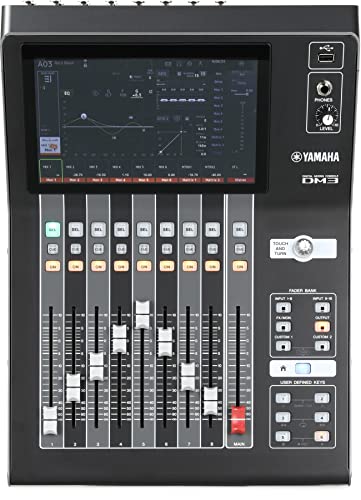
Yamaha DM3
Bands, small venues and project studios that want a compact 96 kHz digital console that doubles as an 18x18 USB recording interface.
Read the Yamaha DM3 review →Questions Buyers Ask
Zoom F6
See the current listing, price and included accessories.
About This Review
Mandrillis Team
The Mandrillis editorial team researches and compares audio and music gear using manufacturer documentation, verified specs and real buyer feedback, so you can make a confident purchase without wading through marketing claims.
Read our full research methodology.