Guides
How Far Should You Stand From a Condenser Mic? (Clear Guide)
Mic distance changes your recording more than almost any setting. Too close sounds boomy and harsh, too far sounds thin and echoey. This guide gives clear distances for singing, speaking and instruments with a condenser mic, explains the proximity effect, and shows how to stay consistent.
Quick Answer
For most vocals, stand about 6 to 12 inches from a condenser mic, roughly the width of a spread hand to a ruler away. Move closer, about 4 to 6 inches, for a warmer, more intimate sound, or back to 12 inches or more for loud singing. Use a pop filter and keep the same distance for every take.
How this guide was put together
This guide is based on manufacturer manuals, published specifications and widely used audio reference standards. Mandrillis does not run hands-on tests for these guides, so treat figures as typical values and check the manual for your own gear before changing settings.
Why Distance Matters So Much
A condenser mic hears everything in front of it: your voice, the room's echo and background noise. Distance decides the balance between them.
Close to the mic, your voice is loud and the room is quiet in the recording. Farther away, your voice gets quieter while the room's echo stays about the same, so the recording sounds more distant.
- Too close: boomy bass, loud breaths and harsh popping sounds.
- Just right: clear, full voice with a natural tone.
- Too far: thin, distant sound with more room echo and noise.
Recommended Condenser Mic Distances
Starting points. Adjust by ear for your voice and room.
| Use | Distance | Notes |
|---|---|---|
| Soft or intimate singing | About 4 to 6 inches | Warmer, use a pop filter |
| Normal singing | About 6 to 12 inches | Best starting point |
| Loud or belting vocals | About 12 inches or more | Lean back on loud notes |
| Voiceover and podcasting | About 6 to 8 inches | Steady, close sound |
| Acoustic guitar | About 8 to 12 inches | Aim near the 12th fret |
| Room or ensemble sound | Several feet | Needs a good sounding room |
The Proximity Effect Explained
Most condenser mics with a cardioid pattern boost bass when a sound source gets very close. This is called the proximity effect.
A little of it makes a voice sound warm and full, which is why radio voices often work close to the mic. Too much makes the voice boomy and muddy.
How to Use It
Move a few inches closer when you want more warmth on a thin voice. Move back when your voice sounds too heavy or bassy.
Small moves of 1 to 2 inches change the tone a lot, so adjust slowly.
How to Measure Your Distance
You do not need a ruler every time. Simple hand measurements give a quick, repeatable guide.
- A spread hand, thumb to little finger, is about 7 to 9 inches for most adults.
- A fist width is about 4 inches.
- Set the pop filter a few inches in front of the mic and keep your lips just behind it.
- Mark your standing or seated spot with tape on the floor.
Use a Pop Filter at Close Distances
Sounds like P and B push a burst of air that can hit the diaphragm and cause a loud thump, called a plosive. Condenser mics are especially sensitive to it.
A pop filter, a mesh or metal screen between you and the mic, breaks up that air. Place it about 2 to 4 inches in front of the mic and sing from just behind it.
Other Ways to Reduce Plosives
Angle the mic slightly to the side, so air passes across it instead of straight into it. Even a small angle of about 10 to 20 degrees helps.
Some singers aim the mic at their chin or nose rather than their mouth for the same reason.
Distance in an Untreated Room
In a room with bare walls, echo is the biggest problem. Staying a little closer, around 6 inches, makes your voice stronger compared with the room.
Do not go so close that you get heavy bass and popping. Combine closer placement with soft materials around you for the best result.
- Hang a thick blanket behind you to cut reflections.
- Face toward soft furniture, not a bare wall.
- Turn off fans and noisy devices before recording.
Stay Consistent Between Takes
Changing distance between takes changes your tone and volume. That makes editing and mixing much harder.
Pick a distance, mark it, and keep it for the whole session. If you move during loud notes, return to the same spot afterward.
- Use the pop filter as a guide for your distance.
- Mark the floor or chair position.
- Keep the mic stand fixed and tight.
- Write down your distance and gain for future sessions.
Mic Height and Angle
Distance is only part of placement. The height and angle of the mic also change the sound, especially for singers.
Set the mic at about mouth height, so you sing straight ahead with your head level. Looking down at a low mic squeezes your throat, while reaching up to a high mic can strain your neck.
Simple Height Tips
Small changes in height and angle can fix a harsh or muffled tone without touching any settings.
- Aim the mic slightly above the mouth for a brighter, airier tone.
- Aim it slightly below for a warmer, fuller tone.
- Keep your posture tall and relaxed while singing.
- Lock the stand tight so the mic does not drift down during a take.
- Use a shock mount to reduce thumps from the stand and floor.
Speaking and Podcasting
For speaking, sit upright with the mic just off to the side of your mouth. Speaking slightly across the mic, rather than straight into it, cuts plosives and breath noise.
Keep a steady posture so your voice stays even through the whole recording.
Set Gain After You Set Distance
Choose your distance first, then set the gain on your interface. Sing or speak at your loudest part of the song and adjust so peaks land around minus 12 to minus 6 dB.
Changing distance later means you must reset gain, so finish positioning before recording.
Common Mistakes
These mistakes are common with new condenser mics. Avoiding them improves recordings right away.
- Singing straight into the mic from an inch away.
- Standing too far back in an echoey room.
- Skipping the pop filter.
- Moving closer and farther during a take.
- Setting gain so high that loud notes clip.
The Bottom Line
Start about 6 to 12 inches from the mic with a pop filter in front. Move closer for warmth and farther for loud singing.
Keep the distance steady, then set your gain. A few minutes spent on placement saves hours of fixing later.
Condenser Microphones From Our Reviews
Popular studio condensers for vocals and voiceover at home.
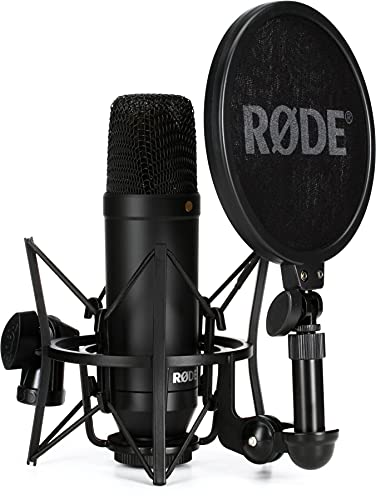
Rode NT1
Mentioned
Who Should Buy It
- Singers and rappers recording one voice at a time in a quiet room
- Voice-over artists and audiobook narrators who need a very low noise floor
- Home producers upgrading from an entry-level condenser
- Buyers who want the shock mount and pop screen bundled rather than bought separately
Skip It If
- You do not own an audio interface or mixer with a microphone preamp
- You stream from an untreated room with keyboard and fan noise
- You need omnidirectional or figure-eight patterns
We may earn a commission at no extra cost to you.
Last verified: October 2026

Audio-Technica AT2035
Mentioned
Who Should Buy It
- You outgrew a USB mic or AT2020 and want lower noise
- You record in a room with rumble and want a built-in high-pass filter
- You track loud sources and want a pad switch on the mic
Skip It If
- You want to plug straight into a laptop by USB
- You can stretch to the Rode NT1 5th Gen for even lower noise
We may earn a commission at no extra cost to you.
Last verified: October 2026

Audio-Technica AT2020USB-X Cardioid Condenser
Mentioned
Who Should Buy It
- First-time creators choosing a serious USB microphone
- Owners of the older AT2020USB+ who want USB-C and a mute button
- Remote workers who want a visible mute state on calls
- Voice-over hobbyists recording in a quiet room
Skip It If
- Your room is noisy and a dynamic would serve better
- You need a mix control to blend computer playback while recording
- You already own an interface and prefer XLR microphones
We may earn a commission at no extra cost to you.
Last verified: October 2026
Keep Reading
Related guides and picks on Mandrillis:
- Best Microphones for Vocals : condenser and dynamic picks for singing
- Dynamic vs Condenser Mic for an Untreated Room : which type suits your space
- Best Condenser Microphones : studio condensers for home recording
FAQs
About This Guide
Mandrillis Team
The Mandrillis editorial team researches and compares audio and music gear using manufacturer documentation, verified specs and real buyer feedback, so you can make a confident purchase without wading through marketing claims.
Read our full research methodology.