Studio Gear Review
Allen & Heath CQ-12T Review: Touchscreen Mixing, USB and SD
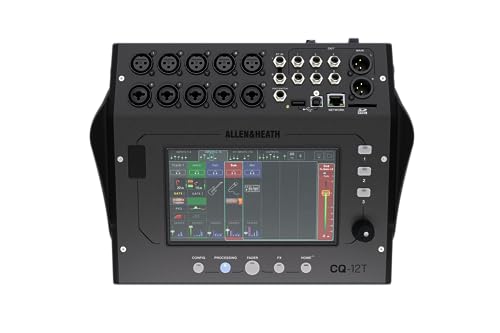
The Allen & Heath CQ-12T combines 10 mic or line inputs with a 7 inch touchscreen, 16x16 USB and SD recording, and Bluetooth input. This research review covers what the listing confirms and what it leaves unpublished about preamps and outputs.
Our Verdict
Research Score 76/100The Allen & Heath CQ-12T packages a genuinely useful feature set, touchscreen control, dual USB and SD recording, and Bluetooth input, into a compact 12 channel frame aimed at small venues and install jobs. The listing is specific about input count and connectivity but leaves preamp gain, phantom power and output bus figures unpublished, so buyers chasing a complete spec sheet should supplement this listing with the manufacturer's documentation. At a mid-range price tier, it is a strong fit for operators who want recording flexibility and touchscreen convenience over the tactile familiarity of physical per channel faders.
Editorial research score based on published specifications and documented features, not a customer rating or lab test.
Allen & Heath
Allen & Heath CQ-12T
Best for: Small venues, bands and install jobs that want a compact touchscreen mixer offering both USB computer recording and standalone SD card recording in one 12 channel unit.
Skip it if: You need physical faders on every channel rather than touchscreen based control, or you require confirmed preamp and output specifications before buying.
Check Price on AmazonWe may earn a commission at no extra cost to you.
Listing verified: November 2026
Who Should Buy It
Buy it if
- Small venue and house band operators who want SD card recording without a laptop present
- Install engineers who want a single touchscreen mixer covering live sound and basic recording
- Worship and corporate AV teams who need Bluetooth input for music and announcements
- Buyers who prefer a modern touchscreen workflow over a traditional analog channel strip layout
Skip it if
- You need a confirmed preamp gain and phantom power specification before buying
- You require physical faders on every channel for live mixing by feel
- You need more than 10 mic or line inputs for a larger ensemble
Key Specifications
| Type | 12-channel digital mixer with a 7 inch touchscreen and Bluetooth, aimed at small venue live sound and install use |
| Inputs | 10 mic or line inputs, 5 of which are combi connectors, plus a dedicated stereo line input |
| Outputs | Not published in listing beyond the stated input configuration |
| Preamps | Not published in listing (gain figure and preamp type are not stated) |
| Resolution | Not published in listing |
| Phantom power | Not published in listing |
| Connection | 16x16 USB interface for computer recording and playback, 16x16 SD card record and playback, and a stereo Bluetooth input for wireless audio |
| Monitoring | 7 inch capacitive touchscreen paired with an associated rotary control for navigation |
| Bundled software | Not published in listing |
| Included accessories | Not published in listing; three custom SoftKeys are built into the control surface |
Overview
The Allen & Heath CQ-12T is a compact digital mixer built around a 7 inch touchscreen rather than a traditional bank of physical channel strips, aimed at small venues, bands and install jobs that want modern recording and wireless connectivity in one unit. The listing describes a 12 channel frame with 10 mic or line inputs and a dedicated stereo line input, giving a reasonably complete picture of the input side of the mixer.
What stands out in the listing is the combination of two separate recording paths, a 16x16 USB interface for computer based recording and a matching 16x16 SD card record and playback option that works without any computer present at all, which is a genuinely practical feature for venues that want a backup recording method or a simple way to capture a show without setting up a laptop.
Allen & Heath has a long standing reputation in both touring and install mixing, and the CQ series specifically targets smaller venues and corporate or worship install work rather than large format touring consoles, which is the context this particular 12 channel model should be judged against.
Buyers comparing this unit against larger Allen & Heath consoles should keep that positioning in mind, since the CQ-12T is deliberately scaled down in both input count and control surface size to fit a smaller budget and a smaller room, not to compete feature for feature with the manufacturer's flagship touring desks.
Preamps and Sound Quality
The listing does not publish a specific preamp gain range, equivalent input noise figure or headroom specification for this mixer, which is a real gap for anyone trying to judge how it will handle a quiet condenser microphone versus a loud brass instrument at close range.
What is confirmed is the input count and connector type, 10 mic or line inputs with 5 combi connectors capable of accepting either XLR microphone cables or quarter inch line level connections, plus a separate stereo line input for a keyboard, media player or similar source.
Buyers should treat the sound character of this mixer as an unknown pending independent confirmation, since the listing focuses on workflow features such as the touchscreen, recording options and Bluetooth rather than on detailed preamp circuit design or measured noise performance.
Inputs, Outputs and Routing
The confirmed input layout is 10 mic or line inputs, 5 of which use combi connectors, plus a dedicated stereo line input, giving a total of 12 channels as the model name suggests. That is a sensible size for a small band, a worship team, or a corporate panel discussion with several microphones and a couple of playback sources.
Output bus count, auxiliary send totals and headphone output count are not published in this listing, so engineers who need a specific number of monitor mixes for a stage should confirm that figure with Allen & Heath's own documentation before assuming a particular routing layout.
Phantom power is also not stated, which matters directly for this unit since condenser microphones commonly used for vocals, overheads or acoustic instruments require it, and buyers should confirm its presence and voltage before planning a microphone complement around this mixer.
Features, Monitoring and Software
The 7 inch capacitive touchscreen, paired with an associated rotary control, is the primary way an operator interacts with this mixer, replacing the long row of physical EQ and dynamics knobs found on an analog desk with a navigable touch interface. That design trades some immediacy for the ability to pack far more processing and routing options into a compact frame than physical controls alone could accommodate.
Dual recording paths are a standout feature, a 16x16 USB interface for recording multitrack audio to a connected computer, and a separate 16x16 SD card record and playback option that works independently of any computer, giving venues a built in backup recording method or a way to capture a show with no laptop on site.
Stereo Bluetooth input adds a simple way to play backing tracks, walk in music or announcements from a phone or tablet without running a cable, and three custom SoftKeys allow an operator to assign frequently used functions, such as muting a group of channels or triggering a scene, to dedicated physical buttons.
- 10 mic/line inputs, 5 combi connectors
- Stereo line input
- 7 inch capacitive touchscreen with rotary control
- 16x16 USB interface
- 16x16 SD card record/playback
- Stereo Bluetooth input
- 3 custom SoftKeys
Build, Design and Controls
The CQ-12T is designed as a compact, likely tabletop or stand mounted mixer rather than a rack unit, built around the touchscreen as its primary interface, though the listing does not publish exact dimensions, weight or chassis material for this specific model.
The rotary control that accompanies the touchscreen suggests a hybrid approach to navigation, letting an operator either tap directly on screen elements or scroll and select using a physical dial, which can be faster for some tasks like scrolling through a long channel list than touch alone.
Build quality questions that matter for a touchscreen centric mixer, such as screen durability, glove or stylus compatibility, and how the unit handles outdoor glare, are not addressed in this listing and should be checked against official product information if those conditions apply to the intended use.
Connectivity, Drivers and Latency
Connectivity centers on the 16x16 USB interface for multitrack recording and playback with a connected computer, which gives this mixer genuine recording studio capability well beyond a basic live sound desk, assuming the host computer has compatible drivers installed.
The matching 16x16 SD card path is a notable connectivity option precisely because it removes the computer from the equation entirely, letting a venue capture or play back a full multitrack session directly from a memory card, which is valuable for touring acts or venues without dedicated recording staff.
Stereo Bluetooth input rounds out the connectivity picture for simple wireless playback, though the listing does not state Bluetooth output for streaming the mixer's own output to wireless speakers or headphones, only input for source material.
Setup and Daily Use
Setting up this mixer for a show involves configuring the 10 mic or line inputs for whatever microphones and sources are in use, assigning SoftKeys to frequently used functions, and deciding whether a given session will be captured to SD card, to a connected computer, or both at once.
For recurring events in the same room, saving a scene on the touchscreen interface lets an operator recall input gain, routing and processing settings quickly rather than rebuilding the show each time, which is one of the practical advantages digital mixers like this one hold over a comparable analog desk.
Operators switching from a physical fader console to a touchscreen unit like this one should expect a short adjustment period learning where key functions live in the touch menus, though the dedicated rotary control and SoftKeys are specifically meant to reduce how often a user has to dig through on screen menus during a live show.
Who Should Buy It
This mixer suits small venues, bands and install teams that want a single compact unit covering live mixing, computer recording and standalone SD card recording, along with simple wireless playback through Bluetooth.
It is a weaker fit for larger ensembles that need more than 10 mic or line inputs, and for buyers who specifically want physical per channel faders rather than a touchscreen driven workflow, or who need a confirmed preamp specification before purchase.
Alternatives Worth Considering
Buyers who want physical faders for every channel rather than touchscreen control should look at a traditional digital mixer with a motorized or manual fader bank instead of this touchscreen only design.
Buyers who need more than 10 mic or line inputs for a larger band or ensemble should look toward a larger format mixer in the same manufacturer's range or a rack mounted system with expandable preamp inputs.
Verdict
The Allen & Heath CQ-12T stands out for packing dual recording paths, a modern touchscreen interface and wireless input into a genuinely compact 12 channel mixer, which suits small venues and install jobs that want more than a basic analog desk without stepping up to a large format console.
The main caveat is the lack of published preamp, phantom power and output specifications, which buyers who need every number confirmed should chase down separately. For operators comfortable with that gap, this mixer's workflow features justify its mid-range price tier.
Strengths and Limitations
Strengths
- 10 mic or line inputs with 5 combi connectors plus a dedicated stereo line input
- 7 inch capacitive touchscreen paired with a rotary control for fast navigation
- 16x16 USB interface for direct computer recording and playback
- 16x16 SD card record and playback without any computer connected
- Stereo Bluetooth input for wireless music or backing track playback
- Three custom SoftKeys for user assignable functions
Limitations
- Preamp gain, phantom power and output bus counts are not published in the listing
- No stated headphone output or auxiliary monitor send count
- Touchscreen based control may feel less immediate than physical faders to some engineers
- Conversion resolution and latency figures are not stated
How We Scored It
Scores reflect published specifications, documented features and value against the alternatives below. They are editorial research scores, not laboratory measurements.
Alternatives to Consider

Pioneer DJ XDJ-RX3
DJs who want club-standard standalone playback from USB with a large touchscreen and a familiar two-channel layout.
Read the Pioneer DJ XDJ-RX3 review →
Yamaha DM3-D 22
Small venues, houses of worship and production companies that want a compact 96 kHz digital console with Dante networking for stage boxes and multitrack recording.
Read the Yamaha DM3-D 22 review →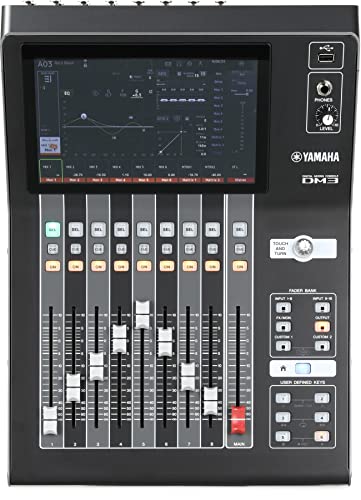
Yamaha DM3
Bands, small venues and project studios that want a compact 96 kHz digital console that doubles as an 18x18 USB recording interface.
Read the Yamaha DM3 review →Questions Buyers Ask
Allen & Heath CQ-12T
See the current listing, price and included accessories.
About This Review
Mandrillis Team
The Mandrillis editorial team researches and compares audio and music gear using manufacturer documentation, verified specs and real buyer feedback, so you can make a confident purchase without wading through marketing claims.
Read our full research methodology.