Studio Gear Review
Audio-Technica PRO44 Review: Low Profile Boundary Mic
The Audio-Technica PRO44 is a condenser boundary microphone built for a low profile placement on tables, podiums and lecterns. The listing highlights self-contained electronics that remove the need for external power modules, a wide-range condenser element and a long detachable cable, though pattern and frequency figures are not published.
Our Verdict
Research Score 70/100The Audio-Technica PRO44 is a specialized tool rather than a general purpose vocal microphone, built around a low profile shape for minimum visibility and self-contained electronics that skip the need for an external power module. A wide-range condenser element with a low-mass diaphragm is named as the source of its performance, and rugged construction backs the idea that it is meant for daily installation use. A twenty five foot detachable cable with a professional connector rounds out the practical picture. What is missing is a polar pattern, a frequency response curve or a sensitivity figure, all of which a buyer evaluating a boundary microphone for a specific room would normally want confirmed. For conference rooms, podiums and lecterns, the PRO44 is a sensible, purpose built choice.
Editorial research score based on published specifications and documented features, not a customer rating or lab test.

Audio-Technica
Audio-Technica PRO44 Boundary Microphone
Best for: Conference rooms, podiums and lecterns that need a low visibility boundary microphone with self-contained electronics and a long detachable cable.
Skip it if: You need a documented polar pattern or frequency response figure before purchase, or you are looking for a handheld or stand mounted vocal microphone instead.
Check Price on AmazonWe may earn a commission at no extra cost to you.
Listing verified: November 2026
Who Should Buy It
Buy it if
- Facilities managers setting up conference rooms or boardrooms with table mounted microphones
- Venues and schools needing a discreet podium or lectern microphone
- Buyers who want self-powered electronics without managing a separate power supply
- Anyone needing a long detachable cable run without adding extra adapters
Skip it if
- You need a confirmed polar pattern for a specific acoustic environment
- You want a stand mounted or handheld microphone rather than a boundary design
- You require a published frequency response or sensitivity specification
Key Specifications
| Type | Condenser boundary microphone with self-contained electronics |
| Polar pattern | Not published in listing |
| Frequency response | Not published in listing |
| Connection | Detachable cable, 25 feet (7.6 m), TA3F to XLRM-type |
| Phantom power | Not required; the listing states self-contained electronics eliminate the need for external power modules |
| Max SPL or sensitivity | Not published in listing |
| Controls | Not published in listing |
| Mount and stand | Low profile boundary design intended to sit directly on a flat surface such as a table or podium; no separate stand mentioned |
| Weight | Not published in listing |
| Included accessories | 25 foot detachable TA3F to XLRM-type cable |
Overview
The Audio-Technica PRO44 is built around a single purpose, sitting unobtrusively on a flat surface while picking up speech from everyone around it, which is why the listing leads with low profile and minimum visibility rather than tone or detail. It is a boundary condenser microphone, a category designed to be placed on a table or podium rather than mounted on a stand, and that placement choice shapes nearly every design decision described in the listing.
Self-contained electronics are the second headline claim, meaning the microphone does not need an external power module to function, which simplifies installation considerably for a facilities team wiring up a conference room or lecture hall. Audio-Technica pairs that convenience with a wide-range condenser element and a low-mass diaphragm described as delivering superior performance.
Rugged design and construction round out the listing's claims, positioning the PRO44 for repeated daily use in a room that may see dozens of meetings or presentations a week, rather than for occasional, careful studio handling.
Sound Quality
Boundary microphones work differently from a typical handheld or studio capsule because they are placed flush against a surface, using the reflected sound off that surface to reinforce the direct signal rather than fighting it, which is a design approach aimed squarely at capturing speech clearly across a room rather than close vocal detail.
Audio-Technica describes the PRO44's capsule as a wide-range condenser element with a low-mass diaphragm, phrasing that suggests the diaphragm responds quickly across a broad span of frequencies, a useful trait for picking up speech from multiple people seated at varying distances around a table. A low-mass diaphragm generally reacts faster to small changes in air pressure than a heavier one, which tends to help speech sound articulate rather than muffled.
No frequency response graph or sensitivity figure is published, so the precise tonal balance cannot be confirmed from the listing. On paper, a wide-range condenser element paired with a boundary design points toward a microphone optimized for intelligible speech pickup rather than the warmth or color associated with close vocal recording.
Pickup Pattern and Noise Handling
No polar pattern is stated in the listing, which is a meaningful gap for a boundary microphone since the pattern determines whether it favors sound from in front of it, picks up evenly from all directions, or uses a hemispherical coverage typical of surface mounted designs.
Boundary microphones as a category often use a hemispherical pickup pattern that favors sound arriving across the surface the microphone sits on, which works well for a round table discussion but behaves differently from a directional handheld microphone aimed at a single speaker. That difference is worth keeping in mind when comparing this listing against a stand mounted vocal microphone's specification sheet.
Because the exact pattern is not confirmed here, a buyer planning a specific room layout, particularly one with noisy air handling equipment nearby, should verify directivity directly with Audio-Technica rather than assuming a particular behavior based on the general boundary microphone category alone.
Build Quality
Audio-Technica markets the PRO44 as ruggedly built, a reasonable expectation for a product meant to sit on a conference table or podium surface day after day, potentially bumped, leaned on or brushed against during setup and teardown of a room.
The low profile shape for minimum visibility also serves a practical build purpose beyond aesthetics, since a flatter, lower microphone is less likely to be knocked over or caught on a cable compared with a taller stand mounted design in a busy meeting space.
No weight or exact dimensions are given in the listing, so planning exactly how the microphone will look on a specific table or podium surface requires either a direct measurement request to Audio-Technica or trusting the general boundary microphone form factor as a guide.
- Rugged construction described as built for repeated daily use
- Low profile shape reduces visibility and snag risk on a table
- Self-contained electronics avoid a separate power module in the installation
- Weight and exact dimensions not published in listing
Connectivity and Setup
The PRO44 includes a detachable cable measuring twenty five feet, terminated with a TA3F connector on the microphone end and an XLRM-type connector on the other, which allows it to run a meaningful distance to a mixer or recording device without additional extensions in most room layouts.
Because the electronics are self-contained, no external power module or dedicated power supply is required to operate the microphone, which simplifies setup considerably compared with boundary microphones that rely on a separate inline power box placed somewhere along the cable run.
Setup is straightforward in practice, placing the microphone flat on the intended surface, running the twenty five foot cable back to the mixer or recorder, and connecting through the XLRM-type end. No phantom power troubleshooting or module placement is needed given the self-contained design, which can shorten installation time considerably in a room with several microphones to wire at once.
Features, Controls and Extras
The defining feature of the PRO44 is less about onboard controls and more about its installation convenience, since self-contained electronics and a long detachable cable address two of the biggest friction points in setting up a boundary microphone for a room.
No switches, pads, or filters are mentioned in the listing, suggesting the PRO44 is designed to be placed and left alone rather than adjusted during a meeting or presentation, which fits its role as a fixed installation microphone rather than a performance microphone an operator adjusts in real time.
The included cable itself functions as a meaningful extra, since a detachable TA3F to XLRM-type cable at twenty five feet in length would otherwise be a separate purchase for many buyers setting up a conference room from scratch.
Use Cases: Vocals, Streaming, Podcasting and Instruments
The PRO44's low profile design and self-contained electronics point clearly toward speech capture in fixed locations, such as a boardroom table, a podium at the front of a hall, or a lectern used for presentations and lectures where a discreet microphone matters.
Multi-person discussions are a strong match for a boundary design placed in the center of a table, since the microphone can pick up several speakers without anyone needing to hold or lean toward a handheld unit, which keeps a meeting moving naturally and reduces distraction during a presentation or panel discussion.
This is a poor fit for music vocals, instrument recording, podcasting at a desk, or any situation calling for a directional, close-miking capsule, since the boundary form factor and surface placement are built around room speech rather than an individually positioned performer.
Who Should Buy It
Facilities and audiovisual teams setting up conference rooms, boardrooms or training rooms that need a microphone capable of picking up multiple speakers from a table surface are the clearest fit for the PRO44, especially where quick, repeatable installation across several rooms matters.
Schools, churches and venues with a podium or lectern that want a low visibility microphone rather than a stand mounted unit in front of the speaker should also consider this model, given its purpose built design for that exact placement.
Buyers who want to avoid managing a separate power module during installation, and who value a long cable included in the box, will appreciate the practical setup advantages this listing describes over a bare capsule sold without those conveniences.
Alternatives Worth Considering
Buyers who need a confirmed polar pattern for a specific room shape should look at boundary microphones that publish a documented pickup pattern, since that detail affects how well the microphone performs in a long narrow room versus a round table setting.
For a conference room needing multiple inputs or automatic mixing between several table microphones, a dedicated conferencing system with several boundary microphones and a mixer built for that purpose may suit a larger room better than a single PRO44 unit.
Anyone needing a handheld or stand mounted microphone for vocals or presentations at a podium, rather than a flush surface mounted design, should instead look at a standard cardioid dynamic or condenser microphone built for that use case.
Verdict
The Audio-Technica PRO44 is a focused, purpose built boundary microphone rather than a general recommendation, and the listing's emphasis on low visibility, self-contained electronics and a long cable makes its intended use clear from the first line.
For a conference room, podium or lecture hall buyer who wants a rugged, easy to install speech microphone and does not need a documented polar pattern or frequency response figure, the PRO44 fits the job cleanly, though it is not a substitute for a vocal or instrument microphone.
Strengths and Limitations
Strengths
- Low profile shape designed for minimum visibility on a table or podium
- Self-contained electronics mean no external power module is required to run the microphone
- Wide-range condenser element with a low-mass diaphragm for responsive pickup
- Rugged design and construction built for repeated daily use
- Long 25 foot detachable cable with a professional TA3F to XLRM-type connection
Limitations
- No polar pattern is stated anywhere in the listing
- No frequency response curve or sensitivity figure is published
- No weight or physical dimensions are provided
- Onboard controls, if any exist, are not described
How We Scored It
Scores reflect published specifications, documented features and value against the alternatives below. They are editorial research scores, not laboratory measurements.
Alternatives to Consider

Beyerdynamic M 160
Recording guitar amplifiers, drum overheads, strings and brass with a smooth, directional ribbon character.
Read the Beyerdynamic M 160 review →
Shure BLX288/SM58 Dual Vocal
Bands, worship teams and event companies that need two dependable wireless SM58 vocal channels in one simple package.
Read the Shure BLX288/SM58 Dual Vocal review →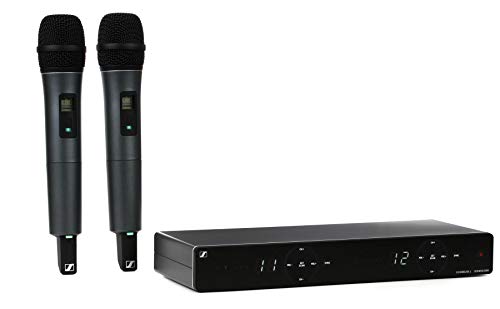
Sennheiser XSW 1-835
Worship teams, schools and gigging duos who want two wireless e835 vocal channels with the simplest possible setup.
Read the Sennheiser XSW 1-835 review →Questions Buyers Ask
Audio-Technica PRO44 Boundary Microphone
See the current listing, price and included accessories.
About This Review
Mandrillis Team
The Mandrillis editorial team researches and compares audio and music gear using manufacturer documentation, verified specs and real buyer feedback, so you can make a confident purchase without wading through marketing claims.
Read our full research methodology.