Studio Gear Review
Behringer B-1 Review: Budget Large Diaphragm Condenser
The Behringer B-1 is a cardioid large diaphragm condenser microphone with a gold-sputtered, shock-mounted capsule, marketed for both studio and live use on vocals, acoustic instruments, and overheads. The listing confirms the pattern and capsule design but does not publish frequency response or connector specifications.
Our Verdict
Research Score 65/100The Behringer B-1 is a budget large diaphragm condenser built around a gold-sputtered, shock-mounted capsule and a confirmed cardioid pattern, marketed as suitable for both studio and live applications on vocals, acoustic instruments, and overhead miking. The feature bullets describe the capsule twice with slightly conflicting wording, and leave frequency response, SPL, connector type, and weight unpublished, so buyers are relying partly on the pressure-gradient condenser concept and partly on Behringer's general reputation in this price bracket. For a home studio that wants one flexible, cardioid condenser covering several recording roles without a large budget, the B-1 is a reasonable, if sparsely documented, choice. Buyers wanting hard numeric specifications before committing should look at the manufacturer's own data sheet first.
Editorial research score based on published specifications and documented features, not a customer rating or lab test.

Behringer
Behringer B-1 Studio Condenser Microphone
Best for: Home and project studios that want a budget large diaphragm condenser for vocals, acoustic instruments, and overhead miking in both studio and informal live settings.
Skip it if: You need a confirmed connector type, documented frequency response, or a published pad switch specification before buying.
Check Price on AmazonWe may earn a commission at no extra cost to you.
Listing verified: November 2026
Who Should Buy It
Buy it if
- Home studio owners who want a general purpose large diaphragm condenser for vocals and acoustic instruments
- Buyers tracking overheads or room sound who want a cardioid pattern for source separation
- Musicians who want one microphone that covers both informal studio and small live applications
- Budget conscious buyers comfortable with a condenser microphone that has limited published numeric specification
Skip it if
- You need a documented frequency response curve or SPL figure before purchase
- You require a confirmed connector type without checking outside sources
- You want a microphone with a clearly documented pad switch specification
Key Specifications
| Type | Large diaphragm condenser microphone with a gold-sputtered capsule |
| Polar pattern | Cardioid |
| Frequency response | Not published in listing |
| Connection | Not published in the feature bullets; the listing title references an XLR connector, though the bullets do not restate it directly |
| Phantom power | Not published in listing; as a pressure-gradient condenser design it will need external phantom power from a mixer or interface to operate |
| Max SPL or sensitivity | Not published in listing |
| Controls | Not published in the feature bullets; the listing title references a minus 10 dB pad, though the bullets do not describe it directly |
| Mount and stand | Shock-mounted capsule described internally; no external stand or mount hardware is detailed in the bullets |
| Weight | Not published in listing |
| Included accessories | Not published in listing |
Overview
The Behringer B-1 is a cardioid large diaphragm condenser microphone built around a gold-sputtered capsule, positioned by Behringer as a flexible tool for both studio and live applications rather than a microphone tuned for one narrow job. The feature bullets describe it as ideal as a main or support microphone, specifically naming acoustic instruments, overheads, and general ambience as suitable targets.
A pressure-gradient transducer design with a shock-mounted capsule sits at the center of the microphone, a combination aimed at capturing detail accurately while reducing how much handling noise reaches the signal when the microphone is moved or adjusted.
The listing's bullets repeat the capsule description in two slightly different ways, once describing a large-diaphragm capsule and once a single-diaphragm capsule, which most likely refers to the same gold-sputtered element described from two angles rather than two separate components, though buyers should be aware the wording is not perfectly consistent.
Sound Quality
As a large diaphragm condenser, the B-1 is built around a transducer design generally associated with detailed, nuanced capture, able to pick up subtle dynamic shading and high frequency detail that a smaller capsule or a dynamic microphone typically cannot resolve as clearly. The gold-sputtered coating on the diaphragm is a common approach in condenser microphone manufacturing, intended to create a consistent, conductive surface across the diaphragm.
No numeric frequency response is published in the bullets, so the exact tonal character of the B-1 cannot be confirmed from the listing data alone. On paper, a general purpose large diaphragm condenser like this is typically voiced for broad usability across vocals and instruments rather than a specialized curve built for one specific source.
Buyers comparing the B-1 against a well known reference point such as the Audio-Technica AT2020 should expect a budget oriented condenser that covers similar general ground, without assuming identical clarity or self noise performance, since Behringer does not publish the comparable signal to noise or sensitivity figures here that would make a direct comparison possible.
Pickup Pattern and Noise Handling
Behringer confirms a cardioid pickup pattern on the B-1, described in the listing as delivering outstanding sound source separation and feedback rejection, language that points to a pattern tuned for isolating a single source from the surrounding room rather than capturing a wide, even image of everything around it.
That cardioid focus is useful across the use cases Behringer names directly, main or support miking in the studio, acoustic instruments, and overhead positions, since all of those applications benefit from rejecting some of the room's reflections and ambient noise rather than capturing them in full.
No alternate polar pattern, such as omni or figure eight, is mentioned, so the B-1 should be treated as a dedicated cardioid design. Buyers planning a recording technique that depends on a switchable pattern, such as mid side stereo work, will need a different microphone for that role.
Build Quality
No weight, housing material, or exact dimensions are published for the B-1, leaving some uncertainty about how the microphone will hold up to years of regular handling. What is confirmed is the shock-mounted design of the capsule itself, built to reduce internally transmitted handling noise rather than to serve as a drop resistant exterior shell.
Behringer frames the B-1 as suitable for both studio and live applications, which suggests at least a basic level of build confidence beyond a studio only design, though without a published weight or material specification, buyers cannot confirm how it compares to sturdier, metal bodied condensers in a similar price range.
The repeated, slightly inconsistent capsule description across two bullets is a reminder that this listing's documentation is not as polished as some competing products, which is worth factoring into expectations about overall build and quality control.
- Gold-sputtered capsule described as both large-diaphragm and single-diaphragm in the bullets
- Shock-mounted capsule to reduce internally transmitted handling noise
- Marketed for both studio and live use
- Weight, dimensions, and housing material not published in listing
Connectivity and Setup
The feature bullets do not state the B-1's output connector directly, though the listing's own title references an XLR connector, consistent with how large diaphragm condenser microphones in this category are nearly always wired. Buyers should treat that as the product's stated identity rather than a figure confirmed inside the bullet text itself.
As a pressure-gradient condenser design, the B-1 will need external phantom power, typically 48 volts from a mixer or interface, to operate, though the bullets do not state the exact voltage requirement. This is standard for condenser microphones in this category, and most modern recording interfaces include a phantom power switch for exactly this purpose.
Setup involves connecting the microphone via XLR to a phantom power capable mixer or interface, then positioning it according to the intended role, close miking a vocalist, placed in front of an acoustic instrument, or set as an overhead, each of which the listing names as a suitable application.
Features, Controls and Extras
The listing's own title mentions a minus 10 dB pad switch, a feature that would let a user attenuate the input level before it reaches a mixer or interface, useful for very loud sources that might otherwise overload the capsule. The feature bullets themselves do not describe this control directly, so its exact behavior cannot be confirmed from the bullet text alone.
Beyond that referenced pad, the bullets do not mention any other onboard switch, filter, or adjustable control, keeping the feature set centered on the capsule design, the cardioid pattern, and the shock mounting rather than a long list of user adjustable electronics.
The real feature emphasis in this listing is versatility, Behringer repeatedly frames the B-1 as suitable for multiple roles, main or support microphone, studio or live use, vocals or acoustic instruments, rather than highlighting a single standout technical feature.
Use Cases: Vocals, Streaming, Podcasting and Instruments
Acoustic instruments are named directly in the listing as a strong fit for the B-1, where the cardioid pattern and large diaphragm condenser design should capture detail and nuance reasonably well in a treated or semi treated room. Overhead and ambience miking are also called out specifically, roles where a cardioid condenser's source separation helps keep the captured sound focused rather than diffuse.
Vocal recording is a plausible use case as well, since large diaphragm condensers are a common choice for vocals generally, though the B-1's own marketing leans more toward general versatility than a vocal specific voicing, unlike a microphone built and marketed specifically around vocal performance.
Podcasting and streaming are not named in the listing, and the need for phantom power and an external interface makes the B-1 a less convenient choice for that use case than a plug and play USB microphone, even though it could technically be used for spoken word content in a pinch.
Who Should Buy It
Home studio owners who want one reasonably flexible large diaphragm condenser, rather than separate specialized microphones for every role, are the clearest fit for the B-1, since Behringer markets it directly as suitable for both main and support duty across several applications.
Buyers tracking acoustic instruments, overheads, or room ambience will benefit from the confirmed cardioid pattern and the source separation it provides, particularly in a home studio that is not fully acoustically treated.
Musicians who want a single microphone that can move between informal studio sessions and small live applications, rather than committing to a studio only or stage only design, will find the B-1's dual purpose marketing a reasonable fit for their needs.
Alternatives Worth Considering
Buyers who want a documented frequency response or SPL figure before committing should compare the B-1 against a well known reference such as the Audio-Technica AT2020, which publishes more complete numeric specifications than this listing provides.
For vocal focused recording specifically, a condenser microphone marketed and voiced around vocal performance, in the spirit of the Rode NT1, may deliver more consistently flattering results than a general purpose model like the B-1 that is marketed across several different roles at once.
Buyers who want a confirmed pad switch specification, rather than one only referenced in the listing title, should look for a competing condenser microphone whose feature bullets describe that control directly rather than leaving it implied.
Verdict
The Behringer B-1 covers a lot of ground for a budget large diaphragm condenser, a confirmed cardioid pattern, a gold-sputtered shock-mounted capsule, and marketing that spans studio and live use across vocals, acoustic instruments, and overheads.
What holds it back from a higher score is incomplete and occasionally inconsistent documentation, no frequency response or SPL figures, no confirmed connector in the bullets themselves, and two slightly conflicting descriptions of the same capsule, all of which leave buyers trusting general condenser microphone expectations more than hard product specific data.
Strengths and Limitations
Strengths
- Cardioid pattern confirmed for strong sound source separation and feedback rejection
- Gold-sputtered large diaphragm capsule described for the main transducer
- Shock-mounted capsule design to reduce internally transmitted handling noise
- Marketed for both studio and live use, covering vocals, acoustic instruments, and overheads
- Pressure-gradient transducer design suited to detailed, nuanced capture
Limitations
- No frequency response, SPL, or sensitivity figures are published
- No connector type is confirmed directly in the feature bullets
- The bullets repeat the capsule description twice with slightly conflicting wording, once calling it large-diaphragm and once single-diaphragm
- No weight, dimensions, or included accessories are stated
How We Scored It
Scores reflect published specifications, documented features and value against the alternatives below. They are editorial research scores, not laboratory measurements.
Alternatives to Consider

Beyerdynamic M 160
Recording guitar amplifiers, drum overheads, strings and brass with a smooth, directional ribbon character.
Read the Beyerdynamic M 160 review →
Shure BLX288/SM58 Dual Vocal
Bands, worship teams and event companies that need two dependable wireless SM58 vocal channels in one simple package.
Read the Shure BLX288/SM58 Dual Vocal review →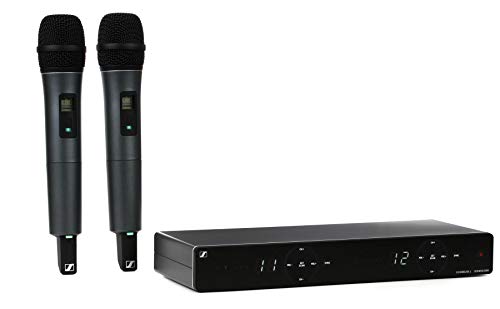
Sennheiser XSW 1-835
Worship teams, schools and gigging duos who want two wireless e835 vocal channels with the simplest possible setup.
Read the Sennheiser XSW 1-835 review →Questions Buyers Ask
Behringer B-1 Studio Condenser Microphone
See the current listing, price and included accessories.
About This Review
Mandrillis Team
The Mandrillis editorial team researches and compares audio and music gear using manufacturer documentation, verified specs and real buyer feedback, so you can make a confident purchase without wading through marketing claims.
Read our full research methodology.