Studio Gear Review
Logitech Creators Yeti Review: Four Pattern USB Mic
The Logitech Creators Yeti is a USB condenser microphone with a three capsule array and four selectable pickup patterns, covering cardioid, omni, bidirectional, and stereo. Onboard controls include mic gain alongside volume and mute, with an adjustable stand for flexible desktop positioning.
Our Verdict
Research Score 77/100The Logitech Creators Yeti builds on a three capsule array to offer four selectable pickup patterns, cardioid, omnidirectional, bidirectional, and stereo, giving it more recording flexibility than most USB microphones in its category. Onboard controls cover headphone volume, pattern selection, instant mute, and mic gain, while an adjustable desktop stand allows the microphone to pivot toward its source or mount directly to a separate stand or boom arm. No numeric frequency response, SPL, or weight figures are published, so buyers are relying on the long standing Yeti reputation rather than a documented spec sheet. For podcasters, musicians, and streamers who want one microphone capable of handling solo vocals, small group conversations, and stereo instrument recording without switching hardware, the Yeti remains a sensible, flexible choice.
Editorial research score based on published specifications and documented features, not a customer rating or lab test.

Logitech
Logitech Blue Yeti USB Microphone
Best for: Podcasters, musicians, and streamers who want maximum pattern flexibility from a single plug and play USB microphone.
Skip it if: You want the smallest possible desktop footprint, or you prefer a traditional XLR microphone for a mixer or interface based setup.
Check Price on AmazonWe may earn a commission at no extra cost to you.
Listing verified: November 2026
Who Should Buy It
Buy it if
- Podcasters recording solo, in pairs, or in small groups around one microphone
- Musicians who want a stereo pattern for recording instruments at home
- Streamers who want onboard mic gain control in addition to volume and mute
- Buyers who want the flexibility to mount on a separate stand or boom arm
Skip it if
- You want the smallest possible desktop footprint, favoring the Yeti Nano instead
- You want a traditional XLR microphone for a mixer or interface based setup
- You need documented numeric frequency response or SPL figures
Key Specifications
| Type | USB condenser microphone with a custom three capsule array |
| Polar pattern | Four selectable patterns: cardioid, omnidirectional, bidirectional, and stereo |
| Frequency response | Not published in listing |
| Connection | USB, plug and play for Mac and PC |
| Phantom power | Not applicable; as a USB microphone it draws power and sends a digital signal over the USB connection rather than using traditional XLR phantom power |
| Max SPL or sensitivity | Not published in listing |
| Controls | Onboard headphone volume, pattern selection, instant mute, and mic gain |
| Mount and stand | Adjustable desktop stand included; can also mount directly to a separate mic stand or boom arm |
| Weight | Not published in listing |
| Included accessories | Adjustable desktop stand included, per the listing |
Overview
The Logitech Creators Yeti is a USB condenser microphone built around a custom three capsule array, positioned by the listing as a professional USB microphone for YouTube videos, Twitch game streaming, podcasting, Zoom meetings, music recording, and more. This is the full size, longer established model in the Yeti lineup, offering more pattern flexibility than the smaller Nano variant.
Logitech frames the three capsule array as producing clear, powerful, broadcast quality sound, language consistent with the Yeti name's established reputation among streamers, podcasters, and musicians as a reliable, well known reference point in the USB microphone category. That name recognition is itself a factor buyers weigh, since a well established product line tends to carry fewer unknowns than a newer, less proven USB microphone.
Blue VOICE software is referenced in the listing as well, adding enhanced effects, advanced modulation, and HD audio samples on top of the hardware capture, extending the microphone's usefulness into live streaming production rather than stopping at raw audio capture alone.
Sound Quality
The listing describes the Yeti's three capsule array as delivering clear, powerful, broadcast quality sound, aimed at a wide range of content creation tasks rather than one narrow application. A three capsule design generally supports more pattern flexibility than a single or dual capsule microphone, which lines up with the four selectable patterns this listing describes.
No numeric frequency response or sensitivity figure is published in this listing, so buyers cannot directly compare the Yeti's measured performance against other USB microphones using only the data provided here. On paper, a broadcast quality framing suggests a voicing tuned for clarity and presence on spoken voice and recorded instruments rather than a flat, reference style capture built for critical studio mixing.
Blue VOICE software adds vocal effects and modulation on top of the raw capsule output, a processing layer the listing presents as a way to elevate streaming and recording, though it should be understood as software functionality rather than a change to the underlying hardware's measured performance.
Pickup Pattern and Noise Handling
Four pickup patterns are confirmed in the listing, cardioid, omnidirectional, bidirectional, and stereo, described as flexible enough to record in ways that would normally require multiple microphones, for vocals, instruments, and podcasts. That range covers more recording scenarios than the two pattern Yeti Nano, at the cost of a larger overall footprint.
Cardioid suits solo vocal or podcast recording by focusing on the source directly in front of the microphone, while omni captures sound more evenly from all directions, useful for small group conversations recorded around a single microphone placed at the center of the table.
Bidirectional pattern, picking up from the front and rear while rejecting the sides, suits a face to face interview format, and stereo pattern captures a wider, more spatial image, useful for recording music or ambient room sound where a sense of width adds value to the final recording.
Build Quality
No weight or exact dimensions are published for the Yeti, though the listing does describe a positionable design with an adjustable desktop stand that allows the microphone to pivot toward the sound source for optimal positioning without needing to move the entire stand. That adjustability matters a great deal in a shared desk setup where the microphone may need to be aimed quickly at a different speaker from one recording session to the next without fully repositioning the stand. It also helps when the desk itself is cluttered with other equipment and the microphone needs to be angled around a monitor or keyboard rather than sitting in a perfectly open space.
No specific housing material or durability claim beyond the general professional USB microphone framing is made, so buyers should not assume rugged, touring grade construction the way they might with a dedicated XLR stage microphone built for repeated handling.
The three capsule array itself forms the physical core of the build, and while internal construction details are not specified, the Yeti's long standing presence in the USB microphone category suggests an established, well tested design rather than a newly introduced product.
- Adjustable desktop stand that pivots toward the sound source
- Can mount directly to a separate mic stand or boom arm
- Three capsule array forms the core of the build
- Weight and exact dimensions not published in listing
Connectivity and Setup
The Yeti connects via USB, described in the listing as plug and play, letting a user set up the microphone in seconds using the included desktop stand or by connecting directly to a separate mic stand or boom arm instead.
As a USB microphone, traditional phantom power does not apply, the Yeti draws power directly from the USB connection and converts its signal to digital before it reaches the computer, which simplifies the overall signal chain compared with an XLR condenser requiring a separate interface or mixer.
No latency monitoring is specifically called out in the listing, letting a user track their voice in real time through a headphone output built into the microphone, with volume control available directly on the body rather than through separate software or hardware.
Features, Controls and Extras
Onboard mic gain is a feature that sets the full size Yeti apart from the Nano, giving users direct control over input level at the microphone itself rather than relying entirely on software level adjustment after the fact, alongside headphone volume, pattern selection, and instant mute.
An adjustable, positionable stand is another standout feature, allowing the microphone to pivot in relation to the sound source, and the listing specifically notes the option to skip the desktop stand entirely and mount the Yeti directly to a separate mic stand or boom arm for more flexible positioning.
Blue VOICE software extends the feature set digitally, offering enhanced effects, modulation, and HD audio samples that go beyond what the hardware alone provides, aimed at elevating streaming and recorded content without additional equipment.
Use Cases: Vocals, Streaming, Podcasting and Instruments
Podcasting and music recording are named directly in the listing, and the four pattern selection means the same microphone can handle a solo voiceover in cardioid, a two person interview in bidirectional, or a wider instrument recording in stereo without switching hardware.
Streaming and gaming are also named specifically, where onboard mic gain and instant mute give a streamer more direct control during a live broadcast than a microphone limited to just volume and pattern switching.
Zoom meetings and general video call use round out the named applications, and the omni pattern option specifically suits a small group gathered around one microphone for a call, a scenario a single pattern USB microphone would handle less gracefully.
Who Should Buy It
Podcasters who record in varying formats, solo episodes, two person interviews, and occasional group conversations, are the clearest fit for the Yeti, since its four pattern selection covers all of those scenarios without requiring a second microphone.
Musicians who want to record instruments or room ambience in stereo, in addition to standard vocal work, will benefit from the dedicated stereo pattern, a capability the smaller Yeti Nano does not offer according to its own listing.
Streamers who want onboard mic gain control, rather than relying purely on software level adjustment, will appreciate the added hardware control the full size Yeti provides over its more compact sibling.
Alternatives Worth Considering
Buyers who want the smallest possible desktop footprint, and who only need cardioid or omni patterns, should consider the Logitech Creators Yeti Nano instead, which the listing for that model describes as more compact while covering the two most commonly used patterns.
Anyone who wants a traditional XLR microphone for use with a dedicated mixer or audio interface, rather than a USB design tied directly to a computer, should look at a condenser microphone built for that kind of signal chain instead of either Yeti model.
Buyers who want documented numeric frequency response or sensitivity figures before purchase should compare this listing against microphones that publish that data directly, since the Yeti's listing focuses on feature and pattern descriptions rather than measured specifications.
Verdict
The Logitech Creators Yeti earns its long standing reputation through genuine flexibility, four selectable patterns, onboard mic gain, and a positionable stand that can also give way to a separate stand or boom arm when needed.
Without published numeric frequency response or SPL figures, buyers are trusting the Yeti name and its established track record across podcasting, streaming, and music recording communities, but for anyone who wants one microphone to handle several different recording formats, that flexibility is the genuine selling point.
Strengths and Limitations
Strengths
- Custom three capsule array for clear, powerful broadcast quality sound
- Four pickup patterns covering cardioid, omni, bidirectional, and stereo
- Onboard controls for headphone volume, pattern, mute, and mic gain
- Adjustable, positionable desktop stand with no latency monitoring
- Can mount directly to a separate mic stand or boom arm for flexible positioning
Limitations
- No numeric frequency response, SPL, or sensitivity figure is published
- No weight or exact dimensions are published
- USB connection ties it to a computer rather than a traditional XLR signal chain
- Larger desktop footprint than the more compact Yeti Nano
How We Scored It
Scores reflect published specifications, documented features and value against the alternatives below. They are editorial research scores, not laboratory measurements.
Alternatives to Consider

Beyerdynamic M 160
Recording guitar amplifiers, drum overheads, strings and brass with a smooth, directional ribbon character.
Read the Beyerdynamic M 160 review →
Shure BLX288/SM58 Dual Vocal
Bands, worship teams and event companies that need two dependable wireless SM58 vocal channels in one simple package.
Read the Shure BLX288/SM58 Dual Vocal review →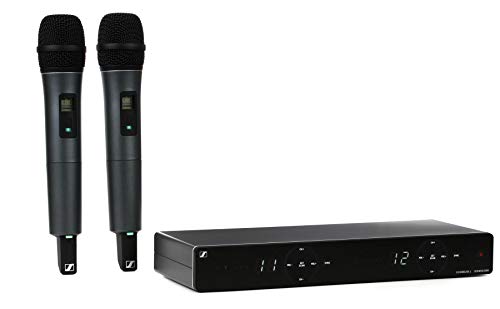
Sennheiser XSW 1-835
Worship teams, schools and gigging duos who want two wireless e835 vocal channels with the simplest possible setup.
Read the Sennheiser XSW 1-835 review →Questions Buyers Ask
Logitech Blue Yeti USB Microphone
See the current listing, price and included accessories.
About This Review
Mandrillis Team
The Mandrillis editorial team researches and compares audio and music gear using manufacturer documentation, verified specs and real buyer feedback, so you can make a confident purchase without wading through marketing claims.
Read our full research methodology.