Studio Gear Review
Focusrite Scarlett 18i16 4th Gen Review: 4 Preamps, ADAT
The Focusrite Scarlett 18i16 4th Gen pairs 4 mic preamps rated at 69dB of gain with ADAT expansion and RedNet derived converters rated at 122dB dynamic range. This research review covers its routing layout and the Word Clock and talkback features it leaves out.
Our Verdict
Research Score 85/100The Focusrite Scarlett 18i16 4th Gen sits just below the flagship 18i20 in the same family, offering 4 mic preamps at 69dB of gain, 18 inputs and 16 outputs, and the same strong 24-bit, 192kHz conversion with a 122dB dynamic range, while leaving out the larger model's Word Clock input and talkback microphone. ADAT, S/PDIF and MIDI I/O still give this unit a real expansion path for studios that outgrow 4 built in preamps. Auto Gain, Clip Safe and a substantial bundled software package round out a genuinely well specified listing. At an upper mid-range price tier, it suits project studios that want serious preamp quality without paying for the largest model's extra routing.
Editorial research score based on published specifications and documented features, not a customer rating or lab test.

Focusrite
Focusrite Scarlett 18i16 4th Gen
Best for: Project studios that need 4 simultaneous mic preamps with real gain headroom plus ADAT expansion, without requiring the larger 18i20's Word Clock or talkback features.
Skip it if: You specifically need Word Clock synchronization or a built in talkback microphone, since this listing does not state either feature for this model.
Check Price on AmazonWe may earn a commission at no extra cost to you.
Listing verified: November 2026
Who Should Buy It
Buy it if
- Producers tracking a handful of instruments and vocals who want strong preamp gain without an oversized interface
- Engineers who want to expand channel count later through ADAT without replacing the main interface
- Buyers who want Auto Gain and Clip Safe to speed up tracking across multiple inputs
- Producers who want a bundled software package covering recording, production and mastering in one purchase
Skip it if
- You need Word Clock synchronization with other digital studio equipment
- You need a built in talkback microphone for communicating with performers
- You need more than 4 simultaneous mic preamps built in without ADAT expansion
Key Specifications
| Type | USB-C audio interface with 18 inputs and 16 outputs, aimed at producer-level home and project studio sessions |
| Inputs | 18 inputs total, including 4 mic preamps, Hi-Z instrument inputs, line inputs, ADAT and MIDI I/O |
| Outputs | 16 outputs total, including analog line outputs plus ADAT, S/PDIF and MIDI I/O |
| Preamps | 4 fourth generation Scarlett mic preamps providing 69dB of gain |
| Resolution | 24-bit, 192kHz converters from the manufacturer's flagship RedNet range, offering a 122dB dynamic range |
| Phantom power | Not published in listing as a specific voltage figure; phantom power is implied for the 4 mic preamp inputs |
| Connection | USB-C |
| Monitoring | Air modes for added presence and harmonic drive, plus Auto Gain and Clip Safe automatic level management |
| Bundled software | Pro Tools Intro+, Ableton Live Lite, Cubase LE, and the Hitmaker Expansion bundle of effects, instruments and mastering tools |
| Included accessories | Not published in listing beyond the bundled software titles |
Overview
The Focusrite Scarlett 18i16 4th Gen sits in the middle of the current Scarlett lineup, offering more routing capacity than the compact two and four input models while staying a step below the flagship 18i20 in total output count and a couple of specific features.
The listing describes an 18 input, 16 output configuration built around 4 mic preamps, Hi-Z instrument inputs, additional line inputs, ADAT, S/PDIF and MIDI I/O, which is a substantial routing layout for a unit still aimed at producers rather than only the largest studio installs.
As with other listings in this product family, the numbers here are specific and checkable rather than vague marketing claims, with the listing stating 69dB of preamp gain and a 122dB dynamic range on the converters, giving buyers real figures to evaluate against competing interfaces.
Positioned as the producer's interface in the listing's own language, the 18i16 targets buyers who need meaningfully more routing than an entry level interface but do not necessarily need the largest model's Word Clock synchronization or built in talkback microphone.
Preamps and Sound Quality
The listing states 4 fourth generation preamps delivering 69dB of gain, the same gain figure quoted for the larger 18i20 model, meaning buyers choosing this smaller sibling are not sacrificing preamp gain quality, only the number of built in preamps and a couple of routing features.
Air mode is described as adding presence and harmonic drive to a signal, with the listing explicitly comparing the effect to the character of classic studio consoles, giving engineers a switchable tonal option on vocals and instruments without an outboard EQ or saturation unit.
On the conversion side, the listing credits the 24-bit, 192kHz converters to the manufacturer's flagship RedNet range and states a 122dB dynamic range, both concrete, checkable figures that place this unit's conversion quality solidly in professional territory despite its mid-tier position in the Scarlett range.
69dB of gain across 4 preamps gives genuine headroom for quieter sources such as ribbon microphones or softer vocalists, and because this figure matches the larger 18i20 model, buyers are not trading preamp quality for a smaller routing footprint here, only giving up a few specific expansion features.
Inputs, Outputs and Routing
The full routing picture is 18 inputs, covering 4 mic preamps, Hi-Z instrument inputs and additional line inputs, plus ADAT and MIDI I/O, against 16 outputs covering analog line outs plus ADAT, S/PDIF and MIDI I/O, a meaningfully smaller output count than the 20 outputs on the larger 18i20.
Unlike the 18i20, this listing does not mention a dedicated Word Clock connection or dual ADAT ports, describing instead a single ADAT connection, which still allows expansion through a compatible 8 channel ADAT preamp unit but with less headroom for further growth than the flagship model offers.
For most project studios tracking a handful of instruments and vocals at once, 4 built in preamps plus a single ADAT expansion path should comfortably cover growth needs without requiring the larger model's additional Word Clock synchronization capability.
Features, Monitoring and Software
Auto Gain is described in the listing as a tool for setting optimal levels quickly across the 4 preamps at once, saving the time that would otherwise go into manually gain staging each microphone individually before a multi-performer session begins.
Clip Safe works alongside Auto Gain, monitoring and adjusting gain in real time to prevent clipping during a take, which is particularly valuable during a live, once only performance capture where stopping to re-gain a channel mid take is not an option.
Unlike the larger 18i20, this listing does not mention a built in talkback microphone, so engineers who specifically want that feature for communicating with a performer in another room should look at the larger model or plan to add a separate talkback solution.
The bundled software package is substantial regardless, including Pro Tools Intro+, Ableton Live Lite, Cubase LE and the Hitmaker Expansion bundle of effects, instruments and mastering tools, giving a buyer a genuinely usable production environment straight out of the box.
- 4 fourth gen mic preamps, 69dB gain
- 18 inputs, 16 outputs total
- ADAT, S/PDIF, MIDI I/O
- 24-bit, 192kHz RedNet derived converters, 122dB dynamic range
- Air mode, Auto Gain, Clip Safe
- Pro Tools Intro+, Ableton Live Lite, Cubase LE, Hitmaker Expansion
Build, Design and Controls
As a mid-sized unit in its family, the Scarlett 18i16 4th Gen is typically built in a rack mountable format rather than the small desktop chassis used by the smaller two and four input Scarlett models, though this listing does not state exact dimensions or weight.
Without a stated talkback microphone, the front panel is likely simpler than the larger 18i20's, focused on preamp gain controls for the 4 inputs, Air mode switching, and Auto Gain triggering rather than additional talkback specific controls.
Given the scale of this unit's routing, buyers should expect a correspondingly detailed front panel for its 4 preamps and instrument inputs, though the listing does not break down the exact physical control count.
Connectivity, Drivers and Latency
The interface connects over USB-C, a modern and widely supported standard across current computers, which the listing states plainly without further elaboration on specific driver requirements or operating system version compatibility.
ADAT, S/PDIF and MIDI I/O round out the digital connectivity, giving this unit considerably more expansion capability than a typical USB interface limited to analog inputs alone, even without the dual ADAT and Word Clock found on the larger 18i20.
Latency performance is not quantified with a specific millisecond figure in the listing, so buyers chasing an exact round trip latency number for a specific buffer size should look to independent measurements or Focusrite's own published figures rather than relying on this listing alone.
Setup and Daily Use
Setting up this interface for a typical session involves gain staging up to 4 simultaneous preamps, which Auto Gain is specifically designed to speed up, followed by configuring any ADAT expander if additional inputs are needed beyond the built in preamps.
Daily use on a unit this size rewards building and saving session templates, since repeatedly reconfiguring 18 inputs and 16 outputs from scratch for every session would offset much of the time saved by Auto Gain and Clip Safe during initial tracking.
For studios running a consistent lineup of instruments and vocalists, the combination of high gain preamps, Air mode and the automated gain features makes this a genuinely practical workhorse interface rather than one that only shows its value on paper.
Who Should Buy It
This interface suits project studios that regularly track several instruments and vocalists and need 4 simultaneous mic preamps with real gain headroom, along with a reasonable path to further expansion through a single ADAT connection.
It is a weaker fit for studios that specifically need Word Clock synchronization with other digital gear, or a built in talkback microphone, since this listing does not state either feature, unlike the larger 18i20 model in the same family.
Buyers who want the preamp quality of the flagship Scarlett interface without paying for its full Word Clock and talkback feature set will find this model a sensible middle ground within the current Scarlett range.
Alternatives Worth Considering
Buyers who specifically need Word Clock synchronization or a built in talkback microphone should look at the larger 18i20 model in the same family rather than this 18i16 unit.
Buyers who only need one or two inputs should look at a smaller Scarlett model, since the smaller interfaces share the same core preamp design philosophy at a considerably lower price.
Buyers who need even more simultaneous mic preamps than the 4 built into this unit can add an ADAT connected preamp expander through its single ADAT port, extending capacity without replacing this interface.
Verdict
The Focusrite Scarlett 18i16 4th Gen backs up its producer-focused positioning with the same strong preamp gain and converter figures found on the flagship 18i20, while trimming Word Clock and talkback features to sit at a slightly more accessible price point.
For project studios that will not miss Word Clock synchronization or a built in talkback microphone, this is a genuinely strong middle option in the Scarlett range, backed by real, specific numbers rather than vague marketing claims.
Buyers deciding between this model and the larger 18i20 should weigh whether those two specific missing features matter enough to their workflow to justify the larger model's higher price and additional output count.
Strengths and Limitations
Strengths
- 4 fourth generation mic preamps rated at 69dB of gain
- 18 inputs, 16 outputs with ADAT, S/PDIF and MIDI I/O for digital expansion
- 24-bit, 192kHz RedNet derived converters with a 122dB dynamic range
- Air mode adds presence and harmonic drive reminiscent of classic studio consoles
- Auto Gain and Clip Safe automate level setting and prevent clipping in real time
- Generous bundled software covering recording, production and mastering
Limitations
- No Word Clock input, unlike the larger 18i20 model in the same family
- No built in talkback microphone is mentioned for this model
- Exact chassis dimensions and weight are not published in the listing
- Phantom power voltage is implied rather than stated as a specific figure
How We Scored It
Scores reflect published specifications, documented features and value against the alternatives below. They are editorial research scores, not laboratory measurements.
Alternatives to Consider

Pioneer DJ XDJ-RX3
DJs who want club-standard standalone playback from USB with a large touchscreen and a familiar two-channel layout.
Read the Pioneer DJ XDJ-RX3 review →
Yamaha DM3-D 22
Small venues, houses of worship and production companies that want a compact 96 kHz digital console with Dante networking for stage boxes and multitrack recording.
Read the Yamaha DM3-D 22 review →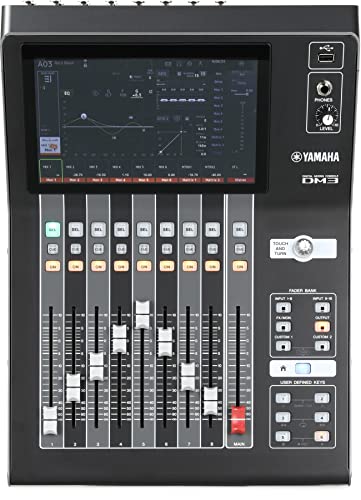
Yamaha DM3
Bands, small venues and project studios that want a compact 96 kHz digital console that doubles as an 18x18 USB recording interface.
Read the Yamaha DM3 review →Questions Buyers Ask
Focusrite Scarlett 18i16 4th Gen
See the current listing, price and included accessories.
About This Review
Mandrillis Team
The Mandrillis editorial team researches and compares audio and music gear using manufacturer documentation, verified specs and real buyer feedback, so you can make a confident purchase without wading through marketing claims.
Read our full research methodology.