Studio Gear Review
AKG Ara USB-C Condenser Microphone Review: USB-C Streaming Mic
The AKG Pro Ara Condenser is a USB-C dual-capsule microphone built for podcasting, streaming, gaming and video blogging, offering 24-bit, 96kHz audio plus onboard volume, gain and mute control. Plug-and-play support spans Mac, PC, iOS and Android devices, making it a flexible desktop and mobile option.
Our Verdict
Research Score 74/100The AKG Pro Ara Condenser is a feature-forward USB-C microphone aimed at podcasters, streamers, gamers and video creators who want a single plug-and-play solution. Its dual-capsule array delivers two capture modes, backed by 24-bit, 96kHz high-resolution audio, while a headphone output with zero latency monitoring and full control over volume, gain and mute make it genuinely practical for live sessions. Compatibility across Mac, PC, iOS and Android extends its usefulness beyond one desktop setup, and the integrated base stand, boom arm and standard stand compatibility add real flexibility. No frequency response or SPL figures are published, and the two capture modes are not named, so some technical details remain unconfirmed, but for everyday convenience it is a strong, practical pick.
Editorial research score based on published specifications and documented features, not a customer rating or lab test.

AKG
AKG Ara USB-C Condenser Microphone
Best for: Podcasters, streamers, gamers and video creators who want a plug-and-play USB-C condenser with onboard monitoring and gain control.
Skip it if: You need an XLR output for a traditional mixer setup, or you want documented frequency response and SPL numbers before buying.
Check Price on AmazonWe may earn a commission at no extra cost to you.
Listing verified: November 2026
Who Should Buy It
Buy it if
- Podcasters and YouTubers who want one microphone that works across Mac, PC, phones and tablets
- Gamers and streamers who want onboard headphone monitoring with zero latency
- Musicians recording quick ideas who want plug-and-play simplicity without a separate interface
- Buyers who want flexible mounting options rather than being locked to one stand type
Skip it if
- You need an XLR connection for a standard studio or live mixer
- You require documented frequency response or SPL specifications
- You want confirmation of the exact polar patterns before purchase
Key Specifications
| Type | USB-C condenser microphone with a dual-capsule array |
| Polar pattern | Two capture modes, described in the listing as dual pattern audio capture; the specific pattern names are not stated in the bullets |
| Frequency response | Not published in listing; the listing instead states 24-bit, 96kHz high-resolution audio |
| Connection | USB-C, confirmed in the listing title |
| Phantom power | Not applicable; the AKG Pro Ara Condenser draws power through its USB-C connection rather than needing external phantom power |
| Max SPL or sensitivity | Not published in listing |
| Controls | Output volume, mic gain and mute controls, plus a headphone output for zero latency monitoring |
| Mount and stand | Integrated base stand included; also compatible with a desktop boom arm or a common microphone stand |
| Weight | Not published in listing |
| Included accessories | Not specifically itemized in the bullets beyond the integrated base stand; a USB-C cable is likely required for connection but is not named as included |
Overview
The AKG Pro Ara Condenser is a USB-C microphone built around a dual-capsule array, marketed for podcasting, video blogging, gaming and streaming rather than traditional XLR studio work. AKG frames it as pro-grade, high-quality sound delivered through a convenient plug-and-play connection.
Two audio capture modes are named as a central feature, enabled by the dual-capsule array, though the listing does not specify exactly which polar patterns those modes use. That omission matters for buyers who want to know precisely how the microphone behaves in different recording situations, especially when switching between a solo setup and a shared conversation.
Beyond the capsule itself, the listing leans heavily on convenience features: universal compatibility across computers and mobile devices, a headphone output for monitoring, and flexible mounting options. Those additions position the Ara Condenser as a complete desktop solution rather than a bare capsule needing extra gear. That framing matters for buyers who want to start recording the same day the box arrives.
Sound Quality
AKG states the Ara Condenser captures 24-bit, 96kHz high-resolution audio, a specification about digital resolution rather than frequency response or self-noise. Higher bit depth and sample rate generally support cleaner, more detailed digital capture, though they do not by themselves guarantee a particular tonal character. That distinction between resolution and tone is one many casual buyers overlook when comparing microphones on paper.
No frequency response curve or SPL rating appears anywhere in the bullets, so the exact tonal balance of the dual capsules cannot be confirmed from this data. Buyers should treat the 24-bit, 96kHz figure as a resolution spec rather than a stand-in for a full frequency response chart.
Buyers familiar with a Blue Yeti, a popular USB condenser aimed at similar podcasting and streaming use, have a useful general reference point for what this class of microphone typically delivers. This review does not claim the Ara Condenser matches that model's specific published numbers, since no matching figures are available here. Any comparison between the two should be treated as a general category reference rather than a measured equivalence.
Pickup Pattern and Noise Handling
The listing confirms a dual-capsule array providing two audio capture modes, described in the title as dual pattern audio capture. Beyond that general description, the specific pattern names, such as cardioid or omnidirectional, are not stated directly in the bullets.
Two capture modes typically let a user choose between a tighter, more isolated pickup for solo recording and a wider pickup suited to multiple speakers or a roundtable conversation. That general behavior is consistent with how dual-capsule USB microphones in this category usually work, though it is not confirmed in exact terms here. Selecting the right mode for the number of speakers in the room is the main practical decision a buyer needs to make.
No numeric noise rejection or off-axis figures are published, so buyers cannot verify from this listing how well either capture mode isolates background noise. Choosing the correct mode for the room and number of speakers remains the most practical way to manage noise with this microphone, especially in an untreated home office or gaming room.
Build Quality
The listing describes the Ara Condenser's design as modern and camera-ready, aimed at buyers who appear on screen as part of streaming, gaming or video content. That styling focus suggests AKG expects this microphone to sit visibly in frame rather than stay hidden off camera.
No housing material, weight or exact dimensions are published in the listing, so the specific build quality cannot be confirmed numerically in any meaningful way. The integrated base stand is named directly, suggesting a self-contained unit that does not require a separate mounting purchase out of the box.
Versatile mounting options, including the integrated base, a desktop boom arm, or a common microphone stand, give buyers flexibility in how the microphone is positioned. That flexibility is itself a practical build consideration for creators who may switch setups between recording sessions.
- Modern, camera-ready design per the listing
- Integrated base stand included
- Compatible with boom arms and standard stands
- Housing material and weight not published in listing
Connectivity and Setup
The AKG Pro Ara Condenser connects via USB-C, confirmed directly in the listing title. That single connection handles both power and digital audio transfer, removing the need for a separate power supply or an analog mixer.
Universal compatibility is named as a specific feature, with support listed for Mac and PC computers as well as iOS and Android tablets and phones. That breadth of compatibility extends the microphone's usefulness beyond a single desktop setup into mobile recording scenarios as well, which is unusual for a microphone at this price.
A headphone output provides zero latency monitoring while tracking, alongside full control over output volume, mic gain and mute, according to the listing. Those onboard controls let a user adjust levels directly at the microphone rather than relying entirely on software settings buried in an operating system menu.
Features, Controls and Extras
Onboard gain, volume and mute control stand out as genuinely practical features for live recording, streaming or gaming sessions, where quick adjustments without opening a settings menu can matter during a live broadcast. The zero latency headphone monitoring supports that same real-time workflow.
The dual-capsule array and its two capture modes function as the microphone's signature feature, letting a user adapt the pickup to solo recording or a shared conversation without needing a second microphone. Exact pattern names are not given, but the practical benefit of having a choice is clear from the listing's framing.
Versatile mounting rounds out the feature set. The integrated base stand covers basic desktop use, while compatibility with a boom arm or standard stand supports more deliberate studio-style setups as a creator's needs grow over time.
Use Cases: Vocals, Streaming, Podcasting and Instruments
Podcasting and streaming are named directly and repeatedly in the listing, and the combination of plug-and-play USB-C connectivity, onboard monitoring and dual capture modes supports both use cases well. A podcaster recording solo or with a guest can switch capture modes to match the situation.
Gaming and video blogging are also named explicitly, with the camera-ready design suggesting AKG expects this microphone to appear in frame during gameplay streams or video content. Musicians are mentioned as well, though the listing does not detail any instrument-specific recording features.
Traditional studio vocal or instrument tracking through an XLR mixer is not the intended use case here, since the Ara Condenser offers no XLR output. Buyers specifically needing that workflow should look elsewhere, while creators working primarily through a computer or mobile device will find this microphone's connectivity a natural fit.
Who Should Buy It
Podcasters and YouTubers who want one microphone that works across a computer, phone or tablet are a strong fit for the Ara Condenser. Its stated universal compatibility and plug-and-play setup remove much of the usual setup friction.
Gamers and streamers who need real-time headphone monitoring without latency will benefit directly from the onboard headphone output and gain controls. That combination lets them hear themselves clearly while broadcasting live without an external mixer.
Musicians or creators who want to record quick ideas without setting up a separate audio interface will also find the Ara Condenser's simplicity appealing. It is not built as a dedicated studio instrument microphone, but it covers casual recording needs well.
Alternatives Worth Considering
Buyers who want a widely documented USB condenser with a long track record in podcasting and streaming should consider the Blue Yeti as a comparison point. This review does not state exact matching specification numbers between the two microphones, so any comparison stays reputational rather than numeric.
Those who specifically want an XLR connection for a traditional studio mixer or a live sound board should look at a dedicated XLR condenser instead. The Ara Condenser's USB-C design does not offer that analog connectivity option at all.
Buyers who want a hybrid approach, with both XLR and USB outputs on one microphone, might consider a model like the Shure MV7. This review makes no specific numeric comparison between that microphone and the Ara Condenser, since neither listing publishes matching figures.
Verdict
The AKG Pro Ara Condenser packs a genuinely useful feature set into a single USB-C microphone. It combines a dual-capsule array, 24-bit, 96kHz audio, onboard monitoring and gain control, and broad compatibility across computers and mobile devices.
Without published frequency response, SPL or exact capture mode names, some technical specifics remain unconfirmed. For podcasters, streamers, gamers and video creators who want convenience and practical controls over a documented spec sheet, it is still a well-rounded, feature-rich choice.
Buyers who need an analog XLR connection should look elsewhere. Anyone building a desktop or mobile recording setup around a single USB-C cable, though, will find most of what they need already built into this one microphone, from monitoring to mounting.
Strengths and Limitations
Strengths
- 24-bit, 96kHz high-resolution audio capture
- Dual-capsule array offering two audio capture modes
- Plug-and-play setup across Mac, PC, iOS and Android
- Headphone output with zero latency monitoring and full gain, volume and mute control
- Versatile mounting with an integrated base stand, boom arm or standard microphone stand
- Camera-ready styling suited to on-screen appearances
Limitations
- No numeric frequency response or SPL figures published
- Specific names of the two capture modes are not stated in the bullets
- USB-C cable not explicitly confirmed as included
- No XLR output for buyers who want an analog mixer connection
How We Scored It
Scores reflect published specifications, documented features and value against the alternatives below. They are editorial research scores, not laboratory measurements.
Alternatives to Consider

Beyerdynamic M 160
Recording guitar amplifiers, drum overheads, strings and brass with a smooth, directional ribbon character.
Read the Beyerdynamic M 160 review →
Shure BLX288/SM58 Dual Vocal
Bands, worship teams and event companies that need two dependable wireless SM58 vocal channels in one simple package.
Read the Shure BLX288/SM58 Dual Vocal review →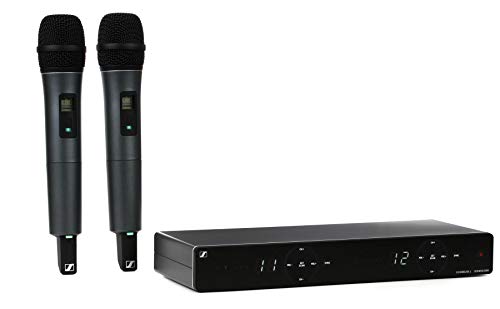
Sennheiser XSW 1-835
Worship teams, schools and gigging duos who want two wireless e835 vocal channels with the simplest possible setup.
Read the Sennheiser XSW 1-835 review →Questions Buyers Ask
AKG Ara USB-C Condenser Microphone
See the current listing, price and included accessories.
About This Review
Mandrillis Team
The Mandrillis editorial team researches and compares audio and music gear using manufacturer documentation, verified specs and real buyer feedback, so you can make a confident purchase without wading through marketing claims.
Read our full research methodology.