Studio Gear Review
Behringer U-Phoria UMC204HD Review: Midas Preamps on a Budget
The Behringer U-Phoria UMC204HD pairs two genuine Midas microphone preamplifiers with 24-bit, 192kHz resolution, latency-free direct monitoring and MIDI connectivity at a budget price. This research review examines what the listing confirms about inputs and phantom power, and flags the output, software and build details left unanswered.
Our Verdict
Research Score 70/100The Behringer U-Phoria UMC204HD earns its budget reputation through two genuine Midas mic preamps, 24-bit, 192kHz resolution and a latency-free Direct Monitor switch, a combination that normally costs more when bought separately. MIDI In and Out ports plus insert points on both channels add flexibility that many two-input interfaces skip entirely. Buyers report clean results from the Midas preamps at this price, and the bundled headphone adapter is a small but genuinely useful inclusion. Where the published specification stays quiet, caution is warranted: no software bundle is named, output connectors are not described, and there is no confirmed dedicated instrument input. For a home studio needing two solid inputs and basic MIDI, this interface is a sensible pick, provided the unpublished details do not matter to the session.
Editorial research score based on published specifications and documented features, not a customer rating or lab test.

Behringer
Behringer U-PHORIA UMC204HD USB Audio Interface
Best for: Home recording musicians and podcasters who want two clean Midas-preamp inputs plus basic MIDI connectivity without paying for channels they will not use.
Skip it if: You need more than two simultaneous inputs, a confirmed software bundle, or a stated instrument-level input, since none of those points are addressed in the listing.
Check Price on AmazonWe may earn a commission at no extra cost to you.
Listing verified: November 2026
Who Should Buy It
Buy it if
- Solo singer-songwriters tracking vocals and one instrument at a time
- Podcasters or streamers who want two phantom-powered combo inputs
- Musicians who want MIDI In and Out without a separate interface
- Buyers who want a straightforward budget interface from an established name
Skip it if
- You need four or more simultaneous inputs
- You require a confirmed software bundle before buying
- You need a dedicated high-impedance instrument input and none is stated
Key Specifications
| Type | 2x2 USB audio interface for Mac or PC |
| Inputs | 2 combo jack inputs accepting XLR and quarter inch connections, each with a 1/4 inch insert point |
| Outputs | Not published in listing beyond the headphone output implied by the Direct Monitor feature |
| Preamps | 2 genuine Midas microphone preamplifiers |
| Resolution | 24-bit, 192kHz |
| Phantom power | +48V phantom power on the combo inputs |
| Connection | USB, per the product title; the feature bullets do not restate the connection type |
| Monitoring | Latency-free Direct Monitor function for input monitoring without delay |
| Bundled software | Not published in listing |
| Included accessories | GHP-105 headphone adapter, converting a 1/8 inch headphone plug to a 1/4 inch TRS port |
Overview
The Behringer U-Phoria UMC204HD is a compact two input, two output USB audio interface built around genuine Midas microphone preamplifier technology. The listing positions it for Mac or PC recording at 24-bit, 192kHz resolution, with phantom power for condenser microphones and a Direct Monitor switch for latency-free tracking. For a budget interface, that is a fairly complete recording toolkit on paper.
Behringer has built the U-Phoria line around pairing its own manufacturing scale with licensed Midas preamp circuitry, and the UMC204HD sits in the middle of that range with two combo inputs instead of one. The published bullet points add MIDI In and Out ports and insert points on each channel, both features that are easy to skip on interfaces at this price.
This is a research review drawn entirely from the product listing. The Midas preamp claim, the 24-bit, 192kHz resolution figure and the phantom power rating all come directly from the published description, while the output connector type, any bundled software and the physical build are not stated and are flagged as such throughout.
Preamps and Sound Quality
Two genuine Midas microphone preamplifiers are the headline feature of the UMC204HD, and the listing frames them as delivering ultra-clear sound with plenty of headroom. Midas is a well regarded name in live and studio mixing console design, and Behringer has licensed that preamp circuitry across the U-Phoria range for several product generations, so the claim has a credible pedigree even without an independent measurement to confirm it.
No gain range, equivalent input noise figure or maximum input level is published, so buyers cannot compare the preamps numerically against competitors such as the Focusrite Scarlett 2i2 or the Universal Audio Volt 2. On paper, the combination of a known preamp design, 24-bit, 192kHz resolution and phantom power suggests a clean signal path suitable for vocals and acoustic instruments, and buyers report satisfactory results at this price point.
Phantom power is confirmed for the combo inputs, which matters because many budget interfaces limit phantom power to a single channel. With two channels of +48V available, the UMC204HD can run a stereo pair of condenser microphones at once, which is useful for room recording or simple stereo podcasting setups.
Inputs, Outputs and Routing
Both inputs use combo jacks, which accept XLR microphone cables and quarter inch instrument or line connections in the same socket. The listing also confirms a quarter inch insert point on each channel, letting an outboard compressor or equalizer be patched into the signal path before it reaches the computer, a feature more commonly found on larger format mixers than two-channel interfaces.
The product title identifies the UMC204HD as a USB audio interface, but the feature bullets themselves do not restate the output connector type, channel count or whether monitor outputs are balanced. Buyers planning to connect studio monitors directly should confirm the rear panel layout before assuming a particular connector.
MIDI In and Out ports extend the routing picture beyond audio, allowing a keyboard controller or other MIDI hardware to connect without an additional MIDI interface. That is a genuinely useful inclusion for buyers who want one box handling both audio and MIDI duties in a small home setup.
Features, Monitoring and Software
The standout feature beyond the preamps is the Direct Monitor function, which the listing describes as providing latency-free input monitoring. On a budget two-channel interface this matters because it lets a vocalist or instrumentalist hear themselves without the processing delay that some computer monitoring paths introduce, which can otherwise throw off timing and pitch during a take.
The quarter inch insert points on each channel double as a feature in their own right, since they let outboard processing join the chain at the preamp stage rather than only after the signal reaches software. That is a small but practical advantage for anyone who already owns a hardware compressor or gate.
No bundled recording software, plugin suite or driver package is named anywhere in the published description. Most interfaces at this price include at least a basic DAW license, so the absence of any stated software bundle is worth confirming directly before buying if a complete software package is part of the budget.
- 2 genuine Midas microphone preamplifiers
- 24-bit, 192kHz resolution for Mac or PC
- +48V phantom power on both combo inputs
- Latency-free Direct Monitor function
- MIDI In and Out ports plus insert points on each channel
Build, Design and Controls
The listing does not describe the chassis material, weight or physical dimensions of the UMC204HD, which limits what can be said about its durability or desk footprint. Behringer's U-Phoria range has generally used metal-topped enclosures with plastic end caps in similar models, but that detail is not confirmed for this specific unit from the published data.
Front panel controls can be inferred from the feature set rather than described directly: two input gain controls for the combo jacks, a Direct Monitor switch, and presumably a master output level given the headphone adapter included in the box. The published bullets do not confirm LED metering, a dedicated headphone volume knob or a power switch.
Included in the box is a GHP-105 headphone adapter, converting a standard 1/8 inch headphone plug to the 1/4 inch TRS connector likely used on the interface's own headphone jack. It is a minor accessory, but one that solves a common annoyance for anyone whose headphones use the smaller consumer connector.
Connectivity, Drivers and Latency
The product title names this a USB audio interface, which is the expected connection method for a device in this class, though the feature bullets themselves never restate USB explicitly. Buyers should treat the connection type as confirmed by the title rather than by a dedicated spec line, since the listing data available here does not repeat it in detail.
No information is published about USB version, bus power requirements, or driver compatibility with specific operating system versions. Given that Behringer has maintained driver support for the wider U-Phoria range over several years, a buyer can reasonably expect ongoing compatibility, though that expectation rests on the brand's track record rather than anything stated in this listing.
Latency is addressed only through the Direct Monitor feature rather than through a published round-trip latency figure. For many home recording tasks the Direct Monitor switch solves the practical latency problem by routing the input signal directly to the headphones before it ever reaches the computer, which sidesteps the need for a low buffer size setting.
Setup and Daily Use
Day to day use of a two input interface like this one typically centers on plugging in a microphone or instrument, setting gain, and flipping the Direct Monitor switch when immediate feedback matters more than hearing the processed signal from the DAW. The UMC204HD's feature set supports exactly that workflow without extra complexity.
The insert points add a step for anyone routing outboard gear, since a compressor or equalizer needs to be patched in before each session rather than relying purely on software processing. For most home users that insert point will likely sit unused, but it remains available for anyone who wants it.
Because no bundled software is confirmed, a new owner may need to source their own recording software separately, which adds a step to initial setup that owners of interfaces with an included DAW license would not face. This is worth planning for before the interface arrives.
Who Should Buy It
This interface suits a solo musician or podcaster who wants two clean, phantom-powered inputs and does not need more channels than that. The Midas preamp pedigree and the 192kHz resolution ceiling both suggest a signal path that can comfortably handle vocal and instrument recording for home use.
Anyone who already owns MIDI hardware and wants to avoid buying a separate MIDI interface gets real added value here, since the MIDI In and Out ports are not common on interfaces at this price. Buyers who value that convenience should weigh it heavily in the decision.
Buyers who need a confirmed software bundle, more than two inputs, or a specifically rated instrument input should look elsewhere or contact the manufacturer directly before purchasing. None of those points are settled by the published listing, so guessing at them is risky.
Alternatives Worth Considering
Two-input interfaces in this general price and feature class include the Focusrite Scarlett 2i2, the PreSonus AudioBox and the Universal Audio Volt 2, each with its own preamp design and software bundle approach. None of their exact specifications apply to the UMC204HD, but they represent the kind of competitor a buyer should cross-shop against before deciding.
Within Behringer's own range, the smaller UMC22 and UM2 models trade the second input and some routing flexibility for a lower price, which may suit buyers who only ever record one source at a time. Stepping up within the same U-Phoria family keeps driver behavior and preamp philosophy consistent while adding capability.
Buyers prioritizing a confirmed software bundle over MIDI ports might find better value elsewhere. The UMC204HD's unpublished software situation is a real unknown that competing listings sometimes resolve by explicitly naming an included DAW.
Verdict
The Behringer U-Phoria UMC204HD delivers two genuine Midas preamps, 24-bit, 192kHz resolution, dual-channel phantom power and MIDI connectivity in a budget-tier package, a combination that covers the core needs of a small home studio. The latency-free Direct Monitor switch and the insert points on each channel add genuine utility beyond what many competitors at this price offer.
The gaps in the published listing, namely the output connector type, the absence of a named software bundle and the lack of any build or dimension data, mean a buyer should confirm those points directly if they matter to the purchase. None of them undermine the core recording capability described, but they are real unknowns rather than settled facts.
Overall this is a sensible choice for a vocalist, instrumentalist or podcaster who wants two solid Midas-preamp inputs and basic MIDI support without paying for channels they will not use. That recommendation holds as long as the unpublished details are acceptable or verified before buying.
Strengths and Limitations
Strengths
- Two genuine Midas mic preamps at a budget price
- 24-bit, 192kHz resolution for Mac or PC
- Latency-free Direct Monitor switch
- MIDI In and Out ports plus insert points on both channels
- Ships with a usable headphone adapter
Limitations
- No bundled software titles are named in the listing
- Output connector types and count are not published
- No confirmed dedicated instrument or Hi-Z input
- Build material and physical dimensions are not stated
How We Scored It
Scores reflect published specifications, documented features and value against the alternatives below. They are editorial research scores, not laboratory measurements.
Alternatives to Consider

Pioneer DJ XDJ-RX3
DJs who want club-standard standalone playback from USB with a large touchscreen and a familiar two-channel layout.
Read the Pioneer DJ XDJ-RX3 review →
Yamaha DM3-D 22
Small venues, houses of worship and production companies that want a compact 96 kHz digital console with Dante networking for stage boxes and multitrack recording.
Read the Yamaha DM3-D 22 review →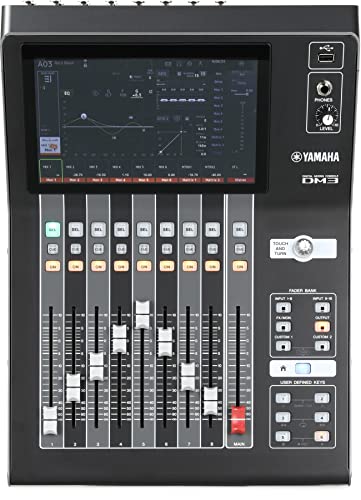
Yamaha DM3
Bands, small venues and project studios that want a compact 96 kHz digital console that doubles as an 18x18 USB recording interface.
Read the Yamaha DM3 review →Questions Buyers Ask
Behringer U-PHORIA UMC204HD USB Audio Interface
See the current listing, price and included accessories.
About This Review
Mandrillis Team
The Mandrillis editorial team researches and compares audio and music gear using manufacturer documentation, verified specs and real buyer feedback, so you can make a confident purchase without wading through marketing claims.
Read our full research methodology.