Studio Gear Review
Allen & Heath SQ-5 48 Review: 48-Channel Digital Console
The Allen and Heath SQ-5 48 is a 48-channel, 36-bus digital mixing console with a 96 kHz FPGA engine, 16 onboard preamps, 8 FX engines and a 32x32 USB interface. This research review checks those extensive features against the preamp and build details the listing leaves unpublished.
Our Verdict
Research Score 86/100The Allen and Heath SQ-5 48 is a genuinely professional-grade console: 48 input channels with 16 onboard preamps, a 96 kHz FPGA processing engine delivering latency under 0.7ms, 12 stereo mixes with 3 stereo matrix outputs, and 8 stereo FX engines with DEEP processing compatibility. A 32x32 USB interface and a 64-channel networked I/O port with remote expander support round out a feature set clearly aimed at touring and broadcast production rather than home recording. The listing does not publish preamp gain or noise figures, phantom power confirmation, or chassis weight and dimensions, which matters less at this tier since buyers typically verify those details before committing. For a live sound engineer or production team needing serious channel count and networked flexibility, the SQ-5 48 justifies its premium position.
Editorial research score based on published specifications and documented features, not a customer rating or lab test.

Allen & Heath
Allen & Heath SQ-5 Digital Mixer
Best for: Live sound engineers, touring productions and broadcast teams that need 48 channels, extensive onboard effects and networked digital I/O in one console.
Skip it if: You need a simple small-format mixer or a basic recording interface, since this is a large-scale professional console built for live sound and broadcast work.
Check Price on AmazonWe may earn a commission at no extra cost to you.
Listing verified: November 2026
Who Should Buy It
Buy it if
- Live sound engineers running 48-channel productions from a single console
- Touring acts needing 16 onboard preamps plus expandable networked I/O
- Broadcast teams that need 3 stereo matrix outputs for multiple feeds
- Venues wanting 8 stereo FX engines without racks of outboard effects gear
Skip it if
- You need a compact interface for home or small studio recording
- You require a published, measured preamp noise or gain specification
- Your budget does not reach the premium professional mixer tier
Key Specifications
| Type | 48-channel, 36-bus digital mixing console built on a 96 kHz FPGA processing engine |
| Inputs | 48 input channels with 16 onboard mic preamps |
| Outputs | LR output, 12 stereo mixes, and 3 stereo matrix outputs, plus a 64-channel I/O port for audio networking |
| Preamps | 16 onboard preamps. Specific gain or noise figures are not published beyond the general FPGA processing architecture |
| Resolution | 96 kHz FPGA processing engine, built on the XCVI architecture |
| Phantom power | Not published in listing |
| Connection | 32x32 USB audio interface, plus a 64-channel networked I/O port and support for remote expanders |
| Monitoring | Not published in listing beyond the output and matrix routing already described |
| Bundled software | Not published in listing |
| Included accessories | Not published in listing |
Overview
The Allen and Heath SQ-5 48 is a large-format digital mixing console offering 48 input channels and 36 buses, built around a 96 kHz FPGA processing engine using the brand's XCVI architecture. The listing confirms 16 onboard preamps, 12 stereo mixes, an LR output and 3 stereo matrix outputs for complex routing across a venue or broadcast.
Allen and Heath has built a strong reputation in live sound and broadcast mixing, and the SQ series sits toward the higher end of that catalog, positioned for touring productions, large venues and professional installations rather than home studios. The feature set described here, including 8 stereo FX engines and a 64-channel networked I/O port, reflects that professional target market directly.
This review relies on the five feature bullets published for this listing. Preamp gain and noise figures, phantom power, and chassis weight or dimensions are not stated in that data, and each of those gaps is noted directly even though buyers at this price tier typically verify such details through a dealer rather than a listing alone.
Preamps and Sound Quality
Sixteen onboard preamps are confirmed across the SQ-5 48's 48 input channels, meaning roughly a third of the channel count can accept a microphone directly from the console itself, with the remainder likely fed by stage boxes or networked I/O. No specific gain range or equivalent input noise figure is published for these preamps.
The 96 kHz FPGA processing engine is the console's core sound quality claim, built on the XCVI architecture that Allen and Heath uses across its SQ series. That architecture is described as delivering exceptional audio quality alongside ultra-low latency, a combination that matters directly for live sound where delay between a performer and the monitor feed is immediately audible.
Latency under 0.7ms is a genuinely strong published figure, well below what a performer would typically notice as delay. For a console handling 48 channels of live audio, maintaining that kind of processing speed while running digital mixing, EQ and effects simultaneously is a meaningful technical achievement worth weighing against competing digital consoles.
Inputs, Outputs and Routing
Forty-eight input channels give this console substantial capacity for a full band, a broadcast production or a large conference setup, with 16 of those channels carrying onboard preamps for direct microphone connection. The remaining channels likely draw from networked stage boxes, though the listing does not itemize that split explicitly.
On the output side, the SQ-5 48 offers 12 stereo mixes alongside a main LR output and 3 stereo matrix outputs. That combination supports simultaneous monitor mixes, broadcast feeds and zone outputs from a single console, which is the kind of routing flexibility expected at this professional tier.
A 64-channel I/O port for audio networking extends the console's reach well beyond its own physical input count, allowing stage boxes and remote expanders to add channels without running individual cables back to the console. That networked approach is standard practice in modern large-venue and touring sound design.
Features, Monitoring and Software
Eight stereo FX engines with dedicated returns are confirmed, giving an operator substantial onboard effects processing without needing outboard reverb or delay units. Running 8 independent stereo effects simultaneously is a generous allocation even among professional digital consoles.
DEEP Processing compatibility is also confirmed, referring to Allen and Heath's expanded processing option for additional plugin-style effects and dynamics on the SQ platform. That compatibility suggests the console can grow its processing capability further through optional software, beyond what ships as standard.
No specific monitoring feature, such as a dedicated control room output or a headphone monitoring scheme, is itemized in the published bullets. The extensive stereo mix and matrix output count already described would typically cover most monitoring needs in a live or broadcast setting regardless.
- 48 input channels with 16 onboard preamps
- 96 kHz FPGA processing engine with latency under 0.7ms
- 12 stereo mixes, LR output and 3 stereo matrix outputs
- 8 stereo FX engines with dedicated returns
- DEEP Processing compatibility and a 64-channel networked I/O port
Build, Design and Controls
No chassis weight, physical dimensions or fader count are published for the SQ-5 48 in the available feature bullets. Allen and Heath's SQ series consoles are generally built with a control surface carrying physical faders for a subset of the total channel count, with layer switching to access the rest, though this exact configuration is not confirmed here.
Given the console's scale, with 48 channels and extensive routing, a substantial control surface and a correspondingly large footprint should be expected. Buyers planning a specific install or touring rack should confirm physical dimensions directly with a dealer before finalizing space or flight case plans.
At this professional tier, buyers typically evaluate build quality through in-person demos, dealer specification sheets or direct manufacturer documentation rather than relying solely on a retail listing. The stakes of getting a console wrong for a touring rig are considerably higher than with a budget interface.
Connectivity, Drivers and Latency
A 32x32 USB audio interface is confirmed, allowing the console to send and receive 32 channels in each direction to a connected computer. That is a substantial multitrack recording and playback capability built directly into the console, useful for virtual soundcheck or full live recording of a show.
The 64-channel networked I/O port and support for remote expanders extend connectivity well beyond the console's own physical inputs. That is a standard feature at this tier, linking stage boxes and remote preamp units over a single network cable rather than a large analog snake.
Latency under 0.7ms, already noted for the FPGA engine, applies across this networked and USB connectivity as well, which matters for any application where the console's processing sits between a performer and their monitor feed in real time.
Setup and Daily Use
Setting up a console of this scale involves configuring channel routing across 48 inputs, assigning preamps either onboard or through networked stage boxes, and establishing the 12 stereo mixes and matrix outputs needed for a specific show or installation. That is considerably more involved than setting up a small interface, befitting the console's professional scope.
Daily use for a touring or venue engineer would center on recalling scene presets, adjusting the 8 onboard FX engines for a given performance, and managing the matrix outputs for broadcast or zone feeds as the production requires. The 0.7ms latency figure matters continuously throughout a live show rather than just at setup.
Virtual soundcheck through the 32x32 USB interface is a practical daily-use feature. It lets an engineer rehearse mix settings against a prerecorded multitrack session without needing the full band or production on site.
Who Should Buy It
This console suits a live sound engineer, touring production or broadcast team that needs 48 channels, extensive onboard effects and networked digital I/O managed from a single surface. The combination of FPGA processing speed and DEEP processing compatibility supports demanding, fast-moving production schedules.
Venues and installations that want to reduce reliance on racks of outboard effects gear will find real value in the 8 stereo FX engines with dedicated returns. That consolidates processing that would otherwise require separate hardware units taking up rack space.
Buyers whose needs are better served by a small interface or a compact mixer, rather than a full 48-channel digital console, should look toward the smaller products in this same batch of listings instead. The SQ-5 48 is built for a different scale of production entirely.
Alternatives Worth Considering
Buyers needing a smaller digital console with fewer channels but similar networked I/O philosophy should look at other models within the Allen and Heath SQ range. Those scale the same general architecture down to smaller channel counts and control surfaces.
For budget-conscious buyers who do not need anywhere near 48 channels, the analog mixers and USB interfaces reviewed elsewhere in this batch serve a completely different scale of production at a fraction of the price. The Behringer XENYX series is one example of that much smaller category.
Competing professional digital consoles from other manufacturers are worth comparing specifically on preamp noise figures and control surface ergonomics. Those are the details this listing leaves unpublished, and they are often where meaningful differences between high-end consoles actually emerge.
Verdict
The Allen and Heath SQ-5 48 delivers a genuinely professional feature set: 48 channels with 16 onboard preamps, a 96 kHz FPGA engine running under 0.7ms latency, extensive stereo mix and matrix output routing, 8 onboard FX engines, and networked connectivity through a 32x32 USB interface and a 64-channel I/O port.
The listing's gaps, around preamp noise figures, phantom power confirmation and physical build specifications, matter less at this tier than they would for a budget interface. Professional buyers typically confirm those details through a dealer or an in-person demo before committing to a purchase of this scale.
For touring productions, large venues and broadcast teams needing serious channel count and processing power in one console, the SQ-5 48 stands as a strong choice. It sits at the top of this review batch in both scale and capability.
Strengths and Limitations
Strengths
- 48 input channels with 16 onboard preamps
- 96 kHz FPGA processing with latency under 0.7ms
- 12 stereo mixes, LR output and 3 stereo matrix outputs for complex routing
- 8 stereo FX engines with dedicated returns, plus DEEP processing compatibility
- 32x32 USB interface and 64-channel networked I/O with remote expander support
Limitations
- No published preamp gain or noise figures
- Phantom power is not explicitly confirmed in the feature bullets
- No chassis weight, dimensions or fader count published
- Premium price tier puts this well beyond small home studio budgets
How We Scored It
Scores reflect published specifications, documented features and value against the alternatives below. They are editorial research scores, not laboratory measurements.
Alternatives to Consider

Pioneer DJ XDJ-RX3
DJs who want club-standard standalone playback from USB with a large touchscreen and a familiar two-channel layout.
Read the Pioneer DJ XDJ-RX3 review →
Yamaha DM3-D 22
Small venues, houses of worship and production companies that want a compact 96 kHz digital console with Dante networking for stage boxes and multitrack recording.
Read the Yamaha DM3-D 22 review →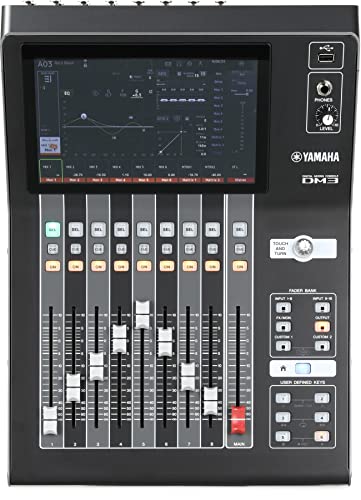
Yamaha DM3
Bands, small venues and project studios that want a compact 96 kHz digital console that doubles as an 18x18 USB recording interface.
Read the Yamaha DM3 review →Questions Buyers Ask
Allen & Heath SQ-5 Digital Mixer
See the current listing, price and included accessories.
About This Review
Mandrillis Team
The Mandrillis editorial team researches and compares audio and music gear using manufacturer documentation, verified specs and real buyer feedback, so you can make a confident purchase without wading through marketing claims.
Read our full research methodology.