Studio Gear Review
AKG D5 Review: Stage Ready Supercardioid Vocal Mic
The AKG D5 is a supercardioid dynamic vocal microphone built for live performance, featuring a Varimotion diaphragm, an integrated pop filter, and a rugged die-cast housing. The listing emphasizes feedback suppression and durability over documented frequency response or SPL figures, positioning it as a stage focused choice.
Our Verdict
Research Score 72/100The AKG D5 is a supercardioid dynamic vocal microphone built for the stage, pairing a Varimotion diaphragm voiced to cut through a mix with an integrated pop filter and a dual shock mounted capsule. AKG backs that with a rugged die-cast housing and a spring steel grille aimed at touring durability, plus a feedback suppression claim tied to the tight supercardioid pattern that helps performers work closer to monitor wedges. No frequency response, SPL, or weight figures are published in the listing, so buyers are relying on AKG's feature descriptions rather than documented numbers. For gigging vocalists who want strong feedback rejection and built in pop filtering without extra accessories, the D5 is a sensible, durable choice.
Editorial research score based on published specifications and documented features, not a customer rating or lab test.

AKG
AKG D5 Vocal Dynamic Microphone
Best for: Live vocalists and stage performers who want strong feedback rejection and built in pop filtering without carrying extra hardware.
Skip it if: You need documented frequency response or SPL figures, or require a specific connector confirmed before buying.
Check Price on AmazonWe may earn a commission at no extra cost to you.
Listing verified: November 2026
Who Should Buy It
Buy it if
- Gigging vocalists who perform regularly in front of monitor wedges
- Performers who want an integrated pop filter without adding separate accessories
- Bands and venues standardizing around a rugged, die-cast handheld microphone
- Buyers who prioritize feedback rejection on loud stages over documented technical numbers
Skip it if
- You need documented frequency response, SPL, or weight figures
- You want a condenser microphone for studio vocal recording instead of a stage dynamic
- You need a confirmed connector type without checking the manufacturer's own spec sheet
Key Specifications
| Type | Dynamic vocal microphone (the Varimotion diaphragm, die-cast housing, and lack of any phantom power requirement described in the bullets are consistent with a dynamic design) |
| Polar pattern | Supercardioid |
| Frequency response | Not published in listing |
| Connection | Not published in listing |
| Phantom power | Not required; the Varimotion diaphragm points to a dynamic design, which does not need external phantom power to operate |
| Max SPL or sensitivity | Not published in listing |
| Controls | Not published in listing; no onboard switch is mentioned in the bullets |
| Mount and stand | Not published in listing beyond the dual shock mount of the capsule itself, which is an internal component rather than an external stand mount |
| Weight | Not published in listing |
| Included accessories | Not published in listing |
Overview
The AKG D5 is a supercardioid vocal microphone built for the stage, centered on what AKG calls a Varimotion diaphragm, a dynamic capsule design the brand positions for crisp sound that stays audible inside a busy live mix. The listing frames this as a performance microphone first, built to survive repeated use in front of monitors and PA systems rather than a studio only tool.
AKG backs that stage focus with a rugged die-cast housing and a spring steel wire mesh grille, both aimed at surviving drops, bumps, and the general wear of touring or weekly gigging rather than sitting on a stand in a treated vocal booth.
An integrated pop filter and a dual shock mounted capsule round out the package, two features that typically require separate accessories on cheaper dynamic microphones, suggesting AKG designed the D5 to work straight out of the box for a performer who does not want to add extra hardware before a show.
Sound Quality
AKG describes the Varimotion diaphragm as delivering crisp sound built to cut through every mix, language that points to a presence focused voicing rather than a flat, neutral response. That kind of tuning is common on stage vocal microphones, since a voice has to compete with monitors, backline amplifiers, and a full band mix in a way a studio vocal chain never does.
No numeric frequency response or sensitivity figure is published in the listing, so the exact shape of that crisp, cut through character cannot be confirmed from the data provided. On paper, a diaphragm marketed specifically for cutting through a mix generally implies some upper midrange emphasis, similar in concept to the presence boosts found on well known stage vocal microphones such as the Shure SM58, though the two should not be assumed to sound identical.
AKG has used Varimotion diaphragm technology across several of its dynamic microphones, and the branding suggests a deliberate, consistent voicing strategy rather than a one off design, though buyers wanting a documented frequency response curve will need to look at AKG's own specification sheet rather than this listing alone.
Pickup Pattern and Noise Handling
The D5 uses a supercardioid polar pattern, which is tighter and more directional than a standard cardioid pattern, rejecting more sound from the sides while staying focused on whatever sits directly in front of the capsule. AKG pairs that pattern with a claim of high feedback suppression, specifically useful for performers who need to stand close to monitor wedges without triggering feedback.
A tighter pattern like supercardioid does trade some flexibility for that extra rejection, a performer has to stay more precisely on axis to get the full benefit, since moving off to the side will reduce output more noticeably than it would on a standard cardioid design. That tradeoff is a deliberate choice for a stage microphone, where feedback control around loud monitors usually matters more than forgiving off axis pickup.
Dual shock mounting of the capsule itself is listed as a way to eliminate handling noise, which works alongside the polar pattern rather than replacing it, keeping low frequency rumble from gripping or bumping the body out of the signal while the supercardioid pattern handles rejection of sound sources around the stage.
Build Quality
AKG specifies a spring steel wire mesh grille paired with a rugged die-cast housing, two choices aimed squarely at live performance durability rather than a lightweight studio design meant to sit untouched on a stand. Die-cast construction is generally heavier and more impact resistant than molded plastic, which fits a microphone meant to survive being passed between performers or dropped during a show.
No exact weight or dimensions are published, so buyers cannot confirm precisely how substantial the D5 feels in hand, but the combination of die-cast housing and a wire mesh grille generally signals a microphone built with touring in mind rather than careful desk use.
Together, the grille, housing, and internal shock mount describe a microphone engineered around the physical demands of live use, repeated handling, occasional drops, and the vibration of being carried on and off stage night after night, even without a published weight figure to quantify it.
- Spring steel wire mesh grille for impact resistance
- Rugged die-cast housing built for live performance
- Dual shock mounted capsule to reduce handling noise
- Weight and exact dimensions not published in listing
Connectivity and Setup
The listing bullets do not state the D5's output connector directly, though a dynamic stage vocal microphone of this design standardly uses a 3 pin XLR connector to send its signal to a mixer or PA system, consistent with how the broader category of handheld stage microphones operates.
As a dynamic microphone built around the Varimotion diaphragm, the D5 does not require phantom power to function, since its signal is generated mechanically rather than through an externally powered circuit, which simplifies setup compared with a condenser microphone that needs a phantom power supply confirmed before use.
In practice, setup means connecting an XLR cable from the microphone to a mixer or PA channel and positioning it in front of the performer. The integrated pop filter and dual shock mount reduce the need for additional setup steps such as attaching a separate foam windscreen or external shock mount before a performance.
Features, Controls and Extras
An integrated pop filter is one of the more practical features called out in the listing, built to reduce plosives and wind noise without requiring a separate foam cover or external pop filter accessory, which is a convenience most budget dynamic microphones leave out.
High feedback suppression tied to the supercardioid pattern functions as a feature in its own right for stage use, giving a performer more headroom before monitor wedges start to ring, a practical benefit that matters more on a loud stage than in a quiet studio.
The listing does not mention an onboard switch, pad, or any adjustable control, keeping the feature set centered on the diaphragm, grille, shock mount, and pop filter rather than any user adjustable electronics.
Use Cases: Vocals, Streaming, Podcasting and Instruments
Live vocal performance is the clear primary use case for the AKG D5, the supercardioid pattern, feedback suppression, and rugged housing all point toward a stage microphone meant to be handled, moved, and pushed close to loud monitors without complaint.
Studio vocal recording is possible but less of a natural fit, since the presence focused, cut through voicing described by AKG is tuned for competing against a live mix rather than for the more controlled, often flatter tonal goals of a quiet vocal booth. A dedicated studio condenser will generally give a more neutral, detailed capture for recorded vocals than a stage dynamic microphone built around this kind of voicing.
Podcasting, streaming, and instrument miking are not named in the listing and are not the microphone's evident design target. A handheld stage microphone like this can technically be used for spoken word content, but a desk mounted condenser or a broadcast style dynamic microphone will generally be a more comfortable and more flattering choice for that kind of seated, close talking use.
Who Should Buy It
Gigging vocalists who perform regularly in front of monitor wedges and need strong feedback rejection will get the clearest benefit from the D5's supercardioid pattern and AKG's feedback suppression claims.
Performers who want an integrated pop filter and shock mounted capsule without adding separate accessories will appreciate how much of that work AKG has already built into the microphone itself.
Bands and venues looking for a rugged, die-cast handheld microphone that can survive repeated touring use, rather than a delicate studio only design, are a strong match for what this listing describes. That combination of durability and stage focused voicing makes the D5 a sensible standardization choice for a venue outfitting multiple vocal channels with the same microphone.
Alternatives Worth Considering
Buyers who want a widely recognized reference point for stage vocal microphones often compare new options against the Shure SM58, a cardioid dynamic design with a long standing reputation, though the D5's supercardioid pattern and integrated pop filter set it apart from that comparison rather than making it a direct substitute.
Anyone who wants documented numeric frequency response or SPL figures before buying should look at AKG's own specification sheet for the D5, since this listing's bullets focus on feature descriptions rather than hard numbers.
Vocalists who want the tightest possible pattern for extreme feedback control on very loud stages might also compare the D5 against other supercardioid competitors in the same price range, weighing the integrated pop filter here against whatever feature set those alternatives offer.
Verdict
The AKG D5 builds its case around a handful of genuinely useful live performance features, a Varimotion diaphragm voiced to cut through a mix, a supercardioid pattern paired with feedback suppression, and an integrated pop filter that saves a buyer from sourcing separate accessories.
With no published frequency response, SPL, or weight figures, buyers are trusting AKG's feature descriptions over hard data, but the rugged die-cast housing and dual shock mounted capsule back up the stage ready positioning well enough to make the D5 a reasonable pick for a performer who prioritizes durability and feedback control over documented specifications.
Strengths and Limitations
Strengths
- Varimotion diaphragm aimed at a crisp sound that cuts through a mix
- Dual shock mount built into the capsule to reduce handling noise
- Spring steel wire mesh grille and die-cast housing built for live performance durability
- Supercardioid pattern with high feedback suppression, useful around stage monitors
- Integrated pop filter to reduce pops and wind noise without an external accessory
Limitations
- No frequency response, SPL, or sensitivity figures are published
- No connector type is stated directly in the bullets
- No weight or dimensions are published
- No onboard switch or control is mentioned
How We Scored It
Scores reflect published specifications, documented features and value against the alternatives below. They are editorial research scores, not laboratory measurements.
Alternatives to Consider

Beyerdynamic M 160
Recording guitar amplifiers, drum overheads, strings and brass with a smooth, directional ribbon character.
Read the Beyerdynamic M 160 review →
Shure BLX288/SM58 Dual Vocal
Bands, worship teams and event companies that need two dependable wireless SM58 vocal channels in one simple package.
Read the Shure BLX288/SM58 Dual Vocal review →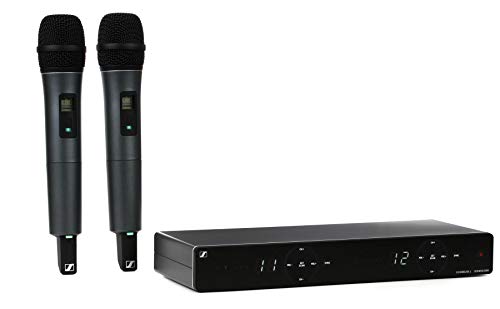
Sennheiser XSW 1-835
Worship teams, schools and gigging duos who want two wireless e835 vocal channels with the simplest possible setup.
Read the Sennheiser XSW 1-835 review →Questions Buyers Ask
AKG D5 Vocal Dynamic Microphone
See the current listing, price and included accessories.
About This Review
Mandrillis Team
The Mandrillis editorial team researches and compares audio and music gear using manufacturer documentation, verified specs and real buyer feedback, so you can make a confident purchase without wading through marketing claims.
Read our full research methodology.