Studio Gear Review
AKG P120 Condenser Microphone Review: A Documented Budget Condenser
The AKG Pro P120 is a budget condenser microphone with an unusually detailed spec sheet: sensitivity, noise level, signal to noise ratio and SPL handling up to 150 dB are all published. Paired with a switchable pad and bass cut filter, it targets home and project studios on a tight budget.
Our Verdict
Research Score 73/100The AKG Pro P120 stands out among budget condensers for how much of its spec sheet the feature bullets actually publish. Sensitivity, equivalent noise level, signal to noise ratio, impedance and SPL handling up to 150 dB are all documented, along with a switchable negative 20 dB pad and a 300 Hz bass cut filter for close placement. That level of detail is unusual at this price tier and gives buyers real numbers to compare against other condensers rather than guesswork. The trade offs are the ones common to any condenser: phantom power and an interface or mixer are required, and the feature bullets do not confirm weight or a pop filter in the box. For a first project studio condenser on a tight budget, it earns a solid recommendation.
Editorial research score based on published specifications and documented features, not a customer rating or lab test.

AKG
AKG P120 Condenser Microphone
Best for: Home and project studio users who want a budget condenser with a documented spec sheet for vocals and instruments.
Skip it if: You need a single all-in-one USB microphone with no interface or phantom power to manage.
Check Price on AmazonWe may earn a commission at no extra cost to you.
Listing verified: November 2026
Who Should Buy It
Buy it if
- Home recordists building a first condenser setup around an existing interface
- Buyers who want a documented pad and filter for close vocal or instrument work
- Project studio owners tracking vocals, acoustic guitar or other quieter instruments
Skip it if
- You do not already own or plan to buy an audio interface with phantom power
- You need USB plug and play simplicity instead
- You want a shock mount or pop filter included in the box
Key Specifications
| Type | Side-address condenser microphone with a low-mass diaphragm, condenser type per the listing title |
| Polar pattern | Cardioid |
| Frequency response | 20 Hz to 20,000 Hz |
| Connection | XLR, per the listing title; electrical impedance of 200 ohms or less and a recommended load impedance of 1,000 ohms or greater, per the feature bullets |
| Phantom power | Required for the condenser capsule; exact voltage not published in the feature bullets |
| Max SPL or sensitivity | Up to 150 dB SPL handling; sensitivity 24 mV/Pa; equivalent noise level 19 dB-A; signal to noise ratio 75 dB-A, per the feature bullets |
| Controls | Switchable -20 dB pre-attenuation pad and a 300 Hz bass cut filter at -6 dB per octave |
| Mount and stand | Stand adapter included |
| Weight | Not published in the feature bullets |
| Included accessories | Stand adapter |
Overview
The AKG Pro P120 is a side address microphone built around a low mass diaphragm, positioned by the feature bullets for vocals, speech and instrument recording in project studios and at home. It sits in the budget price tier, and the listing frames it as compatible with popular audio interfaces for straightforward setup.
What separates this listing from many budget microphones is the amount of detail the feature bullets actually publish. Sensitivity, equivalent noise level, signal to noise ratio, impedance and a frequency bandwidth of 20 Hz to 20,000 Hz are all stated directly, along with a cardioid polar pattern, a switchable pad and a bass cut filter.
The box, per the feature bullets, includes the microphone itself and a stand adapter, nothing more. That keeps the unboxing simple and leaves pop filters, shock mounts and cables as separate purchases for buyers building out a full vocal chain.
Sound Quality
The feature bullets describe a low mass diaphragm delivering clear sound with accurate sonic detail across vocals, speech and instruments. Alongside that general description, the listing publishes a sensitivity of 24 millivolts per pascal and an equivalent noise level of 19 decibels A weighted, both genuinely useful numbers for comparing this microphone against other budget condensers.
A signal to noise ratio of 75 decibels A weighted is also stated directly in the feature bullets, which is a respectable figure for a microphone in this price tier and suggests a reasonably quiet signal path before any gain is applied at the interface or mixer. The published frequency bandwidth of 20 Hz to 20,000 Hz covers the full audible range on paper.
Compared with a reference condenser such as the Audio-Technica AT2020, the P120's published noise and sensitivity figures sit in a broadly similar bracket, though exact tonal character between the two cannot be confirmed without a careful side by side recording session. Buyers report that AKG's budget condensers tend toward a slightly smoother, less fatiguing top end than some competitors in the same price range.
Pickup Pattern and Noise Handling
The feature bullets state a cardioid polar pattern directly, meaning the P120 is most sensitive to sound in front of the capsule and rejects sound from the rear. That focus helps isolate a vocalist or instrument from room reflections and other nearby sources in a typical home studio.
High SPL handling is a specific claim in the feature bullets, rated up to 150 decibels, which the listing frames as useful for capturing loud sources without distortion. A switchable negative 20 decibel pre attenuation pad backs that up for very loud instruments placed close to the capsule.
The 19 decibel A weighted equivalent noise level published in the feature bullets is the other half of the noise story. A lower number here means quieter recordings of soft sources, such as acoustic guitar or a quiet speaking voice, before noise becomes audible in the track.
Build Quality
The feature bullets describe the P120 as built with high quality materials for long lasting performance, calling it a reliable choice for both professional and home studio use. No specific housing material or exact weight is stated beyond that general durability claim.
Electrical impedance is documented at 200 ohms or less, with a recommended load impedance of 1,000 ohms or greater, both the kind of detail usually reserved for more expensive microphones. That level of specification suggests AKG wants this budget model judged on real numbers rather than marketing language alone.
The stand adapter included in the box is the only accessory the feature bullets confirm. Buyers who want a shock mount or a dedicated case for travel will need to source those separately, since neither is described as part of this package.
- Built with high quality materials for long lasting performance, per the feature bullets
- Stand adapter included in the box
- Electrical impedance of 200 ohms or less
- Recommended load impedance of 1,000 ohms or greater
- Weight not published in the feature bullets
Connectivity and Setup
The listing title states an XLR connector, which the feature bullets do not restate directly, though the bullets do describe compatibility with popular audio interfaces for easy setup with common recording software and hardware. As a condenser microphone, the P120 requires external phantom power, a detail implied by the design rather than spelled out as a voltage figure in the feature bullets.
Setup therefore means connecting to an interface or mixer that supplies phantom power, rather than plugging directly into a computer. That is a normal step for a studio condenser, but it does add a small amount of hardware and cost beyond the microphone itself for a buyer starting from nothing with no existing recording gear at all.
Once connected, the switchable pad and bass cut filter give some on microphone flexibility for different sources. This lets a user tame a loud instrument or roll off excess low end before the signal ever reaches the interface.
Features, Controls and Extras
The standout feature in the feature bullets is the amount of published specification. Sensitivity, noise level, signal to noise ratio and impedance are all stated, which is unusual for a microphone at this price point and gives buyers real data to work from.
On the microphone itself, the switchable negative 20 decibel pad and the 300 hertz bass cut filter at negative 6 decibels per octave are the two physical controls described in the feature bullets. Both are standard studio condenser features aimed at handling loud or bass heavy sources.
Beyond those two switches and the included stand adapter, there is nothing else described, no onboard headphone output, no USB path and no companion software. This is a traditional XLR studio condenser rather than a feature dense hybrid design.
Use Cases: Vocals, Streaming, Podcasting and Instruments
Home recording of vocals and speech is the first use case the feature bullets call out directly. And the published sensitivity and noise figures support that application for a quiet home studio setting.
The feature bullets also name instrument recording specifically. Combined with the pad and bass cut filter, that makes the P120 a reasonable choice for acoustic guitar or other instruments that might otherwise overload a more sensitive capsule.
For streaming or podcasting, this is workable but not the easiest path, since it requires an interface with phantom power rather than a simple USB connection. Buyers focused purely on spoken word content over USB may prefer a dedicated USB condenser instead, though they would give up the pad, filter and published noise figures this model offers.
Who Should Buy It
Home recordists who already own, or are willing to buy, an audio interface with phantom power are the natural audience. The published spec sheet gives them real numbers to judge the P120 against other budget condensers before committing, rather than relying on marketing language alone.
Project studio owners tracking vocals, acoustic instruments or quieter sources will appreciate the documented noise floor and the switchable pad and filter for handling louder moments without needing a second microphone. A single P120 can reasonably cover both a quiet verse and a loud chorus in one pass.
Buyers who want the simplicity of a single USB connection, with no interface or phantom power to manage, will find this model adds a step they may not want. They should look at a USB condenser instead.
Alternatives Worth Considering
The Audio-Technica AT2020 is the standard comparison point for a budget XLR condenser and is worth checking against the P120's published sensitivity and noise figures directly. AKG's own higher tier Perception and C series condensers add features such as multiple patterns for buyers who outgrow a fixed cardioid design.
Buyers who want to skip the interface entirely have another option. A USB condenser such as the Audio-Technica AT2020USB plus or a Blue Yeti style microphone trades some of the P120's documented specification for plug and play simplicity.
Buyers focused specifically on instrument recording with high SPL handling might also consider a small diaphragm condenser built for overheads and percussion. This is because the P120's side address design is more vocal and general instrument oriented.
Verdict
The AKG Pro P120 earns its place on documentation alone: sensitivity, noise level, signal to noise ratio, impedance and SPL handling up to 150 decibels are all published in the feature bullets, which is rare at this price tier. The switchable pad and bass cut filter add real flexibility for loud or bass heavy sources.
The trade offs are the usual ones for a condenser: phantom power and an interface are required, and weight and a pop filter are not confirmed in the box. For a first project studio condenser built around real, documented specifications, it is a sound budget choice.
Strengths and Limitations
Strengths
- Detailed published spec sheet including sensitivity, noise level and signal to noise ratio
- Switchable -20 dB pad and 300 Hz bass cut filter for flexible placement
- High SPL handling rated up to 150 dB per the feature bullets
- Low-mass diaphragm aimed at accurate vocal and instrument detail
- Stand adapter included in the box
Limitations
- Requires phantom power and an audio interface or mixer, adding setup steps
- No weight figure published in the feature bullets
- No pop filter or shock mount included
- Condenser type is confirmed by the listing title rather than stated directly in the feature bullets
How We Scored It
Scores reflect published specifications, documented features and value against the alternatives below. They are editorial research scores, not laboratory measurements.
Alternatives to Consider

Beyerdynamic M 160
Recording guitar amplifiers, drum overheads, strings and brass with a smooth, directional ribbon character.
Read the Beyerdynamic M 160 review →
Shure BLX288/SM58 Dual Vocal
Bands, worship teams and event companies that need two dependable wireless SM58 vocal channels in one simple package.
Read the Shure BLX288/SM58 Dual Vocal review →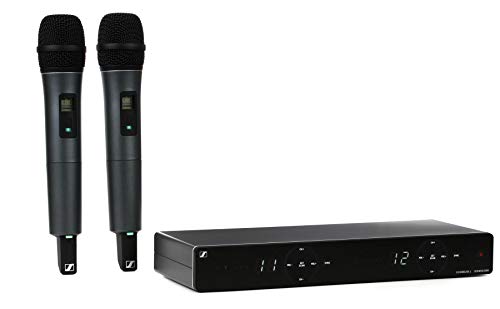
Sennheiser XSW 1-835
Worship teams, schools and gigging duos who want two wireless e835 vocal channels with the simplest possible setup.
Read the Sennheiser XSW 1-835 review →Questions Buyers Ask
AKG P120 Condenser Microphone
See the current listing, price and included accessories.
About This Review
Mandrillis Team
The Mandrillis editorial team researches and compares audio and music gear using manufacturer documentation, verified specs and real buyer feedback, so you can make a confident purchase without wading through marketing claims.
Read our full research methodology.