Studio Gear Review
Audio-Technica ATR1300x Review: Karaoke-Ready Dynamic
The Audio-Technica ATR1300x is a unidirectional dynamic microphone built for karaoke machines, mixers and sound systems, with a rugged metal body and an on and off switch. It ships with a stand clamp and a 1/4 inch terminated cable rather than full XLR to XLR connectivity.
Our Verdict
Research Score 59/100The Audio-Technica ATR1300x is a basic unidirectional dynamic microphone aimed squarely at karaoke setups, small mixers and simple sound systems rather than professional studio tracking. Its rugged metal construction and conveniently located on and off switch make it easy to hand to a casual user without much instruction, while the unidirectional pattern helps keep side and rear noise out of the signal. The included adjustable stand clamp and detachable cable add real convenience, though that cable terminates in a 1/4 inch plug rather than XLR to XLR, which limits direct compatibility with some mixers. No frequency response or SPL figures are published, so buyers are trusting Audio-Technica's general reputation rather than a documented spec sheet. For karaoke and casual vocal use, it does the job without ceremony.
Editorial research score based on published specifications and documented features, not a customer rating or lab test.

Audio-Technica
Audio-Technica ATR1300x Dynamic Microphone
Best for: Karaoke setups, basic live sound systems and casual vocal or instrument use where a simple, affordable dynamic microphone is enough.
Skip it if: You need an XLR to XLR cable for a standard mixer input, or you want documented frequency response and SPL numbers.
Check Price on AmazonWe may earn a commission at no extra cost to you.
Listing verified: November 2026
Who Should Buy It
Buy it if
- Karaoke machine owners who need a dedicated, affordable microphone
- Casual live sound setups using a 1/4 inch input on a small mixer or amplifier
- Buyers who want an included stand clamp rather than sourcing one separately
- Anyone needing a simple backup vocal or instrument microphone
Skip it if
- You need a cable ending in XLR rather than a 1/4 inch plug
- You require documented frequency response or SPL specifications
- You want a shock mount or carrying pouch included
Key Specifications
| Type | Dynamic microphone |
| Polar pattern | Unidirectional, reducing pickup from the sides and rear |
| Frequency response | Not published in listing |
| Connection | XLR at the microphone end, with a detachable 5 meter (16.5 foot) cable terminating in a 1/4 inch plug, as stated in the listing |
| Phantom power | Not required; as a dynamic microphone it does not need external phantom power to operate |
| Max SPL or sensitivity | Not published in listing |
| Controls | On and off switch, described in the listing as conveniently located |
| Mount and stand | Adjustable stand clamp included, according to the listing |
| Weight | Not published in listing |
| Included accessories | Adjustable stand clamp and a detachable 5 meter cable with an XLR to 1/4 inch plug connection |
Overview
The Audio-Technica ATR1300x is a unidirectional dynamic microphone from the brand's ATR Series, marketed for professional sound quality on vocals and instruments at an entry-level price. Audio-Technica names karaoke machines, live and studio mixers, and general sound systems as its intended destinations.
This is a simple, no-frills microphone rather than a feature-rich studio tool. The listing centers its pitch on three practical items: a unidirectional pattern for isolation, rugged metal construction, and a conveniently located on and off switch for quick control during use.
Audio-Technica also bundles two accessories directly with the microphone, an adjustable stand clamp and a detachable 5 meter cable ending in a 1/4 inch plug. That combination is clearly aimed at buyers setting up a karaoke system or a small sound reinforcement rig rather than a recording studio. Nothing about the packaging suggests this model was designed with a traditional studio mixer in mind.
Sound Quality
Audio-Technica describes the ATR1300x as delivering professional sound quality for both vocals and instruments, a general claim rather than a measured one. No frequency response curve or SPL rating appears in the listing, so the exact tonal character of this capsule is not confirmed by any published number.
As a dynamic microphone, the ATR1300x belongs to a design family generally associated with a more forgiving, less detailed capture than a condenser, along with a higher tolerance for loud sources without distortion. That general behavior is a reasonable expectation for this category rather than a specific claim about this model. That forgiving character is often an advantage for casual singers who are not always perfectly on mic.
Buyers who have used a Shure SM58 or a Samson Q2U for karaoke or casual vocal work have a useful reference point for what a budget dynamic microphone in this class typically sounds like. This review does not claim the ATR1300x matches either model's specific published numbers, since neither this listing nor an independent spec sheet provides a direct basis for that comparison.
Pickup Pattern and Noise Handling
The listing confirms a unidirectional polar pattern on the ATR1300x, described as reducing pickup of sounds from the sides and rear to improve isolation of the desired sound source. That behavior is the standard benefit of a unidirectional or cardioid-style pattern in a live or karaoke setting.
Isolation matters most in a karaoke environment, where background music, other voices and room noise are all competing with the singer for the microphone's attention. A unidirectional pattern helps the vocal stay forward in the mix while reducing some of that surrounding clutter.
No numeric polar pattern chart or off-axis rejection figure is published, so the exact tightness of the pattern cannot be confirmed from this data alone. Standard practice, keeping the microphone close to the mouth and pointed directly at the source, remains the most reliable way to get the benefit of this pattern.
Build Quality
Audio-Technica describes the ATR1300x's construction as rugged metal, built for long-lasting performance under repeated use. That kind of metal body is a common and sensible choice for a microphone expected to be handled, passed around, and occasionally dropped during casual karaoke or live use.
The conveniently located on and off switch is itself a build and usability detail worth noting, since many dynamic microphones in this class skip a switch entirely. Having one built in lets a user mute the microphone between songs without routing through a mixer channel.
No weight or exact dimensions are published in the listing, so buyers cannot confirm from this data how the microphone feels in hand. The general metal construction described, however, is consistent with what buyers should expect from a budget dynamic microphone built for frequent handling. A body built to survive being passed from singer to singer is a sensible design priority for this kind of product.
- Rugged metal construction per the listing
- Conveniently located on and off switch
- Unidirectional capsule for isolation
- Weight and dimensions not published in listing
Connectivity and Setup
The ATR1300x connects by XLR at the microphone end, but the included detachable cable terminates in a 1/4 inch plug rather than a second XLR connector, according to the listing. That matters for buyers whose mixer or amplifier expects a standard XLR to XLR connection.
As a dynamic microphone, the ATR1300x does not require phantom power, since its signal is generated mechanically rather than relying on an externally supplied voltage. That makes it simpler to use with basic karaoke machines, small mixers and amplifiers that may not even offer phantom power.
Setup involves attaching the included cable and mounting the microphone in the adjustable stand clamp if a stand is being used. From there, the 1/4 inch end connects to a compatible mixer, amplifier or karaoke machine input, and the microphone is ready to use once the on and off switch is engaged.
Features, Controls and Extras
The on and off switch is the ATR1300x's main onboard feature, giving a user direct control over whether the microphone is live without needing to reach a mixer channel. The listing describes this placement as convenient, suggesting it sits somewhere easy to reach during normal handling.
Beyond that switch, the feature set is intentionally minimal. There is no pad, no filter and no gain control built into the microphone body, keeping the design focused on a straightforward signal path from capsule to cable.
The included adjustable stand clamp and detachable cable function as the real extras here. They remove two purchases a buyer would otherwise need to make separately when setting up a karaoke or small sound reinforcement rig from scratch, which matters for anyone buying their very first microphone.
Use Cases: Vocals, Streaming, Podcasting and Instruments
Karaoke is the single most specific use case named in the listing. The ATR1300x's unidirectional pattern, metal build and on and off switch all point toward that casual, shared-microphone environment rather than a controlled studio setting, where a singer hands the microphone off between turns.
Live and studio mixer use is also named directly, suggesting Audio-Technica expects this microphone to work in small venue sound systems as well as home setups. Instruments are mentioned alongside vocals in the listing, though no specific instrument application is called out beyond that general statement.
Podcasting and streaming are not mentioned in the bullets. The 1/4 inch terminated cable also makes this a less convenient choice for a typical podcasting interface, since those setups usually expect either an XLR connector or a direct USB connection rather than a 1/4 inch plug.
Who Should Buy It
Karaoke machine owners who need a dedicated microphone built for casual, repeated use are the clearest fit for the ATR1300x. Its metal construction, included stand clamp and unidirectional isolation all support that everyday, shared-use role without requiring any extra purchases.
Buyers with a small mixer or amplifier that accepts a 1/4 inch input will find the included cable a direct match. That avoids the need for a separate adapter or replacement cable before the microphone can be plugged in and used.
Anyone who wants a simple, affordable backup vocal or instrument microphone should find the ATR1300x a reasonable, low-risk purchase for that supporting role. Documented frequency response or SPL figures simply are not part of the appeal with a microphone at this price.
Alternatives Worth Considering
Buyers who specifically need an XLR to XLR cable for a standard mixer input should look at a sibling model such as the Audio-Technica ATR1500x. The brand's own lineup pairs that model with an XLR to XLR cable instead of the 1/4 inch plug used here.
Those who want a widely documented dynamic vocal microphone with a long reputation should consider the Shure SM58 as a comparison point. This review does not state exact matching specification numbers between the two microphones, so any such comparison stays reputational rather than numeric.
Podcasters or streamers who want both XLR and USB connectivity in one microphone might look at something like the Samson Q2U instead. The ATR1300x's 1/4 inch terminated cable is not well suited to a typical USB-based podcasting setup, which usually expects a direct computer connection.
Verdict
The Audio-Technica ATR1300x is a simple, metal-bodied dynamic microphone built for karaoke machines, small mixers and casual sound systems. It is backed by a unidirectional pattern, a convenient on and off switch, and an included stand clamp and cable.
Its 1/4 inch terminated cable and lack of published specification numbers limit how confidently it can be compared to better documented microphones. For its intended casual, karaoke-style use, though, it remains a reasonable and affordable choice.
Buyers mainly need to confirm their mixer, amplifier or karaoke machine accepts a 1/4 inch input before relying on the included cable. Those who need XLR to XLR connectivity instead should look toward a sibling model built with that connector in mind.
Strengths and Limitations
Strengths
- Unidirectional pattern aimed at isolating vocals from side and rear noise
- Rugged metal construction described in the listing
- Conveniently located on and off switch
- Adjustable stand clamp and a long detachable cable included
- Marketed for karaoke machines, mixers and sound systems in one package
Limitations
- No numeric frequency response or SPL figures published
- Cable terminates in a 1/4 inch plug rather than XLR to XLR
- No shock mount, pouch or carrying case mentioned
- Limited to one basic on and off control
How We Scored It
Scores reflect published specifications, documented features and value against the alternatives below. They are editorial research scores, not laboratory measurements.
Alternatives to Consider

Beyerdynamic M 160
Recording guitar amplifiers, drum overheads, strings and brass with a smooth, directional ribbon character.
Read the Beyerdynamic M 160 review →
Shure BLX288/SM58 Dual Vocal
Bands, worship teams and event companies that need two dependable wireless SM58 vocal channels in one simple package.
Read the Shure BLX288/SM58 Dual Vocal review →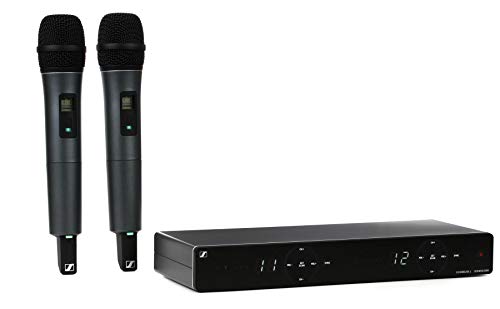
Sennheiser XSW 1-835
Worship teams, schools and gigging duos who want two wireless e835 vocal channels with the simplest possible setup.
Read the Sennheiser XSW 1-835 review →Questions Buyers Ask
Audio-Technica ATR1300x Dynamic Microphone
See the current listing, price and included accessories.
About This Review
Mandrillis Team
The Mandrillis editorial team researches and compares audio and music gear using manufacturer documentation, verified specs and real buyer feedback, so you can make a confident purchase without wading through marketing claims.
Read our full research methodology.