Studio Gear Review
Audio-Technica ATR4697-USB Review: Meeting Boundary Mic
The Audio-Technica ATR4697-USB is an omnidirectional condenser boundary microphone built for meetings and teleconferencing, connecting over USB-C with full 360 degree pickup. It is not designed for isolating a single vocalist or instrument, which separates it clearly from most microphones reviewed for music use.
Our Verdict
Research Score 55/100The Audio-Technica ATR4697-USB is a specialized tool rather than a general-purpose microphone, built around an omnidirectional condenser capsule that picks up sound from all directions across a full 360 degrees. That design fits its stated purpose, meetings and teleconferencing, where several people around a table all need to be heard through one shared device. It is the wrong choice for isolating a single vocalist, an instrument, or any source in a noisy room, since an omnidirectional pattern cannot reject unwanted sound from the sides or rear. Simple USB-C connectivity with an included adapter makes setup straightforward across computers, tablets and smartphones. For its intended conferencing role, it is a reasonable, honestly marketed choice, but buyers wanting a music or podcasting microphone should look elsewhere.
Editorial research score based on published specifications and documented features, not a customer rating or lab test.

Audio-Technica
Audio-Technica ATR4697-USB Boundary Microphone
Best for: Meeting rooms and teleconferencing setups that need one microphone to pick up several people seated around a table.
Skip it if: You need to isolate a single vocalist or instrument, or you want a microphone suited to music recording or noisy environments.
Check Price on AmazonWe may earn a commission at no extra cost to you.
Listing verified: November 2026
Who Should Buy It
Buy it if
- Small offices or home offices setting up a conference room microphone
- Remote teams running video calls with multiple people in one room
- Buyers who want simple USB-C plug-and-play setup without extra configuration
- Anyone needing broad 360 degree pickup rather than a focused, directional capsule
Skip it if
- You want to record a single vocalist or instrument with isolation
- You need a cardioid or unidirectional pattern for noise rejection
- You are recording in a noisy or untreated room for music or podcasting
Key Specifications
| Type | Omnidirectional condenser boundary microphone |
| Polar pattern | Omnidirectional, offering full 360 degree coverage |
| Frequency response | Not published in listing |
| Connection | USB-C, with a 1.5 meter (4.9 foot) cable and an included USB-C to USB-A adapter |
| Phantom power | Not applicable; the microphone draws power through its USB connection rather than needing external phantom power |
| Max SPL or sensitivity | Not published in listing |
| Controls | Not published in listing; no onboard switch is mentioned in the bullets |
| Mount and stand | Not published beyond the boundary microphone format, a design that typically rests flat on a table or surface rather than using a stand |
| Weight | Not published in listing |
| Included accessories | USB-C to USB-A adapter, confirmed directly in the listing |
Overview
The Audio-Technica ATR4697-USB is an omnidirectional condenser boundary microphone, a category built specifically for meeting rooms rather than music or podcasting. The listing names meetings and teleconferencing as the primary intended use, and nothing in the bullets suggests otherwise.
Boundary microphones of this type are generally designed to rest flat on a table or other surface, picking up sound from a wide area around them rather than from one focused direction. That design logic fits the stated purpose well, even though the listing does not describe the exact physical shape of the housing.
This review treats the ATR4697-USB honestly as what it is: a conferencing tool, not a general vocal or instrument microphone. Buyers expecting the kind of focused isolation found in a cardioid studio or stage microphone should understand upfront that this product is built around a different, broader pickup goal. That distinction shapes almost every section of this review, since many of the usual scoring criteria for a music microphone simply do not apply here. Readers looking for a music microphone review should treat this listing as a clear mismatch rather than a borderline case.
Sound Quality
No frequency response curve, SPL rating or sensitivity figure is published for the ATR4697-USB, so its tonal character cannot be confirmed from this data. The listing instead focuses entirely on its intended use case and connectivity rather than any measured audio specification.
As a condenser design, the capsule is generally expected to capture more detail and a wider frequency range than a basic dynamic microphone, a reasonable assumption for the category even though no specific number backs it up here. That detail is most useful for picking up multiple voices clearly rather than for a single, close-miked source.
Buyers should not expect this microphone to deliver the kind of focused, flattering vocal or instrument sound associated with a dedicated studio condenser such as an Audio-Technica AT2020. The ATR4697-USB is built for intelligibility across a room, not for tonal shaping of one voice or instrument. That tradeoff is reasonable given its stated purpose, but it is worth stating plainly rather than leaving buyers to assume otherwise.
Pickup Pattern and Noise Handling
The ATR4697-USB uses an omnidirectional pickup pattern, confirmed in the listing as offering full 360 degree coverage. That pattern picks up sound equally from every direction around the microphone, which is the opposite design goal of a cardioid or unidirectional capsule.
For a meeting room with several people seated around a table, that omnidirectional behavior is a genuine strength, since it avoids the need to position each speaker directly in front of a focused capsule. Everyone within range contributes to the captured audio without needing to lean toward the microphone. That hands-free coverage is exactly what a shared meeting device should provide.
That same pattern is a clear weakness for isolating a single vocalist, an instrument, or any source in a noisy room, since the microphone cannot reject background noise, room echo or unwanted sound the way a cardioid design would. Buyers considering this microphone for music or podcasting should treat that limitation as a hard constraint rather than a minor tradeoff.
Build Quality
The listing describes rugged construction for long-lasting performance, language aimed at reassuring buyers the microphone can withstand regular use in an office or meeting room setting. No specific housing material, weight or dimensions are given to confirm that claim numerically.
Boundary microphones generally favor a low-profile, flat housing that sits unobtrusively on a conference table rather than a tall body mounted on a stand. Nothing in this listing contradicts that general expectation, though the exact shape is not described in detail. A low profile also reduces the chance of someone knocking the microphone over during a busy meeting.
Because this microphone is meant to stay in one place on a table rather than travel with a touring musician, its durability requirements differ from a stage or studio microphone. Repeated handling and transport are less of a concern here than simple long-term reliability in a fixed meeting room setup.
- Rugged construction per the listing
- Boundary microphone format for tabletop use
- Housing material and weight not published in listing
- Omnidirectional capsule for full 360 degree coverage
Connectivity and Setup
The ATR4697-USB connects through a 1.5 meter, about 4.9 foot, cable terminated with a USB-C connector, confirmed directly in the listing. A USB-C to USB-A adapter is also included, extending compatibility to older computers and devices that lack a USB-C port.
Audio-Technica names computers, tablets and smartphones as supported devices, suggesting broad plug-and-play compatibility without needing a separate audio interface or mixer. That simplicity is a meaningful advantage for a conference room where non-technical staff need to set up a call quickly.
Because the microphone draws power through its USB connection, no external phantom power or battery is required to operate it. Setup amounts to plugging the cable into a compatible device and placing the microphone on the table, with the adapter available if the port type does not match. No driver installation or special software appears to be required, based on the plug-and-play language used throughout the listing.
Features, Controls and Extras
No onboard switch, gain control or mute button is mentioned anywhere in the listing, keeping the feature set limited to the capsule, the cable and the included adapter. That simplicity fits a device meant to be set up once and left alone during a call, with any mute function handled through the connected software instead.
The included USB-C to USB-A adapter functions as the microphone's main practical extra, extending compatibility to devices that would otherwise require a separate cable purchase. That is a small but genuinely useful inclusion for an office that has not fully standardized on USB-C hardware.
Buyers expecting onboard mute, gain adjustment or a headphone monitoring output will not find any of those here. The ATR4697-USB keeps its design intentionally minimal, relying on the host device's own software for any level or mute control during a call.
Use Cases: Vocals, Streaming, Podcasting and Instruments
Meetings and teleconferencing are the only use cases named directly in the listing, and the omnidirectional pattern, USB-C connectivity and tabletop format all support that specific role well. This is the microphone's genuine strength, not a limitation to work around.
Vocal or instrument recording for music is not a fit for this microphone, since the omnidirectional pattern cannot isolate a single source from room noise or other instruments. Musicians looking for a general-purpose recording microphone should look at a cardioid condenser or dynamic design instead.
Podcasting with a single host in a quiet room could technically work with the ATR4697-USB, but a cardioid USB microphone would almost always perform better by rejecting more of the surrounding room noise. This product's core value remains tied specifically to multi-person meeting audio rather than any single-speaker recording scenario, no matter how quiet the room happens to be.
Who Should Buy It
Small offices or home offices setting up a dedicated conference room microphone are the clearest fit for the ATR4697-USB. Its omnidirectional coverage and simple USB-C connectivity across common devices make it easy to deploy without specialized equipment.
Remote teams that regularly host video calls with multiple people in one physical room will benefit directly. Nobody needs to pass a microphone around or lean toward a focused capsule during a meeting, since the whole table is covered at once.
Buyers who want a simple, plug-and-play setup without configuring an audio interface or mixer will appreciate the straightforward USB-C connection and included adapter. The feature set stays deliberately minimal, which suits a device meant to be set up once and forgotten.
Alternatives Worth Considering
Buyers who actually need to record or isolate a single vocalist or instrument should look at a cardioid condenser microphone instead, such as an Audio-Technica AT2020. The ATR4697-USB's omnidirectional pattern is fundamentally unsuited to that task regardless of price.
Those building a podcasting setup with one or two speakers in a controlled room might consider a dynamic USB microphone like the Samson Q2U instead. It offers more focused pickup than this boundary microphone's full 360 degree coverage.
Buyers who specifically need a conferencing solution with more advanced features, such as noise suppression or multiple connected units, should compare this listing against other dedicated conferencing microphones. This review covers only the features stated in the current listing.
Verdict
The Audio-Technica ATR4697-USB succeeds at exactly one job: picking up multiple voices around a meeting table through a simple USB-C connection. Its omnidirectional pattern and rugged, tabletop-friendly format are well matched to that specific purpose.
It is not, and should not be treated as, a general-purpose music or podcasting microphone, since its pattern cannot isolate a single source from surrounding noise. Buyers who need that kind of isolation should look toward a cardioid design instead.
Strengths and Limitations
Strengths
- Omnidirectional pattern offering full 360 degree coverage for round-table meetings
- Simple USB-C connection compatible with computers, tablets and smartphones
- Includes a USB-C to USB-A adapter for older devices
- Rugged construction described in the listing
- Purpose-built for meetings and teleconferencing rather than a general-purpose role
Limitations
- Omnidirectional pattern is not suited to isolating a single vocalist or instrument
- No numeric frequency response or sensitivity figures published
- No onboard controls, switches or gain adjustment mentioned
- Not a fit for music recording, podcasting with background noise, or stage use
How We Scored It
Scores reflect published specifications, documented features and value against the alternatives below. They are editorial research scores, not laboratory measurements.
Alternatives to Consider

Beyerdynamic M 160
Recording guitar amplifiers, drum overheads, strings and brass with a smooth, directional ribbon character.
Read the Beyerdynamic M 160 review →
Shure BLX288/SM58 Dual Vocal
Bands, worship teams and event companies that need two dependable wireless SM58 vocal channels in one simple package.
Read the Shure BLX288/SM58 Dual Vocal review →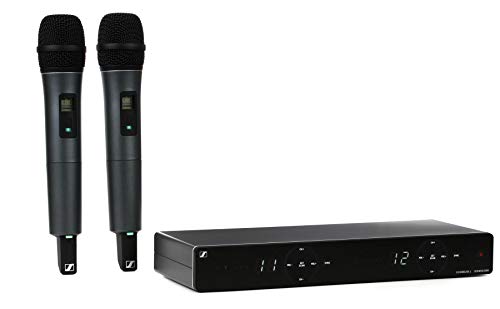
Sennheiser XSW 1-835
Worship teams, schools and gigging duos who want two wireless e835 vocal channels with the simplest possible setup.
Read the Sennheiser XSW 1-835 review →Questions Buyers Ask
Audio-Technica ATR4697-USB Boundary Microphone
See the current listing, price and included accessories.
About This Review
Mandrillis Team
The Mandrillis editorial team researches and compares audio and music gear using manufacturer documentation, verified specs and real buyer feedback, so you can make a confident purchase without wading through marketing claims.
Read our full research methodology.