Studio Gear Review
Behringer C-1 Review: Budget Studio Condenser
The Behringer C-1 is a large-diaphragm cardioid condenser aimed at studio and live use, built around a transformerless FET input the listing describes as ultra-low noise. Numeric specifications are not published, so buyers are weighing reputation and stated features over a documented spec sheet.
Our Verdict
Research Score 68/100The Behringer C-1 targets buyers who want a dedicated large-diaphragm condenser without spending much, built around a cardioid pattern, a pressure-gradient transducer with an internally shock-mounted capsule, and a transformerless FET input the listing describes as ultra-low noise. It is positioned for both studio tracking and light live support duty, a dual role not every budget condenser attempts. The absence of published frequency response, SPL and self-noise figures means buyers are trusting Behringer's general reputation and the listing's own language rather than a documented spec sheet. For a first condenser microphone paired with an interface that already supplies phantom power, the C-1 is a reasonable, low-risk starting point, though it skips bundled accessories and onboard controls entirely.
Editorial research score based on published specifications and documented features, not a customer rating or lab test.

Behringer
Behringer C-1 Studio Condenser Microphone
Best for: Home studio owners and small venues who want an affordable large-diaphragm condenser for both recording and light live support duty.
Skip it if: You need documented frequency response or self-noise numbers before buying, or you want a microphone with built-in controls and bundled accessories.
Check Price on AmazonWe may earn a commission at no extra cost to you.
Listing verified: November 2026
Who Should Buy It
Buy it if
- Beginners building a first home recording setup on a tight budget
- Small venues needing an inexpensive support condenser alongside existing stage microphones
- Podcasters or musicians who already own an audio interface with phantom power
- Buyers comfortable sourcing their own shock mount, cable and pop filter separately
Skip it if
- You require a published, documented frequency response curve before purchase
- You want onboard gain, pad or filter switches on the microphone body
- You need a bundled shock mount, cable and stand included in the box
Key Specifications
| Type | Large-diaphragm condenser microphone |
| Polar pattern | Cardioid |
| Frequency response | Not published in listing; the listing describes the capsule design and noise performance without giving a specific curve or numeric range |
| Connection | Not published in listing; condenser microphones of this class standardly use a balanced XLR output, though the bullets do not confirm the connector directly |
| Phantom power | Not published as a voltage figure in listing; a transformerless FET condenser input of this kind typically needs external phantom power to operate |
| Max SPL or sensitivity | Not published in listing |
| Controls | Not published in listing; no onboard switch, pad or filter is mentioned in the bullets |
| Mount and stand | Not published in listing; the capsule itself is described as internally shock mounted, but an external shock mount or stand clip is not confirmed as included |
| Weight | Not published in listing |
| Included accessories | Not published in listing |
Overview
The Behringer C-1 is a large-diaphragm condenser microphone marketed as a main or support microphone for both studio and live applications, a dual billing that sets it apart from condensers built purely for one role. Behringer frames it as a professional-grade option at a price most beginners can justify for a first dedicated condenser.
At the center of the C-1 is a cardioid pickup pattern, a pressure-gradient transducer and an internally shock-mounted capsule. The listing credits this combination with outstanding sound source separation and feedback rejection, a pairing meant to behave predictably whether the microphone is tracking vocals in a bedroom studio or standing in as a support mic near a stage monitor.
Buyers often compare the C-1 against better known entry-level condensers such as the Audio-Technica AT2020. This listing does not publish a frequency response curve, a self-noise figure or an SPL rating for the C-1, so any comparison has to rest on stated features and general reputation rather than matched numbers. That gap is worth keeping in mind throughout the rest of this review, since it shapes how confidently each section can speak about this specific unit.
Sound Quality
Behringer describes the C-1 as built around a transformerless FET input that eliminates low-frequency distortion. That language is aimed at reassuring buyers that bass-heavy sources will not overload or smear the capsule's output, since a transformerless design of this kind is a known approach to keeping a condenser's low end cleaner under load.
The listing also calls the input ultra-low noise, a claim that speaks to how little hiss or hum the capsule and preamp add to a recorded signal. That matters most in quiet passages or when a track is pushed with extra gain later in a mix, though no self-noise figure in decibels is published here to confirm the precise quietness of the circuit.
As a large-diaphragm condenser, the C-1 belongs to a design family generally associated with a fuller, more detailed capture than smaller diaphragm capsules, a tendency that benefits vocals and many acoustic instruments. Without a published frequency response graph, buyers should treat that as a general design expectation rather than a confirmed tonal signature for this specific microphone. Pairing it with a clean, quiet preamp will do more for the final sound than any single spec sheet ever could.
Pickup Pattern and Noise Handling
Behringer confirms a cardioid pickup pattern on the C-1, described in the listing as delivering outstanding sound source separation and feedback rejection. Those two qualities matter whenever more than one sound source or monitor speaker is active nearby, and a cardioid pattern rejects sound arriving from the rear while remaining most sensitive to the front, the standard behavior buyers should expect from this design.
Feedback rejection is called out specifically, which is notable for a condenser marketed with a live-use role. Condensers are generally more sensitive, and therefore more prone to feedback near a monitor or speaker, than a typical dynamic stage microphone, so the listing frames this rejection as a deliberate strength rather than an afterthought.
No numeric off-axis rejection figure or polar pattern chart is published, so the exact tightness of the cardioid pattern at different frequencies is not confirmed in this data. Buyers planning to use the C-1 near loud monitors should still apply normal gain staging and placement discipline rather than relying on pattern rejection alone. A few inches of repositioning often matters more in practice than any single published rejection figure would suggest.
Build Quality
The C-1 uses a pressure-gradient transducer paired with what the listing calls a shock-mounted capsule. The capsule itself is isolated internally from handling noise and minor vibration rather than relying solely on an external shock mount accessory, a meaningful build detail for a budget condenser, since handling noise can otherwise bleed directly into a recording.
Beyond the capsule description, the listing does not publish the C-1's housing material, weight or exact dimensions. Buyers cannot confirm from this data alone how the microphone will feel in hand or how well it will hold up to repeated transport between a desk and a stage.
Budget condensers in this category typically favor a simple, functional metal or composite body over the heavier machined housings found on premium studio microphones. Nothing in this listing suggests the C-1 departs from that general expectation, though it is not stated outright. Buyers who travel with their equipment should still handle any budget condenser with reasonable care regardless of what the listing does or does not confirm.
- Pressure-gradient transducer design
- Internally shock-mounted capsule
- Housing material not published in listing
- Weight and dimensions not published in listing
Connectivity and Setup
The feature bullets do not state the C-1's output connector directly. A large-diaphragm condenser microphone of this class standardly uses a three-pin XLR output to send its signal to a mixer or audio interface, consistent with how nearly every microphone in this category operates.
Phantom power is not given a specific voltage in the listing. A transformerless FET condenser input of this kind normally requires external phantom power from a mixer or interface to function at all, since the capsule and preamp circuit cannot operate on their own without it.
Setting up the C-1 in practice means connecting it by XLR to a phantom-power-capable mixer or interface. From there it can be positioned for either studio tracking or stage support duty, relying on the cardioid pattern to manage feedback and bleed, since no cable or stand clip is confirmed as included.
Features, Controls and Extras
No onboard switch, pad or low-frequency filter is mentioned anywhere in the listing. That keeps the C-1's feature set centered entirely on its capsule design, its pattern and its transformerless input rather than any adjustable electronics on the microphone body itself.
The ultra-low noise, low-frequency distortion elimination described for the FET input functions as the microphone's main selling feature. It is a circuit-level claim rather than a physical control, aimed squarely at keeping the signal clean before it ever reaches a mixer or interface.
No accessories such as a shock mount, pop filter, cable or stand adapter are confirmed as included. Buyers should plan to budget separately for those items if their existing setup does not already cover them.
Use Cases: Vocals, Streaming, Podcasting and Instruments
Studio vocal and instrument recording is the clearest use case named in the listing. The large-diaphragm capsule and cardioid pattern are positioned to capture a main source with strong separation from whatever else is happening in the room.
Live support duty is called out explicitly as well. The C-1 is framed as useful alongside a venue's existing microphones, leaning on its cardioid pattern and stated feedback rejection to behave reasonably even near stage monitors, a role many budget condensers are not marketed for at all.
Podcasting and streaming are not mentioned directly in the bullets. A cardioid large-diaphragm condenser of this kind is generally workable for those uses in a quiet, reasonably treated room, since condensers tend to pick up more ambient and room noise than a dynamic microphone would in an untreated space.
Who Should Buy It
Beginners assembling a first home studio on a tight budget are the most obvious fit for the C-1. It offers a dedicated large-diaphragm condenser without the cost of the better documented models it will inevitably be compared against.
Small venues or sound engineers who want an inexpensive support microphone to supplement existing stage equipment will also find the stated feedback rejection and cardioid pattern relevant. Expectations should stay realistic, though, given the lack of published numbers.
Buyers who already own an interface or mixer with phantom power are well positioned here. The same goes for anyone comfortable sourcing a shock mount, cable and pop filter on their own rather than expecting a complete, boxed solution.
Alternatives Worth Considering
Buyers who want a widely documented entry-level condenser with a published frequency response and self-noise figure should look at something like the Audio-Technica AT2020. It carries a long reputation in the same general price territory as a comparison point, though this review does not state any exact numbers for that model.
Those specifically chasing a very quiet, low self-noise reputation for vocal work might also compare against a microphone like the Rode NT1. Keep in mind that any such comparison here is reputational rather than numeric, since neither this listing nor this review publishes matching specification figures.
Buyers planning heavy live use directly in front of a loud monitor or stage wedge might instead consider a dynamic microphone such as the Shure SM58. It is generally less sensitive to feedback than a condenser design and may suit rougher stage conditions better than the C-1.
Verdict
The Behringer C-1 is a straightforward budget large-diaphragm condenser built around a cardioid pattern, an internally shock-mounted capsule and a transformerless FET input the listing describes as ultra-low noise. It is aimed at buyers who want one microphone that can handle both studio tracking and light live support duty.
Without published frequency response, self-noise or SPL figures, the C-1 asks buyers to trust Behringer's general reputation and the listing's own language rather than a documented spec sheet. That is a reasonable trade at this price, but not one every buyer will accept.
Strengths and Limitations
Strengths
- Large-diaphragm condenser capsule positioned for both studio and live use
- Cardioid pattern aimed at strong source separation and feedback rejection
- Pressure-gradient transducer with an internally shock-mounted capsule
- Transformerless FET input described as ultra-low noise
- Budget price point for a dedicated condenser microphone
Limitations
- No numeric frequency response, SPL or self-noise figures published
- No connector type or phantom power voltage confirmed in the bullets
- No onboard controls, switches or filters mentioned
- No accessories such as a shock mount, cable or pop filter confirmed as included
How We Scored It
Scores reflect published specifications, documented features and value against the alternatives below. They are editorial research scores, not laboratory measurements.
Alternatives to Consider

Beyerdynamic M 160
Recording guitar amplifiers, drum overheads, strings and brass with a smooth, directional ribbon character.
Read the Beyerdynamic M 160 review →
Shure BLX288/SM58 Dual Vocal
Bands, worship teams and event companies that need two dependable wireless SM58 vocal channels in one simple package.
Read the Shure BLX288/SM58 Dual Vocal review →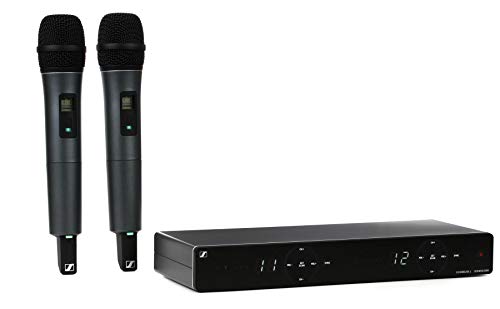
Sennheiser XSW 1-835
Worship teams, schools and gigging duos who want two wireless e835 vocal channels with the simplest possible setup.
Read the Sennheiser XSW 1-835 review →Questions Buyers Ask
Behringer C-1 Studio Condenser Microphone
See the current listing, price and included accessories.
About This Review
Mandrillis Team
The Mandrillis editorial team researches and compares audio and music gear using manufacturer documentation, verified specs and real buyer feedback, so you can make a confident purchase without wading through marketing claims.
Read our full research methodology.