Studio Gear Review
Behringer C-2 Review: Budget Matched Pair for Stereo Recording
The Behringer C-2 is a matched pair of cardioid condenser microphones bundled with a 25 foot XLR cable, built for stereo and instrument recording rather than solo vocal work. The listing publishes frequency response, pattern, and signal to noise figures, though phantom power voltage and build specifications are not stated.
Our Verdict
Research Score 68/100The Behringer C-2 pairs two matched cardioid condenser microphones with a 25 foot XLR cable, giving a home studio a ready made stereo recording kit rather than a single general purpose microphone. The published frequency response of 20 Hz to 20 kHz, a confirmed cardioid pattern, and a 75 dB signal to noise ratio give buyers real numbers to judge, even though phantom power voltage, weight, and build details are not published in the listing. For acoustic instruments, drum overheads, and ensemble recording on a budget, the matched pair format is the genuine selling point, solving the real problem of mismatched microphones more cheaply than buying two separate units. Anyone needing only one microphone or confirmed build specifications should look elsewhere first.
Editorial research score based on published specifications and documented features, not a customer rating or lab test.

Behringer
Behringer C-2 Matched Condenser Microphone Pair
Best for: Home recordists and small studios who want a ready made matched pair of cardioid condensers for stereo miking acoustic instruments, overheads, or room ambience.
Skip it if: You only need a single microphone, require confirmed phantom power details before buying, or want onboard pad and filter switches.
Check Price on AmazonWe may earn a commission at no extra cost to you.
Listing verified: November 2026
Who Should Buy It
Buy it if
- Home studio owners building a stereo pair for acoustic guitar, piano, or drum overheads
- Recordists who want two matched capsules instead of mixing mismatched microphones
- Beginners who want a complete, cable included setup without hunting down a separate XLR cable
- Budget conscious buyers who want published frequency response and signal to noise figures rather than no spec at all
Skip it if
- You need only one microphone and do not want to pay for a matched pair
- You require confirmed phantom power voltage or onboard switches before purchase
- You need documented weight, dimensions, or mount hardware specifications
Key Specifications
| Type | Studio condenser microphone, sold as a matched pair |
| Polar pattern | Cardioid |
| Frequency response | 20 Hz to 20 kHz, per the listing |
| Connection | 3 pin XLR output connector |
| Phantom power | Not published in listing as a voltage figure; as a condenser design it will need external phantom power from a mixer or interface to operate |
| Max SPL or sensitivity | Not published in listing; the listing states a 75 dB signal to noise ratio, a related noise figure rather than an SPL or sensitivity rating |
| Controls | Not published in listing |
| Mount and stand | Not published in listing |
| Weight | Not published in listing |
| Included accessories | A 25 foot XLR microphone cable is included per the listing bullets, alongside the second matched microphone in the pair |
Overview
The Behringer C-2 arrives as a matched pair of studio cardioid condenser microphones, sold together with a 25 foot XLR cable so a buyer can start recording the same day the box is opened. Behringer builds the pair around a 0.63 inch, 16 millimeter single diaphragm condenser transducer in each unit, built to a consistent standard so the two capsules behave the same way side by side.
Matched pairs exist for one reason, stereo and multi mic recording techniques depend on two microphones that sound close to identical, otherwise a stereo image or a pair of overheads ends up lopsided. Behringer's own description leans on that idea, framing the C-2 as a complete setup for immediate use rather than a single all purpose microphone.
On paper, the included cable and the pair format make this a practical starting point for a home studio that has not yet invested in stereo miking, though buyers should know up front that the published data stops at frequency response, pattern, signal to noise, and connector type, with several other specifications left undocumented in the bullets.
Sound Quality
Behringer states the C-2 uses a 0.63 inch single diaphragm condenser transducer in each microphone, a design built to capture detail and nuance rather than the raw output level a dynamic microphone favors. On paper, a single diaphragm condenser like this tends to pick up more high frequency air and subtle dynamic shading than a dynamic capsule, which is part of why condensers are the default choice for acoustic instruments and vocals in a controlled room.
The listing's frequency response figure of 20 Hz to 20 kHz spans the full range of human hearing, which is a standard claim for condenser microphones in this price bracket and should not be read as evidence of an unusually extended or specialized response curve. What that number does confirm is that the C-2 is meant as a general purpose studio tool rather than a microphone voiced for one narrow application.
A 75 dB signal to noise ratio is also published, a figure that sits in reasonable territory for a budget condenser, though it falls short of the signal to noise figures seen on premium studio standards costing considerably more. Buyers comparing this to a well known reference such as the Audio-Technica AT2020 should expect a step below that benchmark in raw clarity, even though both share a broadly similar cardioid condenser concept.
Pickup Pattern and Noise Handling
Behringer confirms a cardioid polar pattern on both microphones in the C-2 pair, meaning each capsule picks up sound most strongly from directly in front while rejecting a meaningful amount of noise arriving from the sides and rear. That focus is what allows a cardioid condenser to isolate a single instrument or vocalist in a room that is not acoustically treated.
Because the pair is matched, the cardioid response should behave consistently across both units, which matters more for stereo recording than it does for a single microphone. If one capsule picked up slightly more off axis noise than the other, a stereo image built from the pair would skew toward whichever microphone rejected less, so matching is the feature that makes the cardioid spec actually useful in a two microphone setup.
No additional polar pattern options, such as omni or figure eight, are mentioned in the bullets, so buyers should treat the C-2 as a dedicated cardioid design rather than a switchable multi pattern microphone. That keeps the feature set simple but also means anyone planning to capture a wider room sound or use the pair in a mid side configuration will need a different microphone for the side channel.
Build Quality
The listing bullets do not publish a weight, dimensions, or housing material for the C-2, which makes it difficult to say with certainty how the pair will hold up to years of touring or repeated studio handling. Buyers moving a lot of gear between sessions should treat the absence of that data as a reason to handle the pair carefully rather than assume road ready construction.
What the listing does confirm is the inclusion of a 25 foot XLR cable alongside the two microphones, which points toward a package built for a buyer setting up a home or small project studio rather than a touring sound engineer assembling a flight case of spares. Behringer's budget microphone line generally favors accessible pricing over the reinforced metal bodies found on premium studio standards, and nothing in this listing contradicts that general expectation.
Together, the pairing itself and the bundled cable describe a product built around getting two consistent capsules in front of a source quickly, rather than a ruggedized, road tested design, even without a published weight figure to quantify the construction.
- Weight and dimensions not published in listing
- Housing material not specified in the feature bullets
- Sold as a matched pair rather than a single ruggedized unit
- 25 foot XLR cable included in the bundle
Connectivity and Setup
Each microphone in the C-2 pair uses a 3 pin XLR output connector, the standard way a condenser microphone sends its signal to a mixer, audio interface, or standalone preamp. The included 25 foot cable covers one of the two microphones, so a second cable of similar length is worth budgeting for if the pair is going to be positioned any real distance from the recording source.
As a condenser design, the C-2 pair will need phantom power to operate, typically 48 volts supplied by a mixer or audio interface, though the listing bullets do not state that voltage figure directly. Most modern interfaces and small mixers include a phantom power switch for exactly this purpose, so in practice this is rarely a blocker, but buyers using an older or very basic recording device should confirm phantom power is available before planning a session around this pair.
Setup in a stereo configuration is straightforward once phantom power and two cables are in place. Position the pair according to whatever spaced, X Y, or ORTF technique is being used, and the matched response should keep the resulting stereo image reasonably centered without extra correction.
Features, Controls and Extras
The C-2 keeps its feature set narrow, the listing does not mention a pad switch, a low cut filter, or any onboard gain control on either microphone in the pair. That simplicity is common at this price point and keeps the microphones easy to use without a learning curve, though it also means any level trimming or filtering has to happen at the mixer or in software after the signal reaches a recording interface.
The real feature here is the pairing itself. Behringer markets the two microphones as matched specifically so they behave the same way, which is the entire value proposition of buying two microphones together instead of purchasing a single unit twice. Add the bundled 25 foot cable and the package functions less like two separate accessories and more like one stereo recording kit.
Buyers hoping for switchable polar patterns, built in pop filtering, or a USB output will not find any of that here. The C-2 pair is a straightforward analog XLR condenser design built around getting a matched stereo pair in front of a source quickly.
Use Cases: Vocals, Streaming, Podcasting and Instruments
Acoustic instruments are the clearest use case for a matched cardioid condenser pair like the C-2, spaced or coincident stereo techniques on acoustic guitar, piano, or a small ensemble benefit directly from two capsules that respond the same way to the same source. Drum overheads are another natural fit, where a matched pair sitting above the kit needs to track the whole stage evenly without one side sounding brighter than the other.
Vocal recording is possible with either microphone individually, and the cardioid pattern will isolate a single voice reasonably well in a treated space, though a dedicated vocal condenser, such as a Rode NT1 style model, is generally a better choice for a lead vocal chain. Podcasting and streaming are not the primary target here, the lack of a USB option makes this less convenient than a plug and play microphone for someone who only wants to talk and hit record.
Room ambience and choir or small ensemble capture round out the realistic use cases, where having two matched points of pickup spread across a wider sound source matters more than raw single channel clarity.
Who Should Buy It
Home studio owners who have been recording acoustic instruments with a single microphone and want to step up to proper stereo imaging are the most natural audience for the C-2, since the pair removes the guesswork of matching two unrelated microphones bought separately.
Buyers setting up drum overheads or capturing a small ensemble in one room will also get clear value, the matched response and the included cable mean less setup friction compared with assembling a stereo pair from mismatched parts.
Anyone working within a tight budget who still wants published frequency response, pattern, and signal to noise figures, rather than a microphone with no documented specification at all, should find the C-2 a reasonable, low risk entry point into condenser stereo recording.
Alternatives Worth Considering
Buyers who only need a single condenser microphone rather than a matched pair might look at a well known reference point such as the Audio-Technica AT2020, a widely used single large diaphragm cardioid condenser that covers many of the same general purpose recording roles without paying for a second capsule.
For vocal focused recording, a dedicated large diaphragm condenser built around vocal use, in the spirit of the Rode NT1 or similar models, is likely to deliver more flattering results on a single voice than a general purpose matched pair designed primarily for stereo and instrument work.
Buyers who specifically want switchable polar patterns, onboard pad and filter controls, or a documented weight and build specification should compare the C-2 against higher tier studio condensers before committing, since this listing does not publish any of those details.
Verdict
The Behringer C-2 earns its place as a budget friendly way to get two matched cardioid condensers and a cable in one purchase, with published frequency response, pattern, and signal to noise figures that at least give buyers something concrete to evaluate rather than a blank specification sheet.
What it does not offer, confirmed phantom power voltage, onboard controls, or any build and weight data, keeps it firmly in entry level territory, but for stereo acoustic recording on a budget, the matched pair format solves a real problem that a single microphone cannot.
Strengths and Limitations
Strengths
- Sold as a matched pair, which suits stereo recording and overhead or spaced pair techniques right out of the box
- Published frequency response of 20 Hz to 20 kHz covers the full range most instruments and vocals occupy
- Cardioid pickup pattern is confirmed, helping isolate the source from room noise and nearby instruments
- A 75 dB signal to noise ratio is stated, pointing to reasonably clean capture for the price tier
- Includes a 25 foot XLR cable, reducing the extra purchases needed to start recording
Limitations
- No phantom power voltage is published, so buyers must confirm their interface or mixer can supply it
- No weight, dimensions, mount, or stand details are listed
- No onboard controls such as a pad or low cut filter are mentioned in the bullets
- Buying a matched pair costs more up front than a single microphone for anyone who only needs one
How We Scored It
Scores reflect published specifications, documented features and value against the alternatives below. They are editorial research scores, not laboratory measurements.
Alternatives to Consider

Beyerdynamic M 160
Recording guitar amplifiers, drum overheads, strings and brass with a smooth, directional ribbon character.
Read the Beyerdynamic M 160 review →
Shure BLX288/SM58 Dual Vocal
Bands, worship teams and event companies that need two dependable wireless SM58 vocal channels in one simple package.
Read the Shure BLX288/SM58 Dual Vocal review →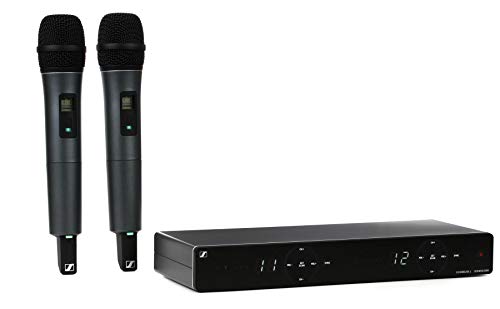
Sennheiser XSW 1-835
Worship teams, schools and gigging duos who want two wireless e835 vocal channels with the simplest possible setup.
Read the Sennheiser XSW 1-835 review →Questions Buyers Ask
Behringer C-2 Matched Condenser Microphone Pair
See the current listing, price and included accessories.
About This Review
Mandrillis Team
The Mandrillis editorial team researches and compares audio and music gear using manufacturer documentation, verified specs and real buyer feedback, so you can make a confident purchase without wading through marketing claims.
Read our full research methodology.