Studio Gear Review
Behringer Ultravoice XM1800S Review: Budget Mic Set of Three
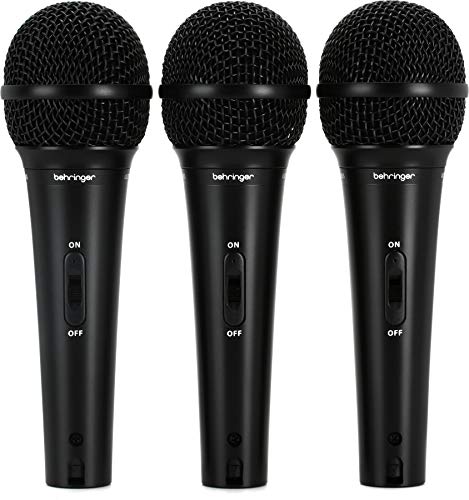
The Behringer Ultravoice XM1800S is a dynamic cardioid vocal and instrument microphone sold as a set of three, with an on and off switch and an ultra-wide frequency response described for brilliant, transparent sound. It targets bands and small venues needing several matching microphones at once.
Our Verdict
Research Score 65/100The Behringer Ultravoice XM1800S stands out mainly for its format: three dynamic cardioid vocal and instrument microphones in a single purchase, each carrying an on and off switch, a cardioid pattern aimed at reducing feedback, and a stated extremely high signal output. That makes it a practical choice for bands, worship teams or small venues that need multiple matching microphones rather than hunting for several compatible units separately. No numeric frequency response, SPL or sensitivity figures are published, so buyers are relying on Behringer's general reputation and the listing's own language describing an ultra-wide, transparent sound rather than a documented spec sheet. For the price of what is effectively three microphones, the value proposition is strong even without hard numbers, provided expectations stay realistic about the absence of published specifications.
Editorial research score based on published specifications and documented features, not a customer rating or lab test.
Behringer
Behringer Ultravoice XM1800S Microphone Set of 3
Best for: Bands, worship teams and small venues that need three matching dynamic vocal and instrument microphones at once.
Skip it if: You only need a single microphone, or you require documented frequency response and SPL numbers before buying.
Check Price on AmazonWe may earn a commission at no extra cost to you.
Listing verified: November 2026
Who Should Buy It
Buy it if
- Bands needing matching vocal microphones for multiple singers at once
- Worship teams or small venues outfitting several microphone stands in one purchase
- Home studios wanting backup microphones alongside a primary model
- Buyers who want a mute switch for quick control between songs or speeches
Skip it if
- You only need one microphone rather than a set of three
- You need a confirmed connector type without checking outside sources
- You require documented frequency response or SPL specifications
Key Specifications
| Type | Dynamic cardioid vocal and instrument microphone, sold as a set of three |
| Polar pattern | Cardioid |
| Frequency response | Not published as a numeric range in listing; the listing describes an ultra-wide frequency response for brilliant and transparent sound without giving specific numbers |
| Connection | Not published in listing; dynamic microphones of this type standardly use an XLR output, though the bullets do not confirm the connector directly |
| Phantom power | Not required; as a dynamic microphone it does not need external phantom power to operate |
| Max SPL or sensitivity | Not published as a number in listing; the listing describes extremely high signal output without giving a specific figure |
| Controls | On and off switch, described in the listing as convenient for muting during breaks |
| Mount and stand | Not published in listing |
| Weight | Not published in listing |
| Included accessories | Not published in listing beyond the set itself; this listing provides three identical microphones with no cables, clips or cases named |
Overview
The Behringer Ultravoice XM1800S is a dynamic cardioid vocal and instrument microphone, sold in this listing as a set of three identical units. That format sets it apart from most single-microphone listings in the same budget category.
Behringer frames the XM1800S around excellent studio and live performance. An on and off switch, a cardioid pattern, and a stated ultra-wide frequency response stand out as the main selling points across all three microphones in the set. That combination of claims is consistent with a general-purpose vocal and instrument microphone rather than a specialized tool for one narrow use.
All three units share the same five feature bullets, so this review treats them as one consistent product rather than three separately specified microphones. Buyers should expect identical performance characteristics across every microphone included in the set, since none is described differently from the others. That consistency is itself a practical benefit for a band that wants every vocalist to sound the same way through the same model.
Sound Quality
Behringer describes an ultra-wide frequency response for brilliant and transparent sound, language meant to suggest the microphone captures a broad range of frequencies cleanly. No numeric frequency response range is published, so the precise width of that response cannot be confirmed from this data.
The listing also claims extremely high signal output, a practical feature for a vocal microphone that needs to cut through a loud band mix or a crowded stage. No specific sensitivity or output level figure in decibels is given to support that claim with hard numbers. Buyers relying heavily on gain staging for a loud stage should keep that absence of hard data in mind when setting mixer levels, especially during a quick line check before a show starts.
Buyers familiar with a Shure SM58, a long-standing reference point for dynamic vocal microphones, have a useful general comparison for what this category typically delivers. This review does not claim the XM1800S matches that model's specific published numbers, since no matching figures are available for a direct comparison. Any such comparison should be read as reputational rather than measured.
Pickup Pattern and Noise Handling
Behringer confirms a cardioid pickup pattern for the XM1800S, described in the listing as minimizing background noise and feedback. That is the expected benefit of a cardioid design, which stays most sensitive to sound arriving from the front while rejecting a meaningful amount from the rear.
Feedback rejection matters specifically for live vocal and instrument use, where the microphone is often positioned near stage monitors or speakers. The listing frames this rejection as a core strength rather than a secondary detail, consistent with the microphone's stated live performance focus.
No numeric off-axis rejection figure or polar pattern chart is published, so the exact tightness of the cardioid pattern cannot be confirmed from this data. Standard cardioid placement practice, keeping the source close and on axis, remains the most reliable way to benefit from this pattern across all three microphones. That discipline matters most on a crowded stage with multiple monitors running at once, where several cardioid microphones are often active simultaneously.
Build Quality
The listing does not describe the housing material, weight or exact dimensions of the XM1800S, so the specific physical build cannot be confirmed from this data alone. Behringer's general framing around studio and live performance suggests a conventional dynamic microphone body, though that is not stated outright.
The on and off switch is itself a build and usability detail worth noting. It gives a performer direct control over muting the microphone during breaks between songs or speeches, without needing to route the change through a mixer channel first.
Three identical units are included, so buyers effectively get three separate chances to evaluate the build quality across a band or team. That can be useful for spotting any unit-to-unit inconsistency, though no such variation is suggested anywhere in the listing itself.
- Cardioid dynamic capsule in each of the three microphones
- On and off switch on each unit
- Housing material and weight not published in listing
- No cables, clips or cases confirmed as included
Connectivity and Setup
No output connector is stated directly for the XM1800S in the bullets. A dynamic cardioid vocal microphone of this kind standardly uses a three-pin XLR output to connect to a mixer or amplifier, consistent with how nearly every microphone in this category operates, including the better documented models buyers often compare it against.
As dynamic microphones, none of the three units in this set require phantom power, since their signal is generated mechanically rather than relying on an externally supplied voltage. That simplifies use with basic mixers or amplifiers that may not offer phantom power on every channel.
Setup for a band or team involves connecting each of the three microphones by XLR to separate mixer channels, since no cables are confirmed as included in the listing. Buyers should plan to source three compatible XLR cables separately before putting the full set to use. Labeling each cable and channel can help keep three identical microphones organized during a busy load-in.
Features, Controls and Extras
The on and off switch is the XM1800S's main onboard feature across all three units. It gives performers direct control over muting between songs or speeches, without needing a mixer engineer to handle every change manually from behind the board.
Extremely high signal output functions as a practical feature in its own right. It is intended to help a vocalist or instrument cut through a dense live mix without needing excessive gain from the mixer channel, reducing the risk of feedback at higher volumes.
Beyond the switch and the stated output level, the feature set stays simple by design. There is no pad, filter or onboard gain control on any of the three microphones, keeping the signal path straightforward from capsule to cable. That simplicity suits a live stage setup where fewer onboard adjustments means fewer things to go wrong mid-show.
Use Cases: Vocals, Streaming, Podcasting and Instruments
Studio and live vocal performance are named directly in the listing. The cardioid pattern combined with the on and off switch make the XM1800S well suited to a performer who needs reliable, repeatable control over several shows or sessions in a row.
Instrument use is also named in the listing's title and bullets, alongside vocals. That suggests the microphones can be repositioned for guitar amplifiers, drums or other close-miked sources without needing a separate instrument-specific microphone purchased on top.
Podcasting and streaming are not mentioned in the bullets. With three microphones included, this set is clearly aimed at live bands, worship teams or small venues outfitting multiple stands rather than a single desktop recording setup for one speaker.
Who Should Buy It
Bands that need matching vocal microphones for multiple singers are the clearest fit for the XM1800S. Buying a set of three removes the risk of mismatched tonal characteristics between different models bought separately over time.
Worship teams and small venues outfitting several microphone stands at once will also find the set format practical. The included on and off switch on every unit supports quick muting during a service or event without extra equipment.
Home studios that want backup microphones alongside a primary model should consider the XM1800S as well. The set provides spares without needing to track down additional units of the same specification later, once the originals are already broken in.
Alternatives Worth Considering
Buyers who only need a single dynamic vocal microphone rather than a set of three should consider a widely documented model such as the Shure SM58. This review does not state exact matching specification numbers between the two microphones, so any comparison stays reputational.
Those who want a more detailed, condenser-style capture for studio vocal work, rather than a rugged dynamic design meant for live use, might look at a large-diaphragm condenser instead. The XM1800S is built and marketed specifically for stage and performance durability, not studio detail.
Buyers planning a podcasting or desktop streaming setup with a single speaker should consider a dedicated USB or XLR podcasting microphone instead. The XM1800S set is designed around multiple performers rather than one desktop user working alone.
Verdict
The Behringer Ultravoice XM1800S earns its appeal through format as much as features. It delivers three dynamic cardioid vocal and instrument microphones, each with an on and off switch and a stated ultra-wide, transparent sound, in a single purchase.
Without published frequency response, SPL or sensitivity figures, buyers are trusting Behringer's general reputation and the listing's own language rather than a documented spec sheet. That is a reasonable trade for a set this size at this price.
Bands, worship teams and small venues stand to get the most practical benefit here. Buying three matching microphones at once beats assembling a mismatched set from several different budget models purchased separately over time.
Strengths and Limitations
Strengths
- Cardioid pattern aimed at minimizing background noise and feedback
- Extremely high signal output described for cutting through a mix
- On and off switch for muting during breaks between songs
- Three microphones included in a single purchase
- Dynamic design suited to both studio and live performance
Limitations
- No numeric frequency response, SPL or sensitivity figures published
- No connector type confirmed in the bullets
- No cables, clips or cases mentioned as included
- No individual model distinction between the three units in the set
How We Scored It
Scores reflect published specifications, documented features and value against the alternatives below. They are editorial research scores, not laboratory measurements.
Alternatives to Consider

Beyerdynamic M 160
Recording guitar amplifiers, drum overheads, strings and brass with a smooth, directional ribbon character.
Read the Beyerdynamic M 160 review →
Shure BLX288/SM58 Dual Vocal
Bands, worship teams and event companies that need two dependable wireless SM58 vocal channels in one simple package.
Read the Shure BLX288/SM58 Dual Vocal review →
Sennheiser XSW 1-835
Worship teams, schools and gigging duos who want two wireless e835 vocal channels with the simplest possible setup.
Read the Sennheiser XSW 1-835 review →Questions Buyers Ask
Behringer Ultravoice XM1800S Microphone Set of 3
See the current listing, price and included accessories.
About This Review
Mandrillis Team
The Mandrillis editorial team researches and compares audio and music gear using manufacturer documentation, verified specs and real buyer feedback, so you can make a confident purchase without wading through marketing claims.
Read our full research methodology.