Studio Gear Review
Mackie EM-Series Review: Bundled Budget Condenser
The Mackie EM-Series EM-91C is a large-diaphragm cardioid condenser sold with a shock mount and XLR cable included, aimed at both large and home-based studios. Numeric specifications are not published, so the bundled accessories and Mackie's general reputation carry much of the value here.
Our Verdict
Research Score 65/100The Mackie EM-Series, represented here by the EM-91C, is a budget large-diaphragm condenser built around a cardioid pattern and sold with a shock mount and XLR cable already in the box, a detail that separates it from condensers that leave buyers to source those parts themselves. Mackie's listing frames it as rugged and reliable, suited to both large professional studios and home-based setups, without committing to any numeric frequency response, SPL or self-noise figures. That absence of hard data means buyers are weighing the brand's general reputation and the convenience of an included cable and shock mount against microphones that publish more complete specification sheets. For a first or backup condenser where bundled accessories matter, the EM-Series is a reasonable, low-friction purchase.
Editorial research score based on published specifications and documented features, not a customer rating or lab test.

Mackie
Mackie EM-91C Condenser Microphone
Best for: Home and project studio owners who want a bundled condenser, shock mount and cable in one affordable package.
Skip it if: You need documented frequency response or self-noise numbers, or you want onboard gain or filter controls on the microphone.
Check Price on AmazonWe may earn a commission at no extra cost to you.
Listing verified: November 2026
Who Should Buy It
Buy it if
- Beginners who want a condenser mic, shock mount and cable in a single purchase
- Home studio owners upgrading from a bundled starter microphone
- Small project studios needing a second or backup large-diaphragm condenser
- Buyers who already have a phantom-power-capable interface or mixer
Skip it if
- You require a documented frequency response curve before buying
- You want onboard switches or filters built into the microphone body
- You need a confirmed self-noise or SPL rating for comparison shopping
Key Specifications
| Type | Large-diaphragm condenser microphone |
| Polar pattern | Cardioid |
| Frequency response | Not published in listing |
| Connection | XLR, confirmed by the included XLR cable named in the listing |
| Phantom power | Not published as a voltage figure in listing; a condenser microphone of this kind typically needs external phantom power to operate |
| Max SPL or sensitivity | Not published in listing |
| Controls | Not published in listing; no onboard switch is mentioned in the bullets |
| Mount and stand | Shock mount included per the listing; a separate floor or desk stand is not stated as included |
| Weight | Not published in listing |
| Included accessories | Shock mount and XLR cable, both named directly in the listing |
Overview
The Mackie EM-Series, specifically the EM-91C model covered in this listing, is a large-diaphragm condenser microphone positioned as an affordable, professional-quality option. Mackie markets it as suited to both large commercial studios and smaller home-based setups, a broad claim that budget condensers in this category often make.
The listing leans heavily on two practical selling points beyond the microphone itself: rugged, reliable construction and a cardioid polar pattern. Those two claims, paired with the bundled accessories described below, form the core pitch for this particular model.
Unlike some budget condensers that arrive as a bare capsule, the EM-91C ships with a shock mount and an XLR cable included, according to the listing. That bundling removes two common extra purchases a first-time buyer would otherwise need to make separately.
Sound Quality
Mackie describes the EM-91C as a professional-quality condenser, a phrase that signals intent rather than a measured result. No frequency response curve, self-noise figure or SPL rating appears anywhere in the listing, so the tonal character of this capsule cannot be confirmed from the data provided here.
As a large-diaphragm design, the EM-91C belongs to a capsule family generally expected to deliver a fuller, more detailed capture than smaller diaphragm microphones, a tendency often favorable for vocals and many acoustic instruments. That is a general design expectation rather than a specific claim made about this model.
Buyers weighing the EM-91C against better documented budget condensers should treat Mackie's general reputation for solid, dependable audio gear as the main signal here. No measured specification separates this model's sound from any other cardioid condenser in its class, so expectations should stay grounded in that reputation rather than any promised numeric performance. A condenser capsule of this type will also respond more to room acoustics than a dynamic microphone would, picking up reflections and ambient noise more readily, which makes the recording environment itself a meaningful factor in how the EM-91C ultimately sounds once a session is tracked and mixed.
Pickup Pattern and Noise Handling
The listing confirms a cardioid polar pattern for the EM-91C, the standard choice for a general-purpose studio condenser. That pattern focuses pickup on sound arriving from the front of the microphone while rejecting a meaningful amount of sound from the rear.
No specific noise handling or off-axis rejection claim beyond the pattern name itself appears in the bullets. Buyers should expect the typical behavior of a cardioid design, useful for isolating a single vocalist or instrument from other sound sources in the same room, rather than any unusual or enhanced rejection.
Because no numeric polar pattern chart is published, the precise rejection characteristics at different frequencies are not confirmed for this specific unit. Standard cardioid placement practice, keeping the source on axis and a reasonable distance from reflective surfaces, remains the safest approach with this microphone.
Build Quality
Mackie describes the EM-91C's construction as rugged and reliable, language meant to signal durability for repeated use in a studio environment. No specific housing material, weight or dimensions are given in the listing, so the exact nature of that ruggedness is not confirmed in numbers.
The included shock mount is itself a build-quality consideration, since it isolates the capsule from stand-transmitted vibration and handling noise during a session. That inclusion suggests Mackie expects this microphone to be mounted on a stand for serious tracking work rather than handled directly.
Compared with microphones that ship as a bare capsule only, bundling a shock mount with the EM-91C reduces the chance a buyer pairs a budget condenser with a mismatched, poor-fitting third-party mount. That is a small but real build-quality advantage in practice, especially for a first-time buyer unfamiliar with shock mount sizing. No information is given about internal grille construction or whether the capsule assembly uses metal or plastic components, so buyers should not assume a premium internal build simply because the listing describes the overall unit as rugged.
- Rugged, reliable construction per the listing
- Shock mount included for vibration isolation
- Housing material and weight not published in listing
- Cardioid capsule in a large-diaphragm body
Connectivity and Setup
The EM-91C connects via XLR, confirmed directly by the included XLR cable named in the listing rather than inferred from general category knowledge. That is a small but useful confirmation compared with listings that leave the connector unstated entirely.
Phantom power is not given a specific voltage figure in the listing, but a condenser microphone of this kind normally requires external phantom power from a mixer or interface to operate. Buyers should confirm their mixer or interface can supply that power before relying on the EM-91C as a primary microphone.
Setup is straightforward in practice. Mount the capsule in the included shock mount, connect the included XLR cable to a phantom-power-capable mixer or interface, and position the microphone using standard cardioid placement for the intended source. Because both the mount and the cable are already provided, a buyer with a working interface or mixer can go from unboxing to a usable signal path in a matter of minutes, without first tracking down a compatible third-party cable or clip.
Features, Controls and Extras
No onboard switch, pad or filter is mentioned anywhere in the listing, keeping the EM-91C's feature set simple by design. The microphone's main appeal rests on the bundled accessories and the general affordable, professional-quality positioning rather than any adjustable electronics.
The included shock mount and XLR cable function as the real extras here, removing two purchases a buyer would otherwise need to make separately when starting with a bare capsule microphone. That bundling is a meaningful convenience feature even without any onboard controls.
Buyers expecting a pad switch, a low-frequency filter or a built-in headphone output will not find any of those on the EM-91C. The listing describes a conventional, control-free condenser design that keeps its attention on the capsule and the included hardware instead. That simplicity can be an advantage for a first microphone, since there are no onboard settings to misconfigure, but it also means every tonal adjustment has to happen externally, through mixer or interface gain staging and any outboard processing a buyer already owns.
Use Cases: Vocals, Streaming, Podcasting and Instruments
Home-based studio recording is named directly in the listing as an intended use, alongside larger professional studios, suggesting Mackie positions the EM-91C as scalable across different recording environments. Vocal and instrument tracking are the implied core uses for a general-purpose cardioid condenser like this one.
Podcasting and streaming are not mentioned specifically in the bullets, but a cardioid large-diaphragm condenser of this type is generally workable for those uses in a quiet, reasonably treated room. Buyers in noisier or untreated spaces should expect more room and ambient noise pickup than a dynamic microphone would capture.
No onboard monitoring or USB connection is offered, so the EM-91C depends entirely on an external mixer or interface for both power and signal routing. That setup fits a traditional studio workflow more naturally than a quick, mixer-free streaming setup aimed at a single USB cable. Instrument recording, such as acoustic guitar or light percussion, is also a reasonable application for a large-diaphragm cardioid condenser like this one, though the listing itself focuses its language on vocal-style studio and home recording rather than naming specific instruments.
Who Should Buy It
Beginners who want a condenser microphone, shock mount and cable in a single affordable purchase are the clearest fit for the EM-91C. The bundling removes two common extra costs that often surprise first-time buyers once they realize a bare capsule microphone needs more than just the mic itself.
Home studio owners replacing an even more basic starter microphone will likely see a reasonable step up here. That is particularly true if their current setup already includes a phantom-power-capable mixer or interface ready to use without any additional purchase.
Small project studios that want an inexpensive second or backup large-diaphragm condenser, rather than a primary flagship microphone, should also find the EM-91C's price and included accessories a sensible fit. It works well as a spare for a vocal booth or an overdub session where the main microphone is already busy.
Alternatives Worth Considering
Buyers who want a widely documented budget condenser with published specifications should compare the EM-91C against a model like the Audio-Technica AT2020. It carries a longer track record in reviews and forums, though this review does not state any exact matching numbers for that comparison.
Those who specifically want a microphone bundle with a pop filter and desktop stand in addition to a shock mount might look at a more complete starter kit instead. This EM-91C listing confirms only a shock mount and cable among its accessories, with no pop filter or stand named.
Buyers who plan to record primarily in untreated rooms might consider a dynamic microphone instead of any condenser in this class. Dynamic designs generally pick up less ambient room noise than a sensitive large-diaphragm condenser like the EM-91C, which can be an advantage outside a treated space.
Verdict
The Mackie EM-Series EM-91C earns its place in a budget shortlist mainly through convenience. A cardioid large-diaphragm capsule is paired with an included shock mount and XLR cable, removing two purchases many first-time buyers would otherwise need to make on their own.
Without published frequency response, SPL or self-noise figures, buyers are relying on Mackie's general reputation and the practical value of the bundled hardware rather than a documented spec sheet. That is a fair trade for this price point, but it is a limitation worth knowing before buying.
A buyer who wants the shortest path from unboxing to a working studio microphone, without researching compatible mounts or cables separately, will find that convenience here. The EM-91C's bundled approach is one of its more convincing arguments at this price.
Strengths and Limitations
Strengths
- Large-diaphragm condenser capsule aimed at both large and home-based studios
- Cardioid polar pattern for front-focused pickup
- Rugged, reliable construction according to the listing
- Shock mount and XLR cable included in the box
- Affordable entry price for a bundled condenser package
Limitations
- No numeric frequency response, SPL or self-noise figures published
- No phantom power voltage confirmed in the bullets
- No onboard controls, switches or filters mentioned
- Model-specific EM-91C details beyond the five bullets are limited
How We Scored It
Scores reflect published specifications, documented features and value against the alternatives below. They are editorial research scores, not laboratory measurements.
Alternatives to Consider

Beyerdynamic M 160
Recording guitar amplifiers, drum overheads, strings and brass with a smooth, directional ribbon character.
Read the Beyerdynamic M 160 review →
Shure BLX288/SM58 Dual Vocal
Bands, worship teams and event companies that need two dependable wireless SM58 vocal channels in one simple package.
Read the Shure BLX288/SM58 Dual Vocal review →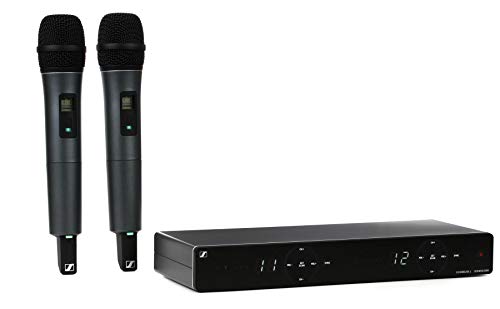
Sennheiser XSW 1-835
Worship teams, schools and gigging duos who want two wireless e835 vocal channels with the simplest possible setup.
Read the Sennheiser XSW 1-835 review →Questions Buyers Ask
Mackie EM-91C Condenser Microphone
See the current listing, price and included accessories.
About This Review
Mandrillis Team
The Mandrillis editorial team researches and compares audio and music gear using manufacturer documentation, verified specs and real buyer feedback, so you can make a confident purchase without wading through marketing claims.
Read our full research methodology.