Studio Gear Review
Neumann TLM 103 Review: The Approachable Neumann
The Neumann TLM 103 is a cardioid large diaphragm condenser with transformerless, low noise circuitry, described as straightforward for both home recording and professional studios. It ships with a suspension shockmount in a nickel finish, though exact frequency response and SPL figures are not published.
Our Verdict
Research Score 83/100The Neumann TLM 103 is positioned as the brand's more approachable large diaphragm condenser, built around a pressure gradient capsule and transformerless circuitry that the listing describes as low noise and straightforward to handle. That combination suits a home studio stepping up to a serious condenser as much as a professional facility needing a dependable secondary microphone. The fixed cardioid pattern and the absence of published frequency response or SPL figures are real limitations for buyers who want full documentation or multiple pattern options. For a vocalist or engineer who wants Neumann's name and a suspension shockmount included without pattern switching they may never use, the TLM 103 earns a strong recommendation within the upper mid range tier.
Editorial research score based on published specifications and documented features, not a customer rating or lab test.

Neumann
Neumann TLM 103 Condenser Microphone
Best for: Home and project studios that want a single, dependable Neumann cardioid condenser for vocals and instruments without pattern switching.
Skip it if: You need multiple polar patterns, published numeric specifications, or a built in pad switch for very loud sources.
Check Price on AmazonWe may earn a commission at no extra cost to you.
Listing verified: November 2026
Who Should Buy It
Buy it if
- Vocalists and voice over artists who want Neumann's reputation in a single cardioid mic
- Project studios upgrading from an entry level condenser
- Engineers who value transformerless, low noise circuitry for clean recordings
- Buyers who want the suspension shockmount included rather than purchased separately
Skip it if
- You need omnidirectional or figure eight patterns for stereo work
- You require a published spec sheet with exact frequency response and SPL figures
- You need a built in pad switch for very loud instrument sources
Key Specifications
| Type | Large diaphragm condenser, pressure gradient transducer, transformerless circuitry |
| Polar pattern | Cardioid |
| Frequency response | Not published in listing |
| Connection | Not published in listing; large diaphragm condensers of this design typically use a standard balanced XLR output |
| Phantom power | Not explicitly published; as a true condenser with transformerless circuitry it requires phantom power to operate |
| Max SPL or sensitivity | Not published in listing; described as low noise |
| Controls | None described; no pad or filter switch mentioned in listing |
| Mount and stand | Suspension shockmount included, per listing title |
| Weight | Not published in listing |
| Included accessories | Suspension shockmount; nickel finish, per listing title |
Overview
The Neumann TLM 103 is a large diaphragm condenser microphone built around a pressure gradient capsule and transformerless circuitry, described in the listing as low noise with straightforward handling for both home recording and professional studios. It ships in a nickel finish with a suspension shockmount included, according to the listing title.
Where some of Neumann's catalog leans toward multi pattern flexibility, the TLM 103 keeps things simple with a fixed cardioid pattern. That simplicity is part of its appeal, positioning it as an easier entry point into the Neumann name than a flagship, pattern switching model.
Frequency response, sensitivity, maximum SPL and weight are not published in this listing. This review focuses on what the confirmed design choices, transformerless circuitry, a pressure gradient capsule and cardioid pickup, mean in practice rather than quoting numbers Neumann has not made public here. Buyers who need that documentation for a procurement sheet should request it directly rather than rely on estimates.
Sound Quality
Transformerless circuitry is the detail most responsible for how this microphone is described in the listing: low noise, with a straightforward handling character that suggests a clean, uncolored signal path from capsule to output. Buyers report Neumann's transformerless designs tend toward a more neutral, detailed capture than microphones built around an output transformer.
A pressure gradient transducer is the standard design behind cardioid condensers, responding to the difference in sound pressure between the front and back of the capsule to create directional pickup. That is a general description of how the capsule works rather than a specific published figure, since the listing gives no frequency response curve to quote, and buyers who need one should request it from Neumann directly.
Compared with a budget large diaphragm condenser such as an Audio-Technica AT2020, the TLM 103 carries Neumann's reputation for refinement and consistency, though this review cannot compare exact numbers since neither this listing nor general knowledge of the AT2020 provides a figure to cite. It is a different category entirely from a convenience USB microphone like a Blue Yeti, which is built for ease rather than studio grade detail.
Pickup Pattern and Noise Handling
The TLM 103 uses a fixed cardioid pattern, rejecting sound from the rear of the capsule while favoring whatever sits in front of it. That is the standard choice for vocal booths and close instrument work, and it is consistent with the listing's description of straightforward handling.
Low noise is explicitly called out in the listing, which matters most on quiet sources such as a soft vocal or a fingerpicked acoustic guitar, where hiss would otherwise creep into a recording. The listing does not publish an exact self noise figure, so this review describes the design intent rather than a specific decibel number, leaving the precise measurement for buyers to confirm with Neumann directly.
There is no pattern switching available on the TLM 103, so engineers who need omnidirectional or figure eight capture for stereo techniques will need a different microphone. Maximum SPL is not published either, so buyers working with very loud sources should confirm headroom directly with Neumann before relying on it for a guitar cabinet or a brass section.
Build Quality
A suspension shockmount is included according to the listing title, which isolates the capsule from stand borne vibration and handling noise, a meaningful inclusion that some competing condensers at this price sell separately. The nickel finish gives the microphone a distinct look on a stand compared with matte black alternatives.
Weight, body dimensions and exact housing material are not published in the listing. Neumann's reputation for build consistency across its catalog is well established, but this review cannot confirm specific physical details for the TLM 103 beyond what the listing states, so buyers planning a specific mount or stand should verify dimensions separately.
No case or additional protective accessory is mentioned alongside the shockmount in the listing. Buyers who need a case for transport should budget for one separately or confirm with the seller whether one is included, since a nickel finish can show wear if moved around without protection.
Connectivity and Setup
As a true condenser with transformerless circuitry, the TLM 103 requires phantom power to operate, though the listing does not state an exact voltage. Large diaphragm condensers of this design typically connect through a standard balanced XLR output, though the listing does not explicitly confirm the connector type.
Setup is described in the listing as straightforward, consistent with mounting the microphone in its shockmount, engaging phantom power from an interface or mixer, and setting gain. That is a simpler process than a tube condenser's external power supply and warm up routine, which matters for a buyer who wants to start recording quickly.
Because the TLM 103 is low noise by design, it should be forgiving of modest preamps on a budget interface. That behavior is similar to how other low noise transformerless condensers perform in typical home studio setups, where expensive preamps are not always available.
Features, Controls and Extras
No pad switch, high pass filter or other control is mentioned in the listing, keeping the TLM 103 focused on a single, dependable cardioid pickup rather than offering multiple configurations. That simplicity aligns with the straightforward handling the listing describes.
The included suspension shockmount is the clearest accessory value in this listing, removing a purchase that buyers of some other condensers need to make separately. The nickel finish is a cosmetic feature rather than a functional one, based on the listing's description.
Buyers who want a pad switch for very loud sources, or a case for transport, should confirm those details with Neumann or the seller directly. Neither item is described in the published listing data, so no assumption should be made either way.
Use Cases: Vocals, Streaming, Podcasting and Instruments
Vocals are a strong fit for the TLM 103, where the low noise, transformerless design and cardioid pattern combine to suit a range of voices in a treated or quiet room. The straightforward handling described in the listing suggests it is meant to be approachable rather than demanding specialized technique.
Instruments such as acoustic guitar, piano and overheads also benefit from the pressure gradient capsule's detailed response. That versatility makes the TLM 103 a reasonable single microphone solution for a small studio handling varied sources across a session.
Streaming and podcasting are possible in a treated space, since the low noise design helps keep quiet passages clean. A large diaphragm condenser will still pick up more room noise than a dynamic microphone built specifically for speech, such as a Shure MV7, in an untreated room.
Who Should Buy It
Home and project studios that want Neumann's reputation in a single, dependable cardioid condenser are the clearest audience for the TLM 103. It suits vocalists and instrumentalists who do not need pattern switching and prefer straightforward setup over flexibility.
Buyers who need multiple patterns, a pad switch, or published numeric specifications before purchase should look at a different model. Either elsewhere in Neumann's catalog or from a competing brand that documents those details explicitly would be a safer fit.
Alternatives Worth Considering
The Neumann TLM 103-MT, also in this catalog, offers the same large diaphragm cardioid design in a matte black finish with a wooden box. That cosmetic and packaging variant is worth comparing against this nickel finished model before deciding.
For buyers who want tube coloration instead of a transformerless solid state design, the Telefunken TF29 offers a fixed cardioid tube condenser at a similar upper mid range price point. It trades a different kind of tonal character for the same single pattern simplicity.
An Audio-Technica AT2020 or a Rode NT1 remain the lower cost alternatives for buyers who want a cardioid large diaphragm condenser without Neumann's price tier. Both trade some refinement for a more accessible purchase.
Verdict
The Neumann TLM 103 delivers on its positioning as an approachable, dependable cardioid condenser. It is backed by transformerless circuitry the listing describes as low noise and straightforward to use, plus an included suspension shockmount that saves a separate purchase.
The lack of published frequency response, SPL and weight figures is a real gap for spec driven buyers. Even so, the design choices and Neumann's reputation support a strong recommendation for home and project studios in the upper mid range tier.
Strengths and Limitations
Strengths
- Transformerless circuitry described as low noise and straightforward to use
- Large diaphragm pressure gradient capsule suited to vocals and instruments alike
- Suspension shockmount included per the listing title
- Neumann's reputation for consistency and build quality across its catalog
- Positioned for both home recording and professional studio use
Limitations
- Frequency response, sensitivity and maximum SPL are not published
- Fixed cardioid pattern with no switching to omni or figure eight
- No pad switch or high pass filter mentioned in the listing
- Weight and dimensions are not stated
How We Scored It
Scores reflect published specifications, documented features and value against the alternatives below. They are editorial research scores, not laboratory measurements.
Alternatives to Consider

Beyerdynamic M 160
Recording guitar amplifiers, drum overheads, strings and brass with a smooth, directional ribbon character.
Read the Beyerdynamic M 160 review →
Shure BLX288/SM58 Dual Vocal
Bands, worship teams and event companies that need two dependable wireless SM58 vocal channels in one simple package.
Read the Shure BLX288/SM58 Dual Vocal review →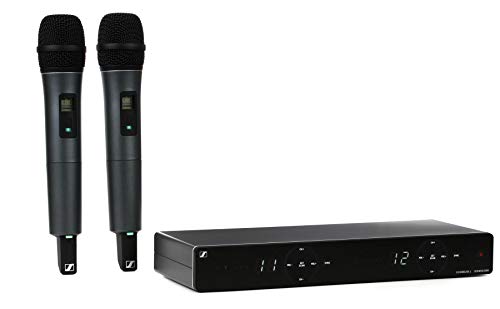
Sennheiser XSW 1-835
Worship teams, schools and gigging duos who want two wireless e835 vocal channels with the simplest possible setup.
Read the Sennheiser XSW 1-835 review →Questions Buyers Ask
Neumann TLM 103 Condenser Microphone
See the current listing, price and included accessories.
About This Review
Mandrillis Team
The Mandrillis editorial team researches and compares audio and music gear using manufacturer documentation, verified specs and real buyer feedback, so you can make a confident purchase without wading through marketing claims.
Read our full research methodology.