Studio Gear Review
Telefunken TF29 Review: Cardioid Tube Condenser Value
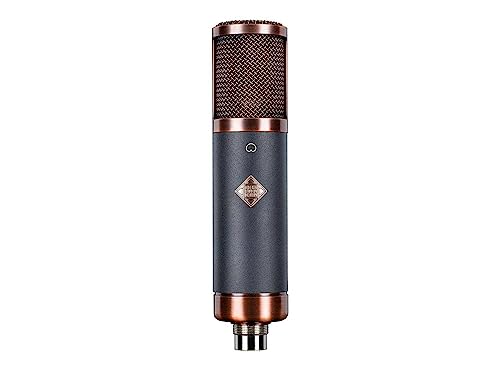
The Telefunken TF29 is a large diaphragm tube condenser with a fixed cardioid pattern, priced below the multi pattern TF39 and TF47 in the same catalog. It ships with a power supply, cable, shock mount and case, giving buyers a simpler route into Telefunken's tube sound.
Our Verdict
Research Score 80/100The Telefunken TF29 trims the catalog's pattern switching down to a single fixed cardioid option, and in exchange sits at a more approachable upper mid range price than its stablemates the TF39 and TF47. The same accessory bundle of cable, power supply, shock mount and case ships in the box, so the simplification is specifically about polar pattern flexibility rather than build or completeness. For a buyer who only ever needs cardioid pickup, that tradeoff is a sensible way to access Telefunken's tube condenser character without paying for switching they would rarely use. Anyone who anticipates needing omnidirectional or figure eight capture down the line should budget for the pricier multi pattern models instead.
Editorial research score based on published specifications and documented features, not a customer rating or lab test.
Telefunken
Telefunken TF29 Tube Condenser Microphone
Best for: Buyers who want a taste of Telefunken's tube condenser sound in a single, dependable cardioid pattern without paying for pattern switching they will not use.
Skip it if: You need multiple polar patterns, a published spec sheet, or a microphone that skips the warm up and external power step entirely.
Check Price on AmazonWe may earn a commission at no extra cost to you.
Listing verified: November 2026
Who Should Buy It
Buy it if
- Vocalists who want one dependable cardioid tube condenser
- Home studios entering the Telefunken range at a lower price point
- Engineers who do not need pattern switching for their typical sessions
- Buyers who still want the full cable, supply, shock mount and case kit
Skip it if
- You need omnidirectional or figure eight patterns for stereo work
- You require published numeric specifications before buying
- You want a phantom powered microphone with no external supply
Key Specifications
| Type | Large diaphragm tube condenser |
| Polar pattern | Cardioid, fixed |
| Frequency response | Not published in listing |
| Connection | 7 pin cable to external power supply, standard analog output to preamp or interface |
| Phantom power | Not applicable, powered by the included external power supply rather than phantom power |
| Max SPL or sensitivity | Not published in listing |
| Controls | None described beyond the fixed cardioid pattern |
| Mount and stand | Shock mount included |
| Weight | Not published in listing |
| Included accessories | 7 pin microphone cable, power supply, shock mount, case |
Overview
The Telefunken TF29 is a large diaphragm tube condenser with a fixed cardioid polar pattern, sitting one step below the multi pattern TF39 and TF47 in the same catalog. The listing confirms a 7 pin microphone cable, a power supply, a shock mount and a case are all included, which matches the accessory kit found on its pricier siblings.
Where the TF29 differs is pattern flexibility. It offers a single cardioid pattern rather than a switchable selection, a simplification that lines up with its lower, upper mid range price tier compared with the premium pricing of the TF39 and TF47. For buyers who only ever record in cardioid, that is not much of a loss.
As with the rest of Telefunken's tube range, the listing does not publish frequency response, maximum SPL or weight figures for the TF29. This review therefore focuses on what the fixed pattern, tube circuitry and accessory bundle mean in practice rather than quoting numbers that are not available. Buyers who need documented specifications for a session sheet or an equipment list should treat that gap as a real limitation rather than an oversight on this review's part.
Sound Quality
A large diaphragm and a tube gain stage together tend to produce a rounder, warmer character than a typical solid state condenser, and the TF29 is built around that same formula as its pricier siblings. Buyers report tube circuitry in this class smooths out harshness on vocals rather than adding extra brightness.
No frequency response or sensitivity numbers appear in the listing, so this review cannot quote a specific curve for the TF29. What can be said with more confidence is that a fixed cardioid tube condenser at this tier is generally voiced for close vocal work rather than for distant or ambient capture, where the single pattern already matches the typical recording distance.
Compared with a budget solid state condenser such as an Audio-Technica AT2020, the TF29 is reaching for a different kind of coloration that a transistor circuit does not naturally produce. It has little in common with a convenience focused USB microphone like a Blue Yeti, since the TF29 still requires an external power supply and a quiet room to perform as intended.
Pickup Pattern and Noise Handling
The TF29 offers a single cardioid pattern with no switching, which is the main way it differs from the TF39 and TF47 in the same Telefunken catalog. Cardioid pickup favors sound arriving from the front of the capsule while rejecting sound from the rear, the standard choice for vocal booths and close instrument work.
That fixed design means the TF29 cannot be reconfigured for omnidirectional room capture or figure eight stereo techniques the way its pattern switching siblings can. Buyers planning ambient recording or mid side stereo pairs will need a different microphone or a second unit for that purpose.
Self noise and maximum SPL are not published in the listing, so the exact ceiling for loud sources and the noise floor on quiet passages are not confirmed here. The simplicity of a single reliable pattern is the TF29's clearer, documented strength, and it removes any risk of a session being ruined by an accidental pattern switch.
Build Quality
A shock mount ships with the TF29, the same inclusion found across Telefunken's tube condenser range. Isolating the capsule from stand vibration matters on a sensitive tube microphone, and having the mount included avoids an extra purchase before the first session.
The listing does not state a weight, body material or capsule diameter for the TF29, so this review cannot describe its physical presence with precision. Tube condensers of this type are typically built with a metal body housing a heated tube, consistent with the external power supply and 7 pin cable the listing confirms.
A case is included as well, protecting the microphone and its more delicate tube internals during transport. That matters for any buyer who does not plan to leave the TF29 mounted permanently in one room, and it brings the TF29 in line with the protective packaging Telefunken ships across its pricier tube models.
Connectivity and Setup
Like the rest of the Telefunken tube lineup, the TF29 connects through a 7 pin cable to its own external power supply rather than drawing phantom power from an interface. Both items are included in the listing, so no separate cable purchase is needed.
From the power supply, the signal typically reaches a preamp or interface through a standard analog connection, though the exact output connector is not specified in the listing. Setup follows the usual tube routine: power on, allow warm up, then set gain at the preamp.
Because the TF29 is not phantom powered, it cannot run from a basic USB interface on its own. That is consistent across Telefunken's tube models and is the tradeoff buyers accept for the tube character the design is built around.
Features, Controls and Extras
There is little in the way of switchable controls on the TF29, since the fixed cardioid pattern removes the pattern selector found on the TF39 and TF47. For buyers who never touch pattern switches anyway, that simplicity is not a meaningful loss.
The included accessory kit is the same as its pricier siblings: cable, power supply, shock mount and case all ship with the microphone. That consistency across the Telefunken range means the TF29 does not feel like a stripped down product, even with one fewer pattern option.
No pad switch, high pass filter or pop filter is mentioned in the listing. Buyers doing close, loud vocal work should plan to add a pop filter separately, since the listing gives no indication one is included.
Use Cases: Vocals, Streaming, Podcasting and Instruments
Lead vocals are the clearest use case for the TF29, where its fixed cardioid pattern and tube warmth suit a performer recording in a treated space. Buyers who know they will always track vocals in cardioid gain little from paying extra for pattern switching, since that flexibility would mostly go unused in a typical vocal session.
Instruments such as acoustic guitar or close miked brass also suit the cardioid pattern well. Anyone wanting a wider or figure eight capture for ambient or stereo recording will need to look at the TF39 or TF47 instead, since the TF29 cannot be switched to those patterns after purchase.
Streaming and podcasting are not a natural fit given the warm up time and external power supply the TF29 requires. A dynamic microphone purpose built for speech, such as a Shure MV7, remains the more practical choice for daily talk content, where speed and simplicity matter more than tube coloration.
Who Should Buy It
Buyers who want Telefunken's tube condenser sound but do not need pattern switching are the clearest audience for the TF29. It delivers the same accessory kit and tube character at a lower price than the multi pattern models in the same catalog, which makes it an easier purchase to justify for a single focused use case.
Anyone who expects to need omnidirectional or figure eight recording down the line should budget for the TF39 or TF47 instead. The TF29's fixed cardioid design cannot be reconfigured after purchase, so that decision is worth making before checkout rather than after.
Alternatives Worth Considering
The Telefunken TF39 and TF47 offer three switchable patterns at a higher premium price, worth considering if pattern flexibility matters more than saving money. Buyers who want to stay within the Telefunken catalog should compare all three before deciding, since the accessory kit and general tube character carry across the range.
The Lewitt PURE TUBE is a similarly positioned studio tube condenser at a comparable upper mid range price. It gives buyers an alternative brand with its own transformer based design to weigh against the TF29 before settling on either one.
For buyers who decide a tube condenser is not necessary, a phantom powered solid state condenser such as an Audio-Technica AT2020 or a Rode NT1 offers a simpler, more affordable route to a cardioid large diaphragm microphone. Neither one requires an external power supply or a warm up period.
Verdict
The Telefunken TF29 makes a reasonable case for itself as the accessible entry point into the brand's tube condenser range. It trades pattern switching for a lower upper mid range price while keeping the same cable, power supply, shock mount and case bundle found on the pricier models.
For a buyer who only ever needs cardioid pickup, that is a sensible trade. Anyone who anticipates needing other patterns should look at the TF39 or TF47 instead, since the TF29's design cannot be changed after purchase.
Strengths and Limitations
Strengths
- Entry point into Telefunken's large diaphragm tube condenser family
- Fixed cardioid pattern is simple to learn and predictable in use
- Ships complete with cable, power supply, shock mount and case
- Upper mid range price undercuts the multi pattern TF39 and TF47
- Tube circuitry aims for a warmer tone than a typical solid state condenser
Limitations
- Single cardioid pattern with no option for omni or figure eight
- No published frequency response, sensitivity or maximum SPL
- External power supply adds a setup step phantom powered mics skip
- Weight and body material are not stated in the listing
How We Scored It
Scores reflect published specifications, documented features and value against the alternatives below. They are editorial research scores, not laboratory measurements.
Alternatives to Consider

Beyerdynamic M 160
Recording guitar amplifiers, drum overheads, strings and brass with a smooth, directional ribbon character.
Read the Beyerdynamic M 160 review →
Shure BLX288/SM58 Dual Vocal
Bands, worship teams and event companies that need two dependable wireless SM58 vocal channels in one simple package.
Read the Shure BLX288/SM58 Dual Vocal review →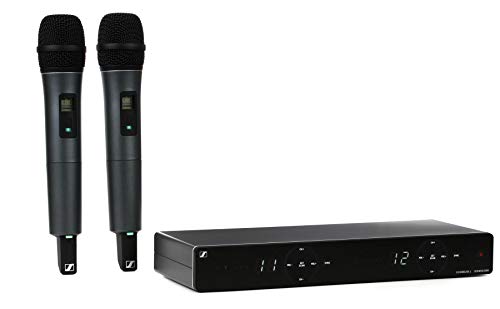
Sennheiser XSW 1-835
Worship teams, schools and gigging duos who want two wireless e835 vocal channels with the simplest possible setup.
Read the Sennheiser XSW 1-835 review →Questions Buyers Ask
Telefunken TF29 Tube Condenser Microphone
See the current listing, price and included accessories.
About This Review
Mandrillis Team
The Mandrillis editorial team researches and compares audio and music gear using manufacturer documentation, verified specs and real buyer feedback, so you can make a confident purchase without wading through marketing claims.
Read our full research methodology.