Digital Pianos Review
Donner DEP-20 Review: Loud, Full-Featured and Budget Priced
The DEP-20 is the best-selling budget piano from Donner: 88 hammer-action keys, 238 voices, 128-note polyphony, 2 x 25 W speakers, a screen and a sustain pedal in the box. This review separates what it does well, features and volume, from where it falls short of the Alesis Recital Pro and Casio CDP-S160, action refinement and piano tone.
Our Verdict
Research Score 72/100The Donner DEP-20 is a lot of keyboard for the money. The speakers are the loudest in the budget class, the 238 voices and screen make it a versatile home keyboard, and a pedal is included. The hammer action is heavy and uniform rather than graded, and the grand piano tone is noticeably thinner than Casio's or Yamaha's, so a committed piano student is better served by the CDP-S160 or P-145. For a family keyboard that must do everything cheaply, it is a reasonable pick.
Editorial research score based on published specifications and documented features, not a customer rating or lab test.

Donner
Donner DEP-20
Best for: Budget buyers who want weighted keys, loud speakers and a large sound library in one box
Skip it if: you want a refined action or a convincing grand piano tone
Check Price on AmazonWe may earn a commission at no extra cost to you.
Listing verified: October 2026
Who Should Buy It
Buy it if
- You want the most features for the least money
- You play pop and keyboard parts as much as piano
- You need loud speakers for a family room
Skip it if
- You are learning classical technique and need a graded action
- Piano sound quality is the priority
- You want app connectivity over Bluetooth
Key Specifications
| Key Action | Hammer action, 88 weighted keys |
| Sound Engine | Sampled voices |
| Voices | 238 |
| Polyphony | 128 notes |
| Speakers | 2 x 25 W |
| Bluetooth | No |
| USB | USB MIDI |
| Pedals | Sustain pedal included |
| Weight | 25.6 lb (11.6 kg) per listing |
| Form Factor | Portable |
What the DEP-20 Offers
Donner built its reputation on packing features into inexpensive instruments, and the DEP-20 is the clearest example. Eighty-eight hammer-action keys, 238 voices covering pianos, electric pianos, organs, strings, brass, guitars, drums and synths, 128-note polyphony, two 25 watt speakers, a backlit LCD, a built-in recorder, a metronome, layer and split modes, dual headphone jacks, USB MIDI and a sustain pedal and music rest in the box. At the listing price we checked, nothing from Yamaha, Casio or Roland offers that list.
The question is not whether it is good value on paper. It is whether the two things that matter most in a piano, the keys and the piano sound, are good enough.
The Action
The DEP-20's keys are hammer-weighted and velocity sensitive with adjustable touch. The weight is on the heavy side and almost uniform from bass to treble, so there is little of the grading that Yamaha, Casio and Roland build into their entry actions. Key return is adequate and the keys are quiet, but repetition is slower than the Casio CDP-S160 and the touch feels less connected to the sound.
For a beginner the action is workable and clearly better than any semi-weighted keyboard. For a student past the first year, the uniform weight and slower repetition become a limit, and the Casio, Yamaha P-145 and Roland FP-10 justify their higher prices with more refined keybeds.
Sounds and Speakers
The 238 voices are the DEP-20's selling point and most are usable for a home keyboard: the electric pianos, organs and strings in particular. The main grand piano is the weak spot, thinner and less resonant than the samples in the Korg B2+, Casio CDP-S160 or Yamaha P-145, with a shorter sustain. It is fine for practice and less satisfying for expressive playing.
The two 25 watt speakers are the loudest of any entry piano we have researched and fill a family room with ease. Combined with the voice library, they make the DEP-20 a good keyboard for a household that plays along to songs and wants volume without an amplifier.
Screen, Recording and Connectivity
The LCD shows the voice, tempo and settings clearly, which makes the DEP-20 easier to operate than hold-and-press designs from Yamaha and Korg. The recorder captures a performance for playback, and the metronome, transpose and dual and split modes are a button away. USB MIDI connects to apps and computers with a cable; there is no Bluetooth and no USB audio, and the line output is a single stereo jack.
Build and Setup
The DEP-20 feels solid for its price, with a plastic chassis, a decent music rest and a sustain pedal that is a switch rather than a piano-style pedal. At about 26 pounds it sits on any X stand, and Donner sells a matching furniture stand and three-pedal unit. Setup is unpacking, plugging in and playing.
DEP-20 Against the Alternatives
Against the Alesis Recital Pro, the DEP-20 has far more voices and a pedal in the box, while the Alesis has a somewhat better piano tone, line outputs and battery operation; they are close rivals and the Donner is usually cheaper. Against the Casio CDP-S160, the Casio's action, piano sound and slim case are all better, and it costs more. Against the Yamaha P-145, the same applies with the addition of app support.
The DEP-20 is the right buy when features and volume per dollar are the priority. It is the wrong buy when the piano sound and the feel under the fingers matter most.
Who Keeps the DEP-20
Families who wanted an all-purpose keyboard for children to explore sounds, play along with songs and take early lessons tend to be happy with it for years. Students who become serious about piano usually move to a Casio, Yamaha, Roland or Kawai within a year or two, and the DEP-20's low price makes that a small loss. Buy it as a feature-rich family keyboard, not as a long-term piano.
Strengths and Limitations
Strengths
- 238 voices and 2 x 25 W speakers at a budget price
- Hammer-action keys with a sustain pedal in the box
- LCD with recording, metronome and layering
- Dual headphone jacks
Limitations
- Action is heavy and uniform rather than graded
- Piano sample is thin next to Yamaha, Casio and Korg
- No Bluetooth or USB audio
How We Scored It
Scores reflect published specifications, documented features and value against the alternatives below. They are editorial research scores, not laboratory measurements.
Alternatives to Consider

Alesis Recital Pro
Beginners who want hammer-action keys and loud speakers for the least money
Read the Alesis Recital Pro review →
Casio CDP-S160
Beginners and casual players who need a light, slim piano that can run anywhere
Read the Casio CDP-S160 review →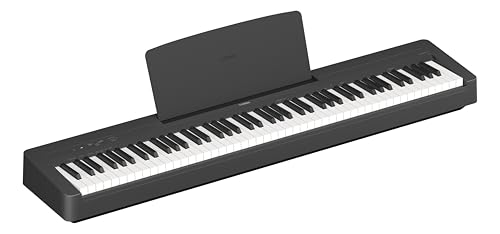
Yamaha P-145
Beginners who want the current Yamaha entry model with app control and a slim footprint
Read the Yamaha P-145 review →Head-to-Head Comparisons
- Donner DEP-20 vs Alesis Recital Pro Compare →
Questions Buyers Ask
Donner DEP-20
See the current listing, price and included accessories.
About This Review
Mandrillis Team
The Mandrillis editorial team researches and compares audio and music gear using manufacturer documentation, verified specs and real buyer feedback, so you can make a confident purchase without wading through marketing claims.
Read our full research methodology.