Studio Gear Review
Behringer U-PHORIA UMC404HD Review: 4x4 MIDAS Interface
The Behringer U-PHORIA UMC404HD is a 4x4 USB audio and MIDI interface with 4 MIDAS mic preamps, 48V phantom power and 24-bit, 192kHz resolution. This research review covers its durable chassis, broad DAW compatibility and the monitoring details the listing leaves unpublished.
Our Verdict
Research Score 80/100The Behringer U-PHORIA UMC404HD is a genuinely capable mid-range interface, pairing four MIDAS designed mic preamps with confirmed 48V phantom power, audiophile 24-bit, 192kHz resolution and a full 4-in, 4-out signal path plus MIDI I/O. Compatibility with major DAWs including Pro Tools, Ableton Live and Cubase broadens its appeal beyond any single software ecosystem, and the impact-resistant metal chassis, described as engineered in Germany, suggests a unit built for regular use rather than occasional recording. Preamp gain, headphone monitoring and bundled software are not published, which are the gaps a buyer should verify before ordering. For a band or home studio that needs four matched phantom-powered inputs recorded to separate tracks, this interface earns a solidly mid-range score.
Editorial research score based on published specifications and documented features, not a customer rating or lab test.

Behringer
Behringer U-PHORIA UMC404HD USB Audio Interface
Best for: Home studios and small bands that need four simultaneous phantom-powered mic preamps, real multi-track USB recording and broad DAW compatibility at a mid-range price.
Skip it if: You need more than four simultaneous inputs or a mixer's style of onboard EQ and effects, since this unit is built purely as a multi-track recording interface.
Check Price on AmazonWe may earn a commission at no extra cost to you.
Listing verified: November 2026
Who Should Buy It
Buy it if
- Bands recording four microphones or instruments simultaneously to separate tracks
- Home studio owners who want matched MIDAS preamps with confirmed phantom power
- Buyers who need MIDI I/O alongside audio recording in one interface
- Anyone prioritizing a durable, impact-resistant chassis for regular transport
Skip it if
- You need more than four simultaneous mic or instrument inputs
- You require confirmed headphone monitoring controls described in the listing
- You want bundled recording software included rather than general DAW compatibility
Key Specifications
| Type | 4x4 USB 2.0 audio and MIDI interface for recording microphones and instruments |
| Inputs | 4 combo inputs with 4 MIDAS designed mic preamps accepting microphone or instrument signals, plus 1 MIDI input |
| Outputs | 4 line outputs, plus 1 MIDI output (exact connector type not published in listing) |
| Preamps | 4 MIDAS designed mic preamps with 48V phantom power (gain figure not published in listing) |
| Resolution | 24-bit, 192kHz, described in the listing as audiophile quality |
| Phantom power | Yes, 48V, confirmed across all 4 MIDAS preamps |
| Connection | USB 2.0, described with ultra-low latency, compatible with Mac OS X and Windows XP or higher |
| Monitoring | Not published in listing |
| Bundled software | Not published in listing beyond stated compatibility with Avid Pro Tools, Ableton Live, Steinberg Cubase and similar software; no bundled titles are named |
| Included accessories | Not published in listing |
Overview
The Behringer U-PHORIA UMC404HD is a 4x4 USB audio and MIDI interface built around four MIDAS designed mic preamps, a feature that puts genuinely professional preamp design into a mid-range interface. The listing describes it as audiophile quality, capable of 24-bit, 192kHz resolution, and compatible with the major recording software platforms most home studios and bands already use.
Behringer's partnership with MIDAS on the preamp design is a meaningful detail here, since MIDAS has a strong reputation in professional live sound consoles, and bringing that preamp circuitry down into a compact USB interface is a notable value proposition at this price point. The listing also emphasizes build quality, describing the chassis as impact-resistant and built like a tank, engineered in Germany.
This review draws on the published listing and general knowledge of the UMC-series design, without direct use of the hardware. Several details buyers often want, including exact preamp gain, headphone monitoring controls and any bundled software, are not stated in the listing, and those gaps are flagged clearly in the sections where they matter most. Buyers comparing this unit against smaller two-input interfaces should weigh the extra channel count here against the simpler setup those smaller units typically offer.
Preamps and Sound Quality
Four MIDAS designed mic preamps sit at the core of this interface, each with 48V phantom power confirmed in the listing. That is a genuinely strong feature set for a mid-range interface, since having four matched, phantom-powered preamps means a full band or a four-person podcast panel can record simultaneously without routing any source through a lesser channel.
No specific gain range in decibels or equivalent input noise figure is published, so exact preamp performance cannot be compared numerically against named reference interfaces such as a Focusrite Scarlett or a Universal Audio Volt. What the listing does confirm is the MIDAS design lineage, which carries a strong general reputation for clean, low-noise preamp performance in professional audio circles.
The 24-bit, 192kHz resolution, described in the listing as audiophile quality, gives the conversion stage more headroom for fine detail than many budget interfaces that cap out at a lower sample rate. Whether a home studio actually needs 192kHz for everyday recording is a separate question, but having the option available is a genuine technical strength.
Inputs, Outputs and Routing
The UMC404HD provides four combo inputs, each accepting either a microphone or an instrument signal through its MIDAS preamp, alongside four corresponding outputs and a dedicated MIDI input and output pair. That 4-in, 4-out layout is a true multi-track configuration, letting a user record four separate tracks simultaneously rather than combining sources into a single stereo feed.
MIDI I/O is a notable addition for an audio interface in this price range, since it lets a user connect a MIDI keyboard or controller directly without needing a separate MIDI interface, streamlining a home studio setup that mixes live instruments with MIDI-triggered sounds.
The listing does not specify the exact connector type for the four outputs, so buyers planning a specific monitor or recording chain should verify whether these are balanced quarter-inch outputs or another connector type before assuming a particular setup.
Features, Monitoring and Software
Broad DAW compatibility is one of the strongest features called out in the listing, with Avid Pro Tools, Ableton Live and Steinberg Cubase named specifically alongside a general statement of compatibility with popular recording software. That removes a common point of uncertainty for buyers who already have a preferred recording platform and simply need an interface that works with it.
Supported operating systems are stated as Mac OS X and Windows XP or higher, phrasing that reads as somewhat dated given how much operating systems have evolved since Windows XP. Current compatibility with the latest macOS or Windows releases is worth confirming directly with Behringer rather than assumed from older listing language.
No headphone monitoring path, direct monitoring switch or bundled software title is described in the listing. For an interface built around four simultaneous inputs, the absence of a stated headphone or monitor control is a real gap worth checking before relying on this unit for a live tracking session.
- 4 MIDAS designed mic preamps with 48V phantom power
- 24-bit, 192kHz audiophile resolution
- 4 inputs, 4 outputs, plus MIDI I/O
- Compatible with Pro Tools, Ableton Live and Cubase
Build, Design and Controls
Build quality is one of the better documented aspects of this listing, which describes an impact-resistant metal chassis, explicitly calling it built like a tank, and notes that the unit is designed and engineered in Germany. That level of specificity about construction is uncommon among the budget and mid-range units covered in this batch.
Control layout can be partly inferred from the four-channel design: four gain controls for the MIDAS preamps, likely paired with phantom power switches and input level metering, feeding the USB output. The listing does not itemize exact knob count, fader presence or metering style.
A sturdy metal chassis matters more for an interface that travels between a home studio and live gigs than for one that sits permanently on a desk, and the stated build quality here suggests Behringer designed the UMC404HD with that kind of regular handling in mind. A touring band loading gear in and out of a van several nights a week would reasonably value that durability more than a solo producer whose interface never leaves a single desk setup.
Connectivity, Drivers and Latency
USB 2.0 is the interface's sole digital connection, described in the listing as delivering ultra-low latency to the connected computer. USB 2.0 bandwidth is generally more than sufficient for a 4-in, 4-out audio stream at 24-bit, 192kHz, so the stated latency claim is plausible given the connection type.
Operating system compatibility is listed as Mac OS X and Windows XP or higher, which covers a wide span of versions but uses dated phrasing by today's standards. Buyers on very recent operating systems should check current driver support directly rather than relying solely on this listing's wording. That verification step takes only a few minutes and avoids an unpleasant surprise after the interface has already arrived.
Because this is a genuine multi-track USB interface rather than a simple stereo mixer feed, driver installation is more likely to be required than on class-compliant, plug-and-play devices, so buyers should plan to install Behringer's driver package before expecting full functionality across all four channels.
Setup and Daily Use
Setup involves installing Behringer's driver for the UMC404HD, connecting microphones or instruments to the four combo inputs, enabling phantom power where condenser microphones are used, and configuring the interface as the audio device within the chosen DAW, whether that is Pro Tools, Ableton Live, Cubase or another compatible platform.
In daily use, the four matched MIDAS preamps make this a genuinely flexible tool for recording a full band live to four separate tracks, or for a podcast with up to four hosts each on their own channel. The MIDI I/O adds a secondary daily-use case for anyone integrating a keyboard controller into the same session without extra hardware.
Who Should Buy It
The Behringer U-PHORIA UMC404HD suits bands, podcasters and home studio owners who need four simultaneous, phantom-powered mic or instrument inputs recorded to separate tracks, with confirmed compatibility across the major DAW platforms and a chassis built to handle regular transport.
It is a weaker fit for solo creators who only need one or two inputs, since a smaller interface would be more cost-effective, and for anyone who specifically needs confirmed headphone monitoring controls stated upfront, since that detail is absent from this listing.
Alternatives Worth Considering
A compact two-input interface such as a Focusrite Scarlett 2i2 style unit suits a solo creator or duo better than this four-channel design, trading input count for a smaller footprint and typically a lower price, though exact specifications for that comparison model are not restated here.
For buyers who need analog mixing in front of a recording interface, the Behringer Xenyx mixers covered elsewhere in this batch could feed their output into this UMC404HD, combining a larger analog front end with this interface's confirmed four-track USB recording.
Universal Audio's Volt series is another commonly referenced mid-range interface line with its own preamp design, worth comparing for buyers weighing MIDAS-designed preamps against a different manufacturer's circuit, though again without restating exact specifications for that alternative.
Verdict
The Behringer U-PHORIA UMC404HD earns its mid-range score through a genuinely strong combination: four MIDAS designed mic preamps with confirmed phantom power, true 4-in, 4-out multi-track recording with MIDI I/O, audiophile resolution and a chassis described as impact-resistant and built like a tank.
The unpublished preamp gain, missing monitoring details and dated operating system language are the main caveats, but none of them undercut the core recording capability. For a band or home studio needing four matched, phantom-powered inputs at a reasonable price, this interface is a sound choice.
Strengths and Limitations
Strengths
- 4 MIDAS designed mic preamps with 48V phantom power across every channel
- Audiophile 24-bit, 192kHz resolution
- 4 inputs and 4 outputs plus MIDI I/O for genuinely multi-track work
- Compatible with major DAWs including Pro Tools, Ableton Live and Cubase
- Impact-resistant metal chassis described as built like a tank, engineered in Germany
Limitations
- Preamp gain figure and headphone monitoring details are not published
- Exact output connector type is not specified in the listing
- No bundled software titles are named, only general DAW compatibility
- The stated Windows XP compatibility is dated language, and current OS support is not separately confirmed
How We Scored It
Scores reflect published specifications, documented features and value against the alternatives below. They are editorial research scores, not laboratory measurements.
Alternatives to Consider

Pioneer DJ XDJ-RX3
DJs who want club-standard standalone playback from USB with a large touchscreen and a familiar two-channel layout.
Read the Pioneer DJ XDJ-RX3 review →
Yamaha DM3-D 22
Small venues, houses of worship and production companies that want a compact 96 kHz digital console with Dante networking for stage boxes and multitrack recording.
Read the Yamaha DM3-D 22 review →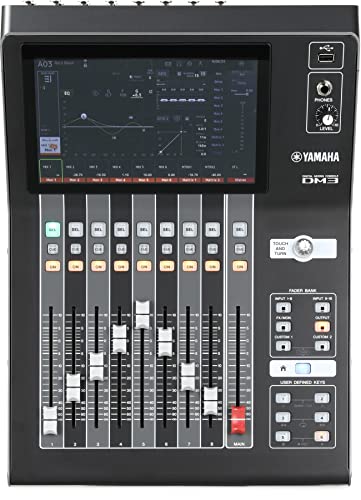
Yamaha DM3
Bands, small venues and project studios that want a compact 96 kHz digital console that doubles as an 18x18 USB recording interface.
Read the Yamaha DM3 review →Questions Buyers Ask
Behringer U-PHORIA UMC404HD USB Audio Interface
See the current listing, price and included accessories.
About This Review
Mandrillis Team
The Mandrillis editorial team researches and compares audio and music gear using manufacturer documentation, verified specs and real buyer feedback, so you can make a confident purchase without wading through marketing claims.
Read our full research methodology.