Studio Gear Review
Behringer UMC1820 Review: 18 Inputs and Midas Preamps for Less
The Behringer UMC1820 is an 18x20 USB audio and MIDI interface built around eight Midas-designed mic preamplifiers, 24-bit, 96 kHz resolution and ADAT expansion. It is compatible with major recording software, though its monitoring section, bundled extras and included accessories are not described in the listing.
Our Verdict
Research Score 82/100The Behringer UMC1820 stands out in the budget tier for publishing real, specific numbers: eighteen inputs, twenty outputs, eight Midas-designed mic preamplifiers with phantom power, and 24-bit, 96 kHz resolution over USB 2.0. ADAT I/O is also available for further expansion beyond the built-in channel count. Named compatibility with Pro Tools, Ableton Live and Cubase adds confidence that the interface will integrate into an existing studio workflow without surprises, even though the monitoring section, bundled software and included accessories are left undescribed. For a project studio or small band that needs many simultaneous inputs and documented preamp design without paying for a flagship interface, this is a strong candidate, provided the missing details are acceptable.
Editorial research score based on published specifications and documented features, not a customer rating or lab test.

Behringer
Behringer UMC1820 USB Audio Interface
Best for: Home and project studios that need many simultaneous inputs with named Midas preamps and room to expand through ADAT.
Skip it if: You need only two channels, a documented monitoring section, or bundled recording software out of the box.
Check Price on AmazonWe may earn a commission at no extra cost to you.
Listing verified: November 2026
Who Should Buy It
Buy it if
- Band and ensemble recording setups needing many mic inputs at once
- Studios planning to expand channel count later through ADAT
- Buyers who want named Midas preamp design rather than an unbranded gain stage
- Users of Pro Tools, Ableton Live or Cubase wanting confirmed compatibility
Skip it if
- You only need one or two input channels
- You need a documented headphone and monitoring section
- You want bundled recording software included
Key Specifications
| Type | 18x20 USB 2.0 audio/MIDI interface with ADAT I/O |
| Inputs | 18 inputs total, including 8 Midas-designed mic preamp channels with phantom power |
| Outputs | 20 outputs total over USB; exact analog output connector count not published in listing |
| Preamps | 8 Midas-designed mic preamplifiers with plus 48V phantom power |
| Resolution | 24-Bit/96 kHz |
| Phantom power | Plus 48V, on the 8 Midas mic preamp channels |
| Connection | USB 2.0, plus ADAT optical I/O for expansion |
| Monitoring | Not published in listing |
| Bundled software | Not published in listing |
| Included accessories | Not published in listing |
Overview
The Behringer UMC1820 is a multichannel USB audio and MIDI interface built to handle eighteen inputs and twenty outputs at once, with ADAT optical I/O available for expanding beyond that. It sits well above a basic two-channel interface in scope, aiming at home studios, project studios and small bands that need to track several sources simultaneously.
Behringer licenses Midas mic preamp designs for this interface, which is a meaningful detail since Midas is known for professional console preamps rather than budget hardware. Pairing that preamp pedigree with a published 24-bit, 96 kHz resolution gives the UMC1820 a stronger specification sheet than many interfaces at a similar price.
This review is written entirely from the published feature bullets, without any personal use of the hardware behind it. Several practical details, including the monitoring section and any bundled software, are not stated, and those gaps are flagged in the relevant sections below.
Preamps and Sound Quality
Eight Midas-designed mic preamplifiers anchor the input section, each with plus 48V phantom power according to the listing. Midas is a respected name in live sound consoles, and licensing its preamp design for a USB interface is a specific, checkable claim rather than vague marketing language.
The listing does not provide a gain range or a noise floor figure for these preamps, so the exact headroom and self-noise cannot be verified independently of Behringer's own branding. Still, naming a specific third-party preamp design is a stronger signal than an unbranded gain stage with no attribution at all.
Resolution is stated plainly as 24-bit, 96 kHz, which is a professional-grade figure for tracking, even if it falls short of the 192 kHz ceiling seen on some smaller two-channel interfaces. For multichannel recording, 96 kHz is a practical and common choice that balances file size against fidelity, especially once eighteen channels are being captured and stored at once across a full session.
Inputs, Outputs and Routing
The interface streams eighteen inputs and twenty outputs over USB 2.0, a genuinely large channel count for a device in this price range. Eight of those inputs carry the Midas mic preamps with phantom power, and the remainder likely include line inputs and the channels added through ADAT expansion.
ADAT optical I/O lets the interface accept additional channels from an external preamp unit or expand its own input count further, which is valuable for a studio that expects to grow. The listing does not specify how many additional channels ADAT adds in this configuration, though ADAT typically carries eight more channels per optical connection.
Specific analog output jack types, such as whether the main outputs are balanced XLR or quarter-inch, are not described in the feature bullets. For a studio planning monitor speaker connections, confirming the exact output connectors ahead of purchase is worth the extra step.
Features, Monitoring and Software
Named software compatibility is a genuine feature here: the listing specifically confirms Pro Tools, Ableton Live and Steinberg Cubase, among other unnamed recording programs. That kind of explicit compatibility listing reduces the risk of driver conflicts with a studio's existing software setup.
Monitoring controls, including any headphone output, direct monitor switch or talkback feature, are not described in the feature bullets. Given the interface's size and channel count, some monitoring section is likely present, but its exact capability is unconfirmed from the listing alone.
No bundled software is mentioned, which is a notable gap for an interface at this scale, since many competitors include at least a lightweight DAW. Buyers should plan to supply their own recording software rather than expect one included in the box.
- 8 Midas-designed mic preamplifiers with phantom power
- 18 inputs and 20 outputs over USB 2.0
- ADAT optical I/O for channel expansion
- 24-Bit/96 kHz resolution
- Confirmed compatibility with Pro Tools, Ableton Live and Cubase
Build, Design and Controls
Dimensions, weight and chassis material are not published in the listing, so the physical footprint of a device handling eighteen inputs cannot be confirmed from the feature bullets. An interface at this channel count is typically rack-mountable, though that is not stated directly here.
Control layout for the eight preamp channels, including individual gain knobs and phantom power switching, is implied by the channel count but not described in detail. Buyers who need to know whether phantom power is switched globally or per channel should check additional documentation.
No metering detail, such as per-channel LED level indicators, is mentioned in the listing. For a multichannel interface used to track a full band, visual level feedback on each channel is a useful feature that remains unconfirmed here, and engineers relying on software metering alone should plan their session windows accordingly.
Connectivity, Drivers and Latency
USB 2.0 is the primary computer connection, supplemented by ADAT optical I/O for channel expansion and MIDI support built into the interface. The listing confirms compatibility with Mac OS X and Windows XP or later, which covers a broad span of computers though it also reflects the age of the listing.
Latency figures are not published, so real-time monitoring performance cannot be compared numerically against competing multichannel interfaces. Given the named software compatibility with Pro Tools, Ableton Live and Cubase, the driver is presumably mature enough for professional tracking sessions.
Because the interface streams all eighteen inputs and twenty outputs simultaneously, it should support true multitrack recording rather than only a stereo mix, which is a meaningful advantage over smaller mixers with an incidental USB output. This multitrack capability is implied by the stated channel counts even though the listing does not use the word multitrack directly.
Setup and Daily Use
Setup for a studio this size typically involves installing Behringer's driver, connecting the interface over USB, and patching microphones into the eight Midas preamp channels with phantom power enabled where condenser mics are used. ADAT expansion would be configured separately if additional channels are needed.
Daily use for a band recording session benefits directly from the eight preamp channels, letting drums, guitars and vocals be tracked simultaneously without bouncing sources through a smaller interface. The named software compatibility should smooth integration into an existing Pro Tools, Ableton Live or Cubase session.
For a solo producer who rarely needs more than a couple of channels, this level of input capacity is more than necessary, and the unconfirmed monitoring section may matter less day to day. For a project studio tracking full bands regularly, the channel count and Midas preamps should see consistent use.
Who Should Buy It
This interface suits home and project studios that regularly record bands or ensembles and need many simultaneous inputs with a named, credible preamp design. Studios planning to grow their channel count later will also benefit from the ADAT expansion path.
It also fits users already working in Pro Tools, Ableton Live or Cubase who want confirmed compatibility rather than guessing. That certainty matters most when a studio cannot afford downtime troubleshooting a driver conflict mid-session.
It is a poor fit for a solo podcaster or singer-songwriter who only ever needs one or two channels, since much of the interface's channel count and ADAT capability would go unused. Those buyers should look at a smaller, less expensive two-channel interface instead.
Alternatives Worth Considering
The Yamaha Steinberg UR22MKII serves the opposite end of the market, offering two documented Class-A preamps and a compact footprint for buyers who do not need multichannel capacity. Choosing between them is really a question of how many sources need to be tracked at once.
The Behringer XENYX X1204USB offers a middle ground, pairing four named XENYX preamps and onboard mixing with a built-in USB interface. It suits a buyer who wants tactile mixer controls rather than a pure multichannel recording interface.
For buyers specifically drawn to the UMC1820's Midas preamps and 18x20 channel count, it is worth confirming any listing details before purchase. UMC1820 listings can vary in how much information they disclose, so cross-checking the current page against this review is a sensible final step.
Verdict
The Behringer UMC1820 stands out in the budget tier for publishing real, specific numbers: eighteen inputs, twenty outputs, eight Midas-designed mic preamplifiers with phantom power, and 24-bit, 96 kHz resolution over USB 2.0. ADAT I/O is also available for further expansion beyond that built-in count.
Named compatibility with Pro Tools, Ableton Live and Cubase adds confidence that the interface will integrate into an existing studio workflow without surprises. The monitoring section, bundled software and included accessories, however, are left undescribed in the listing.
For a project studio or small band that needs many simultaneous inputs and documented preamp design without paying for a flagship interface, this is a strong candidate. The missing usability details should simply be weighed before the purchase is made.
Strengths and Limitations
Strengths
- 8 Midas-designed mic preamplifiers with phantom power
- 18 inputs and 20 outputs streamed over USB 2.0
- ADAT I/O for expanding channel count further
- 24-Bit/96 kHz resolution clearly published
- Named compatibility with Pro Tools, Ableton Live and Cubase
Limitations
- Specific analog output connector types not published
- No monitoring section or bundled software described
- No included accessories listed
- Requires Mac OS X or Windows XP or newer, dating the listing somewhat
How We Scored It
Scores reflect published specifications, documented features and value against the alternatives below. They are editorial research scores, not laboratory measurements.
Alternatives to Consider

Pioneer DJ XDJ-RX3
DJs who want club-standard standalone playback from USB with a large touchscreen and a familiar two-channel layout.
Read the Pioneer DJ XDJ-RX3 review →
Yamaha DM3-D 22
Small venues, houses of worship and production companies that want a compact 96 kHz digital console with Dante networking for stage boxes and multitrack recording.
Read the Yamaha DM3-D 22 review →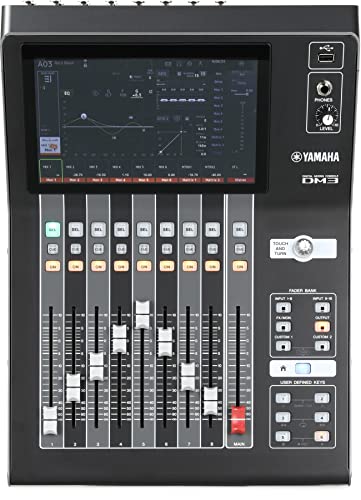
Yamaha DM3
Bands, small venues and project studios that want a compact 96 kHz digital console that doubles as an 18x18 USB recording interface.
Read the Yamaha DM3 review →Questions Buyers Ask
Behringer UMC1820 USB Audio Interface
See the current listing, price and included accessories.
About This Review
Mandrillis Team
The Mandrillis editorial team researches and compares audio and music gear using manufacturer documentation, verified specs and real buyer feedback, so you can make a confident purchase without wading through marketing claims.
Read our full research methodology.