Studio Gear Review
Behringer Xenyx X1003B Review: Battery-Powered Analog Mixer
The Behringer Xenyx X1003B combines a 10-channel analog mixer with 5 phantom-powered mic preamps and optional battery operation. This research review covers the confirmed phantom power, the portable power option, and the USB connection the listing simply does not offer.
Our Verdict
Research Score 55/100The Behringer Xenyx X1003B stands out in this batch for one specific reason: it confirms phantom power on five Xenyx mic preamps while also offering optional battery operation, a combination aimed squarely at portable setups away from a wall outlet. Ten total channels and a 3-band EQ round out a straightforward analog feature set with no USB or digital connection at all, so recording to a computer is simply not part of this unit's job. Preamp gain, output connector type and chassis details are not published, and whether phantom power holds up fully on battery alone is left unspecified. For buskers, acoustic acts and outdoor events that need real phantom power without a power cord, this mixer is a sensible, if basic, choice.
Editorial research score based on published specifications and documented features, not a customer rating or lab test.

Behringer
Behringer Xenyx X1003B Battery-Capable Mixer
Best for: Portable live sound setups, acoustic performers and small venues that need five phantom-powered mic inputs with the option to run away from an electrical outlet.
Skip it if: You need to record a mix or individual channels directly to a computer, since the listing states no USB or digital connection on this mixer.
Check Price on AmazonWe may earn a commission at no extra cost to you.
Listing verified: November 2026
Who Should Buy It
Buy it if
- Buskers and acoustic duos who want battery-powered portability with real phantom power
- Small venues or outdoor events without reliable access to a power outlet
- Bands that need five microphone inputs on a compact analog frame
- Buyers who want a simple analog mixer with no software or drivers to manage
Skip it if
- You need to record multitrack audio to a computer from this mixer
- You require confirmed phantom power performance specifically while on battery power
- You want a stated output connector type before ordering
Key Specifications
| Type | 10-channel analog mixer with optional battery operation; no USB or digital connection is stated in the listing |
| Inputs | 5 XLR mic inputs tied to 5 Xenyx mic preamps, plus additional line-level channels for 10 total channels |
| Outputs | Not published in listing |
| Preamps | 5 Xenyx mic preamps with phantom power (gain figure not published in listing) |
| Resolution | Not applicable, since no digital conversion or USB connection is stated in the listing |
| Phantom power | Yes, stated directly in the listing |
| Connection | Not published in listing beyond the stated optional battery operation; no USB or other digital connection is described |
| Monitoring | Not published in listing |
| Bundled software | Not applicable, since no USB connection is stated |
| Included accessories | Not published in listing |
Overview
The Behringer Xenyx X1003B is a 10-channel analog mixer built around five Xenyx mic preamps with phantom power, and its defining feature is optional battery operation, letting it run without a wall outlet. That combination of confirmed phantom power and portable power is relatively uncommon in budget mixers, where one or the other is often sacrificed.
The listing title calls this a Premium Analog Mixer, a marketing term rather than a measured specification, but the underlying feature list is straightforward: five XLR mic inputs, a 3-band EQ and ten channels total. There is no mention of USB, Bluetooth or any digital connection anywhere in the listing, so this is a purely analog unit in its published form.
This review is built entirely from the product listing and general knowledge of how Xenyx-series mixers are typically designed, without any direct use of the hardware. The sections below note clearly where the listing stays silent, particularly around output connectors, preamp gain and how battery power interacts with phantom power. Buyers weighing this unit against the two USB-equipped Xenyx mixers elsewhere in this batch should treat the choice as power source versus computer connectivity, since this model clearly prioritizes the former.
Preamps and Sound Quality
Five Xenyx mic preamps with phantom power form the core of this mixer, giving a band or small ensemble room for up to five simultaneous microphones. Phantom power is stated plainly in the listing, which removes the guesswork present on several other mixers in this batch that omit that detail despite having mic preamps.
No gain range in decibels or noise floor figure is published, so sound quality claims rest on the general reputation of the Xenyx preamp line rather than a measured number specific to this unit. Buyers familiar with other Behringer Xenyx mixers should expect a broadly similar character here, though that is a general expectation rather than a confirmed specification.
The one genuine open question is how phantom power behaves when the mixer is running on battery rather than external power. Condenser microphones typically need a stable voltage to perform correctly, and the listing does not clarify whether battery operation delivers full phantom voltage or a reduced level, which matters for anyone planning to run condenser mics away from an outlet.
Inputs, Outputs and Routing
Five XLR mic inputs tied to the five preamps form the input core, with the remaining channels in the ten-channel total presumably handling line-level sources such as keyboards or playback devices, though the listing does not break down the line channel count explicitly.
Output routing is the least documented area of this listing. No main output connector type, auxiliary send count or control room output is stated, leaving buyers to plan around a basic stereo output assumption rather than a confirmed routing diagram.
For a mixer this size, five mic inputs plus a handful of line channels suggests a target use case of a small band or a presenter with a few line-level backing sources, rather than a large ensemble requiring extensive subgrouping or multiple aux sends. A duo or trio playing an acoustic set, for example, could cover vocals and instruments across the five XLR channels while still having spare line channels free for a backing track or a keyboard, without running out of inputs partway through a set.
Features, Monitoring and Software
Optional battery operation is the headline feature on the Xenyx X1003B, and it is a genuinely useful one for buskers, outdoor performers and any setup where running a power cable is impractical. Pairing that portability with confirmed phantom power, rather than dropping phantom power to save battery life, is the mixer's strongest selling point.
The 3-band EQ gives standard tone-shaping control, though the listing does not specify whether the mid band is fixed or semi-parametric, so buyers should not assume sweepable midrange control without confirming it first.
No monitoring section, headphone output or software of any kind is described, and since there is no USB connection, no driver or companion app applies here. This is a straightforward, knobs-and-faders mixer in its published form, with every adjustment made directly at the panel rather than through a screen or an app.
- 5 Xenyx mic preamps with phantom power
- Optional battery operation
- 3-band EQ
- 10 total channels
Build, Design and Controls
Chassis material, weight and physical dimensions are not published in the listing, which is a real gap for a mixer marketed partly on portability, since weight directly affects how practical it is to carry to a busking spot or an outdoor gig.
Control layout can be inferred in broad strokes: five full mic channel strips with gain, EQ and level control, plus the remaining line channels, feeding a master section. The listing does not itemize knob count, fader length or metering.
Battery compartment design and battery type are also left unstated, which matters for anyone budgeting for replacement batteries or planning how long a single set will last during a performance. A performer relying on battery power for a full evening of sets would be wise to carry a spare set as a precaution, given that the listing offers no runtime estimate to plan around.
Connectivity, Drivers and Latency
No USB, Bluetooth or other digital connection appears anywhere in the listing, so the Behringer Xenyx X1003B should be treated as a fully analog mixer with no computer connectivity in its published form. There are no drivers to install and no latency to consider through the mixer itself.
Recording from this unit would require routing its output into a separate recorder or audio interface, since the mixer provides no digital path of its own. Streaming or podcasting setups that expect a direct USB feed to a computer are not supported based on what the listing states.
For live sound at a busking spot or a small outdoor event, this lack of digital connectivity is simply irrelevant, and the mixer can be judged purely on its analog mic handling and the convenience of battery power instead. A performer who already owns a separate handheld recorder can still capture a reference recording by patching that recorder into whatever output the mixer provides, even without a direct computer connection built in.
Setup and Daily Use
Setup involves connecting microphones to the five XLR inputs, setting gain and EQ per channel, and routing the output to a PA system or powered speakers. If running on battery, the operator would load whatever battery type the mixer requires before the performance begins.
In daily use, the main appeal is not having to find a power outlet, which matters more for a solo performer or small group at an outdoor market or a street corner than for a venue with fixed power already available. The five mic preamps with phantom power should handle a mix of dynamic and condenser microphones, assuming battery-powered phantom voltage holds up as expected.
Breaking down and packing up should also be quick given the mixer's apparent focus on portability, though without published weight or dimensions, exactly how light a load it makes for a solo performer carrying gear on foot remains an open question rather than a settled fact from the listing.
Who Should Buy It
The Behringer Xenyx X1003B fits performers and small crews who specifically need portable power alongside real phantom power, such as buskers, acoustic duos playing outdoor venues, or small events without reliable electrical access nearby.
It is a weaker match for anyone who needs to record to a computer, since no USB or digital connection is described, and also for larger bands needing more than five simultaneous microphones on one frame. A home studio owner looking for an all-in-one recording solution should also look elsewhere, since this mixer's value is tied specifically to portable, outlet-free analog mixing rather than any kind of digital capture.
Alternatives Worth Considering
The Behringer Xenyx 1202SFX and Xenyx 1002SFX, both covered elsewhere in this batch, trade battery operation for a built-in USB connection aimed at streaming, which suits buyers who need a computer feed more than portable power away from an outlet.
For buyers who specifically need multitrack USB recording in addition to mic inputs, a dedicated audio interface like the Behringer U-PHORIA UMC404HD, also in this batch, records each channel separately rather than combining everything into one analog mix with no digital output at all.
Anyone needing more than five mic inputs while keeping a similar analog, no-computer design should look at larger Xenyx mixers in Behringer's range, trading battery operation for a bigger channel count.
Verdict
The Behringer Xenyx X1003B combines confirmed phantom power on five Xenyx mic preamps with optional battery operation, a specific and useful pairing for performers who need real condenser microphone support away from a power outlet.
No USB connection, unpublished output details and an unclear phantom power performance on battery alone hold the score to the lower end of the budget range, appropriate for a purely analog, portability-focused mixer rather than a computer recording tool.
Strengths and Limitations
Strengths
- 5 Xenyx mic preamps with phantom power confirmed in the listing
- Optional battery operation for use away from power outlets
- 3-band EQ for tone shaping on the mixer
- 10-channel frame covers a reasonably sized small-group mix
- Simple analog signal path with no drivers or software required
Limitations
- No USB or digital connection is stated, so recording to a computer needs separate hardware
- Whether full phantom power remains available while running on battery is not specified
- Preamp gain figure, output connector type and chassis details are not published
- No stated headphone output or monitoring section
How We Scored It
Scores reflect published specifications, documented features and value against the alternatives below. They are editorial research scores, not laboratory measurements.
Alternatives to Consider

Pioneer DJ XDJ-RX3
DJs who want club-standard standalone playback from USB with a large touchscreen and a familiar two-channel layout.
Read the Pioneer DJ XDJ-RX3 review →
Yamaha DM3-D 22
Small venues, houses of worship and production companies that want a compact 96 kHz digital console with Dante networking for stage boxes and multitrack recording.
Read the Yamaha DM3-D 22 review →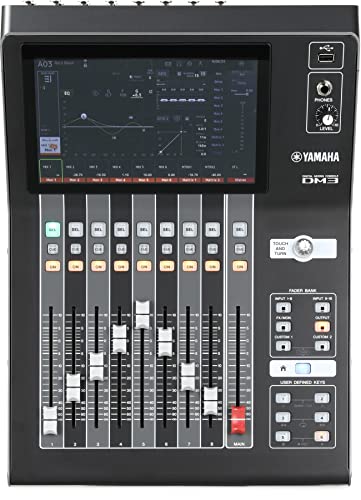
Yamaha DM3
Bands, small venues and project studios that want a compact 96 kHz digital console that doubles as an 18x18 USB recording interface.
Read the Yamaha DM3 review →Questions Buyers Ask
Behringer Xenyx X1003B Battery-Capable Mixer
See the current listing, price and included accessories.
About This Review
Mandrillis Team
The Mandrillis editorial team researches and compares audio and music gear using manufacturer documentation, verified specs and real buyer feedback, so you can make a confident purchase without wading through marketing claims.
Read our full research methodology.