Studio Gear Review
Mackie 802VLZ4 8-Channel Ultra Review: Onyx Preamps, No USB
The Mackie 802VLZ4 8-Channel Ultra is a compact analog mixer with 3 boutique-quality Onyx mic preamps, improved RF rejection and phantom power, but the listing describes no USB connection. It suits broadcast and small live setups more than computer-based recording, since the output section is largely unpublished.
Our Verdict
Research Score 63/100The Mackie 802VLZ4 8-Channel Ultra leans on a real strength, Mackie's Onyx mic preamp reputation, backing it with phantom power and improved RF rejection aimed squarely at broadcast and streaming use. Eight high-headroom line inputs keep hot signals from distorting, which matters for live sound and spoken-word applications where levels can swing unpredictably. The listing describes no USB connection at all, so this is a pure analog mixer rather than a recording interface, and the output jacks, monitoring section and included accessories are left unstated. For a small venue, broadcaster or streamer who wants dependable Onyx preamps and plans to feed a separate recorder or interface, it is a sound choice, though anyone wanting a single-box computer link should look elsewhere.
Editorial research score based on published specifications and documented features, not a customer rating or lab test.

Mackie
Mackie 802VLZ4 8-Channel Compact Mixer
Best for: Broadcast, streaming and small live setups that want Mackie's Onyx preamp reputation in a simple analog-only mixer.
Skip it if: You need a USB connection for computer recording or want effects built into the mixer itself.
Check Price on AmazonWe may earn a commission at no extra cost to you.
Listing verified: November 2026
Who Should Buy It
Buy it if
- Streamers and broadcasters who value the improved RF rejection
- Small venues that want a compact 8-channel analog desk
- Buyers prioritizing Onyx preamp reputation over a computer link
- Users feeding a separate interface or recorder from the mixer's output
Skip it if
- You need USB recording built into the mixer
- You need confirmed outputs before buying cables
- You want onboard effects such as reverb
Key Specifications
| Type | 8-channel standalone analog mixer, no USB connection described in listing |
| Inputs | 8 high-headroom line inputs; exact split between mic and line channels not published in listing |
| Outputs | Not published in listing |
| Preamps | 3 boutique-quality Onyx mic preamps |
| Resolution | Not applicable; no USB connection is described in the listing |
| Phantom power | Yes, for condenser microphones |
| Connection | Analog only; no USB or digital connection described in listing |
| Monitoring | Not published in listing |
| Bundled software | Not applicable; no USB connection is described in the listing |
| Included accessories | Not published in listing |
Overview
The Mackie 802VLZ4 8-Channel Ultra is a compact analog mixer built around Mackie's long-running high-headroom, low-noise design philosophy. The listing describes no USB connection anywhere in the feature bullets, which places this firmly as a standalone mixing desk rather than a combined mixer and interface.
Mackie has built a reputation on its Onyx preamp line across several mixer generations, and this model carries three of them alongside improved RF rejection explicitly aimed at broadcast applications. That combination suggests a mixer designed with streamers and broadcasters in mind as much as traditional live sound engineers.
This review relies entirely on the published feature bullets, with no personal use of the hardware behind it. Several details a buyer would want, including the output section, monitoring controls and included accessories, are not stated, and those gaps are flagged throughout the review below.
Preamps and Sound Quality
Three boutique-quality Onyx mic preamps are the headline feature, and Onyx is a name Mackie has used across several mixer lines with a reputation for clean, transparent gain rather than a colored or vintage-style sound. Having a named, recognizable preamp design in a compact eight-channel mixer at this price is a genuine point in its favor.
The listing does not state how many of the eight total channels carry the Onyx preamp versus a simpler line-level gain stage, only confirming three Onyx preamps exist somewhere in the channel count. Buyers who need more than three microphone inputs with that specific preamp quality should confirm the exact channel layout before purchase.
Eight high-headroom line inputs round out the design, which Mackie frames as resistant to distortion when a hot signal is pushed into the mixer. Combined with the Onyx preamps and phantom power for condensers, the published sound quality claims are specific enough to be meaningfully better than a generic unbranded budget mixer.
Inputs, Outputs and Routing
Eight high-headroom line inputs are confirmed in the listing, with three of them specifically carrying Onyx mic preamps and phantom power for condenser microphones. The remaining channels most likely accept line-level sources only, following a common layout for compact mixers of this channel count.
The output section is not described at all in the feature bullets. A compact eight-channel mixer typically includes a stereo main output and a headphone jack at minimum, but neither is confirmed here, so buyers should check the manual before assuming a specific connector type.
Routing beyond basic channel-to-main mixing is not mentioned, with no aux sends, no effects loop and no group buses described. That keeps the signal path simple for live sound and broadcast use, where a straightforward mix is usually preferred over a complex routing matrix.
Features, Monitoring and Software
Improved RF rejection is the standout feature beyond the preamps, and Mackie specifically frames it as perfect for broadcast applications, which suggests engineering work to reduce interference from nearby wireless microphones, lighting or broadcast equipment. That is a relatively unusual feature to call out explicitly in a compact mixer's listing.
Phantom power for condenser microphones is confirmed, letting the Onyx preamp channels run studio-style condensers directly rather than being limited to dynamic microphones only. No monitoring section, headphone output or metering detail is described in the feature bullets.
No onboard effects, no USB connection and no bundled software are present, since the listing never raises any of those topics. This is a mixer built around clean gain staging and broadcast-friendly engineering rather than a feature-dense all-in-one box.
- 3 boutique-quality Onyx mic preamps
- 8 high-headroom line inputs
- Improved RF rejection for broadcast use
- Phantom power for condenser microphones
- No USB, effects or bundled software described
Build, Design and Controls
Mackie describes the design as ultra compact, and the listing emphasizes its high-headroom, low-noise signal path as the core engineering focus. Dimensions, weight and chassis material are not published, so the exact physical footprint cannot be confirmed from the feature bullets alone.
Control layout is not detailed beyond the presence of eight channels and phantom power switching, so whether channel levels use knobs or faders is not stated. Compact mixers in this class commonly use rotary knobs rather than sliders to keep the footprint small.
No LED metering or visual level feedback is mentioned in the listing, which is a notable gap for a mixer marketed partly at broadcast use, where engineers often want a visual check on levels. Buyers who need a built-in meter should confirm this detail separately before relying on it, since running levels blind is riskier on a board with no stated output section either.
Connectivity, Drivers and Latency
No USB connection, digital output or computer link of any kind is described anywhere in the listing. This mixer is entirely analog, meaning every signal path runs without conversion delay, but it also means there is no built-in way to record a mix directly to a computer.
For anyone who wants to capture audio from this mixer digitally, a separate audio interface or standalone recorder is required, taking a feed from whatever output jacks the mixer provides. That adds a second piece of hardware to the signal chain compared with a mixer that has USB built in.
Because there are no drivers or USB resolution figures to discuss, latency in the traditional computer-recording sense does not apply here. Anyone comparing this model against a USB-equipped mixer such as the Behringer XENYX X1204USB should factor in the cost of that missing interface separately.
Setup and Daily Use
Setup is straightforward: connect microphones to the Onyx preamp channels, enable phantom power for condensers, patch line sources into the remaining inputs, and bring up the mix on whatever output jacks the mixer provides. There is no software, driver or registration step involved anywhere in the process.
Daily use for broadcast or streaming should benefit directly from the improved RF rejection, reducing interference issues that can plague a studio running wireless microphones or nearby transmission equipment. The Onyx preamps should handle typical voice and instrument sources cleanly given Mackie's stated design focus on low noise.
For a small live venue, the eight high-headroom inputs allow a modest band or speaker setup to run without channels clipping under hot signal levels. Anyone wanting to record the show digitally will need to add a separate interface or recorder, since this mixer offers no USB output on its own, and that extra box should be budgeted for alongside the mixer itself.
Who Should Buy It
This mixer suits broadcasters and streamers who specifically want the improved RF rejection and Onyx preamp quality in a compact analog desk. Small venues running modest live sound setups will also find the eight channels and high headroom useful.
It is a reasonable choice for anyone who already owns a separate recording interface or standalone recorder and just needs a clean analog mixer to feed it. The Onyx preamps add real value upstream of that device, improving the signal before it ever reaches the recorder.
It is the wrong mixer for anyone who wants USB recording built into the same box, onboard effects, or a documented output and monitoring section, since none of those are confirmed in the listing. Those buyers should look at a mixer with a built-in USB interface instead.
Alternatives Worth Considering
The Yamaha MG10 is the closest direct comparison, another standalone analog mixer without USB. It trades Onyx preamps for Yamaha's discrete class-A D-PRE design and adds one-knob compressors that this Mackie model does not mention.
For buyers who specifically want a computer link built in, the Behringer XENYX X1204USB adds a USB audio interface, bundled software and onboard compression around four named preamps. That comes at the cost of the RF rejection focus this Mackie model offers.
Those who need far more channels for a full band or multichannel broadcast setup should look at the Behringer UMC1820 instead. It trades this mixer's simple analog layout for eighteen inputs and Midas-designed preamps streamed digitally over USB.
Verdict
The Mackie 802VLZ4 8-Channel Ultra leans on a real strength, Mackie's Onyx mic preamp reputation, backing it with phantom power and improved RF rejection aimed squarely at broadcast and streaming use. Eight high-headroom line inputs keep hot signals from distorting under pressure.
The listing describes no USB connection at all, so this is a pure analog mixer rather than a recording interface, and the output jacks, monitoring section and included accessories are left unstated. Those gaps keep the overall score below what a more fully documented mixer could reach.
For a small venue, broadcaster or streamer who wants dependable Onyx preamps and plans to feed a separate recorder or interface, it is a sound choice. Anyone wanting a single-box computer link should look at a USB-equipped mixer instead.
Strengths and Limitations
Strengths
- 3 boutique-quality Onyx mic preamps
- 8 high-headroom line inputs for low distortion at hot levels
- Improved RF rejection aimed at broadcast use
- Phantom power for condenser microphones
- Mackie's established high-headroom, low-noise design philosophy
Limitations
- No USB connection, so no computer recording in the box
- Outputs, monitoring and accessories not published in listing
- Only 3 of 8 channels confirmed to carry a named preamp
- No onboard effects mentioned
How We Scored It
Scores reflect published specifications, documented features and value against the alternatives below. They are editorial research scores, not laboratory measurements.
Alternatives to Consider

Pioneer DJ XDJ-RX3
DJs who want club-standard standalone playback from USB with a large touchscreen and a familiar two-channel layout.
Read the Pioneer DJ XDJ-RX3 review →
Yamaha DM3-D 22
Small venues, houses of worship and production companies that want a compact 96 kHz digital console with Dante networking for stage boxes and multitrack recording.
Read the Yamaha DM3-D 22 review →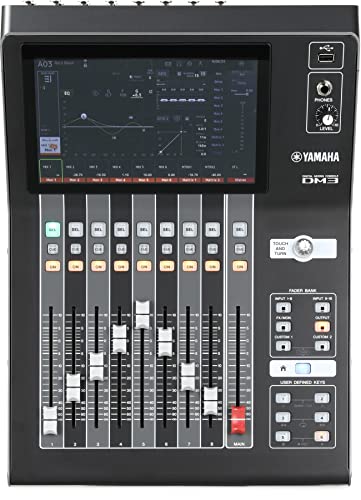
Yamaha DM3
Bands, small venues and project studios that want a compact 96 kHz digital console that doubles as an 18x18 USB recording interface.
Read the Yamaha DM3 review →Questions Buyers Ask
Mackie 802VLZ4 8-Channel Compact Mixer
See the current listing, price and included accessories.
About This Review
Mandrillis Team
The Mandrillis editorial team researches and compares audio and music gear using manufacturer documentation, verified specs and real buyer feedback, so you can make a confident purchase without wading through marketing claims.
Read our full research methodology.