Studio Gear Review
Mackie Mix12FX 12-Channel Review: Analog Mixer
The Mackie Mix12FX 12-Channel is a 12-input analog mixer with phantom-powered preamps, a 3-band EQ and 12 built-in effects, connecting only through stereo RCA jacks. This research review explains why that makes it unsuitable for direct multitrack computer recording and what the listing leaves unpublished.
Our Verdict
Research Score 53/100The Mackie Mix12FX 12-Channel delivers a useful channel count for a compact mixer: four phantom-powered mic/line inputs plus four stereo line inputs, a 3-band EQ with a 75Hz low cut filter, and twelve built-in effects covering reverbs, choruses and delays. Its connectivity, however, is limited to dedicated stereo RCA inputs and outputs, with no USB or other digital computer connection stated anywhere in the listing. That makes it a capable analog mixer for live sound and rehearsal, not a multitrack recording interface. Preamp gain and build details are also unpublished. For a band or small venue needing twelve organized analog channels with onboard effects, this mixer is reasonable, though its score is held back by the missing digital connectivity most buyers now expect.
Editorial research score based on published specifications and documented features, not a customer rating or lab test.

Mackie
Mackie Mix12FX 12-Channel Compact Mixer
Best for: Small bands, rehearsal rooms and basic live sound setups that need twelve analog channels, built-in effects and simple stereo RCA recording without a computer involved.
Skip it if: You need multitrack USB recording to a computer, since the listing states no such connection on this mixer.
Check Price on AmazonWe may earn a commission at no extra cost to you.
Listing verified: November 2026
Who Should Buy It
Buy it if
- Small bands running four microphones and several keyboards or playback sources
- Rehearsal spaces that want built-in effects without outboard gear
- Buyers who want simple stereo RCA recording or playback without a computer
- Anyone who already owns a separate USB interface and just needs analog mixing in front of it
Skip it if
- You need to record more than a basic stereo mix to a computer
- You require confirmed preamp gain figures before ordering
- You want a mixer with a built-in USB audio interface
Key Specifications
| Type | 12-channel analog mixer with onboard effects; no USB or computer connection is stated in the listing |
| Inputs | 4 mic/line inputs with phantom power, plus 4 stereo quarter-inch line inputs, for 12 total input channels |
| Outputs | Dedicated stereo RCA outputs for playback or recording, alongside stereo RCA inputs |
| Preamps | 4 mic/line preamps described as studio-level quality, with phantom power (gain in decibels not published in listing) |
| Resolution | Not applicable, since no digital conversion or USB connection is stated in the listing |
| Phantom power | Yes, available on the 4 mic/line inputs for studio condenser microphones |
| Connection | Not published in listing beyond stereo RCA input and output; no USB or other computer connection is stated |
| Monitoring | Not published in listing beyond basic level and overload indication |
| Bundled software | Not published in listing |
| Included accessories | Not published in listing |
Overview
The Mackie Mix12FX 12-Channel is a compact analog mixer built around twelve total input channels: four mic/line inputs with phantom power and four stereo quarter-inch line inputs. The listing describes a design proven for high headroom and low noise, aimed squarely at live sound and rehearsal use rather than studio multitrack recording.
A 3-band EQ with a dedicated 75Hz low cut filter gives tone-shaping control on the mic/line channels, and twelve built-in effects, covering reverbs, choruses and delays, are included onboard without needing separate outboard effects units plugged in anywhere.
Connectivity is the clearest limitation stated in the listing. Dedicated stereo RCA inputs and outputs are provided for playback or basic recording, but no USB port, Bluetooth, or other computer connection appears anywhere in the published feature list, which matters for anyone expecting to record a full mix digitally from this unit alone. Buyers who have used a USB-equipped Mackie mixer before should not assume that capability carries over to this specific model.
Preamps and Sound Quality
Four mic/line inputs are described as offering studio-level audio quality, with phantom power available for studio condenser microphones. The listing does not publish a specific gain figure in decibels, so headroom cannot be compared numerically against named reference interfaces without further research.
The mixer is described generally as proven for high-headroom, low-noise performance, language that suggests a mature, established design rather than a brand-new untested circuit. That reputation claim is consistent with Mackie's broader history in compact mixer design, though it remains a general description rather than a measured specification in this listing.
The 3-band EQ with a sweepable low cut filter at 75Hz gives practical tone-shaping control, letting a user remove unwanted low-frequency rumble from a vocal or acoustic instrument channel before it reaches the main mix, a detail that affects perceived sound quality as much as the preamp itself. For a band rehearsing in a room with poor acoustics, that low cut filter can meaningfully clean up a muddy mix before any outboard processing is even considered.
Inputs, Outputs and Routing
Four mic/line inputs with phantom power cover microphone needs, while four additional stereo quarter-inch line inputs, operating at plus 4 or minus 10dB levels, handle keyboards, playback devices or other line-level sources, for twelve total channels across the mixer.
Each line input channel includes balance, level and overload indication per the listing, giving a user visual feedback on signal level without needing external metering. The mic/line channels similarly include level and overload indication alongside their own controls, which helps a less experienced operator avoid clipping without constantly watching a separate meter bridge.
Output routing is limited to the dedicated stereo RCA outputs, intended for playback or basic stereo recording, with matching stereo RCA inputs also provided. No balanced main outputs, auxiliary sends, or USB routing are described, so this mixer's output flexibility is narrower than its input count might suggest. A buyer planning to feed powered speakers directly should confirm what connector type those speakers expect, since RCA is a less common professional monitor connection than balanced quarter-inch or XLR.
Features, Monitoring and Software
Twelve built-in effects are listed, spanning reverbs, choruses and delays, giving a live sound engineer or rehearsing band access to common processing types without renting or buying separate outboard effects units.
No companion app, USB control, or monitoring mix beyond basic level indication is mentioned in the listing, consistent with a mixer designed for straightforward analog operation rather than software-assisted control of any kind.
The stereo RCA inputs and outputs double as a basic recording and playback feature, letting a user capture a simple stereo mix of a rehearsal or feed a backing track into the mix, though this falls well short of multitrack recording capability. A band that just wants a quick reference recording of a rehearsal, rather than individually editable tracks, would find this stereo capture adequate for that specific purpose.
- 4 phantom-powered mic/line inputs
- 4 stereo line inputs at plus 4 or minus 10dB
- 3-band EQ with 75Hz low cut filter
- 12 built-in effects
- Dedicated stereo RCA in/out
Build, Design and Controls
The listing does not state chassis material, weight or physical dimensions for the Mackie Mix12FX 12-Channel, leaving buyers without a confirmed figure for planning a desk layout or a travel case.
Control layout can be partly inferred from the channel features described: each mic/line channel likely has its own gain, EQ and level controls, and each line input its own balance and level control, though an exact knob count is not itemized in the listing.
The high-headroom, low-noise design claim suggests attention to internal build quality, though without a stated chassis material or weight, this remains a general design characteristic rather than a specification a buyer can verify before purchase. Buyers planning to transport the mixer regularly between a rehearsal space and a gig should factor in an unknown weight when deciding on a case or bag.
Connectivity, Drivers and Latency
No USB, Bluetooth, or other digital connection is stated anywhere in the listing, so the Mackie Mix12FX 12-Channel should be treated as having no computer connectivity in its published form, beyond the basic stereo RCA input and output pair.
Because there is no digital audio path described, there are no drivers to install and no latency to measure for this unit on its own. Any recording to a computer would require routing the stereo RCA output into a separate audio interface or recorder.
For live sound or rehearsal use where no computer is involved, this absence of digital connectivity is simply not relevant, and the mixer can be evaluated purely on its analog channel count and onboard effects instead. A band that never plans to record multitrack audio loses nothing from this limitation, while a home recordist hoping for a single all-in-one solution should look elsewhere in this batch.
Setup and Daily Use
Setup involves connecting microphones and line sources to the appropriate channels, setting gain and EQ per channel, and routing the stereo RCA output to powered speakers or a basic recorder if a simple mix capture is needed.
Daily use centers on the twelve input channels, the 3-band EQ with low cut filter, and the twelve onboard effects for quick tone shaping and reverb or delay during a rehearsal or small gig, all without any software or driver considerations to manage. A rehearsing band can leave the mixer's settings largely untouched between sessions, adjusting only individual channel levels as different musicians arrive or leave.
Who Should Buy It
The Mackie Mix12FX 12-Channel suits a small band or rehearsal space that needs a generous twelve-channel analog mixer with built-in effects, without any requirement to record multitrack audio directly to a computer from this unit.
It also fits a buyer who already owns a separate USB audio interface or recorder and wants an analog mixer with more channels and onboard effects positioned in front of it, feeding a simple stereo mix into that other device as needed. A worship band or community theater group mixing several microphones and backing tracks for a weekly event is a good practical example of the use case this mixer targets.
Alternatives Worth Considering
A Mackie ProFX-series mixer, such as the ProFX6v3 covered elsewhere in this batch, adds USB connectivity to a similar analog mixing concept, suited to a buyer who specifically needs to record to a computer rather than just mix live.
The Behringer EURODESK series is another analog-only option for buyers comparing larger channel counts without digital connectivity, worth a look for bands needing even more inputs than this twelve-channel unit provides, particularly those running a larger line-up with more microphones than this mixer's four mic/line channels.
A dedicated USB audio interface paired separately with this mixer is another route for a buyer who wants to keep the twelve-channel analog mixing surface while adding computer recording capability through a second device, a two-box approach that several studios use specifically to combine a larger mixing surface with dedicated multitrack conversion.
Verdict
The Mackie Mix12FX 12-Channel offers a genuinely useful twelve-channel analog mixing surface with phantom power, a 3-band EQ with low cut filter, and twelve built-in effects, aimed squarely at live sound and rehearsal use.
With no stated USB or digital computer connection, unconfirmed preamp gain, and no published build details, the honest score for this unit sits in the lower half of the range covered in this batch, appropriate for its analog-only, RCA-limited design and its focus on live mixing over computer recording.
Strengths and Limitations
Strengths
- 4 phantom-powered mic/line inputs described as studio-level quality
- 3-band EQ with a 75Hz low cut filter for tone shaping
- 12 built-in effects covering reverbs, choruses and delays
- Dedicated stereo RCA inputs and outputs for simple playback or 2-track recording
- Described as high-headroom and low-noise
Limitations
- No USB or other digital computer connection is stated in the listing
- Exact preamp gain in decibels is not published
- Chassis material, weight and dimensions are not described
- Not suited to multitrack recording directly to a computer
How We Scored It
Scores reflect published specifications, documented features and value against the alternatives below. They are editorial research scores, not laboratory measurements.
Alternatives to Consider

Pioneer DJ XDJ-RX3
DJs who want club-standard standalone playback from USB with a large touchscreen and a familiar two-channel layout.
Read the Pioneer DJ XDJ-RX3 review →
Yamaha DM3-D 22
Small venues, houses of worship and production companies that want a compact 96 kHz digital console with Dante networking for stage boxes and multitrack recording.
Read the Yamaha DM3-D 22 review →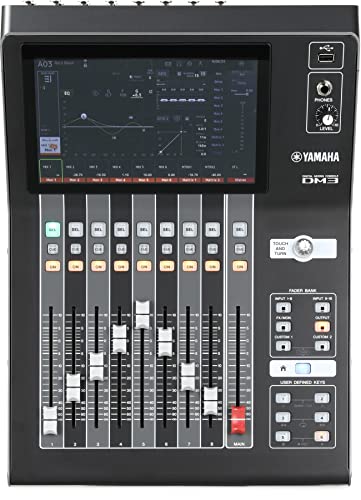
Yamaha DM3
Bands, small venues and project studios that want a compact 96 kHz digital console that doubles as an 18x18 USB recording interface.
Read the Yamaha DM3 review →Questions Buyers Ask
Mackie Mix12FX 12-Channel Compact Mixer
See the current listing, price and included accessories.
About This Review
Mandrillis Team
The Mandrillis editorial team researches and compares audio and music gear using manufacturer documentation, verified specs and real buyer feedback, so you can make a confident purchase without wading through marketing claims.
Read our full research methodology.