Studio Gear Review
PreSonus AudioBox iTwo Review: 2 Class A Preamps
The PreSonus AudioBox iTwo pairs two Class A preamps and zero-latency monitoring with bus-powered USB 2.0 and iPad compatibility, backed by a substantial bundled software package. This research review weighs that combination against the preamp gain and resolution details the listing leaves less detailed.
Our Verdict
Research Score 78/100The PreSonus AudioBox iTwo earns its keep through a well-rounded specification rather than one standout number. Two Class A preamps with phantom power, an internal analog mixer for zero-latency monitoring, a metal chassis built to travel, and bus-powered operation over USB 2.0 or an iPad cover the hardware side convincingly. On the software side, Studio One Artist, Ableton Live Lite, the Studio Magic plug-in suite and the Capture Duo iPad app together form a substantial bundle for a buyer starting from scratch. Resolution caps at 24-bit, 96kHz, solid but not class-leading here, and preamp gain is not published. For a portable setup spanning a computer and an iPad, this interface is well balanced, supporting a score comfortably in the well-known mid-range bracket.
Editorial research score based on published specifications and documented features, not a customer rating or lab test.

PreSonus
PreSonus AudioBox iTwo USB Audio Interface
Best for: Portable and personal recording setups that want two Class A preamps, zero-latency monitoring and a generous bundled software package on both a computer and an iPad.
Skip it if: You need resolution above 24-bit, 96kHz, or a confirmed preamp gain figure, before committing to a purchase.
Check Price on AmazonWe may earn a commission at no extra cost to you.
Listing verified: November 2026
Who Should Buy It
Buy it if
- Musicians who want to record on either a computer or an iPad with the same interface
- Buyers using condenser microphones that need phantom power from a genuinely Class A preamp
- Anyone who wants a full starter software bundle, spanning a DAW, a loop-based production tool and plug-ins, included at no extra cost
- Travelers who want a bus-powered, metal-chassis interface that needs no external power supply
Skip it if
- You need resolution above 96kHz for high-sample-rate recording
- You require a published preamp gain figure in decibels before ordering
- You need more than two simultaneous inputs for a band session
Key Specifications
| Type | USB 2.0 / iPad audio interface, bus-powered |
| Inputs | 2 combo mic/instrument/line inputs with Class A preamps and plus 48V phantom power |
| Outputs | 2 balanced quarter-inch TRS main outputs plus a stereo headphone output with independent level control |
| Preamps | 2 low-noise, high-headroom Class A preamps (gain in decibels not published in listing) |
| Resolution | 24-bit, up to 96kHz |
| Phantom power | Plus 48V, available on both combo inputs |
| Connection | USB 2.0; also compatible with iPad |
| Monitoring | Internal analog mixer with a direct button for zero-latency monitoring |
| Bundled software | Studio One Artist, Ableton Live Lite, the Studio Magic plug-in suite, and Capture Duo for iPad |
| Included accessories | Not published in listing beyond the unit itself; weight and dimensions also not stated |
Overview
The PreSonus AudioBox iTwo is a two-input USB 2.0 interface designed from the outset for both personal computer recording and iPad use, bus-powered so that no separate power supply is needed in either configuration. The listing frames portability as a central design goal, backed by a metal chassis described as built to travel.
Two combo mic, instrument and line inputs sit at the front, each carrying a Class A preamp described as low-noise and high-headroom, with plus 48V phantom power available for condenser microphones. That combination of flexible input type and genuine Class A circuitry is a meaningful detail for a buyer comparing preamp designs across this batch.
On the software side, the listing lists a substantial bundle: Studio One Artist, Ableton Live Lite, the Studio Magic plug-in suite, and Capture Duo, a one-tap recording app for iPad with wireless transfer into Studio One. Buyers report that this breadth of included software meaningfully lowers the cost of getting started compared with buying each title separately. The listing also states broad compatibility with almost all recording software for Mac, Windows and iPad, which should reduce friction for a buyer who already prefers a different DAW than the bundled titles.
Preamps and Sound Quality
The two Class A preamps are described in the listing as low-noise and high-headroom, qualities generally associated with a clean signal that does not distort easily on louder sources while still capturing quiet detail on softer ones. No gain figure in decibels is published, so headroom cannot be compared numerically against named reference interfaces without further research.
Phantom power at plus 48V is confirmed on both combo inputs, supporting condenser microphones commonly used for vocals and acoustic instruments. Combined with the combo input design, a user can also plug an instrument directly into either channel without needing a separate direct box.
Studio-grade converters are mentioned in the listing, supporting recording and playback at up to 24-bit, 96kHz. That resolution is solid for most home recording purposes, though it falls short of the 192kHz figures published for a couple of other interfaces in this batch, a trade-off worth weighing against this unit's broader feature set. For most songwriters and podcasters, 96kHz is well beyond what their final published format requires, so this ceiling is unlikely to be a practical limitation in everyday use.
Inputs, Outputs and Routing
Two combo inputs accept microphone, instrument or line-level sources, giving reasonable flexibility for a solo musician who might record vocals one session and guitar the next without needing to reconfigure anything beyond the input gain.
Output routing includes two balanced quarter-inch TRS main outputs for studio monitors, plus a separate stereo headphone output with independent level control, letting a user set headphone volume without affecting the main monitor level, a detail useful when switching between speaker and headphone monitoring during a session. That independent control also protects against an uncomfortably loud surprise in headphones if the main monitor level happens to be set high from a previous session.
An internal analog mixer with a direct button handles zero-latency monitoring, letting a performer hear an unprocessed version of their own input while a separate computer-side mix plays back simultaneously, which the listing frames as useful for building a personal headphone mix while recording. The large main volume knob covered under build and design works alongside this direct monitoring path, giving a performer one obvious control to reach for when balancing levels mid-session.
Features, Monitoring and Software
Capture Duo for iPad stands out as a feature tailored specifically to this unit's iPad compatibility, described as a one-tap recording application with wireless transfer of recordings into Studio One on a computer, which bridges a mobile recording session into a full desktop production workflow.
The bundled software goes well beyond a single DAW. Studio One Artist gives a capable multitrack recording environment, Ableton Live Lite adds a loop-based production option for a different style of music-making, and the Studio Magic plug-in suite rounds things out with additional processing tools, all included with the hardware purchase.
A 1x1 MIDI In/Out connection is also listed, letting a synth, drum machine or MIDI controller connect directly, which extends this interface's usefulness into basic MIDI-based production alongside its core audio recording role. A songwriter who sketches ideas on a small MIDI keyboard before moving to vocals or guitar can keep both workflows on the same interface without buying a separate MIDI adapter.
- 2 Class A preamps with plus 48V phantom power
- Internal analog mixer for zero-latency monitoring
- Capture Duo for iPad with wireless transfer to Studio One
- Studio One Artist, Ableton Live Lite and Studio Magic bundled
- 1x1 MIDI In/Out
- Large main volume knob
Build, Design and Controls
The listing describes a metal chassis built to travel, a meaningful durability claim for an interface explicitly marketed around portability and iPad use away from a fixed studio desk.
A large main volume knob is specifically called out, suggesting a control surface designed for quick, confident adjustment, which matters for a performer who needs to change levels without hunting for a small control mid-session.
Weight and exact physical dimensions are not published in the listing, so buyers planning a specific travel case or bag should confirm those figures through PreSonus's own documentation rather than relying on this listing alone. Given the stated travel focus, a compact footprint is likely, but this review treats the exact figure as unconfirmed rather than assumed.
Connectivity, Drivers and Latency
USB 2.0 is the primary connection method, and the listing explicitly states bus-powered operation, meaning a connected computer supplies all the power the interface needs without an external adapter.
iPad compatibility is listed as a first-class feature rather than an afterthought, paired specifically with the Capture Duo app for a streamlined mobile recording workflow, broadening this unit's use beyond a traditional desktop setup.
Zero-latency monitoring through the internal analog mixer addresses the most common latency complaint directly, letting a performer monitor their own input without the delay that purely software-based monitoring can introduce on some systems. This matters most on older or heavily loaded computers, where software monitoring delay tends to be most noticeable to a performer.
Setup and Daily Use
Setting up the PreSonus AudioBox iTwo on a computer involves connecting the USB cable, installing Studio One Artist or another supported DAW, and adjusting gain on the two combo inputs before recording. For iPad use, Capture Duo provides a simpler one-tap recording path aimed at quick capture rather than full production.
Daily use benefits from the direct monitoring button and the large main volume knob, both aimed at fast, confident adjustment during a session. The wireless transfer feature in Capture Duo also means a mobile recording can move into a full desktop session without manually copying files between devices, which should speed up a workflow that starts with an idea captured on the go and finishes later at a proper desk.
Who Should Buy It
The PreSonus AudioBox iTwo suits a musician who wants the flexibility to record on a computer at a desk and on an iPad while traveling, using the same two-input interface and Class A preamps in both settings.
It also fits a buyer who wants a complete starter bundle, two DAW-style software options plus a plug-in suite, included with the hardware, reducing how much needs to be purchased separately to start recording. A songwriter juggling a day job and limited studio time benefits particularly from the Capture Duo workflow, since ideas can be captured the moment they happen rather than waiting for a full desktop session.
Alternatives Worth Considering
The PreSonus AudioBox 96 bundle, covered elsewhere in this batch, adds a 16-pad MIDI controller at the cost of a more complex package, suited to a buyer who wants pad-based triggering alongside recording rather than the AudioBox iTwo's more portable, travel-focused design.
The Focusrite Scarlett 2i2 is a frequently cited two-input alternative for buyers comparing preamp character and bundled software, though its exact specification numbers are outside this listing's data and should be checked independently.
The MOTU M2 is another two-input option worth a look for buyers prioritizing a different metering approach, though as with other named reference models here, specific numbers for that unit fall outside the scope of this review and should be confirmed directly.
Verdict
The PreSonus AudioBox iTwo combines two genuinely Class A preamps, zero-latency monitoring, bus-powered USB 2.0 and iPad operation, and a substantial bundled software package into a single, clearly documented interface built around portability.
Resolution tops out at 24-bit, 96kHz and preamp gain is not published, but the breadth of confirmed features and the travel-focused metal chassis support a score comfortably within the well-known mid-range bracket for this review batch overall.
Strengths and Limitations
Strengths
- 2 Class A preamps described as low-noise and high-headroom, with phantom power
- Bus-powered over USB 2.0, with no external power supply needed
- Zero-latency monitoring through an internal analog mixer with a direct button
- A substantial bundled software package: Studio One Artist, Ableton Live Lite and the Studio Magic plug-in suite
- Metal chassis described as built to travel
- 1x1 MIDI In/Out for connecting external hardware
Limitations
- Exact preamp gain in decibels is not published
- Resolution tops out at 24-bit, 96kHz, lower than some other interfaces in this batch
- Weight and physical dimensions are not stated
- The Capture Duo iPad app requires a separate iPad to use
How We Scored It
Scores reflect published specifications, documented features and value against the alternatives below. They are editorial research scores, not laboratory measurements.
Alternatives to Consider

Pioneer DJ XDJ-RX3
DJs who want club-standard standalone playback from USB with a large touchscreen and a familiar two-channel layout.
Read the Pioneer DJ XDJ-RX3 review →
Yamaha DM3-D 22
Small venues, houses of worship and production companies that want a compact 96 kHz digital console with Dante networking for stage boxes and multitrack recording.
Read the Yamaha DM3-D 22 review →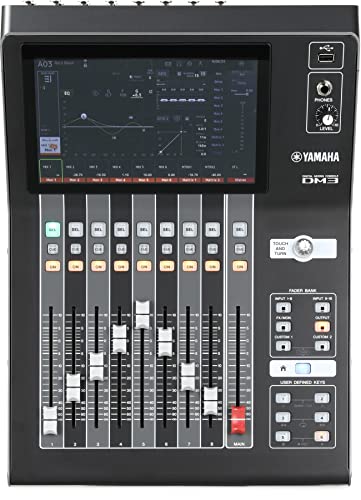
Yamaha DM3
Bands, small venues and project studios that want a compact 96 kHz digital console that doubles as an 18x18 USB recording interface.
Read the Yamaha DM3 review →Questions Buyers Ask
PreSonus AudioBox iTwo USB Audio Interface
See the current listing, price and included accessories.
About This Review
Mandrillis Team
The Mandrillis editorial team researches and compares audio and music gear using manufacturer documentation, verified specs and real buyer feedback, so you can make a confident purchase without wading through marketing claims.
Read our full research methodology.